


HRW Slams Iran for Suppressing ‘Water Uprising’

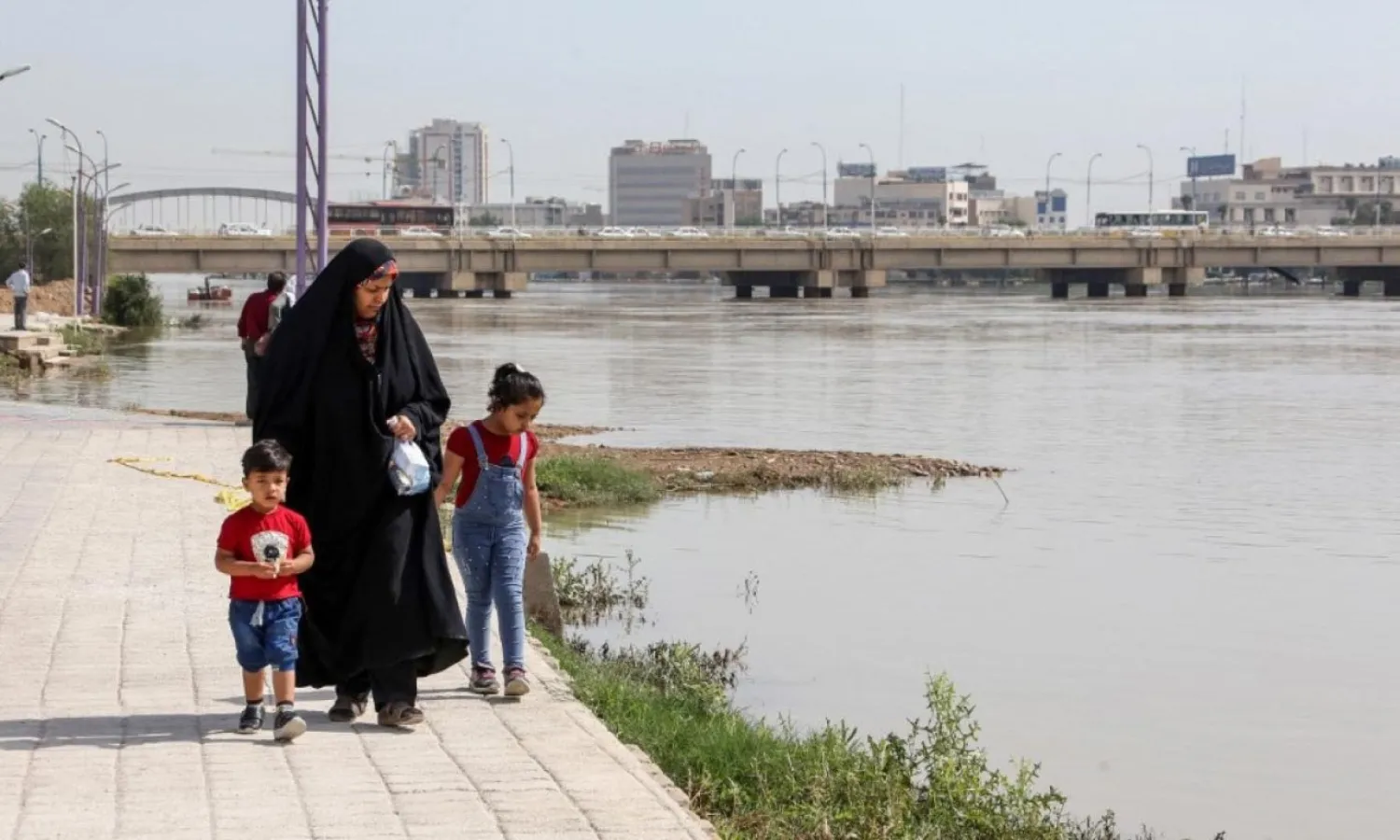
A woman walks with her children along the Karun River in Ahwaz, Khuzestan (File photo: AFP)
TT

HRW Slams Iran for Suppressing ‘Water Uprising’

A woman walks with her children along the Karun River in Ahwaz, Khuzestan (File photo: AFP)

The increasing death toll and mass arrests raise grave concerns about the Iranian authorities’ response to recent protests in Khuzestan, and other provinces, Human Rights Watch (HRW) said.

The international organization said that the authorities should immediately and unconditionally release peaceful protesters, provide information about deaths, and allow an independent international investigation into security agencies’ alleged use of lethal force.

"All those responsible for abuses should be held to account."

HRW extensively documented that Iran’s judiciary regularly uses vaguely defined national security charges to prosecute peaceful dissent and subject detainees to mistreatment, torture, and unfair trials.

It reiterated its previous calls on the UN Human Rights Council member countries to establish an UN-led inquiry into alleged serious rights violations during and in the aftermath of the widespread protests.

Tara Sepehri Far, Iran researcher at HRW, said that Iranian political leaders’ primary response to widespread demands for basic rights has been unchecked repression.

“Only a transparent investigation into the deaths of protesters, holding security forces accountable for wrongdoing, and a commitment to address long-term grievances can begin to address the local population’s loss of trust in the authorities.”

Since July 15, 2021, Iranians have protested deteriorating living conditions in Khuzestan and several other provinces.

As of July 28, human rights groups have verified the identities of at least nine people who were shot dead or died of injuries during the protests, including a 17-year-old boy.

Iranian government officials have announced the death of three protesters and a police officer during the protests. Videos shared on social media from the protests showed security officials shooting firearms and teargas toward protesters.

On July 15, people in dozens of towns and cities in Khuzestan province, a large ethnic Arab population, took to the streets for several nights to protest not having clean water for days.

Human Rights Activists News Agency (HRANA) identified six victims and said 171 people were arrested during the protests.

Unconfirmed reports indicate that the number of deaths and arrests may be higher.

Ali Shamkhani, the secretary of Iran’s national security council, wrote on his Twitter account that the authorities had ordered the release of those arrested during the protests in Khuzestan “who have not committed any criminal act.”

On July 25, Mizan News, the judiciary’s news agency, reported that the head of Iran’s judiciary, Gholamhossein Ejeyi, ordered the courts to release those arrested for protesting and called for a review of those convicted for the November 2019 protests, which began over gasoline prices and transformed into a broader expression of popular discontent with the government’s repression and perceived corruption.

Under the United Nations Basic Principles on the Use of Force and Firearms by Law Enforcement Officials, police may use force only when strictly necessary and to the extent required to achieve a legitimate policing objective.

The deliberate use of lethal force is permissible only when it is strictly necessary to protect life, and warnings should be given when possible, reiterated HRW.

The authorities should promptly report and investigate all incidents of law enforcement officials killing or wounding people with firearms through an independent administrative or prosecutorial process.

Over the past four years, Iranian authorities have responded to widespread protests with increasingly excessive and lethal force, mass arrests, and internet shutdowns.

In November 2019, in one of the most brutal crackdowns, security forces used excessive and unlawful lethal force against massive protests across the country.

Amnesty International reported that at least 304 people were killed.

Iranian authorities said that 230 people were killed but have failed to conduct any transparent investigation into serious allegations of unlawful use of force by security officials and instead prosecuted protesters in unfair trials.

Shadi Sadr, a lawyer and co-founder of London-based NGO Justice for Iran, tweeted that the hundreds of protesters and activists arrested are “mostly of Arab Ahwazi ethnicity.”

They have been arrested “in their homes and workplaces,” she added.

Sadr also indicated that a group of mothers whose children were killed by Iranian security forces gathered in Tehran’s Azadi Square, chanting, “we seek our rights hand in hand until the regime falls.”

Authorities responded by arresting and beating them as they exercised their right to assembly, but they have been all released later.



Top Trump Iran Negotiator Says Visits US Aircraft Carrier in Middle East

US Special Envoy Steve Witkoff delivers a press conference upon the signing of the declaration on deploying post-ceasefire force in Ukraine, during the so-called "Coalition of the Willing" summit, at the Elysee Palace in Paris, France, January 6, 2026. (Reuters)
TT

Top Trump Iran Negotiator Says Visits US Aircraft Carrier in Middle East

US Special Envoy Steve Witkoff delivers a press conference upon the signing of the declaration on deploying post-ceasefire force in Ukraine, during the so-called "Coalition of the Willing" summit, at the Elysee Palace in Paris, France, January 6, 2026. (Reuters)

US President Donald Trump's lead Iran negotiator Steve Witkoff on Saturday said he visited the USS Abraham Lincoln aircraft carrier currently in the Arabian Sea, with Washington and Tehran due to hold further talks soon.

"Today, Adm. Brad Cooper, Commander of US Naval Forces Central Command, Jared Kushner, and I met with the brave sailors and Marines aboard the USS Abraham Lincoln, her strike group, and Carrier Air Wing 9 who are keeping us safe and upholding President Trump's message of peace through strength," said Witkoff in a social media post.

Iranian Foreign Minister Abbas Araghchi said on Saturday he hoped talks with the United States would resume soon, while reiterating Tehran's red lines and warning against any American attack.


Israel’s Netanyahu Expected to Meet Trump in US on Wednesday and Discuss Iran

Israeli Prime Minister Benjamin Netanyahu delivers a speech during a special session to mark the 77th anniversary of the Knesset's establishment and the 60th anniversary of the dedication of the current building at the Knesset, the Israeli parliament, in Jerusalem, 02 February 2026. (EPA)
TT

Israel’s Netanyahu Expected to Meet Trump in US on Wednesday and Discuss Iran

Israeli Prime Minister Benjamin Netanyahu delivers a speech during a special session to mark the 77th anniversary of the Knesset's establishment and the 60th anniversary of the dedication of the current building at the Knesset, the Israeli parliament, in Jerusalem, 02 February 2026. (EPA)

Israeli Prime Minister Benjamin Netanyahu is expected to meet US President Donald Trump on Wednesday in Washington, where they will discuss negotiations with Iran, Netanyahu's office said on Saturday.

Iranian and US officials held indirect nuclear ‌talks in the ‌Omani capital ‌Muscat ⁠on Friday. ‌Both sides said more talks were expected to be held again soon.

A regional diplomat briefed by Tehran on the talks told Reuters Iran insisted ⁠on its "right to enrich uranium" ‌during the negotiations with ‍the US, ‍and that Tehran's missile capabilities ‍were not raised in the discussions.

Iranian officials have ruled out putting Iran's missiles - one of the largest such arsenals in the region - up ⁠for discussion, and have said Tehran wants recognition of its right to enrich uranium.

"The Prime Minister believes that any negotiations must include limiting ballistic missiles and halting support for the Iranian axis," Netanyahu's office said in a ‌statement.


Italy FM Rules Out Joining Trump’s ‘Board of Peace’

Italy's Minister for Foreign Affairs Antonio Tajani speaks to the press during the EPP Leaders’ meeting, in Zagreb, Croatia, 30 January 2026. (EPA)
TT

Italy FM Rules Out Joining Trump’s ‘Board of Peace’

Italy's Minister for Foreign Affairs Antonio Tajani speaks to the press during the EPP Leaders’ meeting, in Zagreb, Croatia, 30 January 2026. (EPA)

Italy will not take part in US President Donald Trump's "Board of Peace", Italian Foreign Minister Antonio Tajani said Saturday, citing "insurmountable" constitutional issues.

Trump launched his "Board of Peace" at the World Economic Forum in Davos in January and some 19 countries have signed its founding charter.

But Italy's constitution bars the country from joining an organization led by a single foreign leader.

Prime Minister Giorgia Meloni, a Trump ally, last month noted "constitutional problems" with joining, but suggested Trump could perhaps reopen the framework "to meet the needs not only of Italy, but also of other European countries".

Tajani appeared Saturday to rule that out.

"We cannot participate in the Board of Peace because there is a constitutional limit," he told the ANSA news agency.

"This is insurmountable from a legal standpoint," he said, the day after meeting US Secretary of State Marco Rubio and US Vice President JD Vance at the Olympics in Milan.

Although originally meant to oversee Gaza's rebuilding, the board's charter does not limit its role to the Palestinian territory and appears to want to rival the United Nations.