

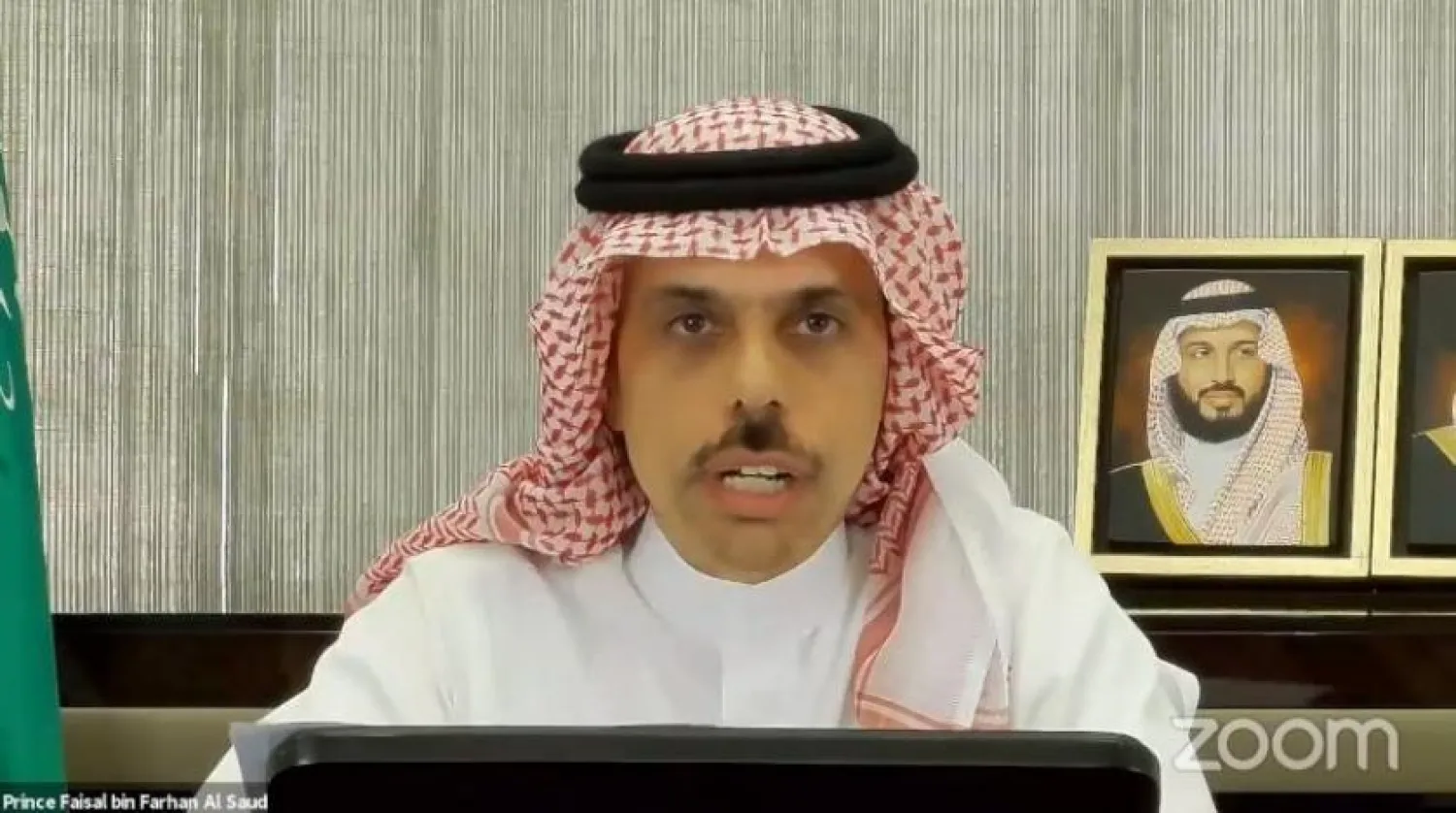

Saudi FM: Houthis Prefer Military Solution in Spite of our Peace Offer in Yemen

The Saudi FM addresses the Aspen Security Forum. (Asharq Al-Awsat)
TT

Saudi FM: Houthis Prefer Military Solution in Spite of our Peace Offer in Yemen

The Saudi FM addresses the Aspen Security Forum. (Asharq Al-Awsat)

Saudi Foreign Minister Prince Faisal bin Farhan bin Abdullah said on Tuesday that the Iran-backed Houthi militias clearly prefer a military solution in Yemen instead of dialogue and peace.

Addressing the Aspen Security Forum in the US, he said: “We had proposed a solution to the crisis in Yemen and offered a ceasefire, but the Houthis rejected them and have continued to target civilians in Saudi Arabia and Yemen.”

Saudi Arabia’s message is that they must agree to dialogue and be part of Yemen’s future, he added.

Turning to Iran, he accused it of threatening navigation in the Gulf and of being part of the crisis in Lebanon.

Iran is a negative actor in the region for supplying the Houthis with weapons and undermining marine navigation, he stated.

Before Tehran can be accepted as an effective member of the region, it must cease destabilizing it, urged Prince Faisal.

On the Iran nuclear deal, the FM noted that the greatest challenge lies in guaranteeing that an agreement would prevent Tehran from acquiring nuclear arms.

“We would support a nuclear deal with Iran if it guarantees that it never acquires such weapons,” he stressed.

On Saudi-American relations during the term of President Joe Biden, he said that “strong dialogue” was ongoing through all American administrations over various issues, including Iran, regional security and climate change.

On Abraham Accords peace deals between Arab countries and Israel, Prince Faisal noted that they have had a positive impact on the region.

“We must build on that” without neglecting the Palestinian-Israeli conflict, he added. Long-term regional stability cannot be secured as long as the conflict is not resolved.

On Qatar, he described relations with it as “very good”.

“We are working together on several issues and continue joint work in the Gulf Cooperation Council to achieve regional prosperity,” he remarked.



Saudi Arabia Condemns Repeated Iranian Attacks on UAE Tankers in Strait of Hormuz

The Saudi Ministry of Foreign Affairs logo
TT

Saudi Arabia Condemns Repeated Iranian Attacks on UAE Tankers in Strait of Hormuz

The Saudi Ministry of Foreign Affairs logo

The Saudi Ministry of Foreign Affairs expressed the Kingdom's strongest condemnation of the targeting of two ADNOC tankers transiting the Strait of Hormuz, describing repeated Iranian attacks against commercial vessels as reprehensible.

In a statement, the ministry stressed that these repeated attacks constitute a dangerous escalation, a direct threat to maritime navigation safety and global energy security, and a grave violation of international law, SPA reported.

It noted that the aggression blatantly defies UN Security Council Resolution 2817, which affirms the freedom of commercial navigation through the Strait of Hormuz and condemns any actions obstructing it.

Holding Iran fully responsible for the consequences of its ongoing violations, the Kingdom demanded an immediate halt to these attacks and adherence to international laws. It emphasized that regional security and maritime safety are shared responsibilities, warning that continuing such actions is intolerable.

Saudi Arabia reaffirmed its full solidarity with the United Arab Emirates, affirming its steadfast support for all measures it takes to protect its sovereignty, security, and resources.


Saudi Leadership Congratulates President of Pakistan on Independence Day

(R) Custodian of the Two Holy Mosques King Salman bin Abdulaziz Al Saud, (L) Prince Mohammed bin Salman bin Abdulaziz Al Saud, Crown Prince and Prime Minister.
TT

Saudi Leadership Congratulates President of Pakistan on Independence Day

(R) Custodian of the Two Holy Mosques King Salman bin Abdulaziz Al Saud, (L) Prince Mohammed bin Salman bin Abdulaziz Al Saud, Crown Prince and Prime Minister.

The Saudi leadership congratulated Pakistan on its Independence Day, reaffirming the strong and longstanding ties between the two countries and their peoples, the Saudi Press Agency said Friday.

Custodian of the Two Holy Mosques King Salman bin Abdulaziz Al Saud sent a cable of congratulations to President Asif Ali Zardari, wishing him continued good health and happiness and the government and people of Pakistan steady progress and prosperity.

King Salman also praised the strong relations binding the two countries and peoples, highlighting the shared commitment to advancing cooperation across all fields.

Prince Mohammed bin Salman bin Abdulaziz Al Saud, Crown Prince and Prime Minister, also sent a cable of congratulations to President Zardari on Pakistan’s Independence Day. The Crown Prince similarly wished the Pakistani president good health and happiness and the government and people continued progress and prosperity.


UAE Condemns ‘Hostile Iranian Attack’ on 2 ADNOC Vessels in Hormuz Strait

Vessels near the Strait of Hormuz, as seen from Musandam, Oman, August 10, 2026. REUTERS/Stringer
TT

UAE Condemns ‘Hostile Iranian Attack’ on 2 ADNOC Vessels in Hormuz Strait

Vessels near the Strait of Hormuz, as seen from Musandam, Oman, August 10, 2026. REUTERS/Stringer

The United Arab Emirates on Friday blamed Iran for attacks on two vessels linked to the Abu Dhabi National Oil Company (ADNOC) as they passed through the Strait of Hormuz a day earlier.

The UAE foreign ministry denounced what it called "the hostile Iranian attack" targeting two vessels affiliated with ADNOC "with no injuries reported.”

ADNOC confirmed "two of its vessels were attacked while transiting" the waterway on Thursday evening, adding the situation was "brought under control,” Emirates News Agency (WAM) reported.

Continued attacks in the strait led to the collapse of an April ceasefire between the United States and Iran.