As Pandemic Olympics Wane, Japan Asks: What Did Games Mean?

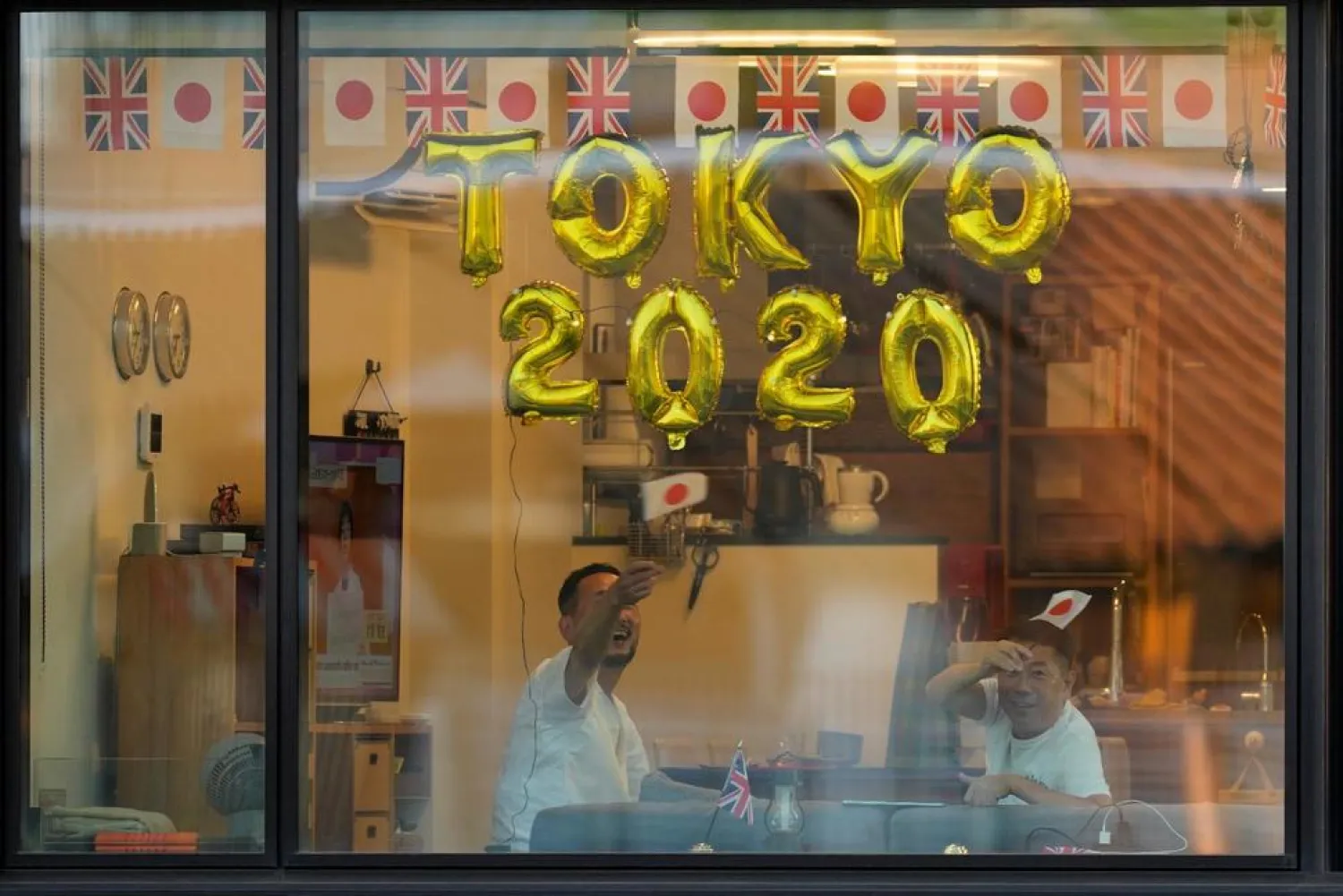
In this July 23, 2021, file photo, people look out their apartment window from a nearby building before the opening ceremony in the Olympic Stadium at the 2020 Summer Olympics in Tokyo, Japan. (AP)
TT

As Pandemic Olympics Wane, Japan Asks: What Did Games Mean?

In this July 23, 2021, file photo, people look out their apartment window from a nearby building before the opening ceremony in the Olympic Stadium at the 2020 Summer Olympics in Tokyo, Japan. (AP)

Was it the strangest Olympics ever, staged during a deadly pandemic, with no fans? How about the angriest, awash in protests and fierce opposition from large swaths of the host nation?

The scariest, with fears of new coronavirus variants and surging cases plaguing Japan— though mostly dodging those in the Olympic “bubble” — throughout the two weeks of sports? Or maybe, as athletes banded together under moments of intense stress, the kindest?

As tens of thousands of athletes, journalists and officials get ready to pack up and leave Monday, Japan will be left to pick over the answers to these questions, maybe for years. Amid the lingering glow from the televised pomp and the indisputable athletic drama, whatever you call these Olympics, it’s worth stopping to consider how Japan sees them.

They were sold, well before the pandemic, as the symbol of Japan’s recovery from the destruction of the 2011 tsunami and nuclear meltdown. The rhetoric now tends to focus on their link to the world overcoming coronavirus.

But does that really work in a country where thousands are still getting sick each day, let alone in other, even worse-hit nations that have sent athletes to Tokyo? Many here, while proud that Japan is on the verge of pulling off what many thought impossible or, in some corners, highly inadvisable, still believe these Games were forced on the country and that their real cost, possibly in lives lost, is yet to be paid.

Others are simply relieved they are over. And a large number maybe even enjoyed the ride, reveling in the sports themselves, Japan’s surprisingly strong medal haul and the generally hospitable way the world was welcomed during a period of illness, fear and uncertainty.

Using some of the dozens of interviews conducted during and before these delayed and disputed Pandemic Games, The Associated Press takes a look at what some Japanese think they mean.

Is it representative of a nation of 126 million? Of course not. But the glimpses into the views of some of the people who lived through this Olympics offer a chance to cut through, in sometimes surprising ways, the government and IOC rhetoric that emphasized harmony and revitalization, and get a bit closer to the heart of the nation’s sentiment.

The beginning
It started with a muted opening ceremony and an empty stadium, with moments so quiet that the shouts of protesters could be heard from the streets outside. Many residents watched with mixed feelings, to say the least, isolated from the Games by organizers trying to keep the Olympic visitors from mingling with the public, forced to modify their lives during a record wave of virus cases and yet another state of emergency.

Many were opposed, and that feeling persisted. But there was nuance, too — a desire to put the country’s best face forward, now that the inevitable was happening, and a notion that this spectacle could act as a salve.

“I am very emotional and teary-eyed while watching the TV because even during the pandemic, the Olympics will still go on,” Riza Nagumo, 53, a housewife, said. “I was praying so much to have this Olympics be a very successful event, to heal the world.”

At a normally bustling intersection in Tokyo’s Shibuya neighborhood, large screens that usually blast advertisements and show television were switched off. Many bars and restaurants were closed, and public viewing locations across Japan were shut down amid rising infections.

“Everyone is just enduring this,” said Harumi Wada, a Tokyo resident. “But to hold the Olympics, despite everything, I feel there’s a dissonance, and I think that distrust toward the government is getting stronger.”

The family
Despite the disruption, delays and disputes of these Games, the ban on spectators and big gatherings proved a surprising boon for some families.

“We are often too busy in our daily life to have this kind of quality family time,” said Ikuko Tozuka, 53, who gathered with her husband and two adult daughters in front of their TV screen in Oiso, west of Tokyo, to watch the Games. “So I am very happy that this Olympics has given us an opportunity to be together.”

Hiroshi, the father, 58, even bought a new TV set to watch the Games with his family.

“It was actually good that this COVID-19 pandemic compelled us as a family to come together and watch the Games in this way,” said Yu, his 26-year-old daughter.

The protesters
Throughout the Games, small knots of protesters gathered to provide voice to what a much larger, mostly silent chunk of Japan was thinking. They chanted, “Cancel the Olympics.” They carried banners reading, “No Olympics 2020 — Use that money for COVID-19” and “Is it more important than human life?”

Were these very public demonstrations representative of the whole country? It’s complicated. Many said in polls they strongly opposed the Games; an unknown number may have been silently taking a wait-and-see attitude, hoping for the best.

In AP interviews conducted over the months between the postponement and the start of the Games, there could be found a feeling of resentment that the government had pushed ahead partly because of pressure from the IOC, which would have faced billions in lost television rights income without the Games. There was also fear over the Olympics spreading new strains of the coronavirus. The government’s main medical adviser said it was “abnormal” to hold the Olympics during a pandemic.

“It’s unethical to proceed with such a big event, with more than 10,000 athletes coming to Tokyo, all situated in one area,” said Masa Yamagata, a Tokyo resident. “We can’t enjoy it anyway. We can’t celebrate it.”

Past as present
Along with the anger and fear, these Games had a nostalgic element for some older Japanese who remembered the Summer Games of 1964, when Japan celebrated its rebuilding from the war and the turbulent years that followed.

Some felt remorse — a sense of what might have been — because these Games would be so much more circumscribed than the last time they were in Tokyo.

There was also gratitude. Thanks to these Games, Seiichi Kuroki, 55, saw his relationship with his 85-year-old father, Masatoshi Kuroki, deepen as they talked about Masatoshi’s role as a marshal at the opening ceremony of the 1964 Olympics.

“I am very grateful for that,” Kuroki said. “He looks happy when I ask him questions such as, ‘What were you doing then at the Games?’ Because that is his legacy. “

There was a tinge of sorrow, however, for Takemasa Taguchi, as the 83-year-old remembered Tokyo’s celebratory mood in 1964.

“I am so sad about this situation,” Taguchi said. “I was hoping that we could have celebrated and danced together with people from all over the world.”


‘Not Competitive’ Brazil Can Improve, Insists Ancelotti

Brazil's head coach Carlo Ancelotti looks on before the Mizuho Blue Challenge – The Kallang Football Series international friendly match between Japan and Brazil at the National Stadium in Singapore, 14 November 2026. (EPA)
TT

‘Not Competitive’ Brazil Can Improve, Insists Ancelotti

Brazil's head coach Carlo Ancelotti looks on before the Mizuho Blue Challenge – The Kallang Football Series international friendly match between Japan and Brazil at the National Stadium in Singapore, 14 November 2026. (EPA)

Brazil coach Carlo Ancelotti on Monday promised an improved performance in the year-ending clash against Singapore, admitting that his squad was "currently not competitive."

The Selecao lost 3-2 against Japan in a friendly in Singapore on Saturday, where Ancelotti and skipper Raphinha were red-carded after Japan scored the dramatic clincher in stoppage time.

"Given that the team is currently not competitive, I want to do more," Ancelotti told reporters in Singapore, where Brazil play on Tuesday.

The Italian, Brazil's first-ever permanent foreign coach, said: "I want to do more because I enjoy being here, so that the team can become more competitive on the global stage.

"The priority is to play well first (tomorrow) and to do well."

Ancelotti, 67, is coming under increasing pressure, following a string of underwhelming performances including two defeats, two wins and a draw in Brazil's last five international outings.

Japan avenged a 2-1 defeat by Brazil in their previous meeting at this year's World Cup, when the South Americans beat them in a round-of-32 clash.

After Saturday's loss, Ancelotti faced a barrage of criticism, including from former Brazilian national team star Romario.

Ancelotti brushed off Romario's remarks, saying "like anyone he has the right to express an opinion."

But the former Real Madrid coach, who reacted with fury after Brazil appealed for a foul in the build-up to Japan's winning goal on Saturday -- which was upheld by VAR -- said that his team "didn't deserve to lose" against Japan.

Japan face Paraguay on Tuesday in the second match of the double-header at Singapore's National Stadium.


Vinicius Says Less Training and Transfer Distractions May Explain Dip in Form

 Brazil's Vinicius Junior celebrates after goal during a friendly soccer match between Japan and Brazil in Singapore, Saturday, Nov. 14, 2026. (AP)
Brazil's Vinicius Junior celebrates after goal during a friendly soccer match between Japan and Brazil in Singapore, Saturday, Nov. 14, 2026. (AP)
TT

Vinicius Says Less Training and Transfer Distractions May Explain Dip in Form

 Brazil's Vinicius Junior celebrates after goal during a friendly soccer match between Japan and Brazil in Singapore, Saturday, Nov. 14, 2026. (AP)
Brazil's Vinicius Junior celebrates after goal during a friendly soccer match between Japan and Brazil in Singapore, Saturday, Nov. 14, 2026. (AP)

Real Madrid winger Vinicius Junior says ‌his reduced training schedule, and transfer interest, may have affected his performances in an underwhelming start to his Real Madrid season.

The Brazilian signed a new contract until 2032 in August, but so far his output on the pitch has fallen short of his own previous standards. Press scrutiny in Spain has been intensified by the impressive start of Ivorian signing Yan Diomande, who has eclipsed Vinicius in his preferred left-sided role.

“I don’t think I prepared as well as I could have after the World Cup, because ‌the impact of ‌that tournament is so significant for all ‌Brazilians," ⁠he told a ⁠press conference in Singapore on Monday.

"Being knocked out so early was something we hadn’t expected. So, I took advantage of my holidays to enjoy myself, rest, relax, and spend more time with my family. I ended up training less than in previous years," he said.

“That may have affected my start to the season."

Vinicius' future ⁠at Real Madrid was a talking point in ‌Spain for months as he entered ‌the final year of his contract before re-signing in August. Premier ‌League champions Arsenal were said to be interested at the ‌time.

"On top of that, regarding my contract renewal, with so many clubs showing interest last summer, I felt truly overwhelmed, as with the situation at Real Madrid. But it’s a very long season.”

The 26-year-old said he ‌had a track record of hitting top form in the decisive moments of the season, ⁠and that he ⁠was on a positive trajectory.

“Maintaining such a high level for so long is always very difficult," said Vinicius.

"I think only Cristiano Ronaldo and (Lionel) Messi have managed to do this for so many years, reaching the same kinds of numbers."

"I am human, I often make mistakes, but I always try to improve.”

This season Vinicius has scored one goal and given three assists in his 12 Real Madrid appearances. Coach Jose Mourinho has only used him for a full 90 minutes on three occasions.

Nevertheless, he did score twice on Saturday in Brazil's 3-2 loss to Japan, and is likely to feature in another friendly against Singapore on Tuesday.


Belgium’s Lukaku Retires from International Football

Belgium's forward #09 Romelu Lukaku celebrates after scoring his team third goal during the UEFA Nations League, League A - Group 1, football match between Belgium and Turkey at the Maurice Dufrasne stadium, in Liege, eastern Belgium on October 2, 2026. (AFP)
TT

Belgium’s Lukaku Retires from International Football

Belgium's forward #09 Romelu Lukaku celebrates after scoring his team third goal during the UEFA Nations League, League A - Group 1, football match between Belgium and Turkey at the Maurice Dufrasne stadium, in Liege, eastern Belgium on October 2, 2026. (AFP)

Belgium forward Romelu Lukaku on Monday retired from international football after scoring 94 goals in 135 games for his country, saying he was "at peace" with his decision.

Lukaku featured in four World Cups for the Red Devils and helped them reach the quarter-finals of this year's tournament before losing to eventual winners Spain.

The 33-year-old, who now plays for Turkish club Fenerbahce, made his debut in 2010 as a teenager and was an unused substitute in Sunday's 4-1 Nations League win over Italy.

"These 16 years I gave all I had for the national team. It was a nice ride and I enjoyed every single moment," Belgium's record goal scorer said on Instagram.

"To the Belgium fans, thank you for the support you gave our team. I am proud to have represented my country in 4 World Cups and 3 European Championships.

"I will never forget those moments. I'm at peace with my decision to stop here," Lukaku said.

The former Chelsea, Manchester United and Inter Milan forward was part of Belgium's so-called "golden generation".

Lukaku, alongside Kevin De Bruyne, Thibaut Courtois and Eden Hazard, finished third at the 2018 World Cup, a best-ever finish for Belgium in the tournament but they failed to lift a trophy during the period.

"I played with amazing teammates that I will always be grateful for," Lukaku said.

"I want to thank them all. I want to thank all the coaches as well for pushing and trusting me to help the team," he added.

- 'Legend, my brother' -

A host of fellow Belgian players paid tribute to Lukaku.

"Legend, my brother," midfielder Axel Witsel said on Instagram.

"Thank you for everything my bro," Courtois said.

"So many amazing memories," the Real Madrid goalkeeper added.

Lukaku's last appearance for his country came in October's 4-1 loss to France.

"Beyond his exceptional performances on the pitch, he has been a true leader, with a strong personality and an essential role in the dressing room," Lukaku's former team-mate and now Belgium's technical director Simon Mignolet said in a statement from the Belgian football association.

"We respect his decision and are deeply grateful to him for everything he has brought to our national team," the former Liverpool goalkeeper added.

Belgium's first game without Lukaku will be a Nations League last-eight fixture in March.

"We must now turn our attention to the future and prepare for the Nations League quarter-finals," Mignolet said.

"With the ambition of continuing to make progress as a team," he added.