
Crypto Fashion: Why People Pay Real Money for Virtual Clothes

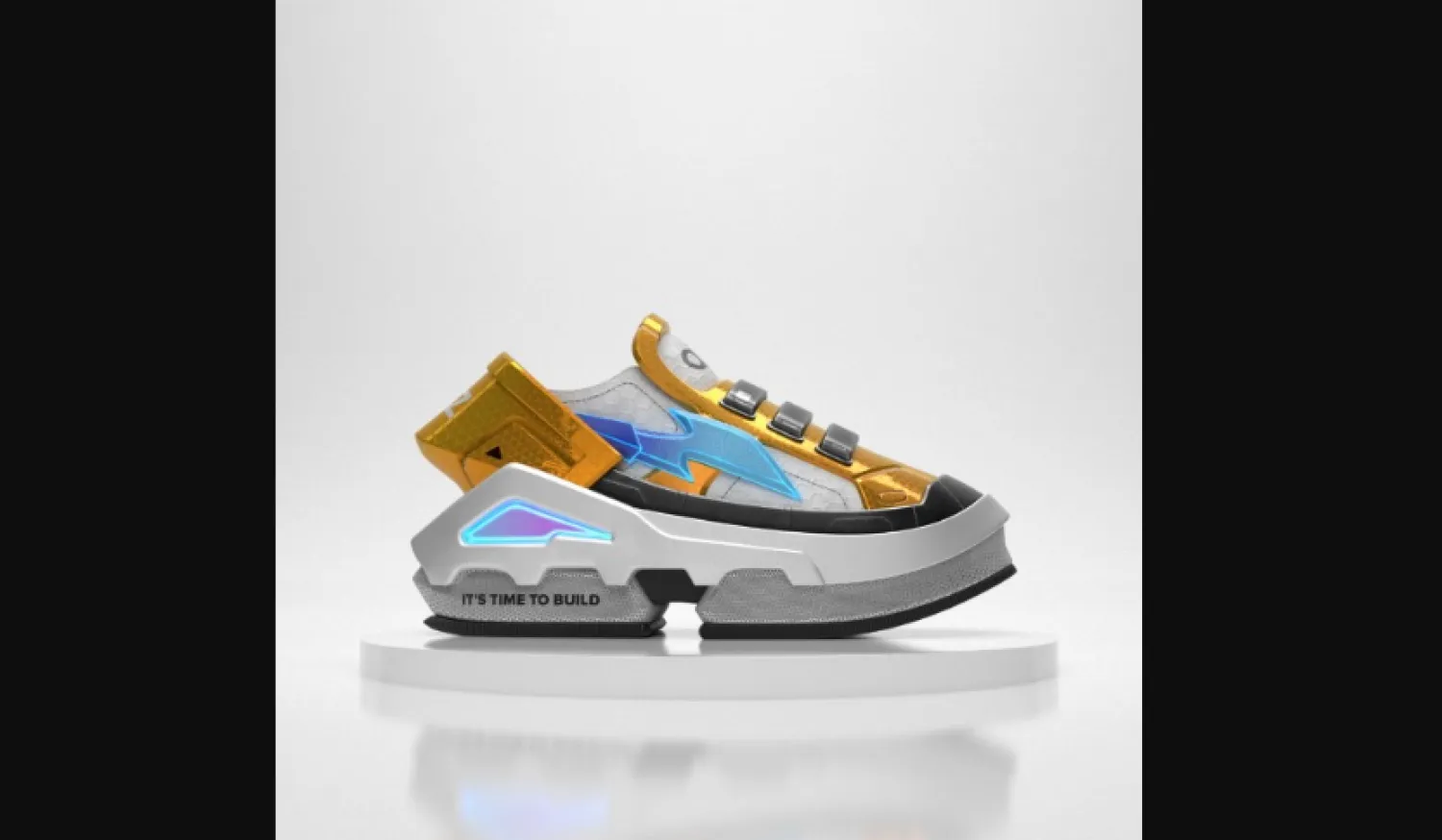
A virtual sneaker made by digital fashion company RTFKT in collaboration with the fund A16z is seen in this render obtained by Reuters on August 10, 2021. RTFKT INC/Handout via REUTERS
TT

Crypto Fashion: Why People Pay Real Money for Virtual Clothes

A virtual sneaker made by digital fashion company RTFKT in collaboration with the fund A16z is seen in this render obtained by Reuters on August 10, 2021. RTFKT INC/Handout via REUTERS

People care what their avatars are wearing.

When the virtual world Decentraland said in June users could make and sell their own clothing for avatars to wear on the site, Hiroto Kai stayed up all night designing Japanese-inspired garments.

Selling kimonos for around $140 each, he said he made $15,000-$20,000 in just three weeks.

While the idea of spending real money on clothing that does not physically exist is baffling to many, virtual possessions generate real sales in the "metaverse" - online environments where people can congregate, walk around, meet friends and play games.

Digital artist and Japan-enthusiast Kai's real name is Noah. He's a 23-year-old living in New Hampshire.

After making as much in those three weeks as he'd earn in a year at his music store job, he quit to become a full-time designer.

"It just took off," Kai said.

"It was a new way to express yourself and it's walking art, that's what's so cool about it... When you have a piece of clothing, you can go to a party in it, you can dance in it, you can show off and it's a status symbol."

In Decentraland, clothing for avatars – known as "wearables" – can be bought and sold on the blockchain in the form of a crypto asset called a non-fungible token (NFT).

Kai's kimonos include exquisite crushed blue velvet pieces with golden dragon trim.

NFTs exploded in popularity earlier this year, as speculators and crypto enthusiasts flocked to buy the new type of asset, which represents ownership of online-only items such as digital art, trading cards and land in online worlds.

The niche crypto assets are also capturing the attention of some of the world's biggest fashion companies, keen to associate themselves with a new generation of gamers - although most of their forays so far are for marketing.

LVMH-owned Louis Vuitton (LVMH.PA) launched a metaverse game where players can collect NFTs, and Burberry (BRBY.L) has created branded NFT accessories for Blankos Block Party, a game owned by Mythical Games. Gucci (PRTP.PA) has sold non-NFT clothing for avatars within the game Roblox .

"Your avatar represents you," said Imani McEwan, a Miami-based fashion model and NFT enthusiast. "Basically what you're wearing is what makes you who you are."

McEwan reckons he has spent $15,000 to $16,000 on 70 NFT wearable items since January, using profit from cryptocurrency investments. His first purchase was a bitcoin-themed sweater and he recently bought a black beret designed by his friend.

The overall size of the NFT wearables market is difficult to establish. In Decentraland alone wearable sales volume totalled $750,000 in the first half of 2021, up from $267,000 in the same period last year, according to NonFungible.com, a website which tracks the NFT market.

Some proponents say wearables and shopping in virtual shops could be the future of retail.

"Instead of scrolling through a feed and shopping online, you can have a more immersive brand experience by exploring a virtual space - whether you are shopping for your online avatar or buying physical products that can be shipped to your door," said Julia Schwartz, director of Republic Realm, a $10 million virtual real estate investment vehicle which has built a shopping mall in Decentraland.

For NFT enthusiasts, online fashion does not replace physical purchases.

But Paula Sello and Alissa Aulbekova, co-founders of the digital fashion start-up Auroboros, say it could be an environmentally-friendly alternative to fast fashion.

Customers can send Auroboros an image of themselves and have clothing digitally added for 60 pounds ($83) to 1,000 pounds.

Sello argued that the virtual garment concept could limit the waste of consumers buying clothes to wear on social media, citing a 2018 Barclaycard study which found 9% of British shoppers have bought clothes for social media photos, then returned them.

"We need to have the shift now in fashion. The industry simply cannot continue," said Sello.

Virtual sneaker company RTFKT sells limited edition NFTs representing sneakers which can be "worn" in some virtual worlds or on social media via a Snapchat filter.

"It really took off when COVID started and loads of people went more online," said Steven Vasilev, RTFKT’s co-founder and CEO.

The company has posted $7 million of sales, with limited edition sneakers selling in auctions for $10,000-$60,000, he said. While the majority of customers are in their 20s and 30s, some are as young as 15.

RTFKT's NFTs can also be used as a token to get a free physical version of the shoe, but one in 20 customers do not redeem that token.

"I didn't do the redemption stuff because I couldn’t be bothered," said Jim McNelis, a Dallas-based NFT buyer who founded NFT company, nft42.

"I try to avoid the physical stuff as much as possible."


Pieter Mulier Named Creative Director of Versace

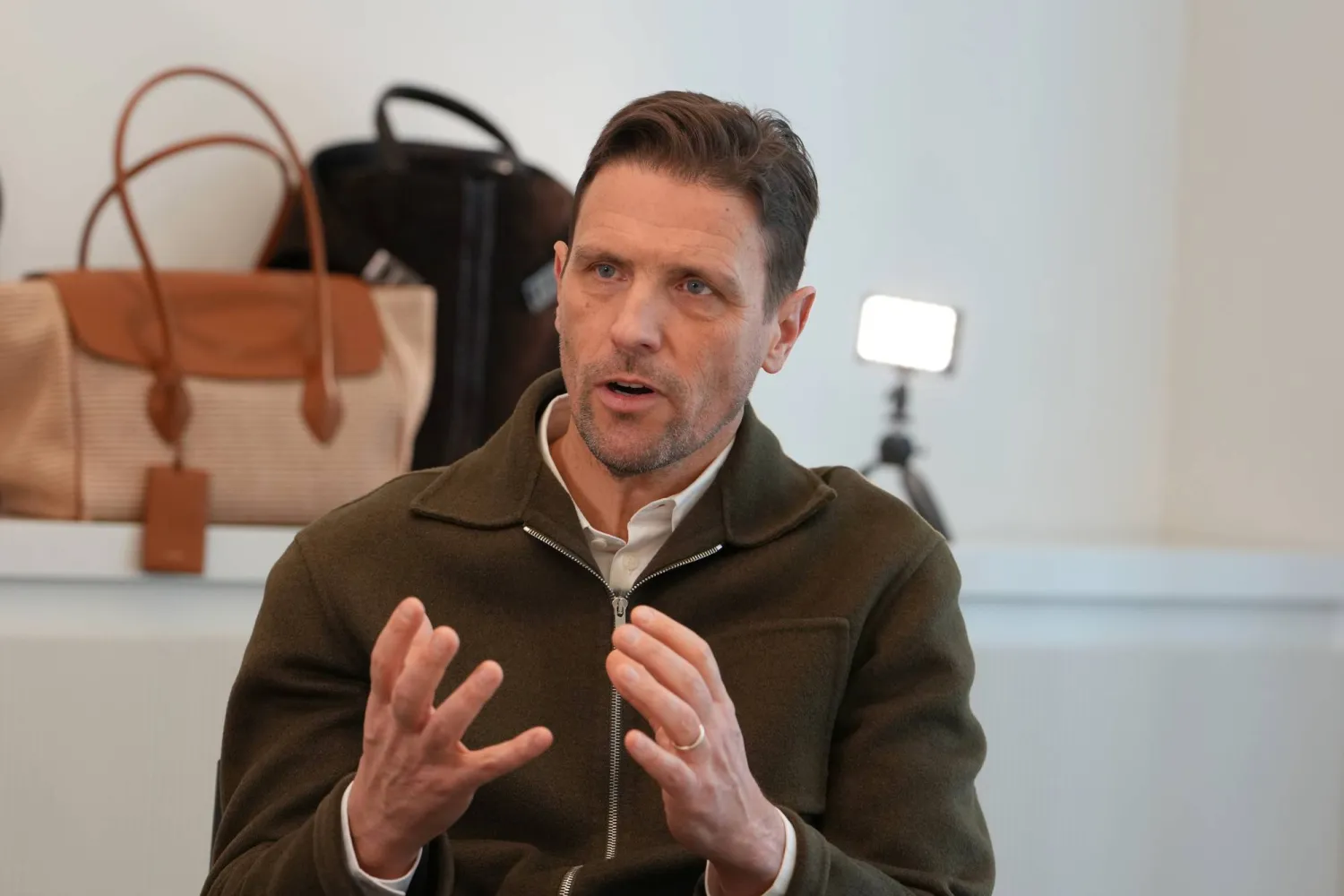
(FILES) Pieter Mulier attends the 2025 CFDA Awards at The American Museum of Natural History on November 03, 2025 in New York City. (Photo by Dimitrios Kambouris / GETTY IMAGES NORTH AMERICA / AFP)
TT

Pieter Mulier Named Creative Director of Versace

(FILES) Pieter Mulier attends the 2025 CFDA Awards at The American Museum of Natural History on November 03, 2025 in New York City. (Photo by Dimitrios Kambouris / GETTY IMAGES NORTH AMERICA / AFP)

Belgian fashion designer Pieter Mulier has been named the new creative director of the Milan fashion house Versace starting July 1, according to an announcement on Thursday from the Prada Group, which owns Versace.

Mulier is currently creative director of the French fashion house Alaïa, and was previously the right-hand man of fellow Belgian designer and Prada co-creative director Raf Simons at Calvin Klein, Jil Sander and Dior.

In his new role, Mulier will report to Versace executive chairman Lorenzo Bertelli, the designated successor to manage the family-run Prada Group. Bertelli is the son of Miuccia Prada and Prada Group chairman Patrizio Bertelli.

“We believe that he can truly unlock Versace’s full potential and that he will be able to engage in a fruitful dialogue,’’ The Associated Press quoted Lorenzo Bertelli as saying of Mulier in a statement.

Mulier takes over from Dario Vitale, who departed in December after previewing just one collection during his short-lived Versace stint.

Mulier was honored last fall by supermodel and longtime Alaïa muse Naomi Campbell at the Council of Fashion Designers of America for his work paying tribute to brand founder Azzedine Alaïa. Mulier took the creative helm in 2021, after Alaïa’s death.


Ralph Lauren’s Margin Caution Eclipses Stronger‑than‑expected Quarterly Results

Guests wait after viewing the latest Ralph Lauren collection in New York City, US, April 17, 2025. REUTERS/Caitlin Ochs/File photo
TT

Ralph Lauren’s Margin Caution Eclipses Stronger‑than‑expected Quarterly Results

Guests wait after viewing the latest Ralph Lauren collection in New York City, US, April 17, 2025. REUTERS/Caitlin Ochs/File photo

Ralph Lauren posted third-quarter results above Wall Street estimates on Thursday, but the luxury retailer's warning of margin pressure tied to US tariffs sent its shares down nearly 6.4% in premarket trading.

The company expects fourth-quarter margins, its smallest revenue period, to shrink about 80 to 120 basis points due to higher tariff pressure and marketing spend.

Ralph Lauren, which sources its products from regions such as China, India and Vietnam, has relied on raising prices and reallocating production to regions with lower duty exposure to offset US tariff pressures, Reuters reported.

"Ralph Lauren has been able to raise prices for some time now. There is some limit on how long it can continue to do this. I think (the company's) gross margins are near peak levels," Morningstar analyst David Swartz said.

The company, which sells $148 striped linen shirts and $498 leather handbags, has tightened inventory, lifted full-price sales and refreshed core styles, boosting its appeal among wealthier and younger customers, including Gen Z.

Higher-income households are still splurging on luxury items, travel and restaurant meals, while lower- and middle-income consumers are strained by higher costs for rents and food as well as a softer job market.

The New York City-based company saw quarterly operating costs jump 12% year-on-year as it ramped up brand building efforts through sports-focused brand campaigns such as Wimbledon and the US Open tennis championship.

The luxury retailer said revenue in the quarter ended December 27 rose 12% to $2.41 billion, above analysts' estimates of a 7.9% rise to $2.31 billion, according to data compiled by LSEG.

It earned $6.22 per share, excluding items, compared to expectations of $5.81, aided by a 220 basis points increase in margins and an 18% rise in average unit retail across its direct-to-consumer channel.

Ralph Lauren now expects fiscal 2026 revenue to rise in the high single to low double digits on a constant currency basis, up from its prior forecast of a 5% to 7% growth.


Saudi Fashion Commission, Kering Launch 'Kering Generation Award X MENA'

This year's award builds on the strong success of the 2025 award, which attracted more than 500 applications, shortlisted 21 finalists, and recognized three winners. SPA
TT

Saudi Fashion Commission, Kering Launch 'Kering Generation Award X MENA'

This year's award builds on the strong success of the 2025 award, which attracted more than 500 applications, shortlisted 21 finalists, and recognized three winners. SPA

Saudi Arabia’s Fashion Commission and global luxury group Kering have launched the "Kering Generation Award X MENA" across the Middle East and North Africa (MENA) for 2026.

The announcement was made on Tuesday during the opening of the RLC Global Forum, hosted at the French Embassy in Riyadh.

This year's award builds on the strong success of the 2025 award, which attracted more than 500 applications, shortlisted 21 finalists, and recognized three winners.

Participants benefited from mentorship programs, workshops, and opportunities to strengthen their global presence. Building on this momentum, the 2026 program seeks to expand its impact across the MENA region.

The 2026 award focuses on four key areas of sustainable fashion: innovation in regenerative materials and clean production, circular design and sustainable business models, nature conservation and animal welfare, and consumer awareness and cultural engagement.

The program targets startups across the MENA region that operate in, or positively influence, the sustainable fashion sector, provided they demonstrate innovation capabilities and the ability to deliver measurable sustainability outcomes.