


Israel’s Submarines Step Up Their Role in ‘Shadow War’ with Iran

Leviathan and a second Israeli navy submarine are seen during a naval maneuver in the Mediterranean Sea off the coast of Haifa, northern Israel June 9, 2021. Picture taken June 9, 2021. REUTERS/Amir Cohen
TT

Israel’s Submarines Step Up Their Role in ‘Shadow War’ with Iran

Leviathan and a second Israeli navy submarine are seen during a naval maneuver in the Mediterranean Sea off the coast of Haifa, northern Israel June 9, 2021. Picture taken June 9, 2021. REUTERS/Amir Cohen

A few may argue that the Israeli Air Force is the crown jewel of the Israeli army, but geopolitical realities and the ongoing shadow war with Iran reveal that the Israeli army has another decisive card to play with, its Navy.

For decades, Israel’s submarine fleet conducted primarily classic intelligence gathering missions. The subs could get in and out of far-away places without being noticed.

But of late, the Israeli army "realized it could do so much more", an Israel Navy official told the N12 news portal.

The details of what the Israeli submarines are up to remains classified, of course. What is known is that they are operating far from Israel’s shores, and earlier this month Iran charged that at least 14 of its ships in the Red Sea and the Mediterranean Sea had been attacked by Israeli forces.

If true, and Israel’s not officially taking responsibility, then submarines were almost certainly involved.

Gathering intelligence also remains a big part of the submarines’ role, but they can do more than just sit and listen. It was suggested in the N12 report that Israeli subs had been used to transport forces and individuals to and from far-away enemy territory.

“We are operating right under the enemy’s feet,” said the Navy, making the submarines not only a tactical asset, but a strategical one that gives Israel a degree of naval superiority over its regional foes.

This has not gone unnoticed by other branches of the military, and Navy officials told N12 that there is a growing demand for joint operations with the submarine fleet. So much so that they can’t keep up.

To remedy that situation, Israel will add a sixth submarine to its fleet in the coming years. The vessel is currently under construction in Germany, from which Israel purchases all of its submarines.

In 10-years' time, Israel is expected to replace at least half of its aging “Dolphin” class fleet with newer, more advanced and far larger submarines. The need to expand and modernize this secretive yet powerful force is becoming clearer by the day.

Regional tensions had reached a new peak after the July 29 attack on an Israeli-operated tanker off the coast of Oman, which Israel, the United States and Britain have accused Tehran of being behind.

According to analysis by The Telegraph at least 20 civilian ships have been attacked by mines, drones, and commandos in a rapidly spiraling “shadow war” between Iran and Israel.

Last year, Iranian destroyer Jamaran fired a missile that struck a logistics navy vessel called Konarak while conducting training exercises in the Strait of Hormuz, killing 19 sailors and wounding 15 others.

For his part, Iranian Supreme Leader Ali Khamenei had appointed a new navy commander as Iran-Israel tensions spike.

Khamenei appointed Adm. Shahram Irani as the new navy chief under the country’s army. He became the successor of Adm. Hossein Khanzadi, who has held the post since 2017.

In his decree, Khamenei urged Irani to improve the Navy. No reason was given for the replacement.



Kremlin Says US Has Not Responded to Its Nuclear Arms Control Offer

Russian President Vladimir Putin delivers his traditional televised New Year's Address to the people of Russia, in Moscow, Russia, 31 December 2025.  EPA/MIKHAIL METZEL/SPUTNIK/KREMLIN POOL
Russian President Vladimir Putin delivers his traditional televised New Year's Address to the people of Russia, in Moscow, Russia, 31 December 2025. EPA/MIKHAIL METZEL/SPUTNIK/KREMLIN POOL
TT

Kremlin Says US Has Not Responded to Its Nuclear Arms Control Offer

Russian President Vladimir Putin delivers his traditional televised New Year's Address to the people of Russia, in Moscow, Russia, 31 December 2025.  EPA/MIKHAIL METZEL/SPUTNIK/KREMLIN POOL
Russian President Vladimir Putin delivers his traditional televised New Year's Address to the people of Russia, in Moscow, Russia, 31 December 2025. EPA/MIKHAIL METZEL/SPUTNIK/KREMLIN POOL

The Kremlin said on Thursday that the United States had not responded to President Vladimir Putin's proposal to informally extend for ‌a year ‌the ‌provisions of ⁠the last ‌remaining nuclear arms pact between Moscow and Washington, the New START treaty, which is ⁠due to expire ‌in three weeks.

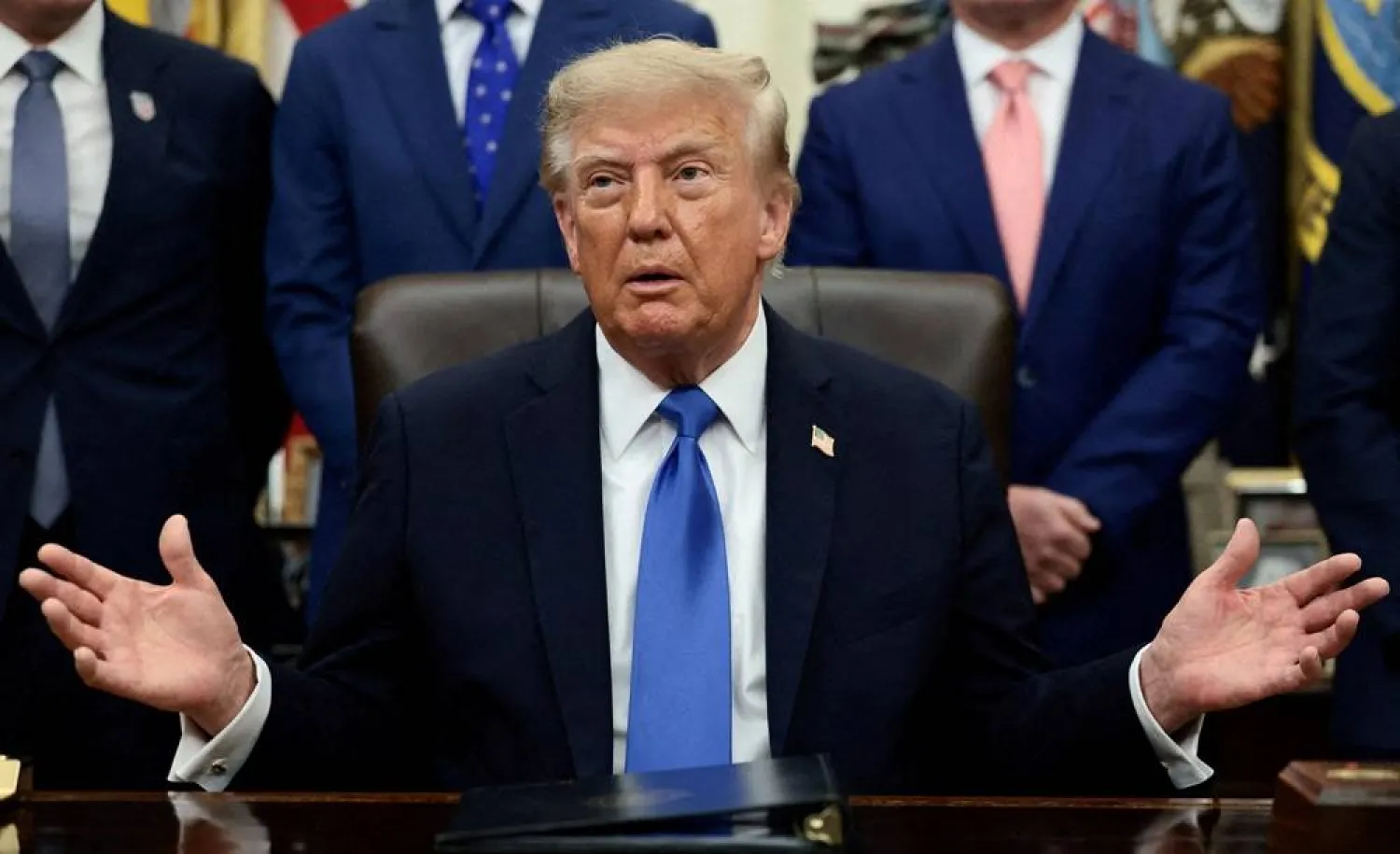
Kremlin spokesman ‍Dmitry ‍Peskov was responding ‍to a question about comments made by US President Donald Trump, who has said that he ⁠instead wants a more ambitious nuclear arms control treaty which includes China - something Beijing has so far shown no interest in.


German Air Traffic Control Advises Avoiding Iranian Airspace until Feb 10

Reuters file photo of an IranAir plane
TT

German Air Traffic Control Advises Avoiding Iranian Airspace until Feb 10

Reuters file photo of an IranAir plane

Germany's air traffic control authority said Thursday it was recommending planes avoid Iranian airspace after the United States has in recent days warned of a possible military intervention in Iran.

A spokesman for Germany's Flight Safety Office told AFP in a statement it had issued a recommendation "that Iranian airspace not be overflown... until February 10," adding that the advice had been issued "on the instruction of the transport ministry".


Türkiye Calls for Dialogue to Resolve Iran Unrest

Turkish Foreign Minister Hakan Fidan speaks during an interview with Reuters at the 23rd edition of the annual Doha Forum, in Doha, Qatar, December 6, 2025. REUTERS/Ibraheem Abu Mustafa
TT

Türkiye Calls for Dialogue to Resolve Iran Unrest

Turkish Foreign Minister Hakan Fidan speaks during an interview with Reuters at the 23rd edition of the annual Doha Forum, in Doha, Qatar, December 6, 2025. REUTERS/Ibraheem Abu Mustafa

Türkiye's top diplomat on Thursday called for dialogue to the crisis in Iran, rocked by mass protests which rights group say have left thousands dead and which prompted US warnings to Tehran.

"We absolutely want problems to be resolved through dialogue," Foreign Minister Hakan Fidan told journalists in Istanbul.

"Hopefully, the United States and Iran will resolve this issue among themselves -- whether through mediators, other actors, or direct dialogue. We are closely following these developments."