


Paralympic Disability Categories under Fire over Fairness

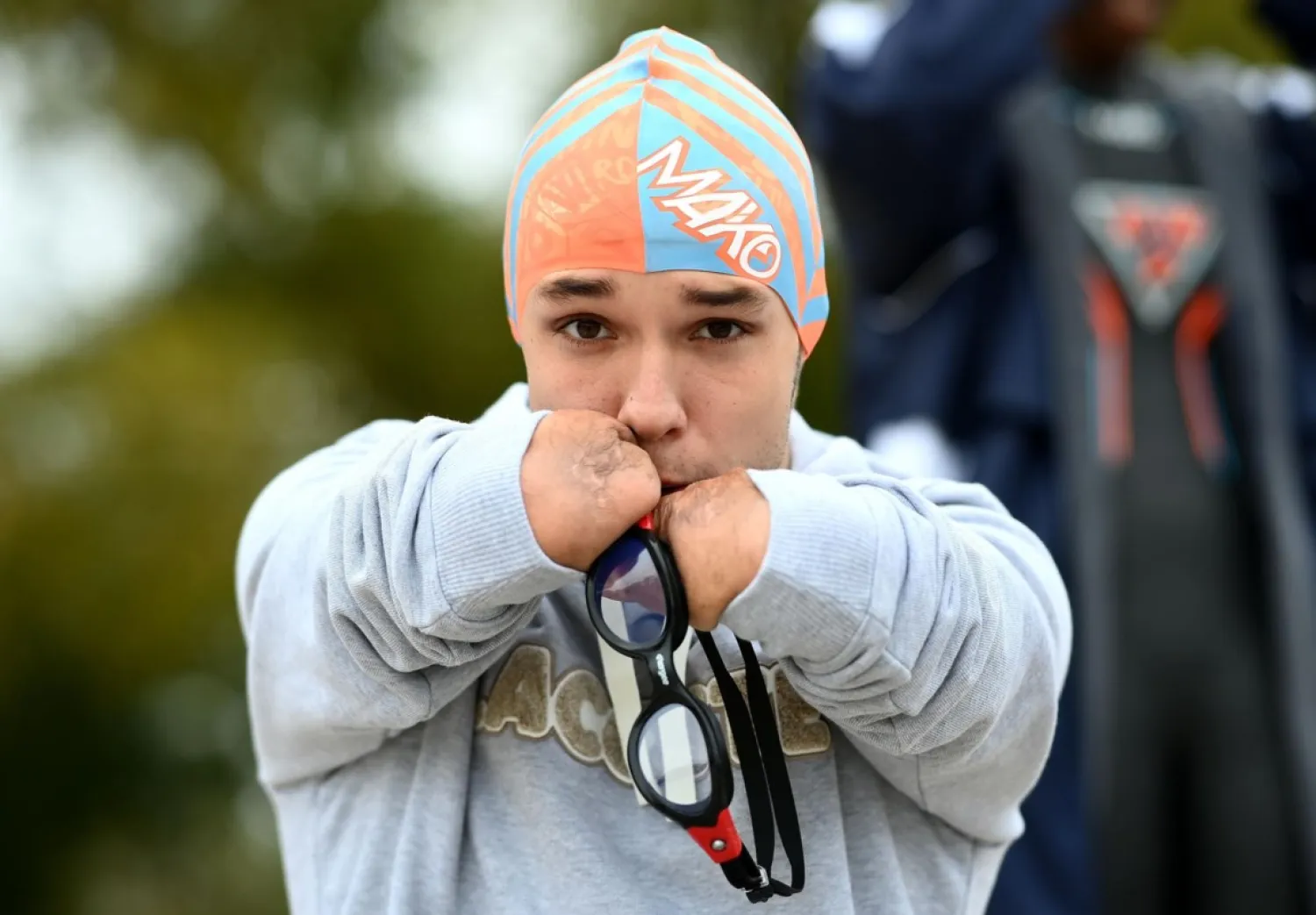
French swimmer Theo Curin is sitting out the Tokyo Paralympics over his unhappiness with the classification system. FRANCK FIFE AFP/File
TT

Paralympic Disability Categories under Fire over Fairness

French swimmer Theo Curin is sitting out the Tokyo Paralympics over his unhappiness with the classification system. FRANCK FIFE AFP/File

They're supposed to be about making parasports fair, but the category system central to disabled sports and the Paralympics, which classifies athletes according to their impairment, is increasingly under fire.

French swimmer Theo Curin, whose lower legs and hands were amputated after a bout of meningitis as a child, is sitting out the Tokyo Games over his unhappiness with the system and how athletes are assessed.

"Overnight, two people who swim with both their hands appeared in my S5 category. You don't have to be very smart to understand that having two hands in swimming helps a lot," the 21-year-old said.

"There are a lot of flagrant inequalities that annoy me and are really ridiculous," he said.

Ten types of impairment are accepted at the Paralympics, broadly covering physical, visual, and intellectual disabilities, reported AFP.

But within each impairment category there are a vast range of abilities, so athletes are further divided by class in a system designed to ensure people compete against others with approximately the same capabilities.

In swimming, for example, each class has a prefix -- S for freestyle, butterfly and backstroke, SB for breaststroke, and SM for individual medley -- followed by a number.

Physical impairments cover numbers 1-10, with the number lower the more severe the impairment. Vision impairments go from 11-13, while 14 indicates intellectual impairment.

The system is complicated and time-consuming, and some athletes feel it is failing.

Curin was supposed to be in the pool at Tokyo's Aquatic Centre this year, as one of France's top para-athletes, with nearly 150,000 Instagram followers.

He made his Paralympic debut in Rio, aged 16, and just missed out on a spot on the podium.

But instead of chasing a medal in Japan, he's making a film and preparing to swim across South America's Lake Titicaca.

"I decided to put aside Paralympic swimming so long as these problems with classification continue," he told AFP.

"They've left me a bit disgusted with the Paralympic movement," the three-time World Championship medalist said.

- 'Incentive to cheat' -

Curin is not the only one who feels the system is flawed, with particularly fierce debate surrounding classification in the pool.

US swimming star Jessica Long, who won her 14th Paralympic gold on Saturday, has said "the incentive to cheat is huge" given the increasing fame and financial rewards enjoyed by successful para-athletes.

"I can't watch this sport that I love continue to get destroyed like this," she told Sports Illustrated last year.

The International Paralympic Committee defends the system, asserting that "sporting excellence determines which athlete or team is ultimately victorious".

"Disappointingly, what we have witnessed in recent years is a small number of athletes... struggling to come to terms with increased competition," it said.

"Rather than embrace the improved competitive nature of their Para sport, they have instead questioned the classification of their competitors, despite the fact that international classifiers have found their rivals to be in the correct class."

But critics of the system point to what they say is the arbitrary and unscientific nature of the assessments involved.

The exams are "done by eye and based on the feeling of the observers", French swimmer Claire Supiot told FranceInfo.

She was reclassified earlier this year from S8 to S9, making "the road to the podium significantly harder".

There are also allegations of athletes trying to game the system, trying to be placed in a more severely impaired class to gain an advantage.

In 2017, a former classifier told the Guardian newspaper on condition of anonymity about athletes taking hot or cold showers, rolling in the snow or bandaging their limbs to appear to have more limited ability during exams.

Curin went through two rounds of exams, the first of which -- a medical examination -- produced a provisional classification at the lower end of S4.

But after a second round in which he was observed in the water, he was given a final class of S5.

That, he said, penalises him unfairly, "because I know how to properly work with my disability".


Tennis Australia Defends Prize Money amid Player Complaints

USA's Coco Gauff waits to receive serve from Uzbekistan's Kamilla Rakhimova during their women's singles match on day two of the Australian Open tennis tournament in Melbourne on January 19, 2026. (AFP)
TT

Tennis Australia Defends Prize Money amid Player Complaints

USA's Coco Gauff waits to receive serve from Uzbekistan's Kamilla Rakhimova during their women's singles match on day two of the Australian Open tennis tournament in Melbourne on January 19, 2026. (AFP)

Governing body Tennis Australia (TA) has defended the amount of prize money on offer at the Australian Open as twice Grand Slam champion Coco Gauff warned that ​players would raise the pressure if their demands were not met.

The Australian Open hiked prize money to A$111.5 million ($74.56 million) for the current tournament, bringing it ahead of last year's French Open ($65.42 million) and Wimbledon ($71.60 million) but short of the US Open's purse ($90 million).

The world's top players wrote to the Grand Slams calling for significant improvements in prize money in ‌April last year, ‌and a number have expressed dissatisfaction ‌with ⁠the ​situation ‌at Melbourne Park in recent days.

Tournament director Craig Tiley, however, said no players had approached him with any complaints about the Australian Open.

"I've also spoken to the players directly, not through third agents, and they are very happy with the Australian Open," Tiley told the Australian Financial Review (AFR).

"Not one of them has shown any ⁠dissatisfaction to me about what we are doing. And I’m not really concerned ‌with what’s said because I know the ‍facts.

"As I said from the ‍beginning, I believe the players should continue to be ‍paid more and more players paid more, we have 128 in the main draw and 128 qualifying (men and women), so we are supporting over 500 players financially each Grand Slam."

The AFR reported that agents of ​the world's top 10 men's and women's players had met in Melbourne over the weekend and agreed ⁠to take further action seeking a bigger share of the Australian Open revenue.

American world number three Gauff told reporters on Monday she had not heard concrete plans for action over pay but said players would raise the pressure if their demands went unmet.

"I feel like that will have to be a collective decision that we would all have to talk about," she said after her 6-2 6-3 win in the first round over Kamilla Rakhimova.

"I do know players are going to put more pressure on ‌the Slams if certain things aren't being met to where we see it."


Warhorse Wawrinka Stays Alive at Farewell Australian Open

Stan Wawrinka of Switzerland celebrates after defeating Laslo Djere of Serbia in their first round match at the Australian Open tennis championship in Melbourne, Australia, Monday, Jan. 19, 2026. (AP)
TT

Warhorse Wawrinka Stays Alive at Farewell Australian Open

Stan Wawrinka of Switzerland celebrates after defeating Laslo Djere of Serbia in their first round match at the Australian Open tennis championship in Melbourne, Australia, Monday, Jan. 19, 2026. (AP)

Former champion Stan Wawrinka lived to fight another day with a gutsy four-set victory to kick off his final Australian Open campaign on Monday.

The three-time Grand Slam winner, 40, is playing his last season before retiring and gave his all to down Serbia's Laslo Djere 5-7, 6-3, 6-4, 7-6 (7/4) in front of a Kia Arena crowd willing him to victory.

But he made life hard for himself, working 18 break points but only converting three of them in a draining 3hr 20min battle.

"It was amazing today, so thank you so much," said Wawrinka, who made his debut at Melbourne Park in 2006.

"It is my last year. It's been too long that I'm coming back, but the passion is still intact.
"But I'm not young any more, so I need to be careful also.

"It's my last time and I'm trying to enjoy it," he added. "But in the same time as I'm trying to compete. I'm always going to fight."

The Swiss stalwart, ranked 139, bounced back from losing the opening set to overwhelm the 92nd-ranked Djere in the second.

Defying his age, he then took the third before an energy-sapping fourth went to a tiebreak where the veteran's experience came into play.

"He's a great player. Last time we met, he beat me so I expected a tough match today," he said.

"But I'm happy with the discipline I put on myself, to keep staying with him, to keep fighting, trying to be a bit more aggressive, trying to find a way."

Wawrinka won the first of his majors at Melbourne in 2014, a season during which he peaked at world number three, and reached two other semi-finals.

Along with that title, he won the French Open a year later and the US Open in 2016.

The triumphs all came at a time when Roger Federer, Rafael Nadal and Novak Djokovic were dominating men's tennis.

Wawrinka has 16 career ATP titles although the last came in Geneva in 2017.

He won Olympic gold in doubles alongside Federer at Beijing in 2008 and helped deliver a first Davis Cup triumph for Switzerland in 2014.


Mane Leaves Cup of Nations Stage at the Top

Sadio Mane of Senegal celebrates holding the trophy after winning the CAF Africa Cup of Nations after the final match between Senegal and Morocco in Rabat, Morocco, 18 January 2026. (EPA)
TT

Mane Leaves Cup of Nations Stage at the Top

Sadio Mane of Senegal celebrates holding the trophy after winning the CAF Africa Cup of Nations after the final match between Senegal and Morocco in Rabat, Morocco, 18 January 2026. (EPA)

Senegal talisman Sadio Mane emerged with more than ​just the Player of the Tournament award after Sunday’s Africa Cup of Nations final, earning widespread respect for persuading his aggrieved side to complete the match against Morocco.

It was Mane who convinced teammates to return to the pitch in Rabat after their coach Pape Bouna Thiaw ordered them off in protest at a penalty awarded against them deep in stoppage time.

The decision, after the referee had consulted ‌VAR, handed Morocco ‌a last-gasp chance to win their first ‌title ⁠in ​50 years ‌but was squandered by Brahim Diaz after a 14-minute delay.

Senegal went on to win 1-0 in extra time for a second Cup of Nations title in the last three editions, after which Mane said it was his last African championship.

"My last Afcon? Yes, I think I've said it, I'll stop here,” the 33-year-old told reporters. “I think the next generation is ⁠ready, they'll do the job, I'll be their 12th man."

The two-time African Footballer of the ‌Year looked reluctant to leave when his ‍coach angrily stormed onto the pitch ‍and gestured for his players to leave.

Amid arguing from both camps, ‍Mane spoke to French coach Claude Le Roy, a veteran of a record nine Cup of Nations, who was pitchside working for French television.

"Sadio came to ask me what I would do in his place, and I told ​him quite simply, 'I would ask your teammates to come back',” said Le Roy, who had previously coached Senegal.

WORLD CUP MAY ⁠BE MANE'S FINAL BOW

Mane has played in six Cup of Nations with two winners’ medals in 2021 - when he was also named best player - and on Sunday. He was also a runner-up in 2019.

In total, he has scored 11 goals in 29 finals appearances.

Mane is widely expected to quit international football altogether after Senegal compete in the World Cup in Canada, Mexico and the US in June.

But before Sunday’s final, his coach insisted Mane might stay on.

"The decision is not his to make," Thiaw said in a press conference. "The people want to see him continue, ‌and I think he made a rash decision. The country doesn't agree, and as the coach, I don't agree."