


Hezbollah Hammered with Criticism amid Lebanon's Crises

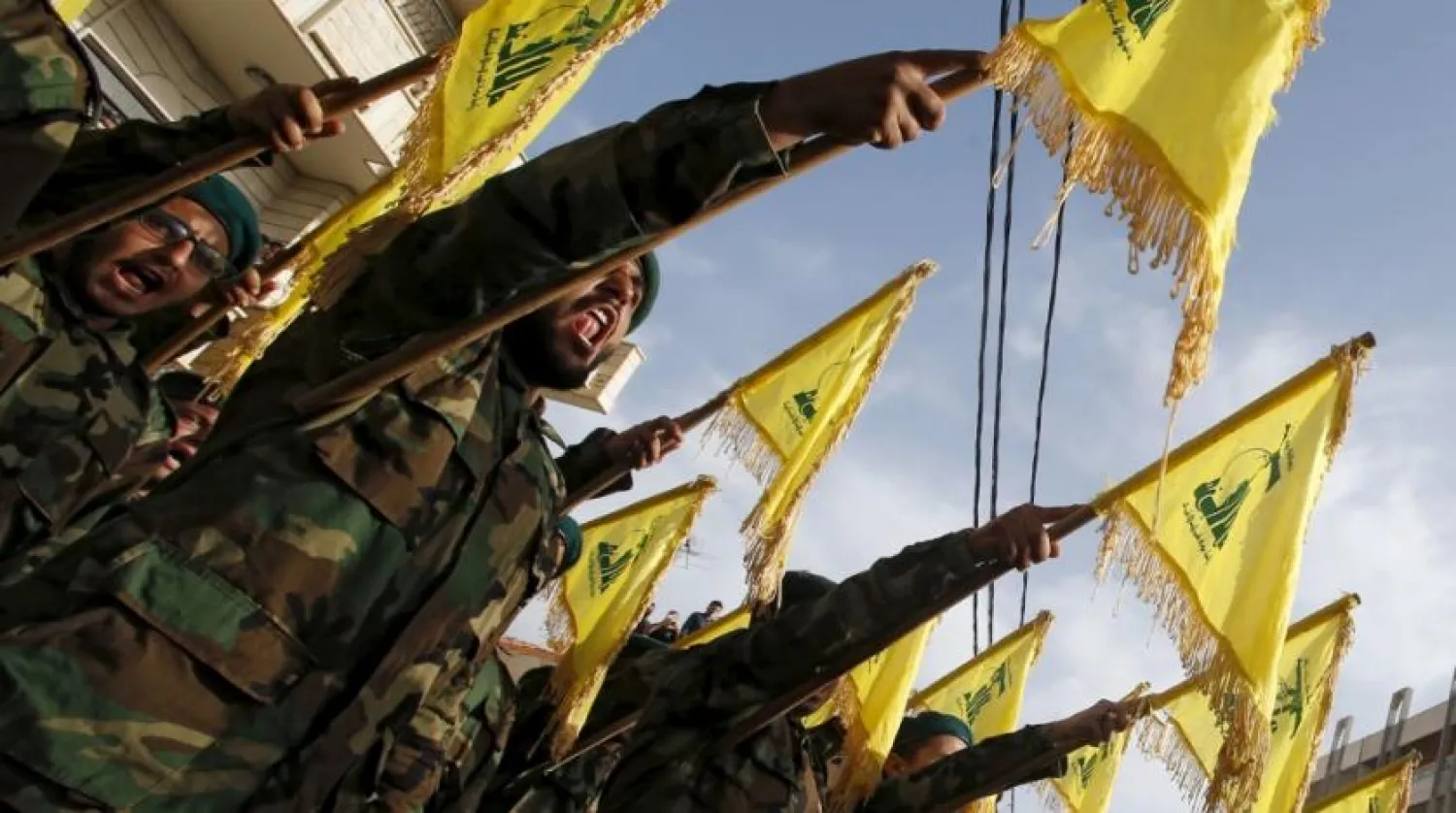
Lebanon’s Hezbollah members carry Hezbollah flags during the funeral of a fellow fighter in al-Ghaziyeh village, southern Lebanon May 26, 2015. REUTERS/Ali Hashisho
TT

Hezbollah Hammered with Criticism amid Lebanon's Crises

Lebanon’s Hezbollah members carry Hezbollah flags during the funeral of a fellow fighter in al-Ghaziyeh village, southern Lebanon May 26, 2015. REUTERS/Ali Hashisho

Driving back to base after firing rockets toward Israeli positions from a border area last month, a group of Hezbollah fighters was accosted by angry villagers who smashed their vehicles' windshields and held them up briefly.

It was a rare incident of defiance that suggested many in Lebanon would not tolerate provocations by the group that risked triggering a new war with Israel, reported The Associated Press.

As Lebanon sinks deeper into poverty, many Lebanese are more openly criticizing Iran-backed Hezbollah. They blame the group — along with the ruling class — for the devastating, multiple crises plaguing the country, including a dramatic currency crash and severe shortages in medicine and fuel.

“Hezbollah is facing its most consequential challenge in maintaining control over the Lebanese system and what is called the ‘protective environment of the resistance’ against Israel,” said Joe Macaron, a Washington-based Middle East analyst.

The incident along the border and other confrontations — including a deadly shooting at the funeral of a Hezbollah militant and rare indirect criticism by the country’s top Christian religious leader — have left the group on the defensive.

The anger has spread in recent months, even in Hezbollah strongholds where many have protested electricity cuts and fuel shortages as well as the currency crash that has plunged more than half the country's 6 million people into penury.

In its strongholds, predominantly inhabited by Shiite Muslims, it is not uncommon now for people to speak out against the group. They note that Hezbollah is paying salaries in US dollars at a time when most Lebanese get paid in Lebanese currency, which has lost more than 90% of its value in nearly two years.

Protests and scuffles have broken out at gas stations around Lebanon and in some Hezbollah strongholds. In rare shows of defiance, groups of protesters have also closed key roads in those areas south of Beirut and in southern Lebanon.

In recent speeches, Hezbollah leader Hassan Nasrallah has appeared angry, blaming the shortages on what he describes as an undeclared Western siege. The chaos in Lebanon, he said, is being instigated from a “black room” inside the US Embassy.

Critics say that rather than push for reform, Hezbollah has stood by its political allies who resist change. They say the group is increasingly pulling Lebanon into Iran’s orbit by doing its bidding, and that US sanctions against Iran and Hezbollah have made things harder.

Where Hezbollah was once considered an untouchable force fighting for a noble cause — the fight against the Israeli enemy — it is now seen by many simply as part of the corrupt political clique responsible for the country’s epic meltdown. Still, when it comes to fighting Israel, the group enjoys unwavering backing within its base of support.

Often criticized for operating as a state within a state, Hezbollah has tried to ease the effects of the crisis on its supporters in similar fashion.

While the government has been working for months to issue ration cards to poor families, Hezbollah has been well ahead. It has issued two such cards to poor families living in Hezbollah bastions, one called Sajjad after the name of a Shiite imam, and a second called Nour, or light, for its fighters and employees of its institutions who number about 80,000.

The tens of thousands carrying Sajjad cards not only can buy highly subsidized products from dozens of shops spread around Lebanon — mostly staples made in Lebanon, Iran and Syria — but can also get medical treatment and advice at 48 Hezbollah-run clinics and medical centers around Lebanon.

Nasrallah is also organizing a sea corridor carrying oil from Iran to Lebanon to help alleviate the fuel shortages, with the first tanker believed to be on its way. The move has been praised by Hezbollah’s supporters and heavily criticized by its opponents, who say it risks bringing more sanctions on Lebanon.

In the border incident, villagers from the minority Druze sect intercepted Hezbollah fighters on their way back after firing rockets toward a disputed area held by Israel. The villagers briefly detained them and the mobile rocket launcher they used after accusing them of putting them at risk if Israel strikes back.

The fighters and the launcher were then handed over to Lebanese troops, who released them on the same day.

Later, Hezbollah angered many Christians after supporters launched a social media campaign against the head of Lebanon’s Maronite Catholic church, the country’s largest, accusing him of treason after he criticized the group for firing the rockets on Israeli positions.

The group has been hammered by accusations from its local opponents. They include silencing its opponents, facilitating smuggling of fuel and other subsidized items to neighboring Syria.

The most serious charge has been a claim by opponents at home that the group brought in the hundreds of tons of ammonium nitrate that exploded at Beirut’s port last year, killing at least 214 people, wounding thousands and destroying parts of the capital.

No direct connection to Hezbollah has emerged, but unsubstantiated theories that tie the group to the stockpile abound. One claim is that Hezbollah imported the chemicals on behalf of the Syrian government, which used them in barrel bombs against opposition-held areas during the neighboring country's 10-year conflict.

“Hezbollah’s agencies are active at the port and this is known to security agencies and all Lebanese. Why is Hassan Nasrallah above questioning?” asked Samy Gemayel, head of the right-wing Christian Kataeb Party recently.

Hezbollah has repeatedly denied any link to the ammonium nitrate. But Nasrallah further angered families of the victims and other Lebanese recently by criticizing the judge leading the investigation into the blast, suggesting he should be replaced.

Nasrallah described Judge Tarek Bitar as “politicized” after he filed charges against some legislators and former Cabinet ministers allied with Hezbollah.

A serious test for Hezbollah came in early August when a funeral of a militant came under fire by suspected gunmen on the southern entrance of Beirut. Three Hezbollah supporters were killed and 16 were wounded in the shooting in the town of Khaldeh.

Hezbollah did not retaliate and instead called on Lebanese authorities to investigate the case.

“An increasing number of Lebanese are realizing that the concept of a Lebanese state cannot coexist with an armed militia serving an outside power,” wrote Michael Young, editor of Diwan, the blog of the Carnegie Middle East Center.



UN: 53 Migrants Dead or Missing in Shipwreck Off Libya

(FILES) Migrants sit on board a RHIB (Rigid inflatable boat) after being evacuated by crew members of the “Ocean Viking” rescue ship from the oil tanker the 'Maridive 703' in the search-and-rescue zone of the international waters between Malta and Tunisia, on December 31, 2025. (Photo by Sameer Al-DOUMY / AFP)
TT

UN: 53 Migrants Dead or Missing in Shipwreck Off Libya

(FILES) Migrants sit on board a RHIB (Rigid inflatable boat) after being evacuated by crew members of the “Ocean Viking” rescue ship from the oil tanker the 'Maridive 703' in the search-and-rescue zone of the international waters between Malta and Tunisia, on December 31, 2025. (Photo by Sameer Al-DOUMY / AFP)

The UN migration agency on Monday said 53 people were dead or missing after a boat capsized in the Mediterranean Sea off the Libyan coast. Only two survivors were rescued.

The International Organization for Migration said the boat overturned north of Zuwara on Friday.

"Only two Nigerian women were rescued during a search-and-rescue operation by Libyan authorities," the IOM said in a statement, adding that one of the survivors said she lost her husband and the other said "she lost her two babies in the tragedy.”

According to AFP, the IOM said its teams provided the two survivors with emergency medical care upon disembarkation.

"According to survivor accounts, the boat -- carrying migrants and refugees of African nationalities departed from Al-Zawiya, Libya, at around 11:00 pm on February 5. Approximately six hours later, it capsized after taking on water," the agency said.

"IOM mourns the loss of life in yet another deadly incident along the Central Mediterranean route."

The Geneva-based agency said trafficking and smuggling networks were exploiting migrants along the route from north Africa to southern Europe, profiting from dangerous crossings in unseaworthy boats while exposing people to "severe abuse.”

It called for stronger international cooperation to tackle the networks, alongside safe and regular migration pathways to reduce risks and save lives.


Eight Muslim Countries Condemn Israel’s ‘Illegal’ West Bank Control Measures

 Israeli soldiers stand guard during a weekly settlers' tour in Hebron, in the Israeli-occupied West Bank, February 7, 2026. (Reuters)
Israeli soldiers stand guard during a weekly settlers' tour in Hebron, in the Israeli-occupied West Bank, February 7, 2026. (Reuters)
TT

Eight Muslim Countries Condemn Israel’s ‘Illegal’ West Bank Control Measures

 Israeli soldiers stand guard during a weekly settlers' tour in Hebron, in the Israeli-occupied West Bank, February 7, 2026. (Reuters)
Israeli soldiers stand guard during a weekly settlers' tour in Hebron, in the Israeli-occupied West Bank, February 7, 2026. (Reuters)

Saudi Arabia and seven other Muslim countries on Monday condemned new Israeli measures to tighten control of the West Bank and pave the way for more settlements on the occupied Palestinian territory.

Saudi Arabia, Jordan, the UAE, Qatar, Indonesia, Pakistan, Egypt and Türkiye "condemned in the strongest terms the illegal Israeli decisions and measures aimed at imposing unlawful Israeli sovereignty", a Saudi Foreign Ministry statement said.

Israel's security cabinet approved a series of steps on Sunday that would make it easier for settlers in the occupied West Bank to buy land while granting Israeli authorities more enforcement powers over Palestinians, Israeli media reported.

The West Bank is among the territories that the Palestinians seek for a future independent state. Much of it is under Israeli military control, with limited Palestinian self-rule in some areas run by the Palestinian Authority (PA).

Citing statements by Finance Minister Bezalel Smotrich and Defense Minister Israel ‌Katz, Israeli ‌news sites Ynet and Haaretz said ‌the ⁠measures included scrapping ‌decades-old regulations that prevent Jewish private citizens buying land in the West Bank.

They were also reported to include allowing Israeli authorities to administer some religious sites, and expand supervision and enforcement in areas under PA administration in matters of environmental hazards, water offences and damage to archaeological sites.

Palestinian President Mahmoud Abbas said ⁠the new measures were dangerous, illegal and tantamount to de-facto annexation.

The Israeli ministers ‌did not immediately respond to requests for ‍comment.

The new measures come three ‍days before Prime Minister Benjamin Netanyahu is scheduled to ‍meet in Washington with US President Donald Trump.

In his statement, Abbas urged Trump and the UN Security Council to intervene.

Jordan’s foreign ministry condemned the decision, which it said was “aimed at imposing illegal Israeli sovereignty” and entrenching settlements. The Hamas group called on Palestinians in the West Bank to “intensify the confrontation with the occupation and its settlers.”

Trump has ruled out Israeli annexation of the West Bank, but his administration has not sought to curb Israel's accelerated settlement building, which the Palestinians say denies them a potential state ⁠by eating away at its territory.

Netanyahu, who is facing an election later this year, deems the establishment of any Palestinian state a security threat.

His ruling coalition includes many pro-settler members who want Israel to annex the West Bank, land captured in the 1967 Middle East war to which Israel cites biblical and historical ties.

The United Nations' highest court said in a non-binding advisory opinion in 2024 that Israel's occupation of Palestinian territories and settlements there is illegal and should ‌be ended as soon as possible. Israel disputes this view.

The West Bank is divided between an Israeli-controlled section where settlements are located and sections equaling 40% of the territory where the Palestinian Authority has autonomy.

Palestinians are not permitted to sell land privately to Israelis. Settlers can buy homes on land controlled by Israel’s government.

More than 700,000 Israelis live in the occupied West Bank and east Jerusalem, territories captured by Israel in 1967 from Jordan and sought by the Palestinians for a future state. The international community overwhelmingly considers Israeli settlement construction in these areas to be illegal and an obstacle to peace.

Smotrich, previously a firebrand settler leader and now finance minister, has been granted cabinet-level authority over settlement policies and vowed to double the settler population in the West Bank.

In December, Israel’s Cabinet approved a proposal for 19 new Jewish settlements in the West Bank as the government pushes ahead with a construction binge that further threatens the possibility of a Palestinian state. And Israel has cleared the final hurdle before starting construction on a contentious settlement project near Jerusalem that would effectively cut the West Bank in two, according to a government tender reported in January.


Shibani Meets Barrack in Riyadh

Syrian Foreign Minister Asaad Hassan al-Shibani during his meeting with US Special Envoy to Syria Thomas Barrack in Riyadh (SANA)
TT

Shibani Meets Barrack in Riyadh

Syrian Foreign Minister Asaad Hassan al-Shibani during his meeting with US Special Envoy to Syria Thomas Barrack in Riyadh (SANA)

Syrian Foreign Minister, Asaad al-Shibani, met on Monday in Riyadh with US Special Envoy for Syria, Tom Barrack, the Syrian Foreign Ministry reported via its Telegram channel.

According to the Syrian Arab News Agency (SANA), the meeting took place on the sidelines of the meeting of political leaders of the International Coalition to Defeat ISIS.

Al-Mikdad, accompanied by General Intelligence Chief Hussein al-Salama, arrived in Riyadh on Sunday to participate in the Coalition’s discussions.

On February 4, the UN Security Council warned during a session on threats to international peace and security that the terrorist group remains adaptable and capable of expansion.

The council emphasized that confronting this evolving threat requires comprehensive international cooperation grounded in respect of international law and human rights.