
Former Professor Charged with Sending Equipment to Iran

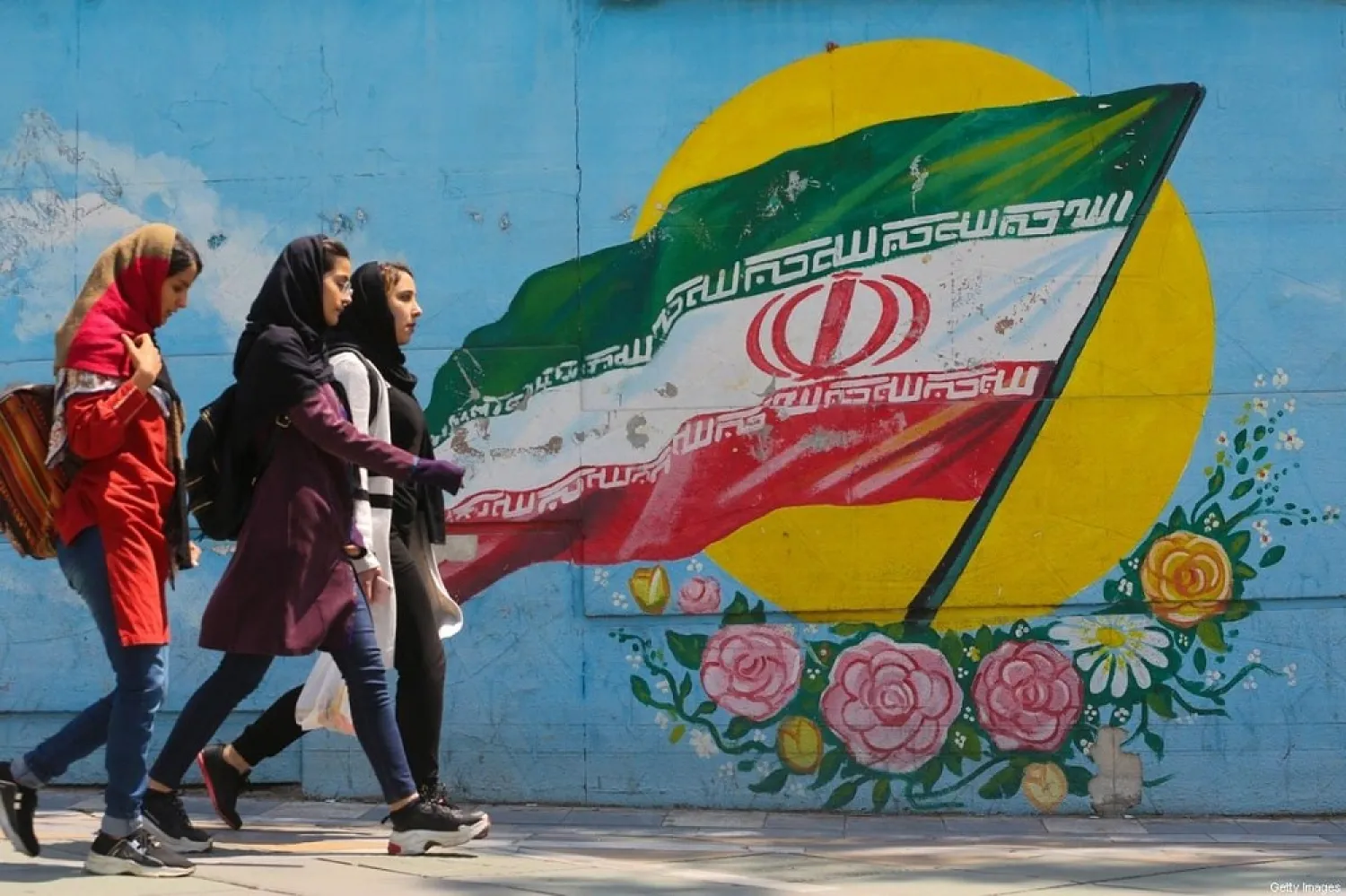
Young girls walk in front of a mural showing the Iranian national flag in Tehran, Iran on April 23, 2019. (Getty Images)
TT

Former Professor Charged with Sending Equipment to Iran

Young girls walk in front of a mural showing the Iranian national flag in Tehran, Iran on April 23, 2019. (Getty Images)

A former University of Miami professor, his wife and his sister are facing federal charges related to purchasing genetic sequencing equipment from US manufacturers and illegally shipping it to Iran, prosecutors said.

Mohammad Faghihi, 52, his wife Farzeneh Modarresi, 53, and his sister Faezeh Faghihi, 50, made their initial appearances Tuesday in Miami federal court, according to court records. All three are charged with conspiring to commit an offense against the United States and conspiring to commit money laundering, as well as several other charges.

The family operated a Florida company called Express Gene. According to a criminal complaint, Express Gene received numerous wire transfers from accounts in Malaysia, the People’s Republic of China, Singapore, Turkey and the United Arab Emirates totaling almost $3.5 million between October 2016 and November 2020. Some of that money was used to purchase genetic sequencing equipment from US manufacturers to ship it to Iran without a license, despite sanctions on Iran, investigators said.

In February, Mohammad Faghihi arrived at Miami International Airport from Iran and lied to Customs and Border Protection officers, prosecutors said. Faghihi told them that he didn’t practice his profession or conduct any type of research in Iran. But officials said Faghihi was the director of a laboratory within Shiraz University of Medical Science in Iran bearing his name: Dr. Faghihi’s Medical Genetic Center. During a search of Faghihi’s luggage, CBP officers reported finding 17 vials of unknown biological substances covered with ice packs and concealed beneath bread and other food.

Faghihi was an assistant professor in UM’s Department of Psychiatry & Behavioral Sciences from 2013 to 2020. During that time, he was the principal investigator on several National Institute of Health grants. Officials say Express Gene and Faghihi received large deposits from international wires during this period, and Faghihi failed to make the required disclosures to the university or NIH.

Online court records didn’t list attorneys for Faghihi or his family.


Pope Leo Marks First Easter as Pontiff with Call for Hope Amid Global Conflicts

 Pope Leo XIV presides over Easter Mass in St. Peter's Square at the Vatican, Sunday, April 5, 2026 (AP)
Pope Leo XIV presides over Easter Mass in St. Peter's Square at the Vatican, Sunday, April 5, 2026 (AP)
TT

Pope Leo Marks First Easter as Pontiff with Call for Hope Amid Global Conflicts

 Pope Leo XIV presides over Easter Mass in St. Peter's Square at the Vatican, Sunday, April 5, 2026 (AP)
Pope Leo XIV presides over Easter Mass in St. Peter's Square at the Vatican, Sunday, April 5, 2026 (AP)

Pope Leo celebrated his first Easter Mass as pontiff with a call Sunday to exercise hope against “the violence of war that kills and destroys,” saying “we need this song of hope today” as conflicts spread around the world.

With the US-Israeli war on Iran in its second month and Russia’s ongoing campaign in Ukraine, Leo has repeatedly called for a halt in hostilities. In his Easter homily, the pope singled out those who wage war, abuse the weak and prioritize profits.

Leo, the first US-born pope, addressed the faithful from an open-air altar in St. Peter’s Square flanked with white roses, while the steps leading down to the piazza where the faithful gathered were filled with spring perennials, symbolically resonating with the pope’s message of hope.

The pontiff implored the faithful to keep their hope in the face of death, which lurks “in injustices, in partisan selfishness, in the oppression of the poor, in the lack of attention given to the most vulnerable.

“We see it in violence, in the wounds of the world, in the cry of pain that rises from every corner because of the abuses that crush the weakest among us, because of the idolatry of profit that plunders the earth’s resources, because of the violence of war that kills and destroys,” he said.

He quoted his predecessor Pope Francis in warning against falling into indifference in the face of “persistent injustice, evil, indifference and cruelty,” because “it is also true that in the midst of darkness, something new always springs to life and sooner or later produces fruit.”

He will later deliver the traditional “Urbi et Orbi” message — Latin for “to the city and the world.”

Christians in the Holy Land were marking a subdued Easter Traditional ceremonies at the Church of the Holy Sepulchre, revered by Christians as the traditional site of Jesus’ crucifixion and resurrection, were scaled back under an agreement with Israeli police. Authorities have put limits on the sizes of public gatherings due to ongoing missile attacks.

The restrictions also dampened the recent Muslim holy month of Ramadan and Eid al-Fitr holiday, as well as the current weeklong Jewish festival of Passover. On Sunday, the Jewish priestly blessing at the Western Wall — normally attended by tens of thousands — was limited to just 50 people.

The restrictions have strained relations between Israeli authorities and Christian leaders. Police last week prevented two of the church’s top religious leaders, including Latin Patriarch Pierbattista Pizzaballa, from celebrating Palm Sunday at the Church of the Holy Sepulchre.

On Tuesday, the pope had expressed hope that the war could be finished before Easter.


France Condemns China’s Execution of a French Citizen Held on Death Row for 15 Years

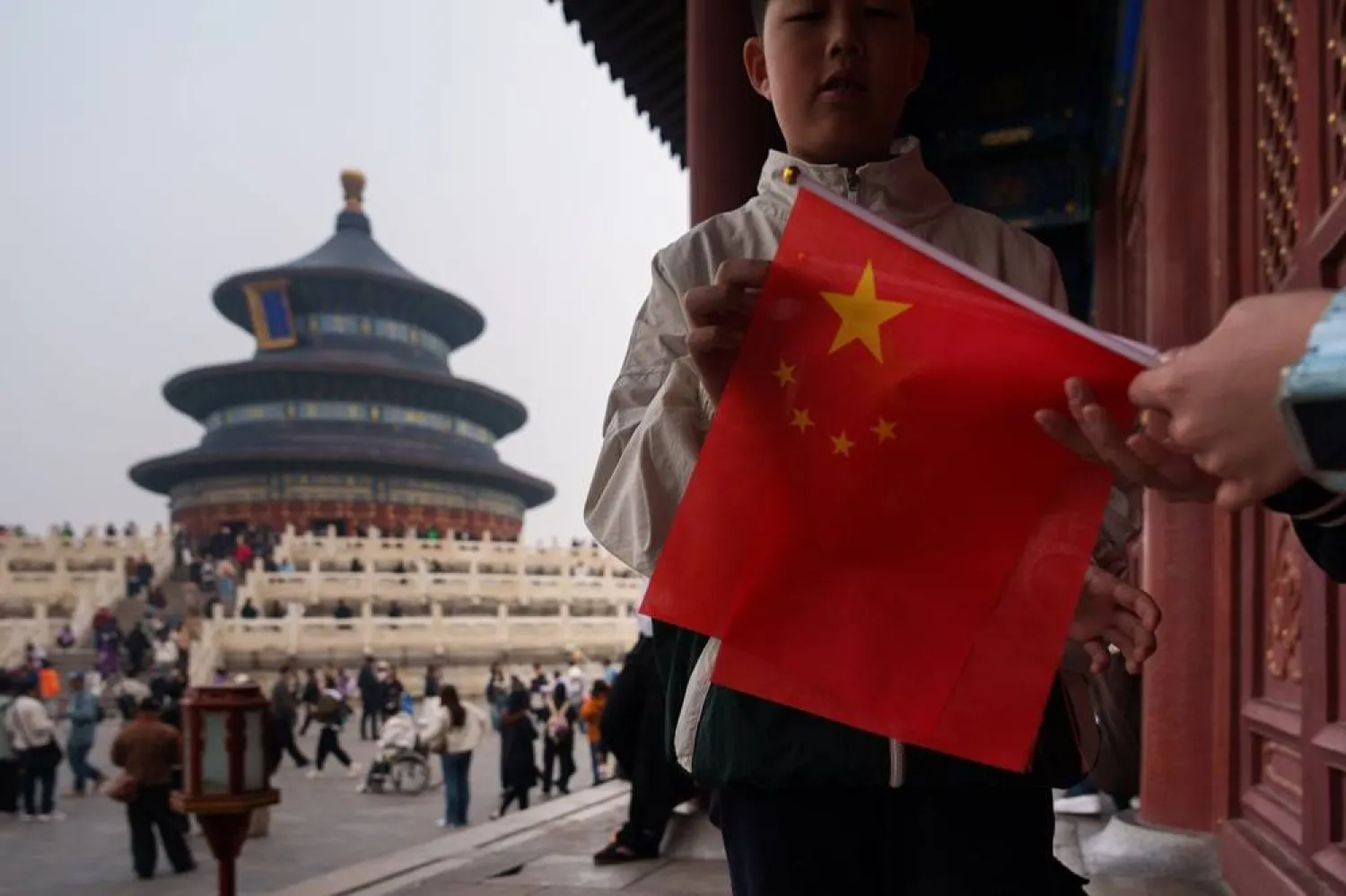
 A child holds a Chinese national flag near the Hall of Prayer for Good Harvests in Beijing, China, Friday, April 3, 2026. (AP)
A child holds a Chinese national flag near the Hall of Prayer for Good Harvests in Beijing, China, Friday, April 3, 2026. (AP)
TT

France Condemns China’s Execution of a French Citizen Held on Death Row for 15 Years

 A child holds a Chinese national flag near the Hall of Prayer for Good Harvests in Beijing, China, Friday, April 3, 2026. (AP)
A child holds a Chinese national flag near the Hall of Prayer for Good Harvests in Beijing, China, Friday, April 3, 2026. (AP)

France said China has executed a French citizen convicted of drug trafficking after keeping him on death row for more than 15 years. 

Chan Thao Phoumy, 62, was executed in the southern Chinese city of Guangzhou, despite French authorities’ clemency appeals, the French Foreign Ministry said in a statement late Saturday. It didn’t say when the sentence was carried out. A Chinese court sentenced him to death in 2010. 

The ministry’s statement expressed “consternation” and added: “We particularly regret that Mr. Chan’s defense did not have access to the final court hearing, which constitutes a violation of his rights.” 

“We extend our condolences to his family, whose grief we share,” it said. 

In a short statement Sunday that didn't mention Chan by name, the Chinese Embassy in Paris said that China “treats defendants of all nationalities equally, handles all cases impartially and strictly in accordance with the law.” 

France abolished the death penalty by act of parliament in 1981, and has become a vigorous campaigner against its use and for its abolition everywhere. 

China's use of executions — carried out by firing squads or lethal injections — is shrouded in secrecy but has long been extensive. Amnesty International says China is the world's lead executioner, believed to sentence and put to death thousands of people annually. 


Iran Internet Blackout Is Longest Nationwide Shutdown on Record, Says NetBlocks

Iranians pose for pictures as they celebrate Iranian Nature's Day on the thirteenth day of Nowruz (Persian New Year), in a park in Tehran, Iran, 02 April 2026. (EPA)
TT

Iran Internet Blackout Is Longest Nationwide Shutdown on Record, Says NetBlocks

Iranians pose for pictures as they celebrate Iranian Nature's Day on the thirteenth day of Nowruz (Persian New Year), in a park in Tehran, Iran, 02 April 2026. (EPA)

Iran's internet blackout, first imposed well over a month ago, is now the longest nationwide shutdown on record, according to the monitor NetBlocks.

"Iran's internet blackout is now the longest nation-scale internet shutdown on record in any country, exceeding all other comparable incidents in severity having entered its 37th consecutive day after 864 hours," NetBlocks said in a tweet.

In another tweet, the monitor noted some countries had experienced intermittent or regional-level shutdowns over longer periods, while North Korea had never been connected to the global internet at all.