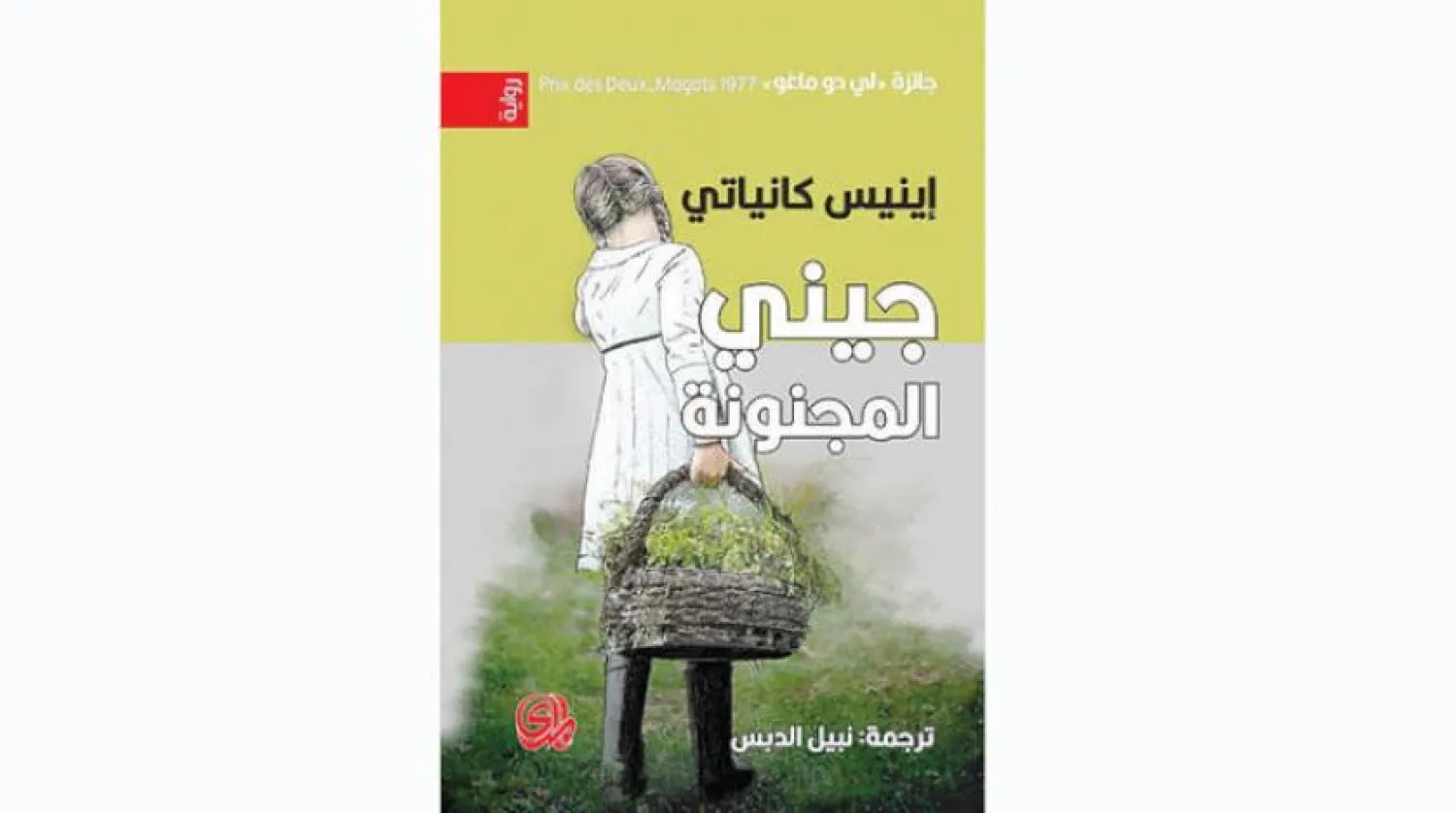
Dar Al Mada to Publish Arabic Translation of Inès Cagnati's ‘Génie la Folle’

Book: "Génie la Folle" translation
TT

Dar Al Mada to Publish Arabic Translation of Inès Cagnati's ‘Génie la Folle’

Book: "Génie la Folle" translation

Dar Al Mada publishing house, Iraq, will soon release an Arabic translation of "Génie la Folle," a novel by Inès Cagnati, winner of the Prix des Deux Magots. The novel was translated by Nabil al-Debes.

An extract from the novel:

"She went to farms to help. In the fall, she worked in cutting and arranging wood. I used to accompany her on Thursday to catch and pile small branches. We were lonely. At noon, she used to light a small fire. I often recall fall memories in forests: the fire, the cold, her picture when I accompanied her to freezing forests. In the spring, she worked in vineyards, and fields of peas and beans. I still remember wild lavenders…they were red and yellow.

She also gathered lettuce and wild leeks so we eat them in the evening. She picked up peas and beans, and put the share they gave her in her purse. We ate some of it, and she packed and preserved the rest. During harvest seasons, the fields diffused a special scent.

When she came back home, her hair was covered with dust and hay. She was also covered with corn, beans, and tomatoes. She brought fruits; we ate some, and made jams and more canned goods. During the grape harvest season, she came back home smelling like sugar. They used to give her some virgin wine that made me a little dizzy.

She went to prepare feasts for baptism, communions, and weddings. Sometimes she took me with her. I stayed in humid kitchens and watched her all the time."


Crowds Flock to Istanbul's Museum of Innocence before TV Adaptation

Pamuk brought his bestselling novel to life in a red-painted house in Istanbul. Yasin AKGUL / AFP
TT

Crowds Flock to Istanbul's Museum of Innocence before TV Adaptation

Pamuk brought his bestselling novel to life in a red-painted house in Istanbul. Yasin AKGUL / AFP

On a cobbled street in Cukurcuma, a district on Istanbul's European side known for its antiques shops, the story penned by Nobel laureate Orhan Pamuk in his bestselling novel "The Museum of Innocence" has been brought to life.

Inside a red-painted house, visitors are confronted by a wall of 4,213 cigarette butts, many of them lipstick-stained, others angrily stubbed out, all obsessively kept by the book's protagonist, Kemal Basmaci.

Just days before Friday's launch of a serialized Netflix adaptation of the novel, hundreds of curious visitors have come to the museum, squeezing past one another on the narrow wooden stairs up to Basmaci's attic room.

At the entrance, Umit, who runs the museum and declined to give his surname, said there had been about 500 visitors per day since Netflix began running trailers for the nine-part series, compared to 200 on a normal day.

"And that will likely double after it comes out," he predicted.

Set in the 1970s, the series features a young man from a wealthy Istanbul family who is devastated by the end of his relationship with Fusun, a distant cousin from a working-class background.

The break-up sends him on an obsessive mission to collect anything that is hers, AFP said.

Hence the wall of cigarette butts mounted on pins, each painstakingly labelled by circumstance, collected over an eight-year period starting from 1976.

There are hundreds more items on display, from bits of jewelry to items of clothing, photos, cinema tickets and bottles of Meltem soda, which was popular in the 1970s -- a huge collection of mundane mementoes passionately collected to fill the void left by Fusun's absence.

They are laid out in 83 display cases, the same number of chapters in the book.

Nobel literature prize-winner Pamuk, who opened the museum in 2012, four years after the novel was published, has admitted to being a similarly compulsive collector.

- 'Truth in it' -

The novel emerged when he began writing about the objects he had saved, everything from family keepsakes to trinkets picked up at the bazaars, which gradually brought his characters to life.

The museum showcases objects that make up the story, but the story also developed as he acquired new objects, the museum website says.

And the whole novel opens a unique window onto a decade of Istanbul history.

Songul Tekin, 28, a visitor who loved the book, said she is convinced some of it really happened and came to the museum to "see it in real life".

"It's told in real depth. There has to be some truth in it because otherwise you would never have so many objects and so much detail," she told AFP.

She arrived with a friend and her copy of the novel -- a gesture which lets visitors enter for free, thanks to a ticket on page 485 of the Turkish version of the book.

Also visiting was Aydin Deniz Yuce, a psychologist in his 30s who is a huge fan of Pamuk's works.

Although "The Museum of Innocence" was not his "favorite", he said he was really keen to see the Netflix series and is convinced the "handsomeness" of the main actor, Selahattin Pasali, will be perfect for creating a credible Kemal.

- Turkish series, global popularity -

With the novel translated into more than 60 languages, the museum has drawn international interest.

Visitors from China, Hungary, Italy, Japan and Russia turned up over the space of a few hours, an AFP correspondent said.

Poring over the display cabinets, Zeng Hu and Zeng Lin An, sisters from Hubei province in central China, said they were now intrigued to read the book and watch the series, although Netflix is not available in China.

Speaking to AFP at the screening late on Thursday, Pamuk said he was happy with the adaptation by Istanbul-based production company Ay Yapim after a disastrous first attempt several years ago.

"Since I was so dissatisfied and unhappy with my first try with Hollywood, I decided I wouldn't allow anyone to make a film of any of my books without seeing the complete script first," he said.

That meant working closely with a scriptwriter for 18 months before any money changed hands, which gave him "tight control" over the script.

"Once every two months, we would meet, like students doing homework. I would go over the scriptwriter's texts, criticize it, improve it, suggest other things," Pamuk said.

"It worked magically."

Hugely popular, Turkish television dramas and series, known as "dizi", are now available in 170 countries.

Global demand for them rose by 184 percent between 2020 and 2023, figures from Parrot Analytics show.

In 2024, Türkiye was the world's third-largest exporter of television series, after the United States and the UK.


Prince of Wales Explores AlUla Arts Festival, Engages with Local Artists

The prince met with a group of talented young men and women from AlUla active in various artistic and cultural fields - SPA
TT

Prince of Wales Explores AlUla Arts Festival, Engages with Local Artists

The prince met with a group of talented young men and women from AlUla active in various artistic and cultural fields - SPA

AlUla Arts Festival captured the interest of the Prince of Wales and heir apparent to the throne of the United Kingdom of Great Britain and Northern Ireland Prince William during his recent visit to AlUla, SPA reported.

He viewed a selection of standout works by Saudi and international artists, ranging from contemporary installations to immersive open-air experiences inspired by AlUla’s landscapes and rich heritage.

He was also briefed on the festival’s creative programs, which annually transform AlUla into a dynamic platform for art and innovation, attracting artists and visitors from around the world.

During the visit, the prince met with a group of talented young men and women from AlUla active in various artistic and cultural fields.

He listened to their experiences and contributions to the governorate's cultural development, supported by ongoing efforts to strengthen the creative sector and expand its local and international presence.


Saudi Cinema Expands International Footprint at Berlin Festival

Saudi Cinema Expands International Footprint at Berlin Festival
TT

Saudi Cinema Expands International Footprint at Berlin Festival

Saudi Cinema Expands International Footprint at Berlin Festival

The Film Commission took part in the 76th Berlin International Film Festival, held from February 12 to 22, to showcase its key achievements in advancing the Saudi film sector and highlighting a selection of films that demonstrate the talent of Saudi filmmakers and the Kingdom’s expanding production infrastructure.

It presented the Kingdom’s diverse filming locations and spotlighted major milestones, including Norah, the first Saudi film selected for the Un Certain Regard section at the Cannes Film Festival, SPA reported.

The commission signed several cooperation agreements with leading international film institutions, including the French National Center of Cinema. It also launched artistic initiatives in Berlin in collaboration with global partners and cinemas, demonstrating the Kingdom’s expanding cultural and creative network.

CEO of the commission Abdullah Al-Qahtani said: "Saudi cinema goes beyond filmmaking to building cultural bridges and sharing authentic stories with global audiences."

He noted that strengthening strategic partnerships and investing in local talent are central to positioning the Kingdom as a hub for creative industries, adding that continued participation in international festivals broadens exposure to the richness and diversity of Saudi culture.