


Abbas Tells UN Israeli Actions Could Lead to ‘One State’

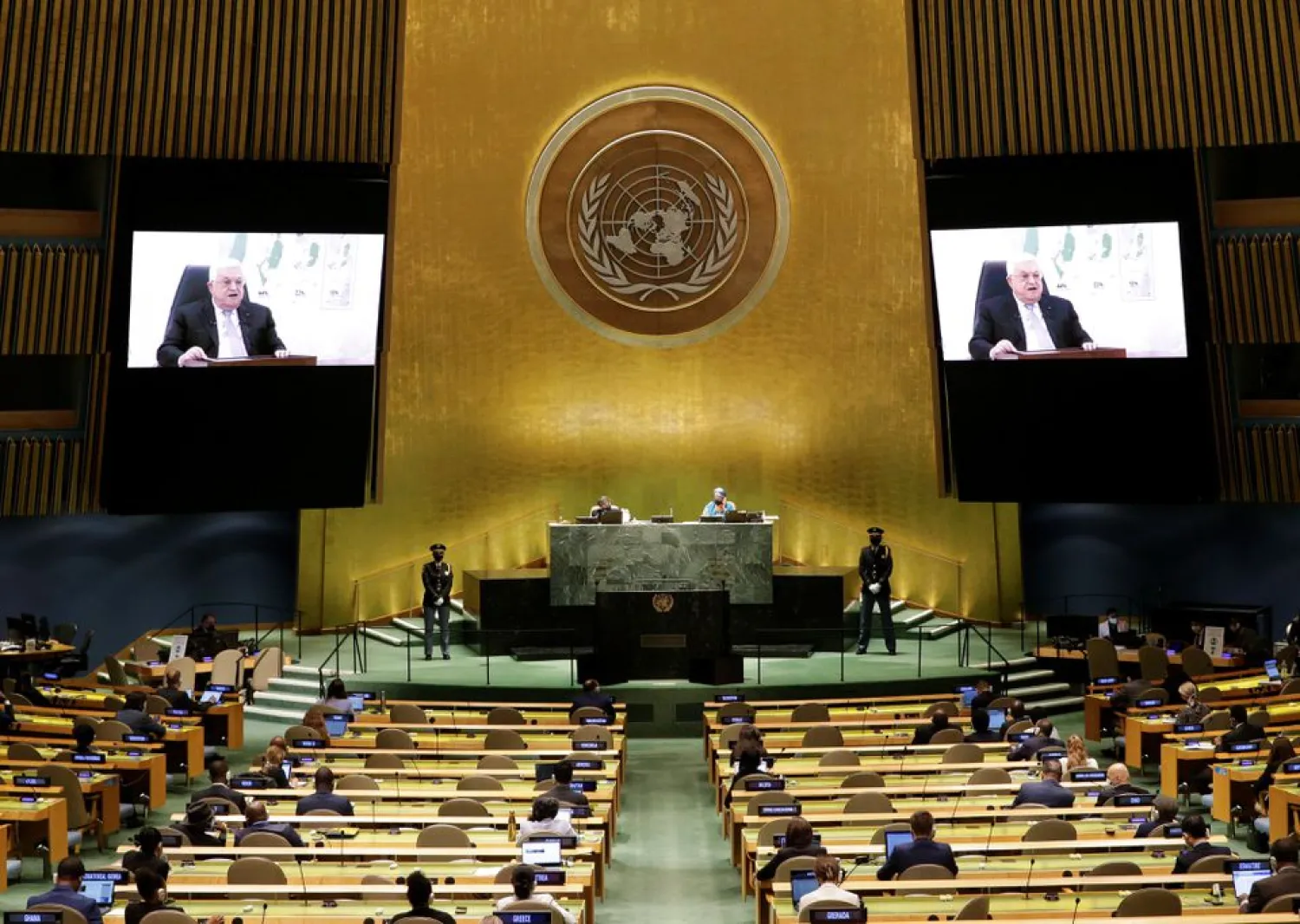
Mahmoud Abbas, President, State of Palestine delivers a speech remotely at the UN General Assembly 76th session General Debate in UN General Assembly Hall at the United Nations Headquarters on Friday, September 24, 2021 in New York City. (Reuters)
TT

Abbas Tells UN Israeli Actions Could Lead to ‘One State’

Mahmoud Abbas, President, State of Palestine delivers a speech remotely at the UN General Assembly 76th session General Debate in UN General Assembly Hall at the United Nations Headquarters on Friday, September 24, 2021 in New York City. (Reuters)

Palestinian President Mahmoud Abbas accused Israel on Friday of destroying the two-state solution with actions he said could lead Palestinians to demand equal rights within one binational state comprising Israel, the occupied West Bank and Gaza.

Addressing the UN General Assembly via video link from the West Bank, Abbas, 85, urged the international community to act to save the two-state formula that for decades has been the bedrock of diplomacy for the Israeli-Palestinian conflict.

Abbas said Israel was “destroying the prospect of a political settlement based on the two-state solution” through its settlements on West Bank land it captured in the 1967 Middle East war.

Most countries view the settlements as illegal, a position Israel disputes.

“If the Israeli occupation authorities continue to entrench the reality of one apartheid state as is happening today, our Palestinian people and the entire world will not tolerate such a situation,” Abbas said. Israel rejects accusations of apartheid.

“Circumstances on the ground will inevitably impose equal and full political rights for all on the land of historical Palestine, within one state. In all cases, Israel has to choose,” Abbas said from Ramallah, the seat of his Palestinian Authority, which has limited self-rule in the West Bank.

There was no immediate Israeli comment on Abbas’ remarks.

Critics say internal Palestinian divisions have also contributed to the deadlock in US-sponsored peace talks, which collapsed in 2014.

Under interim peace accords with Israel, Abbas’ PA was meant to exercise control in Gaza as well. But his rivals Hamas seized the coastal enclave in 2007 and years of on-and-off talks have failed to break their impasse.

Israeli Prime Minister Naftali Bennett, a far-rightist who sits atop a cross-partisan coalition, opposes Palestinian statehood. His government has vowed to avoid sensitive choices towards the Palestinians and instead focus on economic issues.

In his UN address, Abbas threatened to rescind the Palestinians’ recognition of Israel if it does not withdraw from the West Bank, Gaza and East Jerusalem within a year.

“If this is not achieved, why maintain recognition of Israel based on the 1967 borders? Why maintain this recognition?” Abbas said.

While some Palestinians and Israelis support the idea of a single binational state, most have very different ideas of what that entity would look like and how it would be governed.

Most analysts contend a single state would not be viable, for religious, political and demographic reasons. Israeli governments have viewed a one-state concept as undermining the essence of an independent Jewish state.

US President Joe Biden reiterated his support for the two-state solution during his own UN address on Tuesday, saying it would ensure “Israel’s future as a Jewish, democratic state living in peace alongside a viable and democratic Palestinian state.”



EU Condemns Israel's West Bank Control Measures

The Israeli settlement of Har Homa, seen from the West Bank city of Bethlehem, Tuesday, Dec. 17, 2024. (AP)
TT

EU Condemns Israel's West Bank Control Measures

The Israeli settlement of Har Homa, seen from the West Bank city of Bethlehem, Tuesday, Dec. 17, 2024. (AP)

The European Union on Monday condemned new Israeli measures to tighten control of the West Bank and pave the way for more settlements in the occupied Palestinian territory, AFP reported.

"The European Union condemns recent decisions by Israel's security cabinet to expand Israeli control in the West Bank. This move is another step in the wrong direction," EU spokesman Anouar El Anouni told journalists.


Atrocities in Sudan's El-Fasher Were 'Preventable Human Rights Catastrophe'

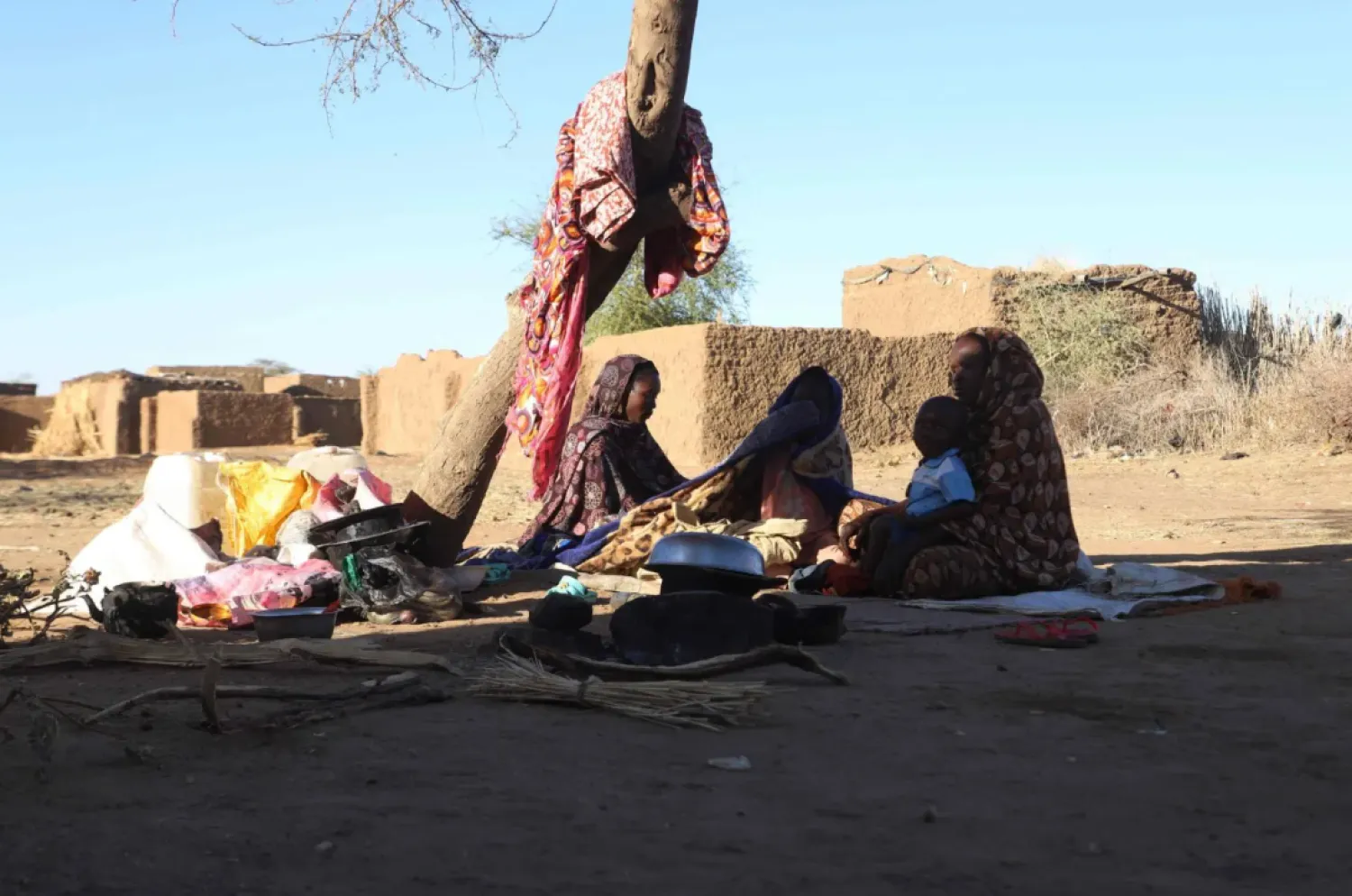
Sudanese displaced people who left El Fasher after its fall, sit in the shade in Tawila at the Rwanda camp reception point on December 17, 2025. (Photo by AFP)
TT

Atrocities in Sudan's El-Fasher Were 'Preventable Human Rights Catastrophe'

Sudanese displaced people who left El Fasher after its fall, sit in the shade in Tawila at the Rwanda camp reception point on December 17, 2025. (Photo by AFP)

The atrocities unleashed on El-Fasher in Sudan's Darfur region last October were a "preventable human rights catastrophe", the United Nations said Monday, warning they now risked being repeated in the neighbouring Kordofan region.


"My office sounded the alarm about the risk of mass atrocities in the besieged city of El-Fasher for more than a year ... but our warnings were ignored," UN rights chief Volker Turk told the Human Rights Council in Geneva.


He added that he was now "extremely concerned that these violations and abuses may be repeated in the Kordofan region".


Arab League Condemns Israel's Decisions to Alter Legal, Administrative Status of West Bank

A general view shows the opening session of the meeting of Arab foreign ministers at the Arab League Headquarters (Reuters)
TT

Arab League Condemns Israel's Decisions to Alter Legal, Administrative Status of West Bank

A general view shows the opening session of the meeting of Arab foreign ministers at the Arab League Headquarters (Reuters)

The General Secretariat of the Arab League strongly condemned decisions by Israeli occupation authorities to impose fundamental changes on the legal and administrative status of the occupied Palestinian territories, particularly in the West Bank, describing them as a dangerous escalation and a flagrant violation of international law, international legitimacy resolutions, and signed agreements, SPA reported.

In a statement, the Arab League said the measures include facilitating the confiscation of private Palestinian property and transferring planning and licensing authorities in the city of Hebron and the area surrounding the Ibrahimi Mosque to occupation authorities.

It warned of the serious repercussions of these actions on the rights of the Palestinian people and on Islamic and Christian holy sites.

The statement reaffirmed the Arab League’s firm support for the legitimate rights of the Palestinian people, foremost among them the establishment of their independent state on the June 4, 1967 borders, with East Jerusalem as its capital.