


Earless Worms Listen Through Their Skin, New Study Finds

Caenorhabditis elegans share many of the same biological characteristics as humans Pic: AP
TT

Earless Worms Listen Through Their Skin, New Study Finds

Caenorhabditis elegans share many of the same biological characteristics as humans Pic: AP

A species of roundworm that is widely used in biological research can sense and respond to sound, despite having no ear-like organs, according to a new study from the University of Michigan Life Sciences Institute (LSI).

The findings, published on September 22 in the journal Neuron, offer a new biological tool for studying the genetic mechanisms underlying the sense of hearing.

Researchers in the lab of Shawn Xu at the Life Sciences Institute have been using Caenorhabditis elegans to study sensory biology for more than 15 years. When his lab began this work, these millimeter-long worms were thought to have only three main senses: touch, smell and taste.

Xu's lab has since established that worms have the ability to sense light, despite having no eyes, as well as the ability to sense their own body posture during movement (also known as the sense of proprioception).

"There was just one more primary sense missing -- auditory sensation, or hearing. But hearing is unlike other senses, which are found widely across other animal phyla. It's really only been discovered in vertebrates and some arthropods. And the vast majority of invertebrate species are thus believed to be sound insensitive," said Xu, LSI research professor and the study's senior author.

"We proved that worms responded to airborne sounds in the range of 100 hertz to 5 kilohertz -- a range broader than some vertebrates can sense. When a tone in that range was played, worms quickly moved away from the source of the sound, demonstrating that they not only hear the tone but sense where it's coming from," he explained.

The researchers conducted several experiments to ensure the worms were responding to airborne sound waves. They found that worms have two types of auditory sensory neurons that are tightly connected to the worms' skin. When sound waves bump into the worms' skin, they vibrate it.



SpaceX Prioritizes Lunar 'Self-growing City' over Mars Project

FILE - A SpaceX logo is displayed on a building, May 26, 2020, at the Kennedy Space Center in Cape Canaveral, Fla. (AP Photo/David J. Phillip, File)
TT

SpaceX Prioritizes Lunar 'Self-growing City' over Mars Project

FILE - A SpaceX logo is displayed on a building, May 26, 2020, at the Kennedy Space Center in Cape Canaveral, Fla. (AP Photo/David J. Phillip, File)

Elon Musk said on Sunday that SpaceX has shifted its focus to building a "self-growing city" on the moon, which could be achieved in less than 10 years.

SpaceX still intends to start on Musk's long-held ambition of a city on Mars within five to seven years, he wrote on his X social media platform, "but the overriding priority is securing the future of civilization and the Moon is faster."

Musk's comments echo a Wall Street Journal report on Friday, stating that SpaceX has told investors it would prioritize going to the moon and attempt a trip to Mars ⁠at a later time, targeting March 2027 for an uncrewed lunar landing.

As recently as last year, Musk said that he aimed to send an uncrewed mission to Mars by the end of 2026.

The US faces intense competition from China in the race to return humans to the moon this decade. Humans have not visited the lunar surface since the Apollo 17 mission in 1972. Less than a week ago, Musk announced that SpaceX ⁠acquired the artificial intelligence company he also leads, xAI, in a deal that values the rocket and satellite company at $1 trillion and the artificial intelligence outfit at $250 billion.

Proponents of the move view it as a way for SpaceX to bolster its plans for space-based data centers, which Musk sees as more energy efficient than terrestrial facilities as the demand for compute power soars with AI development.

SpaceX is hoping a public offering later this year could raise as much as $50 billion, which could make it the largest public offering in history.

On Monday, Musk said in response to a user on X that NASA will constitute less than 5% of SpaceX's revenue this year. SpaceX is ⁠a core contractor in NASA's Artemis moon program with a $4 billion contract to land astronauts on the lunar surface using Starship.

"Vast majority of SpaceX revenue is the commercial Starlink system," Musk added.

Earlier on Sunday, Musk shared the company's first Super Bowl ad, promoting its Starlink Wi-Fi service.

Even as Musk reorients SpaceX, he is also pushing his publicly traded company, Tesla, in a new direction.

After virtually building the global electric vehicles market, Tesla is now planning to spend $20 billion this year as part of an effort to pivot to autonomous driving and robots.

To speed up the shift, Musk said last month Tesla is ending production of two car models at its California factory to make room for manufacturing its Optimus humanoid robots.


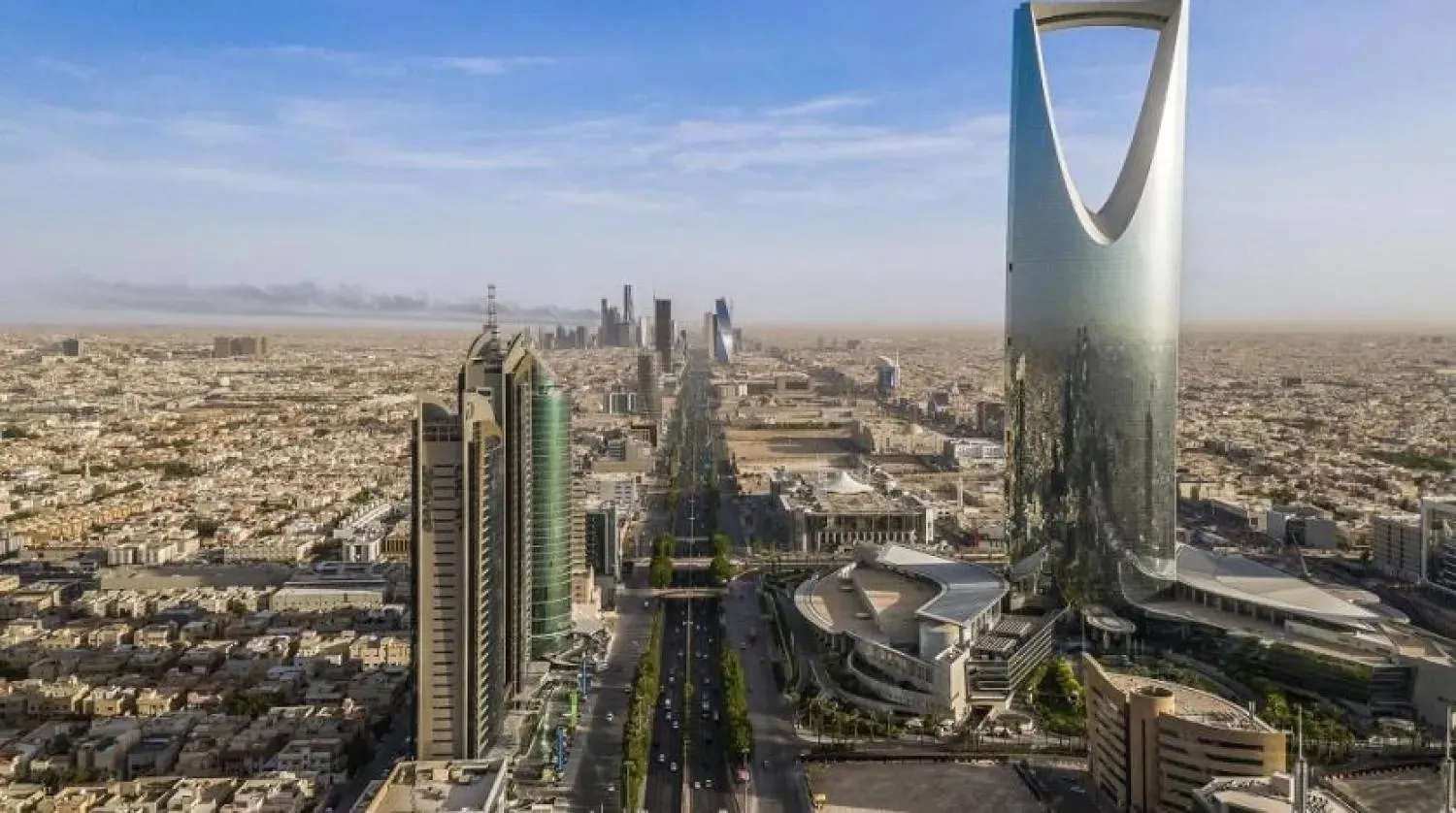
Saudi Arabia Participates in Drafting the International AI Safety Report 2026

General view of Riyadh, Saudi Arabia. (SPA)
TT

Saudi Arabia Participates in Drafting the International AI Safety Report 2026

General view of Riyadh, Saudi Arabia. (SPA)

The Kingdom of Saudi Arabia, represented by the Saudi Data and Artificial Intelligence Authority (SDAIA), participated for the second consecutive year in the preparation of the International AI Safety Report 2026, reinforcing its international efforts to advance AI safety and support responsible innovation worldwide, the Saudi Press Agency said on Monday.

The report, emerging from the 2023 AI Safety Summit at Bletchley Park, provides a scientific assessment of advances in advanced AI systems, examines associated risks, and outlines practical approaches to strengthening safety standards and global governance, serving as a key reference for policymakers, regulators, and researchers.

The report is a comprehensive global document assessing AI risks and related challenges and serves as a trusted scientific reference to support regulatory policies and the development of governance frameworks for the safe and responsible use of advanced technologies.

The report was developed by a distinguished group of international scientists and experts in AI safety and technology governance, featuring specialists from prestigious universities and research centers, as well as representatives from over 30 countries and major international organizations, including the United Nations, the Organization for Economic Co-operation and Development, and the European Union.

The report highlights several key messages, notably the importance of keeping pace with the rapidly growing capabilities of AI through advanced regulatory and scientific frameworks, the need to invest in safety and technical compliance research to ensure systems remain under effective human oversight, and the promotion of international coordination to establish common standards supporting the safe and responsible use of advanced technologies.

It also emphasizes the need to consider economic and social dimensions to ensure the fair distribution of AI benefits and reduce inequality gaps.

Saudi Arabia’s participation in this international effort aligns with the objectives of Saudi Vision 2030, which aims to establish the Kingdom as a global hub for technological innovation while upholding the highest standards of responsibility and technical security.

It reflects the Kingdom’s commitment to actively shaping the global future of AI, promoting sustainable development, safeguarding community security, and enhancing international cooperation toward a safer, more stable technological future.


US Astronaut to Take her 3-year-old's Cuddly Rabbit Into Space

FILE PHOTO: An evening launch of a SpaceX Falcon 9 rocket carrying 20 Starlink V2 Mini satellites, from Space Launch Complex at Vandenberg Space Force Base is seen over the Pacific Ocean from Encinitas, California, US, June 23, 2024. REUTERS/Mike Blake/File Photo
TT

US Astronaut to Take her 3-year-old's Cuddly Rabbit Into Space

FILE PHOTO: An evening launch of a SpaceX Falcon 9 rocket carrying 20 Starlink V2 Mini satellites, from Space Launch Complex at Vandenberg Space Force Base is seen over the Pacific Ocean from Encinitas, California, US, June 23, 2024. REUTERS/Mike Blake/File Photo

When the next mission to the International Space Station blasts off from Florida next week, a special keepsake will be hitching a ride: a small stuffed rabbit.

American astronaut and mother, Jessica Meir, one of the four-member crew, revealed Sunday that she'll take with her the cuddly toy that belongs to her three-year-old daughter.

It's customary for astronauts to go to the ISS, which orbits 250 miles (400 kilometers) above Earth, to take small personal items to keep close during their months-long stint in space.

"I do have a small stuffed rabbit that belongs to my three-year-old daughter, and she actually has two of these because one was given as a gift," Meir, 48, told an online news conference.

"So one will stay down here with her, and one will be there with us, having adventures all the time, so that we'll keep sending those photos back and forth to my family," AFP quoted her as saying.

US space agency NASA says SpaceX Crew-12 will lift off on a SpaceX Falcon 9 rocket from Cape Canaveral in Florida to the orbiting scientific laboratory early Wednesday.

The mission will be replacing Crew-11, which returned to Earth in January, a month earlier than planned, during the first medical evacuation in the space station's history.

Meir, a marine biologist and physiologist, served as flight engineer on a 2019-2020 expedition to the space station and participated in the first all-female spacewalks.

Since then, she's given birth to her daughter. She reflected Sunday on the challenges of being a parent and what is due to be an eight-month separation from her child.

"It does make it a lot difficult in preparing to leave and thinking about being away from her for that long, especially when she's so young, it's really a large chunk of her life," Meir said.

"But I hope that one day, she will really realize that this absence was a meaningful one, because it was an adventure that she got to share into and that she'll have memories about, and hopefully it will inspire her and other people around the world," Meir added.

When the astronauts finally get on board the ISS, they will be one of the last crews to live on board the football field-sized space station.

Continuously inhabited for the last quarter century, the aging ISS is scheduled to be pushed into Earth's orbit before crashing into an isolated spot in the Pacific Ocean in 2030.

The other Crew-12 astronauts are Jack Hathaway of NASA, European Space Agency astronaut Sophie Adenot, and Russian cosmonaut Andrey Fedyaev.