


French Luxury Brand Saint Laurent Goes Fur-Free

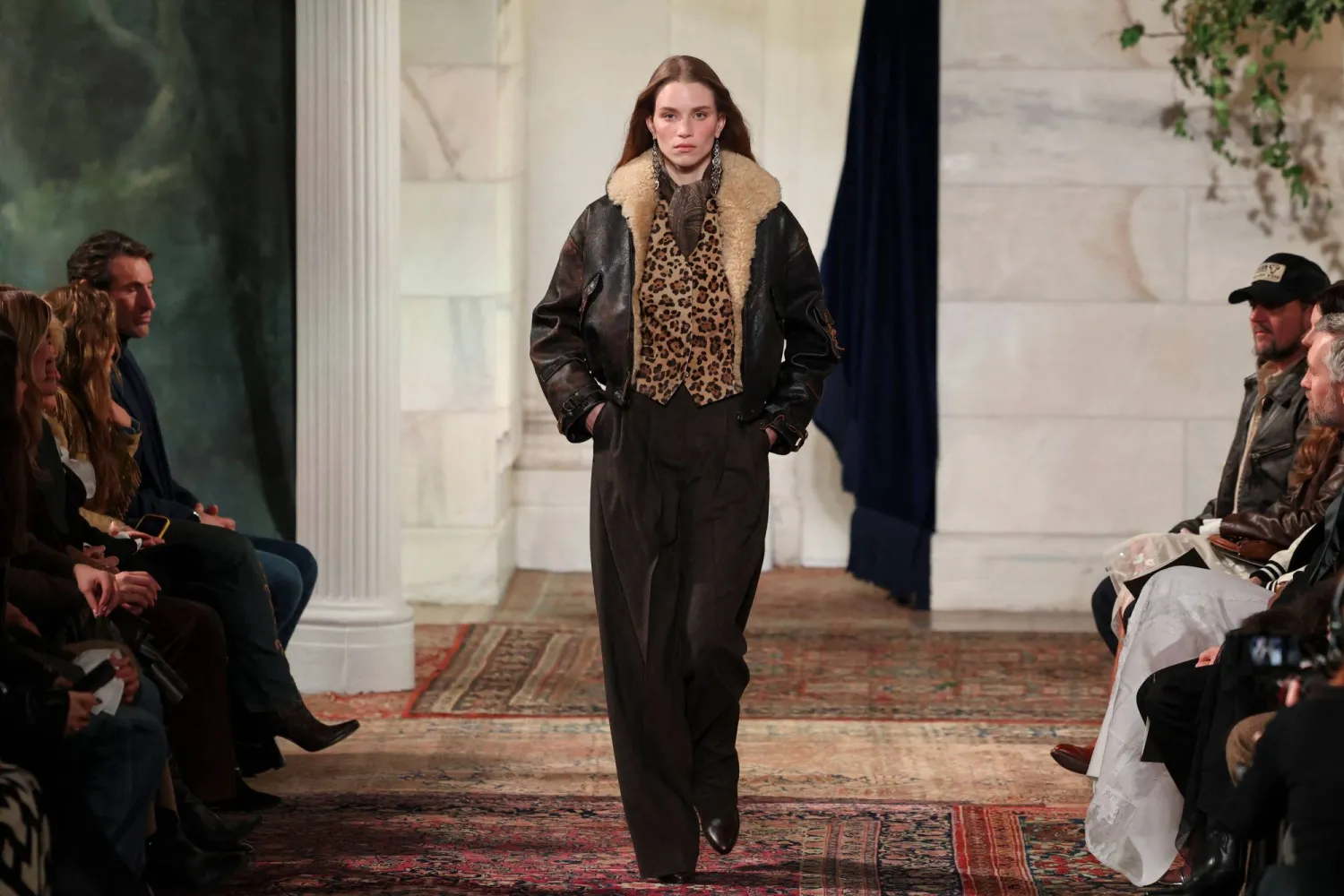
The end of fur at Saint Laurent. ALAIN JOCARD AFP/File
TT

French Luxury Brand Saint Laurent Goes Fur-Free

The end of fur at Saint Laurent. ALAIN JOCARD AFP/File

French high-end fashion brand Saint Laurent will stop using fur in its collections from next year, its parent company Kering said on Friday, joining a growing list of global companies.

Kering brand Brioni will also forsake fur, the company said, making all the fashion group's houses fur-free.

Animal rights groups have long lobbied the global fashion industry to give up fur and several, including Versace, Chanel and Michael Kors, had already stopped using it, said AFP.

People for the Ethical Treatment of Animals (PETA) took the lead in protesting against Saint Laurent, demonstrating outside its store in the fashionable Avenue Montaigne in Paris this year after supermodel Kate Moss appeared in an advertising campaign for the brand wearing a fox coat.

"There is nothing glamorous about fur," PETA told Saint Laurent.

Within the Kering group, Gucci was the first to drop fur in 2017, followed by Balenciaga, Bottega Veneta et Alexander McQueen.

"The world has changed, along with our clients, and luxury naturally needs to adapt to that," Kering CEO François-Henri Pinault said in a statement.

Kering would be entirely fur-free from the Fall 2022 collections.

On Friday, among the fur items still available in Saint Laurent's webstore were a rabbit coat priced at 5,500 euros ($6,450), a sleeveless fox vest for the same price, and a pair of mink mules for 995 euros.

"We believe that killing animals not to eat them but only for their fur doesn't correspond to modern luxury which must be ethical, in sync with its times and the questions of our societies," Marie-Claire Daveu, head of sustainable development at Kering, told AFP.

LVMH, the world's largest luxury group and Kering rival, meanwhile told AFP that it continued to allow its brands to meet customer demand for fur products.

These were being made "in the most ethical and responsible way possible", LVMH said, adding that it had banned all fur from endangered species.

According to PETA, 85 percent of fur sold in the world originates from animals who live their entire lives in captivity, often in conditions "of misery" and "extreme suffering".

They are usually killed by poison gas, electrocution or beaten to death with clubs, it said.

The international fur trade is estimated to be worth several tens of billions of dollars annually, employing around one million people worldwide.

Saudi Fashion Commission Issues Research Paper on 'Fashion Week Economics'

The Saudi Fashion Commission logo
TT

Saudi Fashion Commission Issues Research Paper on 'Fashion Week Economics'

The Saudi Fashion Commission logo

The Saudi Fashion Commission has issued its research paper for the fourth quarter of 2025, titled Fashion Week Economics, as part of its continued commitment to providing leading sector insights through the Fashion Futures platform.

The paper presents an in-depth analysis of Riyadh Fashion Week's contribution to local economic growth and explores the role of global fashion weeks in the global economy.

It highlights how Riyadh Fashion Week reflects the Kingdom's cultural and creative development, marking the beginning of a new era for Saudi creative industries, one driven by cultural confidence and economic ambition, through a dynamic integration of creativity, commerce, and culture aligned with the vision of a thriving creative economy.

The research also examines themes including the economic and cultural value of fashion weeks worldwide, the role of fashion-week events as global economic drivers, and case studies of various brands showcased at Riyadh Fashion Week 2025.

Through publishing this paper, the Fashion Commission continues to provide essential economic data and sector insights into the rapidly evolving fashion industry.

Riyadh Fashion Week targets designers, brands, creative talent, buyers, retailers, sponsors, and partners, serving as a central platform for opportunities across the market. Its rapid expansion across three editions, featuring more than 100 participating brands and attracting approximately 27,000 visitors, has delivered significant value in terms of media presence, relationship building, and business growth for participants.

The participation of major global fashion houses such as Vivienne Westwood and Stella McCartney in the third edition further reflects Riyadh’s growing influence in international luxury circles and its increasing global standing.


Fashion Commission Launches 1st Executive Master’s Program in Riyadh

Fashion Commission Launches 1st Executive Master’s Program in Riyadh
TT

Fashion Commission Launches 1st Executive Master’s Program in Riyadh

Fashion Commission Launches 1st Executive Master’s Program in Riyadh

The Fashion Commission announced the launch of the first Executive Master’s program to be delivered in Riyadh, developed in collaboration with the world-renowned Institut Français de la Mode (IFM).

The new program marks a significant leap in advancing fashion education and executive training within the Kingdom, according to SPA.

The Executive Master’s in Strategic Management of Fashion & Luxury represents a new milestone in fashion education, taking place in Riyadh for the first time. It is a 15-month hybrid executive master’s degree track designed for high-potential professionals seeking advanced executive training while continuing their careers. Delivered through a blend of in-person modules in Riyadh and Paris, alongside supervised online learning, the program equips participants with strategic, managerial, and analytical expertise tailored to the rapidly evolving fashion and luxury sector.

Designed with market needs in mind, the executive master’s curriculum covers creation and design, brand strategies, sustainability, new consumer behaviors, retail innovation, fashion media, collection management, and future industry perspectives. Participants will also complete a thesis that contributes new knowledge to the regional and global fashion landscape.

The program is taught by IFM’s internationally recognized faculty, experts in fashion history, sustainability, consumer behavior, design, and luxury management, alongside industry leaders from major global houses, fashion federations, media groups, and innovation-driven organizations.

This landmark program builds on the Fashion Commission’s ongoing partnership with IFM since June 2022. Within the first year, the collaboration introduced high-level educational initiatives, including the Advanced Management Program for Luxury Fashion and the Executive Master’s in Luxury Fashion, designed to elevate local talent and strengthen the Kingdom’s creative workforce.

These programs have contributed to developing the skills and knowledge required to support a world-class fashion ecosystem.

The launch of the Executive Master’s marks a pivotal step in establishing Riyadh as an education hub for the fashion and luxury sectors. By bringing a master’s qualification of this caliber directly to the Kingdom, the Fashion Commission reinforces its commitment to enabling professional growth, supporting innovation, and creating globally competitive talent pipelines.


Nike Shares Rise as Apple’s Cook Doubles His Bet on CEO Hill’s Overhaul Effort

A jogger wearing Nike shoes runs along the Charles River in Cambridge, Massachusetts, US, March 18, 2019. (Reuters)
TT

Nike Shares Rise as Apple’s Cook Doubles His Bet on CEO Hill’s Overhaul Effort

A jogger wearing Nike shoes runs along the Charles River in Cambridge, Massachusetts, US, March 18, 2019. (Reuters)

Nike shares rose 5% in early trading on Wednesday after Apple CEO Tim Cook doubled his personal stake in the sportswear maker, raising his bets on the margin-pinching turnaround efforts led by CEO Elliott Hill.

Cook, who has been on Nike's board since 2005, bought 50,000 shares at $58.97 ‌each, according to ‌a regulatory filing. As of December ‌22, ⁠he holds about ‌105,000 shares, which is now worth nearly $6 million.

It was the largest open market stock purchase for a Nike director or executive and possibly the largest in more than a decade, said Jonathan Komp, analyst at Baird Equity Research.

"(We see) Cook's move as a positive signal for the progress under CEO Elliott Hill and Nike's 'Win ⁠Now' actions," Komp said.

The purchase comes days after Nike reported weaker quarterly margins and weak ‌sales in China even as CEO ‍Hill tries to revive demand ‍through fresh marketing plans and innovation focused on running and sports, ‍while phasing out lagging lifestyle brands.

He has also attempted to mend Nike's ties with wholesalers such as Dicks Sporting Goods to increase visibility among shoppers amid stiff competition from newer brands.

However, the strategy has strained Nike's margins, which have been declining for over a year, while its efforts to win back its ⁠premier position in discount-friendly China appears to be faltering.

Nike's shares have slumped nearly 13% since it reported results on December 18 and are on track for the fourth straight year of declines. They were trading at $60.19 on Wednesday.

Cook has been a lead independent director of Nike since 2016 when co-founder Phil Knight stepped down as its chairman.

The Apple CEO "remains extremely close" with Knight, Komp said, adding that he has advised Nike through key strategic decisions including Hill's appointment last year.

Board director and former Intel CEO ‌Robert Swan also bought about 8,700 shares for about $500,000 this week.