



S.Korea Broadband Firm Sues Netflix after Traffic Surge from 'Squid Game'

The Netflix series "Squid Game" is played on a mobile phone in this picture illustration taken September 30, 2021. (Reuters)
TT

S.Korea Broadband Firm Sues Netflix after Traffic Surge from 'Squid Game'

The Netflix series "Squid Game" is played on a mobile phone in this picture illustration taken September 30, 2021. (Reuters)

South Korean Internet service provider SK Broadband has sued Netflix to pay for costs from increased network traffic and maintenance work because of a surge of viewers to the US firm's content, an SK spokesperson said on Friday.

The move comes after a Seoul court said Netflix should "reasonably" give something in return to the internet service provider for network usage, and multiple South Korean lawmakers have spoken out against content providers who do not pay for network usage despite generating explosive traffic.

A Netflix spokesperson did not have an immediate comment on the lawsuit.

The popularity of the hit series "Squid Game" and other offerings have underscored Netflix's status as the country's second-largest data traffic generator after Google's YouTube, but the two are the only ones to not pay network usage fees, which other content providers such as Amazon, Apple and Facebook are paying, SK said.

Netflix's data traffic handled by SK jumped 24 times from May 2018 to 1.2 trillion bits of data processed per second as of September, SK said, riding on the success of several Netflix productions from Korea including "Squid Game" and "D.P."

SK Broadband said it lodged a lawsuit against Netflix for it to pay for using SK's networks since Netflix began using SK's dedicated line starting 2018 to deliver increasingly larger amounts of data-heavy, high-definition video content to viewers in Korea from servers in Japan and Hong Kong.

Last year, Netflix had brought its own lawsuit on whether it had any obligation to pay SK for network usage, arguing Netflix's duty ends with creating content and leaving it accessible. It said SK's expenses were incurred while fulfilling its contractual obligations to Internet users, and delivery in the Internet world is "free of charge as a principle", according to court documents.

But the Seoul Central District Court ruled against Netflix in June, saying that SK is seen as providing "a service provided at a cost" and it is "reasonable" for Netflix to be "obligated to provide something in return for the service".

SK estimated the network usage fee Netflix needed to pay was about 27.2 billion won ($22.9 million) in 2020 alone, the court document said.

Netflix has appealed against the ruling, court records showed, with fresh proceedings to start in late December.

Netflix said in a statement on Wednesday that it contributed to the creation of about 16,000 jobs in South Korea stemming from about 770 billion won in investments, as well as an economic effect of about 5.6 trillion won.

Ruling party lawmaker Kim Sang-hee said on Wednesday that out of South Korea's top 10 data traffic generators, 78.5% of the traffic came from foreign content providers, up from 73.1% a year earlier, with "Google-YouTube and Netflix that account for the majority turning a blind eye to network usage fees".



AI No Better Than Other Methods for Patients Seeking Medical Advice, Study Shows

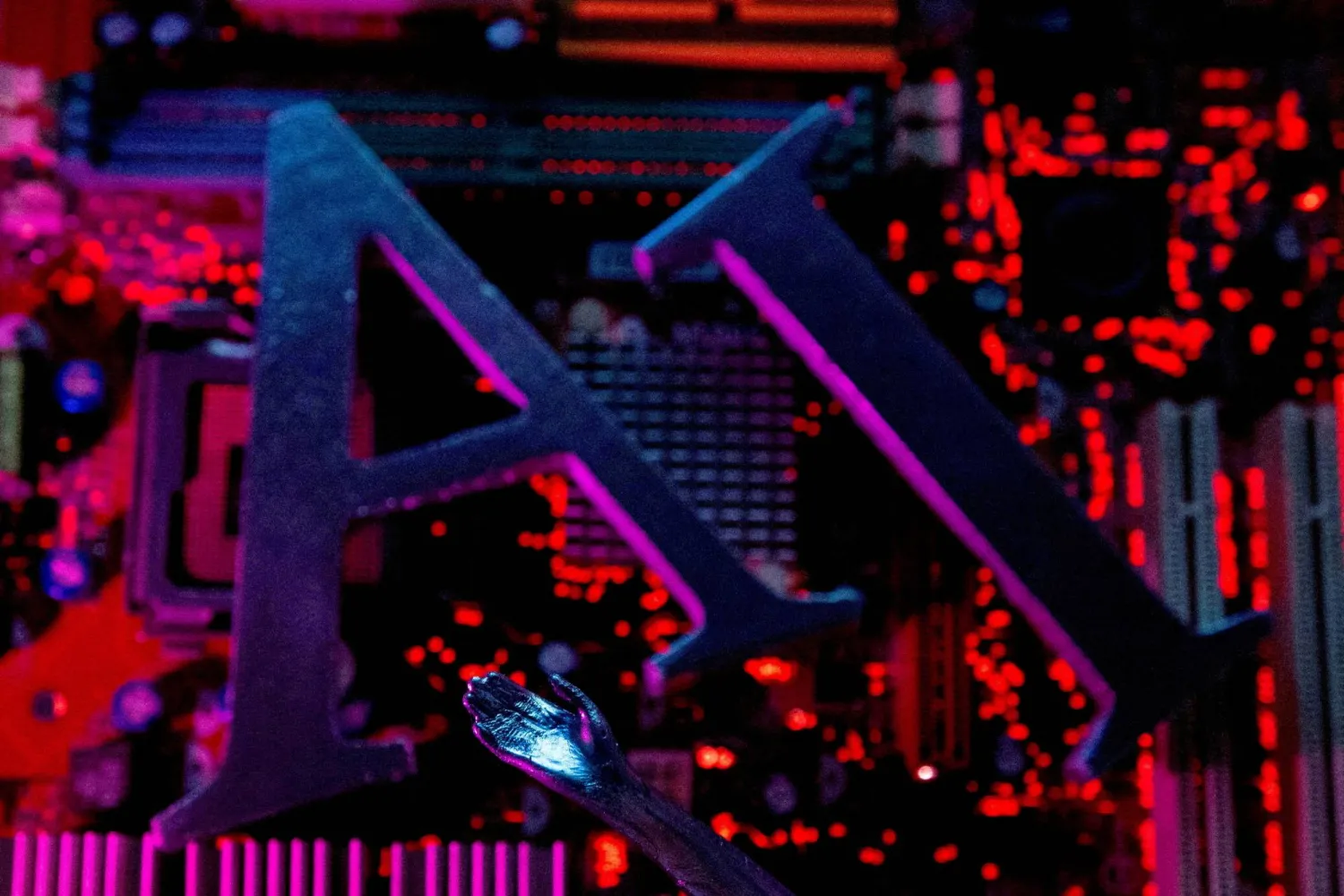
AI (Artificial Intelligence) letters and a robot hand are placed on a computer motherboard in this illustration created on June 23, 2023. (Reuters)
TT

AI No Better Than Other Methods for Patients Seeking Medical Advice, Study Shows

AI (Artificial Intelligence) letters and a robot hand are placed on a computer motherboard in this illustration created on June 23, 2023. (Reuters)

Asking AI about medical symptoms does not help patients make better decisions about their health than other methods, such as a standard internet search, according to a new study published in Nature Medicine.

The authors said the study was important as people were increasingly turning to AI and chatbots for advice on their health, but without evidence that this was necessarily the best and safest approach.

Researchers led by the University of Oxford’s Internet Institute worked alongside a group of doctors to draw up 10 different medical scenarios, ranging from a common cold to a life-threatening hemorrhage causing bleeding on the brain.

When tested without human participants, three large-language models – Open AI's Chat GPT-4o, ‌Meta's Llama ‌3 and Cohere's Command R+ – identified the conditions in ‌94.9% ⁠of cases, ‌and chose the correct course of action, like calling an ambulance or going to the doctor, in an average of 56.3% of cases. The companies did not respond to requests for comment.

'HUGE GAP' BETWEEN AI'S POTENTIAL AND ACTUAL PERFORMANCE

The researchers then recruited 1,298 participants in Britain to either use AI, or their usual resources like an internet search, or their experience, or the National Health Service website to ⁠investigate the symptoms and decide their next step.

When the participants did this, relevant conditions were identified in ‌less than 34.5% of cases, and the right ‍course of action was given in ‍less than 44.2%, no better than the control group using more traditional ‍tools.

Adam Mahdi, co-author of the paper and associate professor at Oxford, said the study showed the “huge gap” between the potential of AI and the pitfalls when it was used by people.

“The knowledge may be in those bots; however, this knowledge doesn’t always translate when interacting with humans,” he said, meaning that more work was needed to identify why this was happening.

HUMANS OFTEN GIVING INCOMPLETE INFORMATION

The ⁠team studied around 30 of the interactions in detail, and concluded that often humans were providing incomplete or wrong information, but the LLMs were also sometimes generating misleading or incorrect responses.

For example, one patient reporting the symptoms of a subarachnoid hemorrhage – a life-threatening condition causing bleeding on the brain – was correctly told by AI to go to hospital after describing a stiff neck, light sensitivity and the "worst headache ever". The other described the same symptoms but a "terrible" headache, and was told to lie down in a darkened room.

The team now plans a similar study in different countries and languages, and over time, to test if that impacts AI’s performance.

The ‌study was supported by the data company Prolific, the German non-profit Dieter Schwarz Stiftung, and the UK and US governments.


Meta Criticizes EU Antitrust Move Against WhatsApp Block on AI Rivals

(FILES) This illustration photograph taken on December 1, 2025, shows the logo of WhatsApp displayed on a smartphone's screen, in Frankfurt am Main, western Germany. (Photo by Kirill KUDRYAVTSEV / AFP)
TT

Meta Criticizes EU Antitrust Move Against WhatsApp Block on AI Rivals

(FILES) This illustration photograph taken on December 1, 2025, shows the logo of WhatsApp displayed on a smartphone's screen, in Frankfurt am Main, western Germany. (Photo by Kirill KUDRYAVTSEV / AFP)

Meta Platforms on Monday criticized EU regulators after they charged the US tech giant with breaching antitrust rules and threaten to halt its block on ⁠AI rivals on its messaging service WhatsApp.

"The facts are that there is no reason for ⁠the EU to intervene in the WhatsApp Business API. There are many AI options and people can use them from app stores, operating systems, devices, websites, and ⁠industry partnerships," a Meta spokesperson said in an email.

"The Commission's logic incorrectly assumes the WhatsApp Business API is a key distribution channel for these chatbots."


Chinese Robot Makers Ready for Lunar New Year Entertainment Spotlight

A folk performer breathes fire during a performance ahead of Lunar New Year celebrations in a village in Huai'an, in China's eastern Jiangsu Province on February 7, 2026. (AFP)
TT

Chinese Robot Makers Ready for Lunar New Year Entertainment Spotlight

A folk performer breathes fire during a performance ahead of Lunar New Year celebrations in a village in Huai'an, in China's eastern Jiangsu Province on February 7, 2026. (AFP)

In China, humanoid robots are serving as Lunar New Year entertainment, with their manufacturers pitching their song-and-dance skills to the general public as well as potential customers, investors and government officials.

On Sunday, Shanghai-based robotics start-up Agibot live-streamed an almost hour-long variety show featuring its robots dancing, performing acrobatics and magic, lip-syncing ballads and performing in comedy sketches. Other Agibot humanoid robots waved from an audience section.

An estimated 1.4 million people watched on the Chinese streaming platform Douyin. Agibot, which called the promotional stunt "the world's first robot-powered gala," did not have an immediate estimate for total viewership.

The ‌show ran a ‌week ahead of China's annual Spring Festival gala ‌to ⁠be aired ‌by state television, an event that has become an important - if unlikely - venue for Chinese robot makers to show off their success.

A squad of 16 full-size humanoids from Unitree joined human dancers in performing at China Central Television's 2025 gala, drawing stunned accolades from millions of viewers.

Less than three weeks later, Unitree's founder was invited to a high-profile symposium chaired by Chinese President Xi Jinping. The Hangzhou-based robotics ⁠firm has since been preparing for a potential initial public offering.

This year's CCTV gala will include ‌participation by four humanoid robot startups, Unitree, Galbot, Noetix ‍and MagicLab, the companies and broadcaster ‍have said.

Agibot's gala employed over 200 robots. It was streamed on social ‍media platforms RedNote, Sina Weibo, TikTok and its Chinese version Douyin. Chinese-language television networks HTTV and iCiTi TV also broadcast the performance.

"When robots begin to understand Lunar New Year and begin to have a sense of humor, the human-computer interaction may come faster than we think," Ma Hongyun, a photographer and writer with 4.8 million followers on Weibo, said in a post.

Agibot, which says ⁠its humanoid robots are designed for a range of applications, including in education, entertainment and factories, plans to launch an initial public offering in Hong Kong, Reuters has reported.

State-run Securities Times said Agibot had opted out of the CCTV gala in order to focus spending on research and development. The company did not respond to a request for comment.

The company demonstrated two of its robots to Xi during a visit in April last year.

US billionaire Elon Musk, who has pivoted automaker Tesla toward a focus on artificial intelligence and the Optimus humanoid robot, has said the only competitive threat he faces in robotics is from Chinese firms.