Togolese FM: We Look Forward to Strategic Partnership with Saudi Arabia https://english.aawsat.com/home/article/3233881/togolese-fm-we-look-forward-strategic-partnership-saudi-arabia
Togolese FM: We Look Forward to Strategic Partnership with Saudi Arabia
Togolese Foreign Minister Robert Dussey. Asharq Al-Awsat
Togolese Foreign Minister Robert Dussey revealed that his country, which enjoys the highest living standards in Africa, is moving closer to building a comprehensive strategic partnership with Saudi Arabia, which will boost security in West Africa.
In an interview with Asharq Al-Awsat, Dussey confirmed that the leaderships of Saudi Arabia and Togo have the complete political will to enhance cooperation between the two countries.
Dussey has been on a visit to Riyadh since the beginning of the week.
“This visit allowed me to meet with several Saudi officials and ministers to put forward ideas and discussions that are currently taking place in various fields and to explore ways to enhance cooperation,” Dussey told the newspaper.
Togo’s top diplomat said that talks with Saudi officials covered the fields of agriculture and food security.
Agricultural products such as coffee, cocoa beans, groundnuts, cassava, jasmine rice, corn, and millet were discussed.
More so, Dussey announced that efforts are underway to open a Togolese embassy in Riyadh, saying “it might happen before the end of 2021.”
During a meeting with Saudi Foreign Minister Prince Faisal bin Farhan, Dussey discussed issues of common interest, reviewed bilateral relations between Togo and Saudi Arabia, and examined means of boosting cooperation between the Kingdom and the West African nation.
Prince Faisal and Dussey also explored regional developments and international efforts.
“I spoke with my Saudi counterpart about political and security cooperation, especially in West Africa, the Sahel, and the Sahara, at a time when the Togolese government is making an effort to help Mali to restore its security and stability, and Chad to enhance security and peace and fight terrorism,” said Dussey.
“Togo and Saudi Arabia have had understandings of counter-terrorism cooperation since 2017, and the two countries will work together to maximize cooperation in the security sector,” he affirmed.
Dussey pointed out that Riyadh is still lending his country a helping hand on so many levels.
On the migration of African youth to Europe, Dussey stressed the importance of creating reasons to keep young people in their countries, where they could help in building the national economy, security, and political scene.
“The immigration of young people is often a bad idea, and the consequences are not guaranteed,” warned Dussey.
“But there is also a need to provide education and appropriate work for young people in their countries,” he added.
“I see that African youth do not need to immigrate to Europe, as their countries are rich in natural resources and need them,” noted Dussey.
When asked about peacemaking efforts in Yemen, Dussey expressed his belief in the need to get every Yemeni party to push towards achieving security, stability, and peace.
He noted that Saudi Arabia is striving to achieve all that is possible to push Yemenis in the direction of peace. The Kingdom is doing so through initiatives it launched.
Dussey stressed that the Riyadh Initiative is the appropriate way out for Yemen from the current crisis, emphasizing the need for other actors to take serious steps to move peace efforts forward.
The top diplomat noted that Togo will continue to support Saudi efforts to promote peace and find a solution to the Yemeni crisis.
Al-Zouba to Asharq Al-Awsat: Yemen Will Not Be an Iranian Pawnhttps://english.aawsat.com/interviews/5327389-al-zouba-asharq-al-awsat-yemen-will-not-be-iranian-pawn
Al-Zouba to Asharq Al-Awsat: Yemen Will Not Be an Iranian Pawn
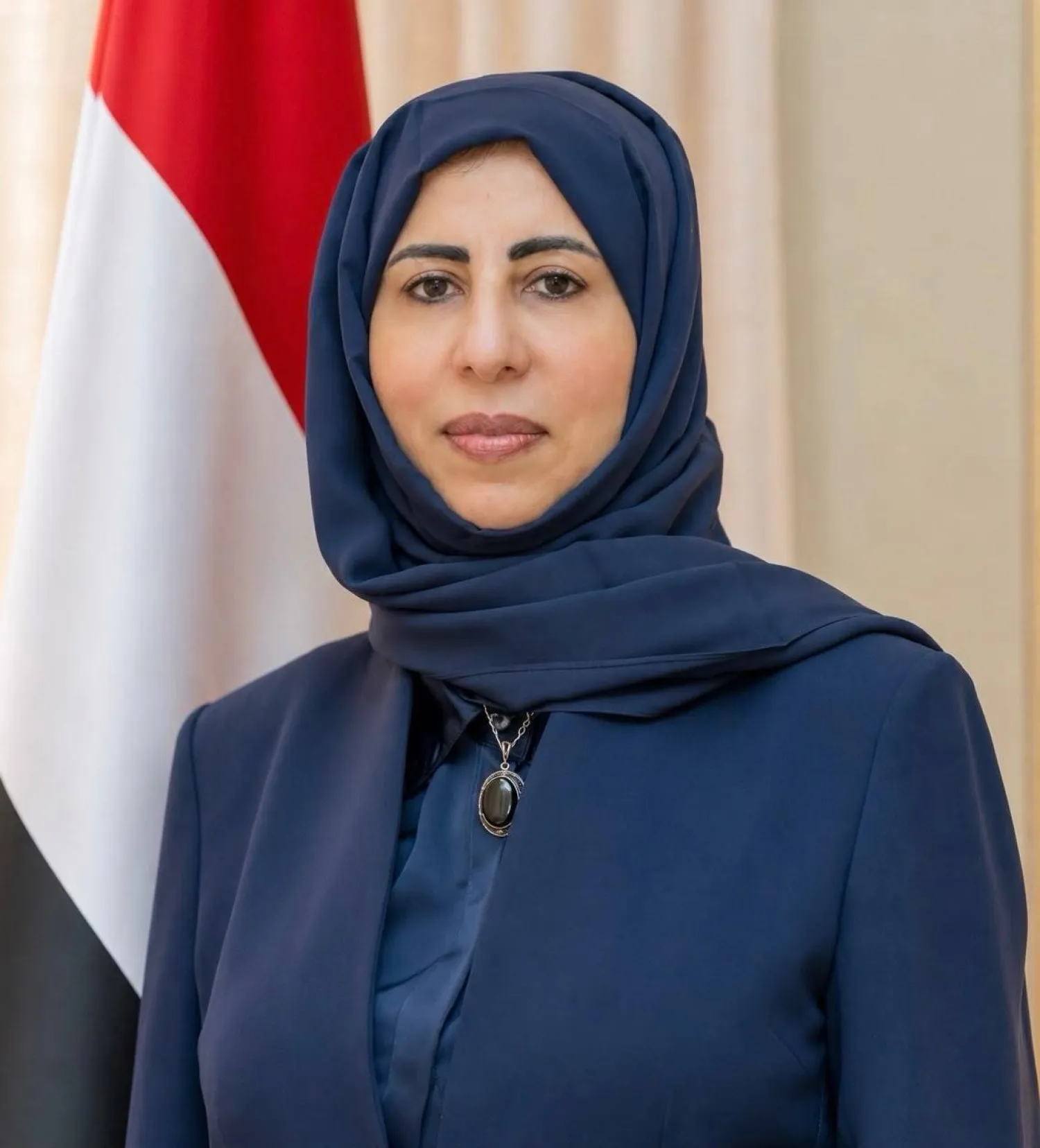
Dr. Afrah Al-Zouba, Yemen’s Minister of Foreign Affairs and Expatriates (Yemeni Foreign Ministry).
Yemeni Minister of Foreign Affairs and Expatriates Dr. Afrah Al-Zouba said the Yemeni government has entered a phase of restoring the state after exhausting opportunities for de-escalation, stressing that any future political process must end with the return of state institutions and the state having sole control over weapons and decisions of war and peace, rather than power-sharing with an armed group.
In an interview with Asharq Al-Awsat, Al-Zouba said: “We have not abandoned peace, but rather the illusion of peace that leaves weapons outside the state,” stressing that the goal of the current phase is to end the coup and extend state authority over the entire national territory. She added: “The Yemenis’ right to their state cannot remain suspended at the will of an armed group.”
The minister linked the restoration of the state to regional security and international maritime navigation, saying: “The security of Bab el-Mandeb begins on the coast, and protecting ships at sea will remain an incomplete solution as long as the land is a launching point for threats to it.”
The foreign minister praised Saudi political, military and economic support, while stressing that the success of the phase “will not be measured by the number of cities restored, but by the number of citizens who regain their security and families who return to their homes.”
Restoring the State as the Path to Peace
Al-Zouba explained that the decision to enter the phase of restoring the state was announced by President of the Presidential Leadership Council Dr. Rashad Al-Alimi, based on constitutional responsibility and in accordance with the decisions of the National Defense Council, after opportunities for de-escalation had been exhausted, with the aim of preserving Yemen’s unity, sovereignty, independent decision-making and territorial integrity.
She recalled the president’s assertion that “Yemen’s Dawn” is not merely the name of a military operation, but a promise that the war will end with a state and that Yemenis will regain their republic and their future. She noted that behind the armed forces are political and societal forces rallying around the state project and supporting its institutions.
The minister said the state had given peace efforts their full time and opportunities, but the Houthis responded with further mobilization and escalation and expanded their attacks against civilians, national facilities, neighboring countries and international waterways.
She added that experience had demonstrated the fragility of de-escalation as long as the group is capable of rearming and imposing its will on society, stressing that “every settlement that leaves the state’s decision hostage to weapons postpones the war rather than ending it.”
Al-Zouba stressed that the force used by the state is a means of protecting citizens and enforcing the law, not a substitute for politics. As for diplomacy, she described it as “proactive rather than merely reactive,” explaining that it sets out the operation’s objectives and legitimacy, mobilizes support for it, accompanies the humanitarian response and prevents the Houthis from being treated as a parallel authority to the state.
International Support Awaits Practical Programs
The minister spoke of growing support for Yemeni state institutions and a broader recognition of the link between their ability to extend their authority and regional security and maritime safety. She said this was reflected in her communications and meetings on the sidelines of the 81st session of the United Nations General Assembly last month.
Alongside Saudi and Gulf support, the minister pointed to calls by members of the UN Security Council for practical cooperation with the government to prevent the Houthis from obtaining weapons, technical assistance, training and financing. She also noted London’s affirmation of Yemen’s and Saudi Arabia’s right to defend their security and sovereignty under international law, the European Union’s renewed support for the Yemeni government and people, and Japan’s continued efforts to build the capabilities of the coast guard.
But she stressed that “the real measure is the impact of these positions on the state’s ability to protect its citizens and restore its institutions,” identifying three priority tracks: strengthening defense and security capabilities on land and at sea, enforcing the arms embargo under Resolution 2216 to cut off Iranian supplies, and providing the government with economic, development and humanitarian support.
The foreign minister said strengthening maritime capabilities is based on the international partnership for Yemeni maritime security, coordination with the Saudi-led multinational defensive maritime coalition, and relevant existing frameworks. She revealed that the government will present detailed needs to its partners, looking to translate support into “practical programs with clear timelines.”
According to Al-Zouba, the Houthis have targeted more than 100 commercial vessels since November 2023, sinking several, damaging dozens of others, hijacking a vessel and detaining dozens of crew members. Their attacks have resulted in the deaths of sailors and Yemeni rescuers. She said countries bearing the cost of disrupted trade and higher shipping and insurance costs have a direct interest in enabling Yemen to secure its coastlines.
Washington: Declared Support and Ongoing Coordination
Al-Zouba described the declared US position as clearly standing with the Yemeni government, noting Washington’s assertion that the Houthis initiated the confrontation and must bear its consequences, and that the legitimate government has the right to defend its people and end the group’s ability to engage in terrorism.
She said Washington called at the UN Security Council for the Houthis to withdraw from areas they had seized, end Iranian support and fully implement the arms embargo. She also noted that the US assistant secretary of state for Near Eastern affairs renewed, during their meeting in New York, his support for the government and the Presidential Leadership Council, as well as continued coordination on security, stability and counterterrorism.
She quoted US Secretary of State Marco Rubio as saying that the operations came in response to the Houthi attack and to retake territory they had seized, and that the Yemeni government and Saudi Arabia would not accept the group controlling Bab el-Mandeb. She declined to discuss specific military or intelligence commitments, saying: “I am committed, when discussing them, to what is officially announced through the relevant channels.”
The minister confirmed that the government is working with Washington on tangible cooperation proportionate to the threat: “We are not asking anyone to take its place, but rather to enable it to carry out its duty by strengthening the capabilities of its institutions and supporting its economic stability.”
She warned against selective Houthi assurances that they would not target ships belonging to certain countries, saying such assurances leave the group capable of attacking others, give it time to rearm and consolidate its control over the coast. She said: “Freedom of navigation is a right guaranteed by international law to all states, not a privilege granted by an armed group and withheld according to its terrorist agenda and in a manner that serves the Iranian regime.”
Iranian Supplies and Accountability
Al-Zouba said the evidence the government presents to its partners regarding Iranian support consists of “documented evidence, not political assessments.” She described the relationship as an extended military and strategic one that predates the coup, citing the seizure of the vessel Jihan 1 in an arms-smuggling case announced by the government in early 2013.
She referred to the findings of the UN Panel of Experts regarding the role of the Quds Force, Hezbollah, and Iraqi experts and technicians in transferring equipment and providing training and assistance to the Houthis, and said the group could not develop complex systems without external support.
She added that Yemeni forces seized, in a single operation last year, more than 750 tons of weapons and equipment bound for the Houthis, including anti-ship and anti-aircraft missiles, drone engines and radar equipment. Some of the equipment displayed characteristics similar to systems manufactured in Iran, and Persian-language operating manuals were found with it.
Al-Zouba cited remarks by the commander of the Quds Force in June about a “security belt” extending from Hormuz to Bab el-Mandeb, considering the linking of the two waterways a compounded threat to energy and trade security. She also cited Rubio’s reference to direct flights from Tehran to Yemen carrying members of the Revolutionary Guard Corps.
Nevertheless, the foreign minister stressed that the Yemeni issue should not be reduced to the confrontation with Iran, because the Houthis have their own project and interests in retaining power, weapons and resources, and their threat will not automatically end with any de-escalation with Tehran. She noted arrangements that the Panel of Experts said it had documented with Somalia’s al-Shabaab movement involving arms smuggling and training, and with al-Qaeda involving security coordination and the continuation of a cessation of hostilities between them.
She stressed: “We distinguish between documenting the support system and proving direct management of a particular attack. Each has its own evidence.” She called for suppliers, intermediaries and financiers to be pursued, procurement, transport and smuggling networks to be dismantled, the transfer of military technologies and expertise to be halted, and information-sharing and accountability for violations of the arms embargo to be strengthened.
The Day After: Institutions and Services Without Retribution
The minister outlined the government’s vision for restored areas as one centered on the return of security, civilian administration, services and the rule of law. She explained that the president had directed the preparation of a parallel plan for the operations under which institutions would begin operating in every city and district that is restored.
Priorities include resuming the payment of salaries and addressing outstanding dues, an urgent recovery and reconstruction program covering roads, electricity and water, facilitating the return of displaced people and reviving the economy, with support from brothers and friends.
Al-Zouba stressed that protecting civilians, respecting international humanitarian law and facilitating aid are obligations during and after the operations, saying: “This is not a war against the people of Sanaa or Saada or any governorate, nor against a sect or tribe.”
She stressed the state’s responsibility toward citizens in areas under Houthi control, saying that “there is no place for revenge or collective punishment, and the door to amnesty and safe return remains open in accordance with the announced procedures.”
The minister kept the political track open for a just and comprehensive peace based on the approved references, constitutional legitimacy and equal citizenship. But she stressed that its essence is “ending the coup and restoring institutions, not sharing power with weapons,” and that participation is a right for anyone who complies with the constitution and the law.
Saudi Support and the Partnership to Restore the State
Al-Zouba described coordination with Saudi Arabia as close and continuous politically, militarily, developmentally and in relief efforts, governed by a strategic partnership and a single objective: ending the coup and restoring the state. She praised the Saudi Council of Ministers for renewing, at its latest session, its full support for the Presidential Leadership Council, the government and the Yemeni people.
She said Saudi support had contributed to the resilience of state institutions, strengthened national consensus and cohesion, and that budget support, fuel supplies for power plants, and humanitarian and development assistance all help the government meet its obligations and alleviate citizens’ suffering.
On the ground, the foreign minister explained that the Coalition to Support Legitimacy has provided air and operational support since the launch of “Yemen’s Dawn,” and confirmed that this support would continue until the restoration of the institutions. She noted that the advances by forces along the western coast, around Bab el-Mandeb and on other fronts were the result of their sacrifices and cohesion and of the national will, alongside “this influential support.”
She renewed solidarity with Saudi Arabia in confronting Houthi attacks, which she said had reached the point of threatening holy sites, and expressed support for its right to protect its security and sovereignty. She welcomed the “Mecca Defense Alliance” moving toward the practical implementation of its collective defense commitments. She stressed that the Houthis do not represent the Republic of Yemen or the will of its people, and that restoring the state is a pillar of security for Yemen and its neighbors.
Aden Airport: An Attack on the Lives of Yemenis
Al-Zouba described the targeting of Aden International Airport as a “terrorist attack targeting a civilian facility serving Yemenis from different governorates,” striking at their right to travel, receive medical treatment and return to their families.
She said, based on the announcement by the relevant authorities, that one of the two missiles fell near the runway minutes before a flight arriving from Cairo was due to land and was forced to divert to Jeddah, while passengers, workers and air crews were within the danger zone. She added that the move to protect lives does not lessen the gravity of an attack “that could have turned a civilian flight into a humanitarian catastrophe within moments.”
The minister linked the attack to the shelling of the airport when the government arrived in late 2020, which resulted in more than 100 people killed and wounded, the detention of four Yemenia aircraft in 2024, and the disruption of the return of more than 1,000 pilgrims, in addition to attacks on the airports of Jazan and Najran and threats to aircraft transiting Saudi airspace.
She considered the timing of the attack an attempt to shift the confrontation from the battlefield to the lives and services of citizens, calling for measures beyond condemnation, including holding those who planned and carried out the attack accountable, depriving the Houthis of missiles and drones, and preventing the use of civilian flights as cover for military support.
She said the government welcomed the Jordanian initiative to operate flights between Amman and Sanaa to serve citizens and patients, while the Houthis rejected it and sought to operate flights not coordinated with the state. She called on the International Civil Aviation Organization to condemn the attack, assist in assessing risks and enhance safety, stressing: “Aden Airport will remain a civilian gateway for Yemenis, operating in accordance with safety requirements.”
Al-Zindani to Asharq Al-Awsat: Yemen Will Not Remain an Open Arena for a Cross-border Projecthttps://english.aawsat.com/interviews/5310974-al-zindani-asharq-al-awsat-yemen-will-not-remain-open-arena-cross-border-project
Al-Zindani to Asharq Al-Awsat: Yemen Will Not Remain an Open Arena for a Cross-border Project
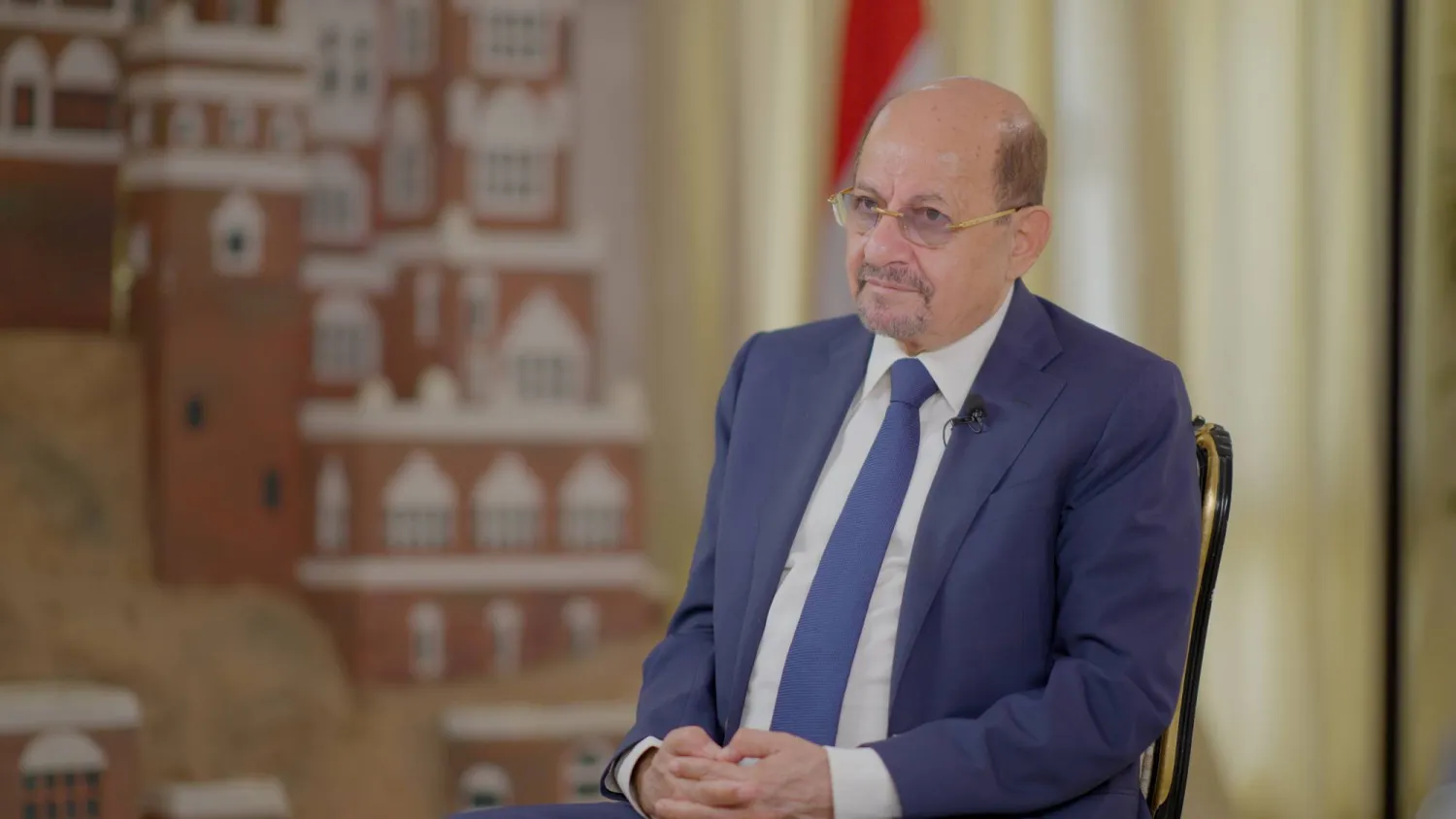
The Prime Minister affirmed that Yemen would not remain an open arena for a cross-border project (Photography by Turky Alagili)
Yemeni Prime Minister Dr. Shaya al-Zindani warned that his country would not remain an open arena for a cross-border project, stressing that the state would continue to build its capabilities to protect its people, institutions and interests, and that true peace cannot be a substitute for the state, but rather the fruit of its restoration.
In an interview with Asharq Al-Awsat, Al-Zindani said that the recent Houthi escalation clearly reveals the group’s targeting of the foundations of life and the national economy, and its attempt to transform Yemeni lands, ports and sea lanes into tools that serve a regional project that transcends the country’s borders.
The Prime Minister stressed that the Yemeni-Saudi coordination goes beyond confronting an emergency military escalation, and is based on a firm strategic partnership between two countries that share neighborliness, security, destiny and common interests.
Houthi escalation targets the national economy
Al-Zindani said the recent escalation clearly reveals that the Houthi terrorist militias are not only targeting a military front or a specific facility, but are also targeting civilians, the foundations of life and the national economy, and are trying to turn Yemeni lands, ports and sea lanes into tools in a regional project that goes beyond the borders of Yemen.
He added that targeting the port of Mocha specifically represents a very dangerous development because it affects a civilian and economic facility and sends a threatening message to trade and navigation in one of the most important maritime corridors in the world, noting that the government dealt with this escalation as a simultaneous threat to national security, the Yemeni economy, and regional and international security.
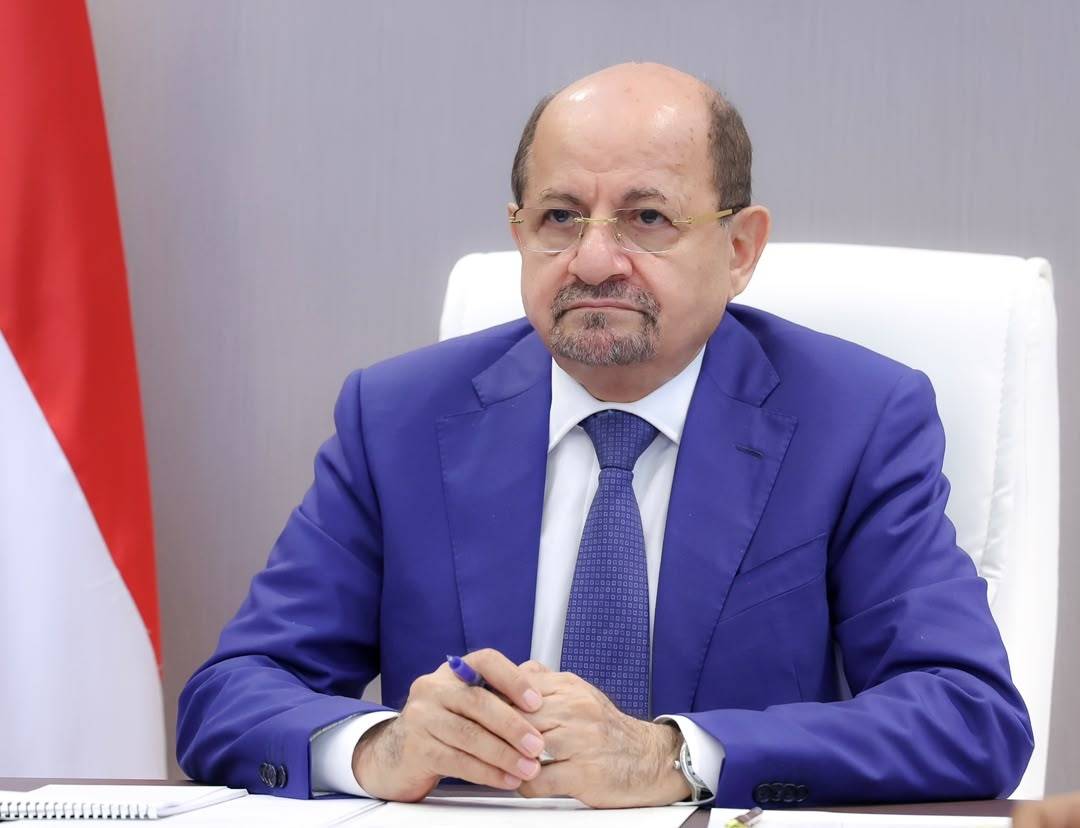
Al-Zindani affirmed that the government is working to strengthen the emergency response system and secure supply chains (Prime Minister's Office)
The shift from containment to deterrence
Regarding the shift from containment to deterrence, the Prime Minister explained that the government is facing a militia that has proven, over the past years, that it exploits any truce to rebuild its capabilities, and then returns to escalation whenever the opportunity arises.
He said that the government’s mission today is to enable state institutions, the armed forces and security services to protect citizens, facilities and national interests, and to work with the military and security leadership to raise readiness, enhance deterrence capabilities and restore state authority.
He stressed that deterrence, from the government’s point of view, is not just a military action, but an integrated system that includes military and security readiness, protecting facilities, securing ports and border crossings, pursuing financing and smuggling networks, in addition to political and diplomatic action and mobilizing international support.
Al-Zindani pointed out that the National Defense Council had already directed that readiness be maintained at its highest levels, that the protection of vital facilities be strengthened, and that deterrence tools be expanded in the face of sources of threat.
He added: “We are not looking for a war for the sake of war, nor do we want to expand the circle of Yemeni suffering, but at the same time the state and government will not accept that facilities, ports, cities and civilian objects become open targets without having the ability and will to protect them.”
“We say to everyone, inside and outside, that sustainable peace cannot be built in Yemen unless the state has the power to make decisions, possess sovereignty, and control weapons.”
Al-Zindani pointed out that the National Defense Council had already directed that readiness be maintained at its highest levels (Saba)
Measures to protect infrastructure
Al-Zindani explained that his government views the protection of facilities as a matter of national security, not merely a precautionary measure. He indicated that, in light of the recent escalation, it has raised the level of preparedness in vital institutions and facilities, particularly ports, border crossings, and the transportation, energy, communications, and basic services sectors, and has developed contingency plans to address various potential scenarios.
He added that, during the past few days, he directed that the level of preparedness be raised in transport facilities, ports and border crossings, and that their ability to continue performing their functions in emergency circumstances be ensured.
The Prime Minister indicated that the government is working through two parallel tracks; the first relates to the direct protection of facilities and raising the level of coordination between military and security agencies and civilian authorities, while the other focuses on ensuring the continuity of services and economic activity in the event that any facility is subjected to an attack.
He explained that the importance of this is due to the fact that the Houthis’ goal is not limited to causing material damage, but also includes creating a state of fear, disrupting economic activity, and confusing the movement of citizens and trade, stressing that the best response to this type of terrorism is to maintain the work of state institutions.
He pointed out that the government is also working to strengthen the emergency response system, secure supply chains and stocks of basic goods, and coordinate with local authorities and relevant bodies to ensure a swift response to any potential damage.
Regarding the port of Mocha, Al-Zindani said that the government does not treat it as merely a local facility, but rather as part of a broader economic and maritime system, noting that targeting it would have repercussions that extend beyond national borders.
He added that protecting ports and economic facilities is a national responsibility, and at the same time it is part of the international community’s responsibility towards the security of navigation and international trade.
He stressed that the message the government wants to convey is that it will not allow the Houthi militias and their supporters in the Iranian regime to turn civilian and economic facilities into hostages to blackmail the state or the international community.
Stability in liberated areas
The Prime Minister described maintaining stability in the liberated areas as "the government's main battle," explaining that the Houthi militias are not only relying on missiles and drones, but also on exhausting the citizen, disrupting the economy, disabling services, and weakening confidence in the state.
He stressed that protecting economic and social stability is no less important than protecting the front lines, noting that the government program is based on interconnected paths that include developing revenues, controlling spending, strengthening oversight of public funds, combating corruption and smuggling, improving resource management, supporting the banking sector, maintaining currency stability, and continuing to improve electricity and basic services.
He added that the government is working to build greater resilience in the face of shocks, by securing basic needs, improving inventory management, diversifying supply routes, and raising the readiness of service institutions.
Al-Zindani said that the government has taken steps in the path of institutional and financial reform, but it does not claim that the results have yet reached the level that the citizen aspires to.
“We are working in extremely difficult circumstances, but the difficulty of the circumstances does not absolve the government of its responsibilities,” he added.
He stressed that the best way to thwart the Houthis’ bet on exhausting the liberated areas is to make state institutions more efficient, the economy more resilient, services more regular, and citizens more confident in their state.
The Yemeni Prime Minister affirmed that Saudi Arabia has been and continues to be a key partner for Yemen (Prime Minister's Office)
Yemeni-Saudi coordination
Al-Zindani stressed that Yemeni-Saudi coordination is based on a deeper foundation than just a situational response to military escalation, explaining that the two countries are united by a strategic partnership based on neighborliness, security, destiny and common interests.
He stressed that Saudi Arabia has been and remains a key partner for Yemen, and has not dealt with it as merely a political or security issue, but rather has proceeded from a vision that considers the stability of Yemen as part of the security of the Kingdom and the region, and sees that enabling the Yemeni state to restore its institutions, revive its economy and improve the conditions of its citizens is an investment in the security and stability of the entire region.
He explained that this coordination is constantly evolving and moving through political, diplomatic, security, military, economic and humanitarian tracks, noting that there is a high level of consultation between the leaderships of the two countries and their governments in dealing with emerging developments and risks.
“We highly appreciate the positions of the Custodian of the Two Holy Mosques, King Salman bin Abdulaziz, and Crown Prince and Prime Minister Mohammed bin Salman, towards Yemen, its leadership and people, and the continuous political, economic, humanitarian, military and security support they provide, as well as the role played by Prince Khalid bin Salman, Minister of Defense, in strengthening cooperation and coordination between the two countries,” he added.
The Yemeni Prime Minister cited as an example the support that goes beyond political, security and military aspects, noting that the Saudi Development and Reconstruction Program for Yemen has become a key partner in the path of recovery and development, through its projects in the electricity, energy, water, health, education, transportation and infrastructure sectors.
He explained that these projects not only aim to address immediate needs, but also help to rebuild the capabilities of state institutions and improve the economic and living conditions of citizens.
Al-Zindani also pointed to the humanitarian role played by the King Salman Humanitarian Aid and Relief Center, as another example of Saudi commitment to the Yemeni people, through its relief and humanitarian programs and projects in various governorates.
Al-Zindani pointed to the humanitarian role played by the King Salman Center for Relief and Humanitarian Aid, as another example of Saudi commitment to the Yemeni people (Prime Minister's Office)
Regarding confronting the Houthi escalation, the Prime Minister stressed that there is a shared understanding of the nature of the threat, explaining that this escalation is no longer just an internal Yemeni issue; when the militias target ports, civilian facilities, and commercial ships and threaten international navigation, they are transferring the threat to the regional and international levels.
He called for a more resolute international stance, stressing that the security of the Red Sea and Bab al-Mandab is not just a Yemeni or regional issue, but an international interest linked to trade, energy, and global supply chains.
Government needs
Regarding his government’s needs, Al-Zindani said they consist, firstly, of continued political and diplomatic support for the Yemeni position; secondly, of supporting the capabilities of the state and its military, security and economic institutions; thirdly, of supporting the government’s efforts to protect vital facilities and restore its ability to produce and export its resources; and fourthly, of adopting a clear international position that links any path to peace to ending the causes of the war, and not to managing the division.
He stressed that Yemen does not want the international community to fight the war on behalf of the Yemenis, but rather to help them end it and build a state capable of protecting itself, and to deal seriously with the sources of funding and arming of the militias and the smuggling networks that fuel their ability to continue the war.
He explained that the equation the government is working on is not limited to confronting and deterring escalation, but is based on “a state confronting a terrorist coup militia”; a state that possesses institutions, a sovereign decision, armed forces, security services, and a recoverable economy, in contrast to a project that wants to keep Yemen in a state of war and constant attrition, and it must be defeated.
Al-Zindani expressed his confidence that Saudi support, along with the support of the international community, will enhance the ability of the Yemeni government to protect the liberated areas and continue reforms, leading to the complete restoration of state authority over the entire national territory, and achieving peace that ends the coup and restores stability to Yemen and its natural role in its Arab and regional environment.
A message to the Houthis
The Prime Minister concluded with a message in which he said: “The Houthi militias and those who support them should realize that Yemen will not remain an open arena for a cross-border project, that the Yemeni state will continue to build its capabilities to protect its people, institutions and interests, and that true peace cannot be a substitute for the state, but rather a result of its return.”
Spanish Ambassador to Asharq Al-Awsat: Saudi Arabia and Spain Enter New Era of Strategic Partnershiphttps://english.aawsat.com/interviews/5293710-spanish-ambassador-asharq-al-awsat-saudi-arabia-and-spain-enter-new-era
Spanish Ambassador to Asharq Al-Awsat: Saudi Arabia and Spain Enter New Era of Strategic Partnership
Spain's Ambassador to Saudi Arabia, Javier M. Carbajosa (Embassy of Spain in Riyadh)
Saudi-Spanish relations have entered a new phase of institutional cooperation following the signing of the Strategic Partnership Agreement in Madrid last May. The agreement established a permanent framework to expand economic, investment and technological cooperation while creating a high-level mechanism to oversee joint projects.
In an interview with Asharq Al-Awsat, Spain's Ambassador to Saudi Arabia, Javier Carbajosa, revealed that two new Memorandums of Understanding in the fields of economy and transport have been finalized, alongside additional cooperation frameworks that remain under negotiation. He stressed that bilateral relations are moving toward a comprehensive strategic partnership aligned with the objectives of Saudi Vision 2030.
Saudi Arabia and Spain signed the Strategic Partnership Agreement on May 13 in Madrid and agreed to establish a Strategic Partnership Council to elevate bilateral relations and expand cooperation, particularly in promising economic and investment sectors. They also signed an agreement on mutual visa exemption for holders of diplomatic and special passports.
On Tuesday, the Saudi Cabinet approved a Memorandum of Understanding on cooperation in the future of modern transport methods between the Kingdom's Ministry of Transport and Logistics Services and Spain's Ministry of Transport and Sustainable Mobility.
A New Framework for Bilateral Relations
Carbajosa said the agreement signed in Madrid marks a turning point in bilateral relations, establishing a new institutional framework for managing cooperation between the two countries.
"I am very pleased to share with you what I consider a milestone in our bilateral relations, and that is the signature last May in Madrid of the Strategic Partnership Agreement between our two countries, raising our diplomatic relations to its highest level.
From now onwards, both Prime Ministers will personally lead our bilateral relations."
He explained that under the new framework, Saudi Crown Prince Mohammed bin Salman and Spanish Prime Minister Pedro Sánchez will personally lead bilateral relations, helping accelerate the implementation of joint projects and strengthen political and economic coordination.
"Traditionally, cooperation between Saudi Arabia and Spain was driven by a Joint Commission, co-led by the Ministries of Economy from both countries and supported by various government sectors. This framework aimed to deepen bilateral ties through regular technical consultations and biennial high-level summits. Now, the new framework supersedes everything else and the Strategic Partnership will encompass all our activities in different sectors."
He added that Memorandums of Understanding in the fields of economy and transport have already been finalized, while negotiations continue on additional cooperation frameworks that will all fall under the umbrella of the new Strategic Partnership.
Growing Trade, Services Driving the Partnership
Carbajosa said bilateral trade between the two countries stands at approximately $6 billion annually, while Spanish exports to Saudi Arabia range between $2.4 billion and $2.6 billion, making Spain the fifth-largest European Union exporter to the Kingdom.
Spanish exports include industrial machinery, mechanical valves, ceramics, pharmaceuticals and agri-food products. Meanwhile, Spain imports roughly $3.5 billion annually from Saudi Arabia, mainly crude petroleum, refined oil and ethylene polymers.
He said Spanish imports from Saudi Arabia rose by 18 percent during the first quarter of this year, driven by higher crude oil prices linked to regional geopolitical tensions, while Spanish exports contracted during the same period.
"While long-term indicators point toward growth, the overall trade trajectory in 2026 remains dependent on the normalization of energy supply routes in the Gulf region."
Carbajosa noted that cooperation extends beyond trade in goods.
"While the trade in goods favors Riyadh, the exchange of services tells a different story. Driven by Saudi Arabia's Vision 2030 economic diversification, Spanish engineering, infrastructure, and transport firms have secured multi-billion-dollar contracts in the Kingdom.
From the flagship Haramein High-Speed Railway to massive urban transit and renewable energy grids, Spain heavily exports 'know-how' and technical services that do not always register in traditional customs ledger balances."
From Water and Energy to Smart Transport
The ambassador said cooperation also covers desalination and water resource management, drawing on Spain's world-class expertise in the design, construction and operation of large-scale reverse osmosis desalination plants, wastewater treatment facilities and circular water networks. Spanish companies have historically led major water and desalination projects across the Kingdom.
He added that cooperation also extends to urban development, infrastructure project management and the preparation of master plans for smart and sustainable cities, alongside upgrading power grids, substations and industrial complexes to strengthen energy security and support the integration of utility-scale renewable energy.
In the transport sector, Carbajosa said Spanish companies possess globally recognized expertise in designing, managing and operating complex transport networks. He cited the landmark Haramein High-Speed Railway, led by Spanish public-private consortia, alongside major infrastructure contributions to the Riyadh Metro project.
He also highlighted Spain's role in smart mobility, noting that Spanish companies will manage the intercity transportation network for the Qiddiya City giga-project through intelligent transport systems and traffic management solutions.
The Region's First Virtual Air Traffic Control Tower
Carbajosa said Saudi Arabia and Spain signed two Memorandums of Understanding in February 2026 covering civil aviation and future transportation modes, in the presence of Saudi Minister of Transport and Logistics Services Saleh Al-Jasser and his Spanish counterpart, Óscar Puente.
"The agreements align with the Kingdom's Aviation Program goals: expanding connectivity to 250 international destinations, positioning Saudi Arabia as a global logistics hub, and reaching 330 million annual passengers by 2030. Cooperation spans seven areas, including safety standards, route expansion, regulatory alignment, sustainable aviation, and joint R&D into autonomous aircraft and smart airport design."
He added that cooperation also extends to modernizing air navigation systems and airport infrastructure. A Spanish engineering firm has been selected to update the master plans for five Saudi airports, while another Spanish company has partnered with Saudi Air Navigation Services to deploy the region's first virtual air traffic control tower.
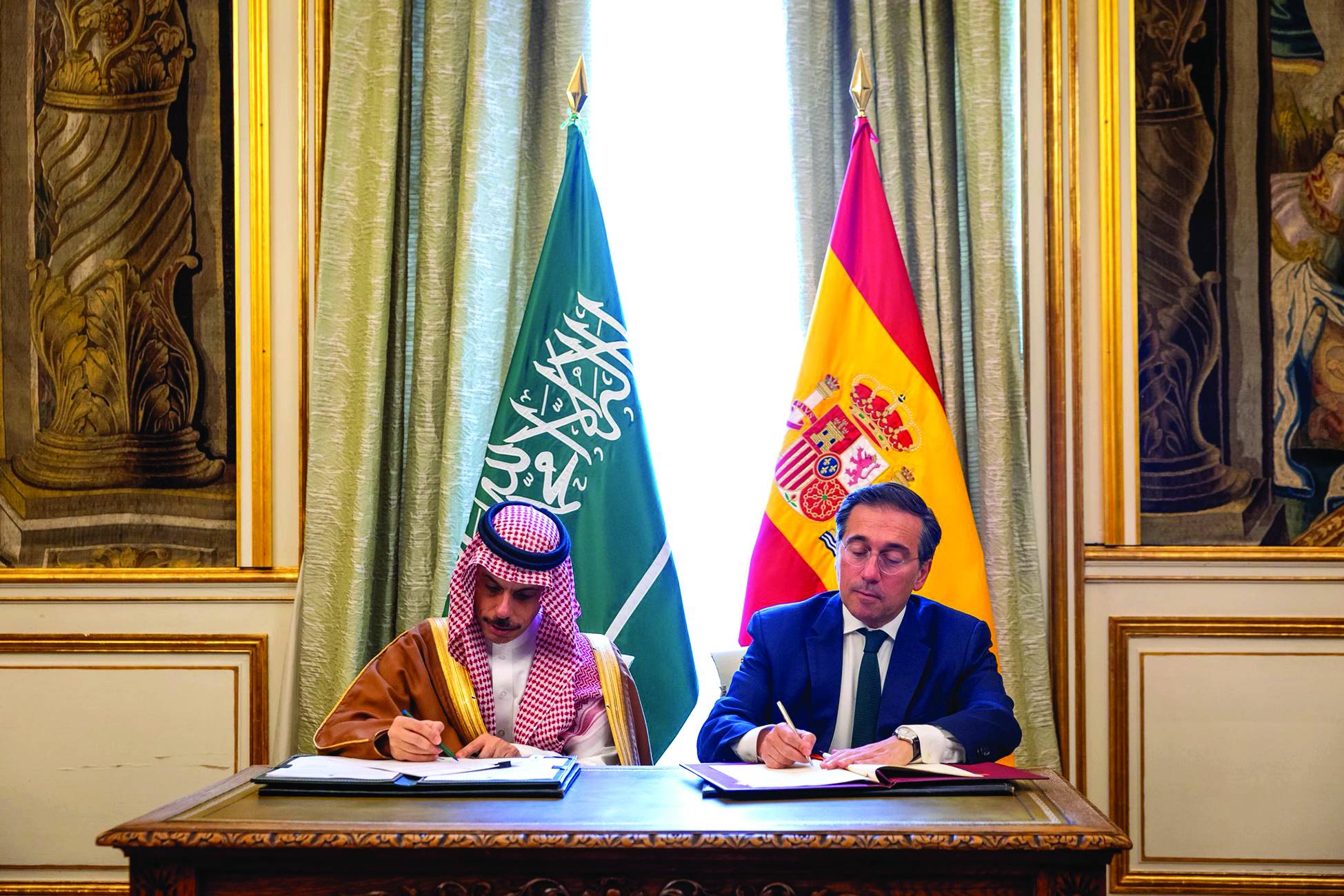
Saudi Foreign Minister Prince Faisal bin Farhan and Spanish Minister of Foreign Affairs José Manuel Albares Bueno during the signing of a Memorandum of Understanding establishing the Strategic Partnership Council (X)
From Arms Procurement to Technology Transfer
Carbajosa said defense cooperation between the two countries has evolved beyond traditional arms procurement toward industrial partnerships built on technology transfer and the localization of defense industries.
He explained that the joint venture between Saudi Arabian Military Industries (SAMI) and Spain's Navantia to outfit five Avante 2200 corvettes has helped transfer technological know-how to the Kingdom and resulted in the development of the HAZEM naval combat management system through technology transfer from Navantia. He added that a follow-on agreement includes the transfer of intellectual property rights to the General Authority for Military Industries (GAMI), paving the way for future naval vessels to be built in Saudi Arabia.
He added that other Spanish companies, including Indra and Grupo Oesía, offer advanced capabilities in radar systems, electronic warfare and counter-drone technologies. Spain currently accounts for approximately 10 percent of Saudi arms imports, ranking second only to the United States.
According to Carbajosa, Spain's expertise in cybersecurity, command-and-control systems and dual-use technologies aligns with the objectives of Saudi Vision 2030, which seeks to localize more than 50 percent of military spending by 2030 through technology transfer, research and development, and workforce training.
Space Opens New Horizons for Partnership
Carbajosa said Saudi Arabia's space economy reached $8.7 billion in 2024 and is projected to grow to $31.6 billion by 2035.
He noted that Spain has an advanced industrial base in the space sector through companies such as Airbus Defence and Space Spain, Indra, GMV, Hisdesat and Sener, which provide solutions in secure satellite communications, Earth observation and geospatial analytics.
He said these companies are natural partners for the Kingdom's sovereign space infrastructure priorities, including secure satellite communications, Earth observation and geospatial analytics.
He concluded by emphasizing that Saudi-Spanish relations have evolved from implementing projects to building long-term strategic partnerships based on co-production and technology transfer, opening new horizons for cooperation in defense, aviation and space.
لم تشترك بعد
انشئ حساباً خاصاً بك لتحصل على أخبار مخصصة لك ولتتمتع بخاصية حفظ المقالات وتتلقى نشراتنا البريدية المتنوعة