


How Danish Gastronomy Reached Dizzying Heights

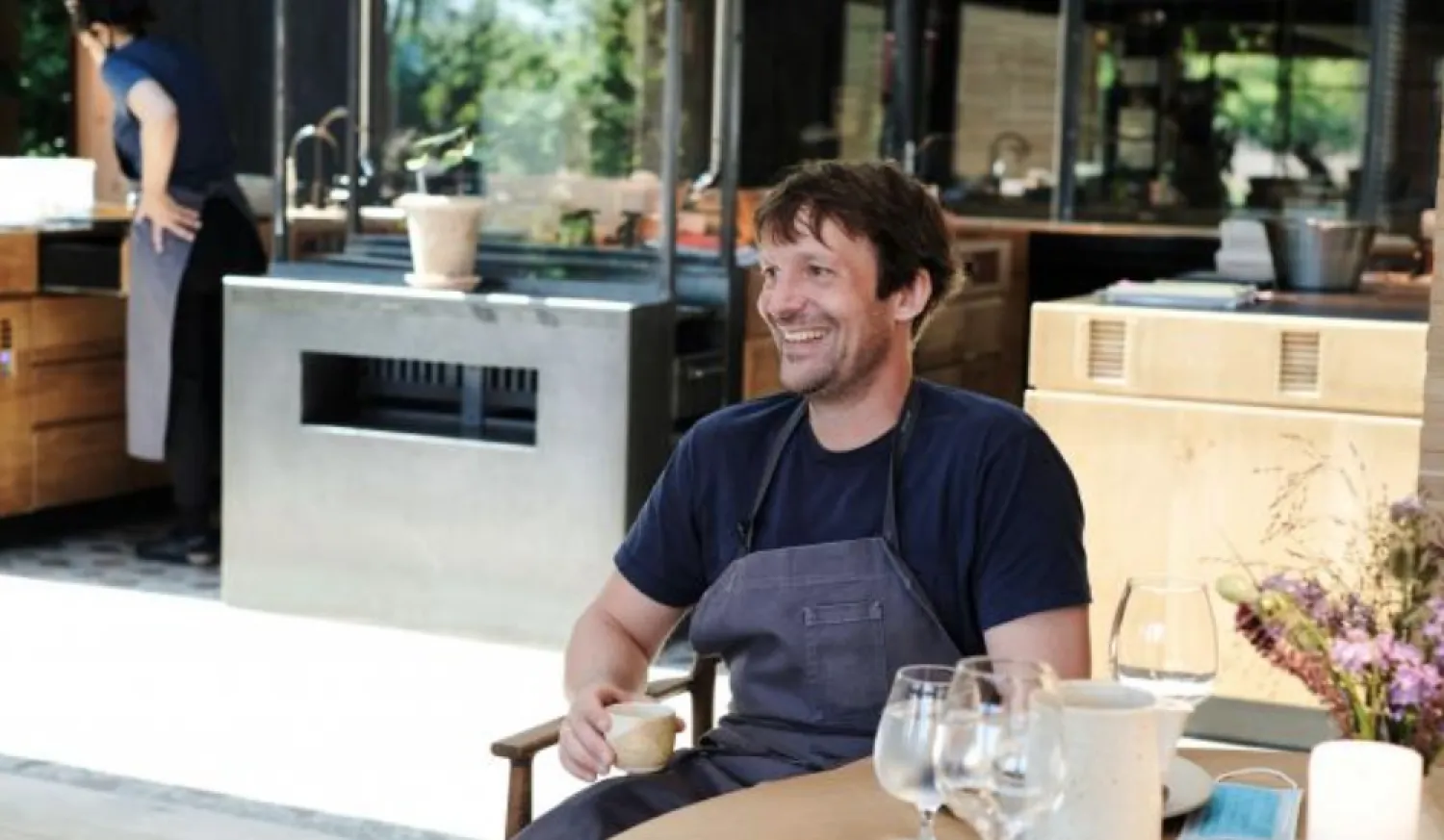
Rene Redzepi, chef and co-owner of the Danish restaurant. Noma Thibault Savary AFP
TT

How Danish Gastronomy Reached Dizzying Heights

Rene Redzepi, chef and co-owner of the Danish restaurant. Noma Thibault Savary AFP

It's home to the top two eateries in the world and a cornucopia of Michelin stars: Denmark's haute cuisine, non-existent 20 years ago, is making Copenhagen a top destination for gourmands.

Noma and its star chef Rene Redzepi, and Geranium headed by Rasmus Kofoed, clinched the top two spots in the 50 Best Restaurant awards recently published by British magazine Restaurant, reported AFP.

"They were nobody 20 years ago when Rene Redzepi started to reinvent the Nordic cuisine, focusing on local, ethical food," says Szilvia Gyimothy, a marketing professor at Copenhagen Business School.

"It was quite unique and now he is an agenda-setter."

With cold winters and sandy fields battered by winds from the North Sea and Baltic, Denmark is worlds away from the sun-drenched orchards of France, Italy and Spain, whose bountiful crops have served up gastronomic feasts for centuries.

Paradoxically, Denmark's culinary successes have been partly attributed to the country having no gastronomic traditions to speak of, leaving the field wide open to innovation and creativity.

There are "many restaurants in the world where the chefs ... rest on their laurels (and) are not so creative. Rene Redzepi and Rasmus Kofoed are never satisfied with what they've achieved," says Bent Christensen, founder of Danish food guide Den Danske Spiseguide.

"It's very special to have two people like that in such a small country," he adds.

Christensen attributed the success to a vibrant culinary scene spearheaded by the two young chefs, as well as the unexpected advantages of Denmark's geographical location.

"You're always less than 40 kilometers (25 miles) from the sea, that's fantastic for fish," he gushes.

"And it's nice with our climate -- you really have four seasons and the vegetables can slowly mature."

Creating refined, delicately flavored meals, chefs favor local specialties -- such as cabbage, which Redzepi has dubbed "the coconut of the North" -- honoring the country's environmental mindset.

For example, Geranium is currently offering a three-hour "Autumn Universe" sitting featuring Jerusalem artichoke, grilled lobster, sea buckthorn and duck.

Noma's summer menu, soon to make way for fall's "game and forest", meanwhile features among other things an awe-inspiring saffron caramel candle, with a lit wick made from shaved walnut dipped in cardamom essential oil.

- 'Pushing a social agenda' -

Redzepi is a fermentation guru -- a technique he uses to makes pine cones edible -- and fiercely loyal to local products, always inventing new dishes, Gyimothy says.

"He is engaged in the debate around food, climate, labor conditions, parity. He has really been using his role to push a strong societal agenda," she says.

Shortly after earning its third Michelin star in September -- finally, according to food critics -- Noma clinched the top spot in the 50 Best Restaurant awards on October 5, elbowing out Mirazur in Menton, France.

Redzepi previously held the title four times in the 2010s.

But the fantastical dishes do not come cheaply: Noma's set menu costs 2,800 kroner (380 euros, $435), excluding drinks.

"It is still a very elitist product but it also affects the way average Danes think of their food," says Gyimothy.

Danes have become more conscious of buying locally-grown and in-season products, and reducing their climate footprint, she explains.

The effect can also be seen on other restaurants.

"Danes used to travel around, just to practice (different cooking styles) but now it's upside down, people are coming to Denmark to study," notes Christensen.

According to VisitDenmark, which promotes tourism to the country, 38 percent of foreigners who visited Copenhagen in 2019 did so to sample the gastronomy.



Greece's Cycladic Islands Swept Up in Concrete Fever

Real estate fever has broken out across Greece's Cyclades archipelago, threatening to destroy its picturesque landscapes. Aris MESSINIS / AFP
TT

Greece's Cycladic Islands Swept Up in Concrete Fever

Real estate fever has broken out across Greece's Cyclades archipelago, threatening to destroy its picturesque landscapes. Aris MESSINIS / AFP

On the sloping shoreline of the Greek Aegean island of Milos, a vast construction site has left a gaping wound into the island's trademark volcanic rock.

The foundations are for a hotel extension that attracted so much controversy last year that the country's top administrative court ended up temporarily blocking its building permit, said AFP.

Construction machinery still dots the site for a planned 59-room extension to the luxury resort, some of whose suites have their own swimming pools.

Milos Mayor Manolis Mikelis calls the project an "environmental crime".

"The geological uniqueness of Milos is known worldwide. We don't want its identity to change," he told AFP in his office, adorned with a copy of the island's most famous export, the Hellenistic-era statue of the love goddess Venus.

Fueled by a tourism boom, real estate fever has broken out across the Cyclades archipelago, threatening to destroy iconic landscapes of whitewashed houses and blue church domes.

In December, several mayors from the Cyclades as well as the Dodecanese -- which includes the highly touristic islands of Rhodes and Kos -- sounded the alarm.

"The very existence of our islands is threatened," they warned in a resolution initiated by the mayor of Santorini, Nikos Zorzos.

Tourism has become "a field for planting luxury residences to sell or rent," said Zorzos, whose island -- a top global destination -- welcomes roughly 3.5 million visitors for a population of 15,500.

- Rejecting 'plunder' -

The "Cycladic islands are not grounds for pharaonic projects", the mayors continued.

V Tourism, the company operating the hotel, argues that the expansion was approved in 2024 with "favorable opinions from all competent authorities".

But Mikelis, the mayor, noted that there are legislation "loopholes" when it comes to construction.

Like Santorini, Milos is a volcanic isle that is home to one of Greece's most unique beaches, Sarakiniko.

With its spectacular white formations rounded by erosion, the so-called 'moon beach' has bathers packed tighter than an astronaut's suit during summertime.

Yet Sarakiniko is not protected under Greek law.

Another hotel project there was blocked last year, and the environment ministry has given the owners a month's time to fill in its construction dig.

'Voracious'

Ioannis Spilanis, emeritus professor at the University of the Aegean, says what is happening in the Cyclades "is voracious, predatory real estate".

Once marginal land intended for grazing "have become lucrative assets. (Locals) are offered very attractive prices that are still low for investors."

"Then you build or resell for ten times more," he said.

In Ios, a small island with a vibrant nightlife, a single investor -- a Greek who made a fortune on Wall Street -- now owns 30 percent of the island, the mayors said in their December statement.

Tourism contributes between 28 and 33.7 percent of GDP, according to the Greek Tourism Confederation (SETE), making it a key sector that has propped up the country's economy for decades.

Some residents are gravely concerned about the real estate sweep's effects on Milos

Arrivals have been breaking record after record with more than 40 million visitors in 2024, a performance that was likely surpassed in 2025.

In Milos, which has more than 5,000 inhabitants, 48 new hotel projects are currently underway, according to the mayor, and 157 new building permits were awarded from January to the end of October 2025, according to the state statistical body.

On Paros, which has also experienced a real estate frenzy for several years, 459 building permits were granted over the same period, and on Santorini, 461.

The most ambitious projects in Greece are classified as "strategic investments", a fast-track procedure created in 2019 to facilitate investments deemed priorities.

But "there's often no oversight," said Spilanis, the academic.

Golden goose

And many of the new constructions are far removed from traditional Cycladic architecture.

But the tourism industry is a vital source of income on islands which are usually deserted in winter, and offering few other job prospects.

The tourism industry is a vital source of income on islands which are usually deserted in winter

"This island is a diamond, but unfortunately in recent years it’s become nothing but money, money, money," fumes a resident who spends half the year in Germany.

"But if I say that in public, everyone will jump down my throat!" she said.

In a 2024 report, the state ombudsman of the Hellenic Republic stressed the deterioration in quality of life on islands where residents can no longer find housing, as many owners prioritize lucrative short-term rentals, while waste management and water resources are also under major strain.

But there are signs of a slowdown in the Cyclades.

Santorini last year saw a 12.8-percent drop in air arrivals between June and September, while Mykonos had to settle for a meagre 2.4-percent increase.


Kyiv Botanical Garden's Plants Wither Due to Frost, Power Cuts

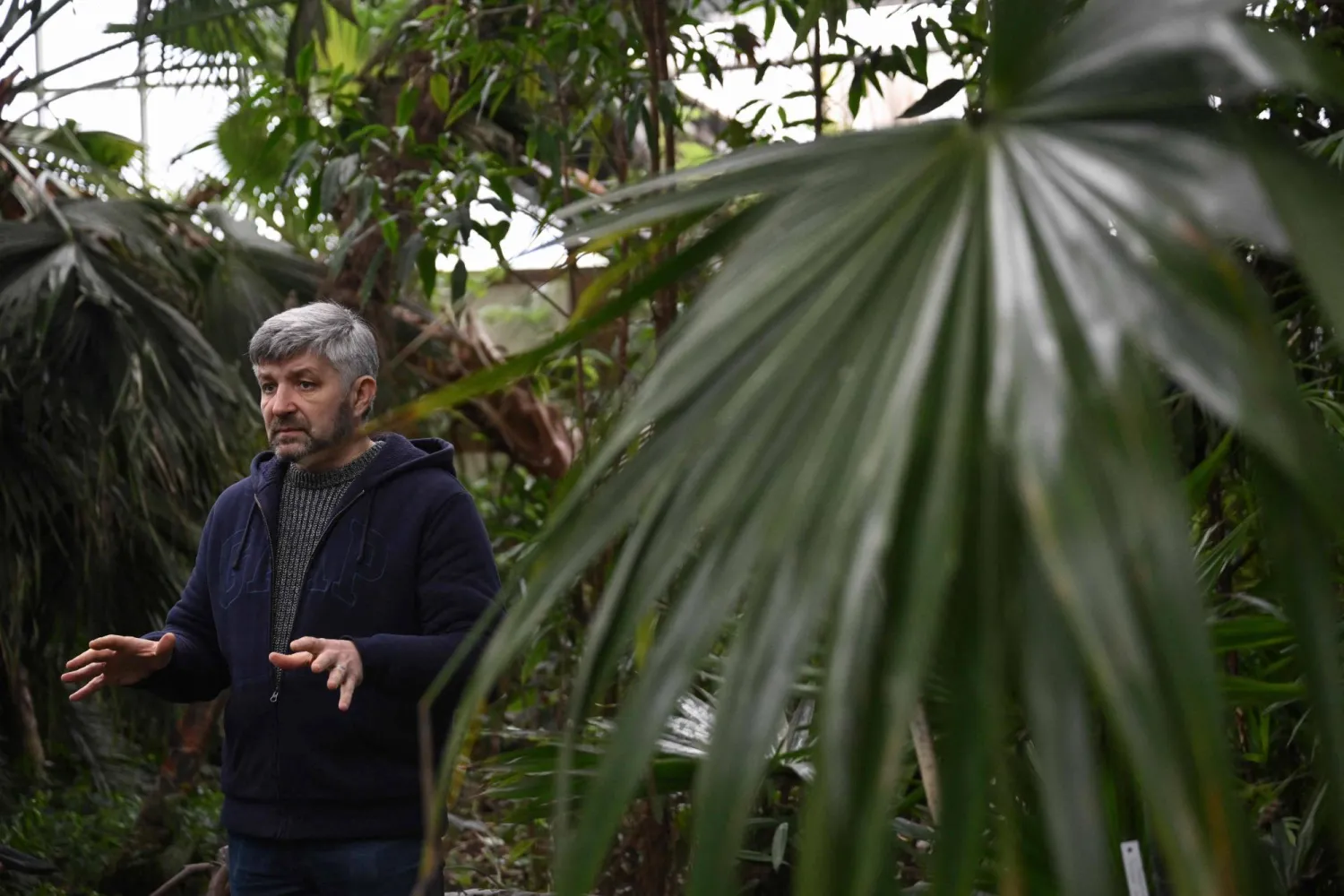
Doctor of Biological Sciences Roman Ivannikov, Head of the Department of Tropical and Subtropical Plants of the Gryshko National Botanical Garden of the National Academy of Sciences of Ukraine, speaks during an AFP interview in the garden's main greenhouse in Kyiv on February 11, 2026. (Photo by Genya SAVILOV / AFP)
TT

Kyiv Botanical Garden's Plants Wither Due to Frost, Power Cuts

Doctor of Biological Sciences Roman Ivannikov, Head of the Department of Tropical and Subtropical Plants of the Gryshko National Botanical Garden of the National Academy of Sciences of Ukraine, speaks during an AFP interview in the garden's main greenhouse in Kyiv on February 11, 2026. (Photo by Genya SAVILOV / AFP)

Roman Ivannikov has spent around 30 years pampering orchids, azaleas and figs at Ukraine's National Botanical Garden, but power cuts triggered by Russian strikes are threatening to freeze his cherished collection of tropical plants.

Moscow has been pummeling Ukrainian energy sites with drones and missiles, plunging thousands of households into darkness during the harshest winter since it started its invasion four years ago.

The almost-daily barrages, paired with the cold snap, have put lives at risk and created an unprecedented threat for Ivannikov's pride and joy: a collection of almost 4,000 species.

"Our children grew up on the paths of this garden. We have poured our lives into this," Ivannikov, 51, told AFP, struggling to fight back tears.

The temperature in the garden's main greenhouse was 12C.

"It's not even the lower bound of normal," Ivannikov said.

The temperature dipped even lower on four nights over recent weeks, when the heating cut off entirely.

Wearing a thick navy jacket over a wool sweater, Ivannikov, the head of the department of tropical and subtropical plants, picked up a leaf that had just come rustling down.

"You can see how many fallen leaves there are... Perfectly healthy leaves that could have kept feeding the plant and functioning for months are falling down," he said.

The plant, he explained, was optimizing energy needs and shedding part of its leaves in the lower tiers so it can keep the leaves at the top and "survive in these conditions".

He, fellow staff and scores of volunteers were shuffling between tasks like firing up stoves and spreading protective covers on a collection of smaller plants, like orchids.

Volodymyr Vynogradov, 66, has signed up to help cut firewood used to heat the greenhouses.

"There needs to be heating for the azaleas," he told AFP, his cheeks rosy from cold and a pile of split logs scattered around.

"Physically, it's a little bit of a warm-up... That's why I decided to help somehow. For myself and for the sake of flowers."

The garden's collection has been laboriously reassembled after it had perished during World War II -- through decades of purchases, exchanges and numerous scientific missions that took Ivannikov's senior colleagues across several continents.

They "used to go to places and bring back plants from areas where those forests are no longer there", making those replanted at the Kyiv garden susceptible to "irrecoverable losses".

"Those plants have been preserved with us, and that underscores their uniqueness: if we lose them, we won't be able to restore them," Ivannikov said.

Individual specimens have already wilted, but the scale of damage is impossible to assess -- the destructive impact of the cold could only start to show in weeks or even months to come.

"Flowering intervals will change, plants will bloom but won't be able to set seed for a year or two. Or, for example, they'll set seed, but it won't be viable -- it will be dead," Ivannikov, who is trying to stay hopeful, said.

"We just have to hold on until summer, until spring -- make it through however many days are needed."

His dream, he said, is to create a "large national bonsai collection", something he had already begun laying the groundwork for.

The institution meanwhile offers organized tours and works with military servicemen and displaced Ukrainians who find solace in gardening work.

"They feel alive and want to see what comes next. They see a future, they want to keep living -- and that's our mission."


Sunbed Ads Spreading Harmful Misinformation

Cancer charities and doctors say sunbeds are linked to higher rates of melanoma and other skin cancers (Getty images) 
TT

Sunbed Ads Spreading Harmful Misinformation

Cancer charities and doctors say sunbeds are linked to higher rates of melanoma and other skin cancers (Getty images) 

Harmful misinformation claiming sunbeds offer health benefits in winter is being spread by tanning companies on social media, the BBC has found.

BBC identified hundreds of adverts on TikTok, Instagram and Facebook saying sunbeds can boost energy and treat skin conditions or mental health problems.

One suggested that going on a sunbed for “eight minutes” could prevent colds and flu, while another claimed that UV rays could “stimulate the thyroid gland” to help someone lose weight.

Claims like these are “irresponsible” and “potentially dangerous,” the government told BBC - while an NHS dermatologist described the amount of sunbed misinformation on social media as “genuinely terrifying.”

The findings come after the Advertising Standards Authority (ASA) banned six tanning adverts for making irresponsible health claims or suggesting sunbeds were safe.

Cancer charities and doctors are clear about the risks of using sunbeds - and say the machines are linked to higher rates of melanoma and other skin cancers.

Using a bed before the age of 35 increases the risk of melanoma by 59% later in life, according to the World Health Organization (WHO).

The Sunbed Association, which represents half the UK's tanning shops, says the ASA and WHO are using “outdated data,” but encourages its members not to use medical claims in advertising.

Young people are by far the biggest sunbed users in the UK - about one in seven 18-to-24-year-olds say they used one in the past year, double the average for all age groups, according to a 2025 YouGov survey.

Other data suggests nearly a quarter of under-25s wrongly believe sunbeds actually reduce the risk of getting skin cancer.