


Pro-Iran Groups Denounce Iraq Election as ‘Scam’

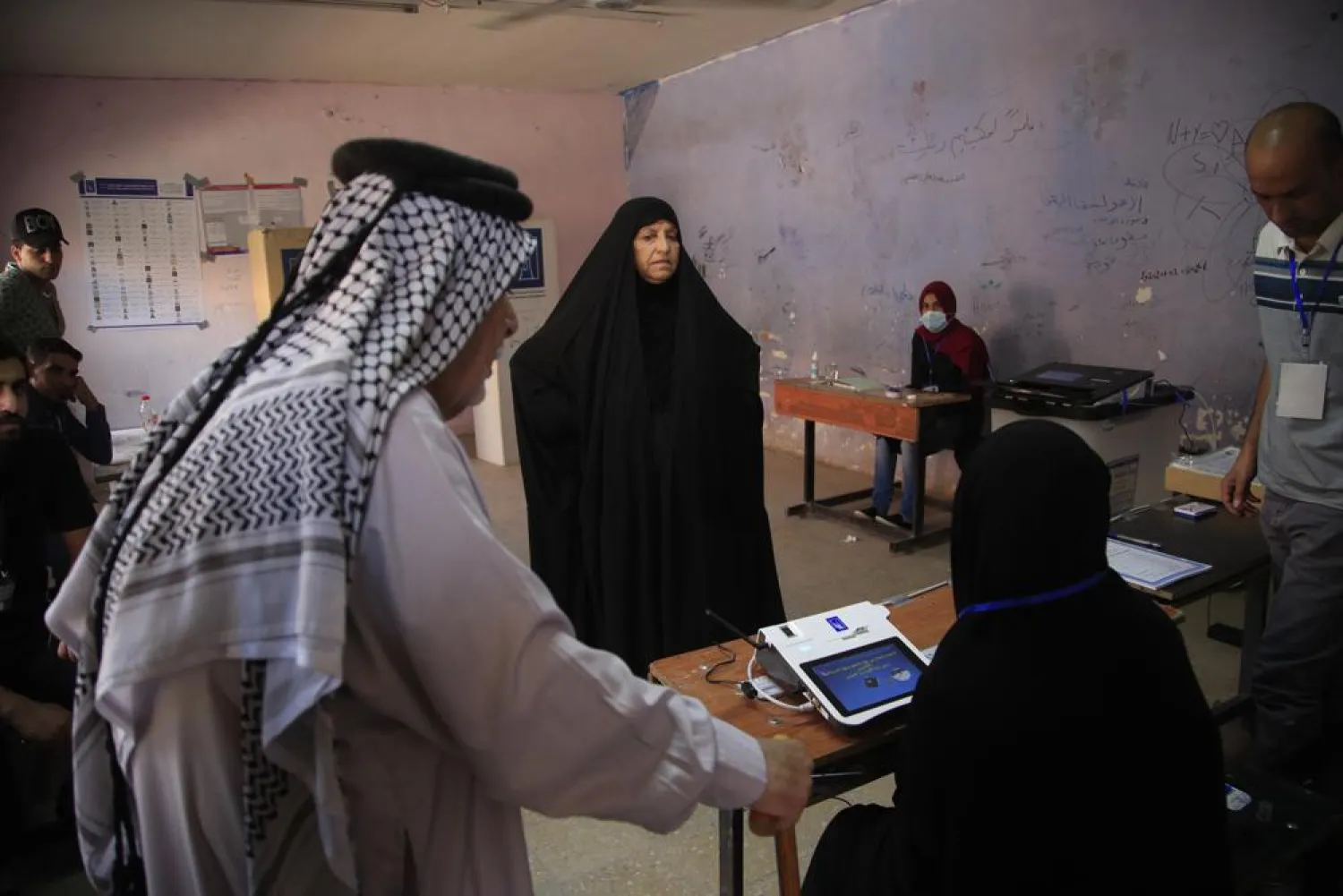
Iraqis gather to cast their vote at a ballot station in the country's parliamentary elections in Baghdad, Iraq, Sunday, Oct. 10, 2021. (AP)
TT

Pro-Iran Groups Denounce Iraq Election as ‘Scam’

Iraqis gather to cast their vote at a ballot station in the country's parliamentary elections in Baghdad, Iraq, Sunday, Oct. 10, 2021. (AP)

Two days after Iraq’s legislative election, pro-Iranian Shiite parties and armed groups on Tuesday denounced early poll results as "manipulation" and a "scam".

Sunday’s parliamentary election -- the fifth in the war-scarred country since the 2003 US-led invasion toppled Saddam Hussein -- was marked by a record low turnout of 41 percent.

Parties representing Iraq’s Shiite majority have dominated Iraqi politics since the aftermath of the invasion, but early results from Sunday’s vote deepened a rift between powerful factions within that camp.

According to preliminary results from the electoral commission, the biggest winner was the movement of Shiite cleric Moqtada Sadr, which increased its lead to 73 of the assembly’s 329 seats.

This boosts the leverage in choosing Iraq’s next prime minister and cabinet for Sadr.

Losses were booked by pro-Iranian Shiite parties with links to the armed groups that make up the paramilitary network known as the Popular Mobilization Forces (PMF).

The Fatah (Conquest) Alliance, previously the second largest bloc in parliament, suffered a sharp decline from 48 to only about a dozen seats, according to observers and results compiled by AFP.

"We will appeal against the results and we reject them," said a joint statement by several of the Shiite parties, including the Fatah Alliance.

"We will take all available measures to prevent the manipulation of votes," added the statement also signed by the party of former prime minister Haider al-Abadi, who served from 2014 to 2018.

The head of the EU observer mission, Viola von Cramon, said the vote had been "calm and orderly" and that "there was nothing technically wrong with the majority of polling stations observed".

Results from some polling stations were still being counted, nearly 48 hours after voting ended.

‘Scam and rip-off’
One of PMF’s most powerful factions, the Hezbollah Brigades, rejected the election as "the biggest scam and rip-off the Iraqi people have been subjected to in modern history."

"The PMF brothers are the main targets," its spokesman Abu Ali al-Askari charged.

The PMF was formed in 2014 and went on to play a major role in the defeat of the ISIS group, which had expanded its self-declared "caliphate" centered in Syria and taken over a third of Iraq.

The PMF has since been integrated into Iraq’s state security apparatus, and many lawmakers linked to it were elected to parliament in 2018.

Prime Minister Mustafa al-Kadhimi brought forward the vote from 2022 to appease a youth-led protest movement that erupted two years ago against graft, unemployment, crumbling public services and Iranian influence in politics.

Iraq is a major oil producer but nearly a third of its almost 40 million people live in poverty, according to UN figures, and the Covid pandemic only deepened a long-running economic crisis.

The protest movement ended after hundreds of demonstrators were killed. More activists have since been targeted in bloodshed and abductions which the movement blames on pro-Iran armed groups.

Kadhimi’s political future is now uncertain, with few observers willing to predict who will emerge as leader after the usual haggling between factions that follows Iraqi elections.

Another notable trend in the election were gains by the pro-Iranian State of Law Alliance of former prime minister Nuri al-Maliki, who served from 2006 to 2014. His party can count on about 30 seats.

The Taqadom party of the influential parliament speaker Mohamed al-Halbussi, a Sunni, claimed to have won some 40 seats.

In the Shiite south, Imtidad, a newly created party representing the protest movement, won nine seats, according to a preliminary count by AFP.

The EU observer mission said it saw the low voter turnout as a "clear political signal", hoping that it would be "heard by the political elite".


New Hamas Security Measures amid Fears of Overseas Assassinations

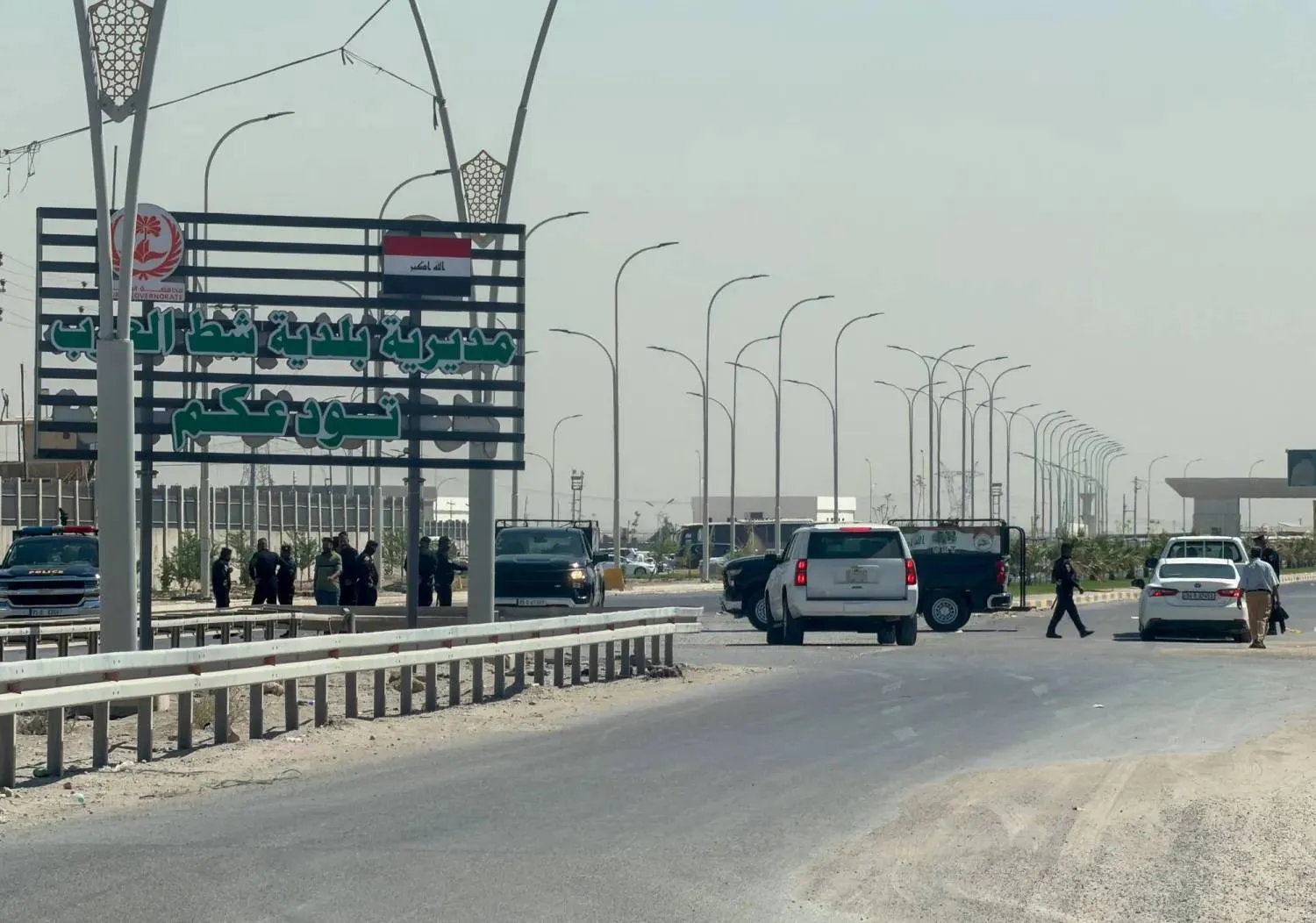
The building damaged in the Israeli strike on Hamas leaders in Doha last September (Reuters)
TT

New Hamas Security Measures amid Fears of Overseas Assassinations

The building damaged in the Israeli strike on Hamas leaders in Doha last September (Reuters)

Hamas is increasingly bracing for what it sees as a looming Israeli assassination attempt against senior figures operating outside Palestinian territory.

Senior officials in the movement told Asharq Al-Awsat that concern has been mounting over a potential strike targeting Hamas’s top echelon, particularly after the killing of senior Lebanese Hezbollah official Haitham Tabtabai.

The sources said that despite “reassurance messages” conveyed by the United States to several parties, including mediators in Türkiye, Qatar and Egypt, that last September’s Doha operation will not be repeated, the movement’s leadership “does not trust Israel”.

One source linked “expectations of a new assassination attempt with the Israeli government’s efforts to obstruct the second phase of the ceasefire agreement and its claim that the movement has no intention of advancing toward a deal”.

According to the sources, Hamas’s leadership has tightened security measures since the attempted assassination in Doha, convinced that “Israel will continue tracking the leadership and locating them through different methods, foremost of which are advanced technologies”.

A “non-Arab state”

A Hamas source said “there are assessments that the movement’s leaders may be targeted in a non-Arab state”, declining to identify it.

Since the start of the war on Gaza in October 2023, Israel has threatened and carried out overseas assassinations against Hamas leaders. It first killed Saleh al-Arouri, the movement’s deputy leader, in Beirut in January 2024, then killed the head of its political bureau, Ismail Haniyeh, in Tehran in July 2024.

Israel then attempted to eliminate the movement’s leadership council in the Doha operation.

Israeli Prime Minister Benjamin Netanyahu later apologized to Qatar after pressure from US President Donald Trump.

US envoys Steve Witkoff and Jared Kushner subsequently met Khalil al-Hayya, head of the Hamas delegation for ceasefire talks, who had been a primary target in the Doha operation.

“New security instructions”

Asharq Al-Awsat reviewed an internal directive distributed to Hamas leaders abroad regarding personal security and precautionary measures to prevent possible assassinations or at least reduce their impact.

The new instructions, which appear to have been drafted by security experts, say all fixed meetings in a single location must be canceled, and that leaders should resort to irregular meetings in rotating locations.

The instructions also require leaders to “keep mobile phones completely away from meeting sites by no less than 70 meters, and to ban the entry of any medical or electronic devices including watches into meeting venues. There must be no air conditioners, internet routers, television screens or even home intercom systems.”

The guidelines stress the need to “constantly inspect meeting venues in case miniature cameras have been planted anywhere through human agents, particularly since Israeli security services resort to installing cameras and spying devices during maintenance work inside buildings that they identify as future targets”.

The document warns leaders that “Israel relies on a chain of elements to monitor and track its targets, including human factors such as cleaning staff or others, or even individuals in the first circle around the wanted person, as well as mobile phones and other tools that can be used for surveillance such as screens, air conditioners and more”.

It adds that “switching off phones alone does not prevent tracking, especially since there is the ability to hack any device operating through Wi-Fi. Smart watches and similar devices can be used to determine the number of people in any room. Several types of missiles can also penetrate any wall or building and reach their target in a very short period”.

Gaza commander survives

Meanwhile, Israel on Wednesday attempted to assassinate a commander in the Rafah Brigade of the Qassam Brigades, the Hamas military wing, after bombing a tent sheltering his family in the Mawasi area of Khan Younis in southern Gaza.

The strike came hours after four Israeli soldiers were wounded in a firefight with Qassam gunmen in Rafah as the troops emerged from tunnels.

Sources told Asharq Al-Awsat that the targeted figure survived. He is the intelligence chief of the Rafah Brigade.

Israel had previously said it succeeded in dismantling the Rafah Brigade completely and eliminating it, but successive operations carried out by armed cells from the brigade inside the city, which is under Israeli control, have fueled significant doubt about Israel’s narrative.


Sources to Asharq Al-Awsat: Tribal Clashes Behind Killing of Yasser Abu Shabab

Yasser Abu Shabab (Social Media)
TT

Sources to Asharq Al-Awsat: Tribal Clashes Behind Killing of Yasser Abu Shabab

Yasser Abu Shabab (Social Media)

Sources in Gaza said the killing of Yasser Abu Shabab, the leader of an armed militia opposed to Hamas, unfolded against the backdrop of a tribal confrontation, with two members of his own Tarabin clan implicated in the attack.

The sources told Asharq Al-Awsat that the two assailants, from the Debari and Abu Suneima families, both part of the wider Bedouin Tarabin tribe, had taken part in the shooting that left Abu Shabab fatally wounded.

According to the sources, the incident occurred on Thursday and ended swiftly when Abu Shabab’s escorts shot dead the men who had targeted him.

Abu Shabab, a controversial figure who emerged during Israel’s war on Gaza and became prominent during efforts to deliver aid to the blockaded enclave, was killed after months in the public eye.

Israel’s Army Radio said on Thursday, citing security officials, that Abu Shabab, one of the most prominent tribal leaders opposed to Hamas in Gaza, died of his wounds at Soroka Medical Center in Beersheba in southern Israel, where he had been transferred after being injured earlier.

Abu Shabab’s armed group is based in Rafah in southern Gaza. In previous remarks he insisted that his group’s only link was with the Palestinian Authority, rejecting accusations that he collaborated with Israel.

He had called for renaming his militia, known as the Popular Forces in Gaza, as a counterterrorism group.

Army Radio said Abu Shabab had declared his cooperation with Israel and formed the first armed group to confront Hamas in southern Gaza. It added that he had been targeted by gunmen who opened fire on him.

A few months earlier, with the resumption of humanitarian aid deliveries to Gaza, Abu Shabab resurfaced after nearly three months of absence from the field and from his Facebook page.

Abu Shabab has frequently stirred controversy. Some Gaza residents linked his name to the theft of humanitarian aid in past periods, while others defended him and praised what they considered efforts to secure and protect aid shipments.

In May last year, he reactivated his Facebook page and announced he had resumed securing the delivery of aid to residential areas, raising questions about his sudden reappearance and the purpose behind the announcement, especially given his past association among many with aid theft.

Several sources told Asharq Al-Awsat that Abu Shabab and the armed group that appeared with him in photos on his page were primarily present in areas between eastern Rafah and southeastern Khan Younis.

These areas fall under Israeli control and are inhabited only by a few dozen members of the Tarabin tribe, to which Abu Shabab and his associates belong.

Humanitarian aid began to enter Gaza last week after Israel yielded to international pressure and lifted the blockade it had imposed on aid entry on March 2 last year. A global hunger monitoring body said the blockade had pushed half a million people in the enclave to the brink of famine.

No one knows the exact size of the armed force he formed. Estimates range from dozens to a few hundred, based on images and short videos on TikTok and other social media platforms that show the group with weapons and four-wheel drive vehicles.

Asharq Al-Awsat was unable to reach Abu Shabab directly to clarify his role in the handling of aid, as all his phone numbers were switched off.

Some sources familiar with him said he was a simple young man who had been detained by Hamas police on charges of drug possession and trafficking, but escaped with other inmates after the war broke out and the bombardment intensified. The sources said he had never been affiliated with any Palestinian faction and that there was no known record of him spying for Israel. They added that carrying weapons was common among most members of the Tarabin tribe.

After some residents accused him of stealing aid, Hamas security forces raided sites he visited with his armed men in November 2024, killing at least twenty people and wounding dozens.

After reports claimed he had been killed when an anti-armor projectile struck the vehicle he used to flee, it later emerged that his brother had been inside and was the one killed.

According to some sources, Abu Shabab fled to areas very close to Israeli military positions east of Rafah.

After a period of absence, Abu Shabab reappeared in recent days as aid deliveries resumed. Videos circulated showing men said to be from his group securing aid convoys, escorting foreign delegations and accompanying Red Cross workers. The footage shows people from the Tarabin tribe speaking with visiting delegations.

Each time aid entered the enclave, Abu Shabab posted messages on his Facebook page about protecting it and transporting it to the edges of areas outside his control, which he referred to as “the other side”, meaning the de facto Hamas government.

In one recent post he wrote, “When we distributed aid with dignity they defamed us, when we stood to protect it they accused us, and here we are today appearing before the people, we the sons of this nation.”

The message was signed “Yasser Abu Shabab, Popular Forces”.

Field sources told Asharq Al-Awsat that the stolen aid had not gone to Hamas. The sources said the shipments entered residential areas without protection, which contributed to theft.

When a group from the Hamas Home Front security force went to secure the aid in Deir al-Balah in central Gaza, an Israeli strike killed six of its members, allowing an armed gang to seize the supplies.

Hours later, Hamas fighters fired a projectile at the armed men responsible for the theft, killing six of them, the field sources said.

Some sources said Abu Shabab could barely write and was unlikely to be managing his Facebook page himself. This raised questions about who might be backing him, especially since he operated in areas considered extremely dangerous for Gaza residents due to the presence of Israeli forces.

In several posts, Abu Shabab referred to a media team that managed his page and handled his work professionally. In one post he not only highlighted aid protection but also called for unity and urged people to reject Hamas, which he accused of distorting the image of popular figures.

In some of his posts he referred to his group as the Popular Action Forces. On some TikTok videos, labels such as Counterterrorism Forces appeared.

Some Gaza residents, even jokingly, began calling him “Mr. President”, while others referred to him as “the state”, especially after his armed men were seen wearing military fatigues with Palestinian flags and saluting every convoy carrying visiting delegations.

Local sources said he recently helped evacuate families trapped by Israeli forces in the Amour area southeast of Khan Younis, enabling them to reach areas west of the city.

Hamas repeatedly accuses Israel of fostering lawlessness in Gaza and enabling aid theft by armed gangs.

Israeli officials have openly encouraged Gaza residents to break away from Hamas and rise up against it, which has already occurred in some areas.


Israel Strikes South Lebanon Towns

Smoke billows from the site of an Israeli airstrike that targeted the southern Lebanese village of al-Mjadel on December 4, 2025. (Photo by KAWANT HAJU / AFP)
TT

Israel Strikes South Lebanon Towns

Smoke billows from the site of an Israeli airstrike that targeted the southern Lebanese village of al-Mjadel on December 4, 2025. (Photo by KAWANT HAJU / AFP)

Israel's military said it struck targets in two southern Lebanese towns on Thursday after ordering the evacuation of two buildings it alleged were being used by Hezbollah.

About an hour after the initial warning, the army's Arabic spokesperson issued another notice instructing residents of buildings in two other towns to leave.

The strikes came a day after Israel and Lebanon sent civilian envoys to a committee overseeing a fragile ceasefire agreed a year ago that both sides have accused the other of breaking.

The envoys would broaden the scope of talks between the long-time adversaries, both sides said.

Lebanese Prime Minister Nawaf Salam said on Wednesday Lebanon was open to the committee taking on a direct verification role to check Israeli claims that Hezbollah is re-arming, and verify the work of the Lebanese army in dismantling the group's infrastructure.