Japan Puzzling over Sudden Virus Success

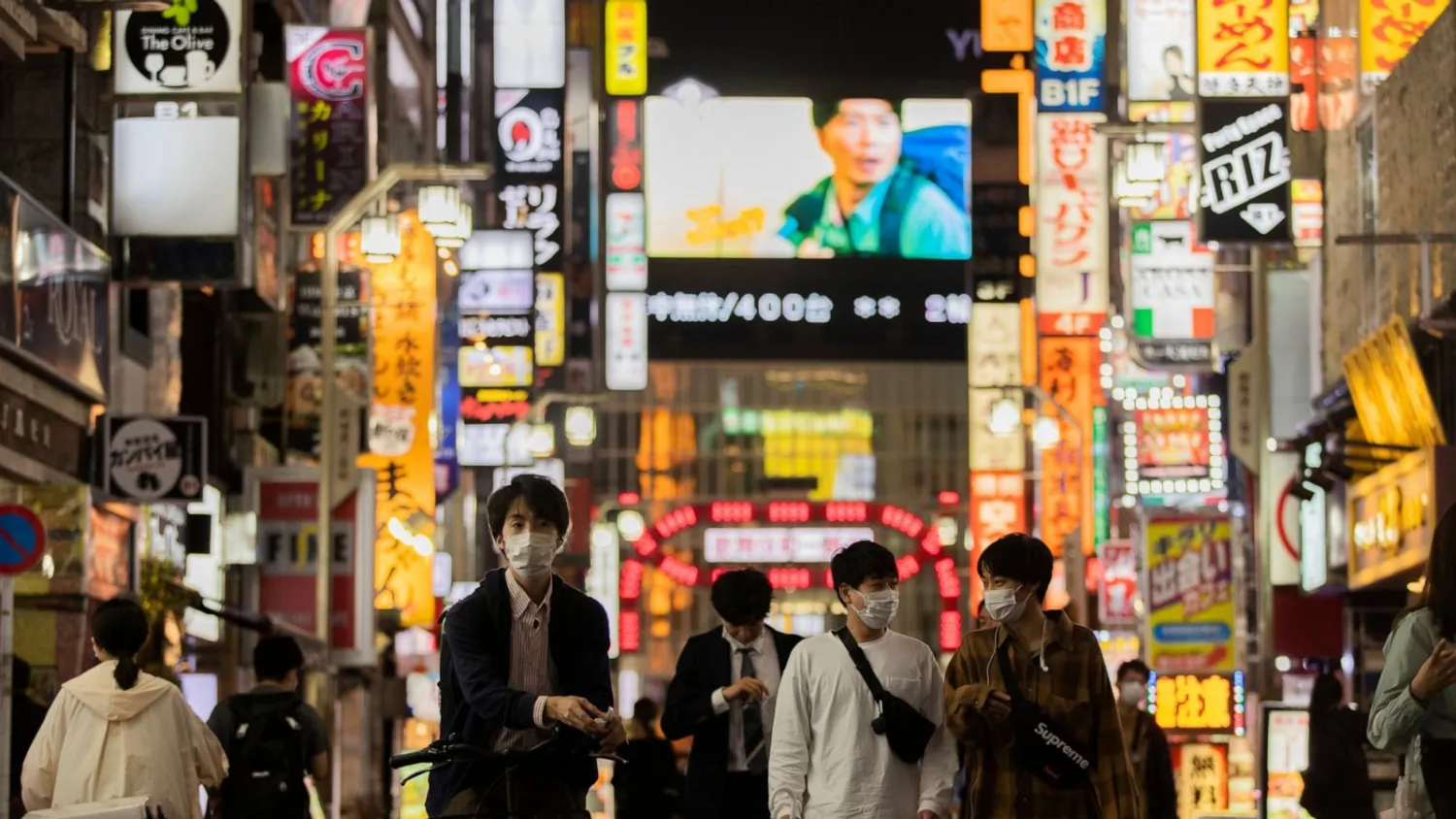
FILE - In this Oct. 1, 2021, file photo, people walk through the famed Kabukicho entertainment district of Tokyo on the first night of the government's lifting of a coronavirus state of emergency. (AP Photo/Hiro Komae, File)
TT

Japan Puzzling over Sudden Virus Success

FILE - In this Oct. 1, 2021, file photo, people walk through the famed Kabukicho entertainment district of Tokyo on the first night of the government's lifting of a coronavirus state of emergency. (AP Photo/Hiro Komae, File)

Almost overnight, Japan has become a stunning, and somewhat mysterious, coronavirus success story.

Daily new COVID-19 cases have plummeted from a mid-August peak of nearly 6,000 in Tokyo, with caseloads in the densely populated capital now routinely below 100, an 11-month low.

The bars are packed, the trains are crowded, and the mood is celebratory, despite a general bafflement over what, exactly, is behind the sharp drop.

Japan, unlike other places in Europe and Asia, has never had anything close to a lockdown, just a series of relatively toothless states of emergency, The Associated Press said.

Some possible factors in Japan's success include a belated but remarkably rapid vaccination campaign, an emptying out of many nightlife areas as fears spread during the recent surge in cases, a widespread practice, well before the pandemic, of wearing masks and bad weather in late August that kept people home.

But with vaccine efficacy gradually waning and winter approaching, experts worry that without knowing what exactly why cases have dropped so drastically, Japan could face another wave like this summer, when hospitals overflowed with serious cases and deaths soared — though the numbers were lower than pre-vaccination levels.
Many credit the vaccination campaign, especially among younger people, for bringing infections down. Nearly 70 percent of the population is fully vaccinated.

“Rapid and intensive vaccinations in Japan among those younger than 64 might have created a temporary condition similar to herd-immunity,” said Dr. Kazuhiro Tateda, a Toho University professor of virology.

Tateda noted that vaccination rates surged in July to September, just as the more infectious delta variant was spreading fast.

He cautioned, however, that breakthrough infections in the US, Britain and other places where inoculations began months earlier than in Japan show that vaccines alone are not perfect and efficacy gradually wears off.

Japan’s vaccinations started in mid-February, with health workers and the elderly first in line. Shortages of imported vaccines kept progress slow until late May, when the supply stabilized and daily inoculation targets were raised to above 1 million doses to maximize protection before the July 23-Aug. 8 Olympics.

The number of daily shots rose to about 1.5 million in July, pushing vaccination rates from 15% in early July to 65% by early October, exceeding the 57% of the United States.

Daily new cases surged just weeks ahead of the Olympics, forcing Japan to hold the Games with daily caseloads of more than 5,000 in Tokyo and around 20,000 nationwide in early August. Tokyo reported 40 cases Sunday, below 100 for the ninth straight day and lowest this year. Nationwide, Japan reported 429 cases Sunday for an accumulated total of about 1.71 million and 18,000 deaths since the pandemic began early last year.

So why the drop?

“It’s a tough question, and we have to consider the effect of the vaccinations progress, which is extremely big,” said Disease Control and Prevention Center Director Norio Ohmagari. “At the same time, people who gather in high-risk environments, such as crowded and less-ventilated places, may have been already infected and acquired natural immunity by now.”

Though some speculated that the drop in cases might be due to less testing, Tokyo metropolitan government data showed the positivity rate fell from 25% in late August to 1% in mid-October, while the number of tests fell by one-third. Masataka Inokuchi, the Tokyo Medical Association deputy chief, said falling positivity rates show infections have slowed.

Japan's state of emergency measures were not lockdowns but requests that focused mainly on bars and eateries, which were asked to close early and not serve alcohol. Many people continued to commute on crowded trains, and attended sports and cultural events at stadiums with some social distancing controls.

The emergency requests have ended and the government is gradually expanding social and economic activity while allowing athletic events and package tours on a trial basis using vaccination certificates and increased testing.

To speed up inoculations, former Prime Minister Yoshihide Suga, who left office recently, expanded the number of health workers legally eligible to give shots, opened large-scale vaccination centers and promoted workplace vaccinations beginning in late June.

Kyoto University professor Hiroshi Nishiura told a recent government advisory board meeting that he estimates vaccinations helped some 650,000 people avoid infection and saved more than 7,200 lives between March and September.

Many experts initially blamed younger people, seen drinking on the streets and in parks when the bars were closed, for spreading the virus, but said data showed many in their 40s and 50s also frequented nightlife districts. Most serious cases and deaths were among unvaccinated people in their 50s or younger.

Takaji Wakita, director of the National Institute of Infectious Diseases, told reporters recently he is worried people have already resumed partying in nightlife districts, noting that the slowing of infections may have already hit bottom.

"Looking ahead, it is important to further push down the caseloads in case of a future resurgence of infections," Wakita said Thursday.

On Friday, new Prime Minister Fumio Kishida said a preparedness plan to be compiled by early November would include tougher limits on activities and require hospitals to provide more beds and staff for COVID-19 treatment in case infections soar in a “worst-case scenario.”

Many people are cautious about letting down their guard, regardless of the numbers.

Mask-wearing “has become so normal," said university student Mizuki Kawano. “I’m still worried about the virus,” she said.

Public health experts want a comprehensive investigation into why infections have dropped off.

An analysis of GPS data showed that people’s movements in major downtown entertainment districts fell during the most recent, third state of emergency, which ended Sept. 30.

“I believe the decrease of people visiting entertainment districts, along with the vaccination progress, has contributed to the decline of infections,” said Atsushi Nishida, the director of the Research Center for Social Science & Medicine Sciences at the Tokyo Metropolitan Institute of Medical Science.

But people headed back to entertainment districts as soon as the recent emergency ended, he said, and that may “affect the infection situation in coming weeks.”


Trump Says Takes ‘Very Seriously’ Possible Iran Threat to Washington

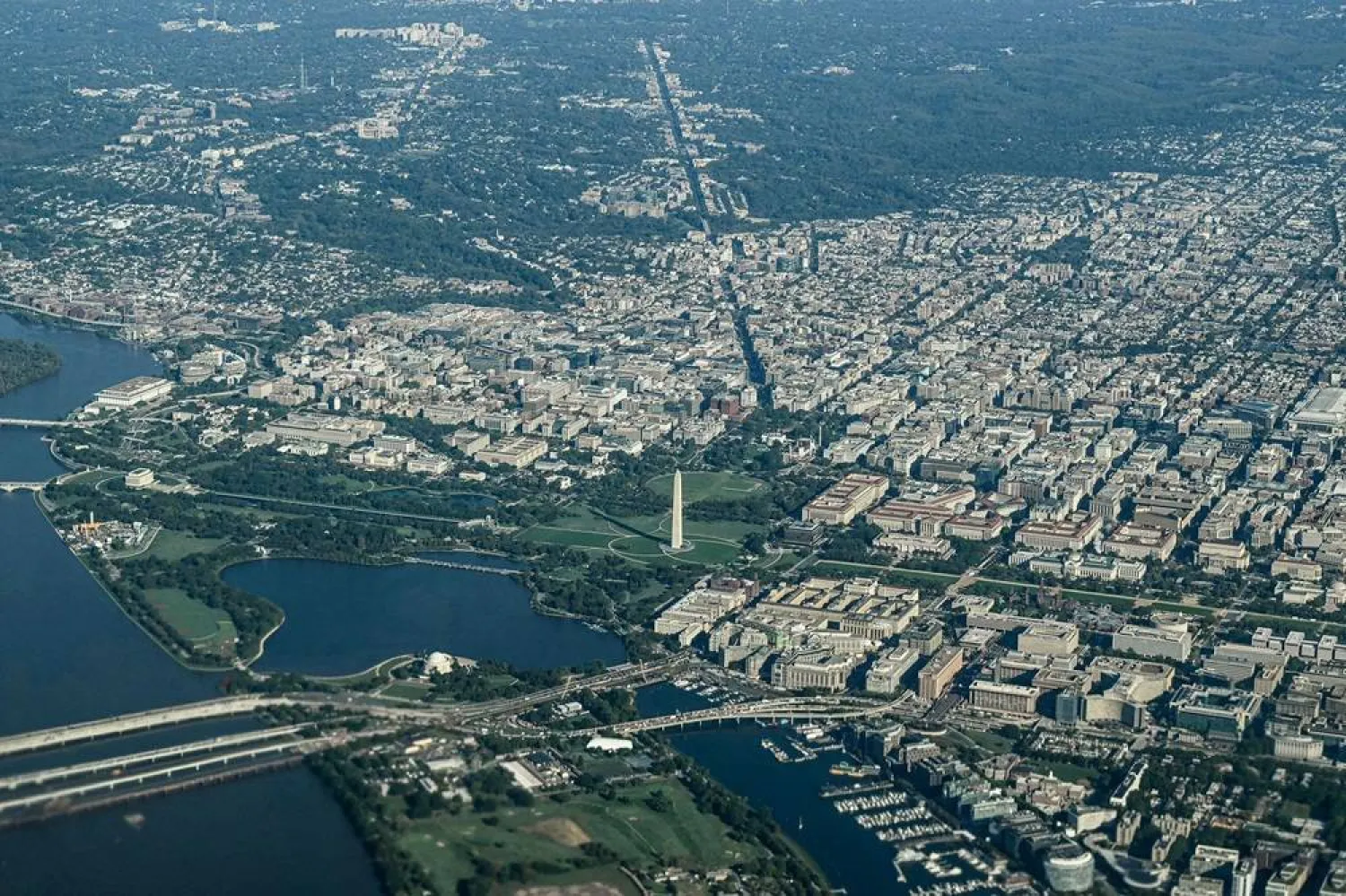
 An aerial view of Washington, DC is seen on October 13. (AFP/Getty Images)
An aerial view of Washington, DC is seen on October 13. (AFP/Getty Images)
TT

Trump Says Takes ‘Very Seriously’ Possible Iran Threat to Washington

 An aerial view of Washington, DC is seen on October 13. (AFP/Getty Images)
An aerial view of Washington, DC is seen on October 13. (AFP/Getty Images)

President Donald Trump said Tuesday that US authorities take "very seriously" any possible threat to Washington, after reports of Iran preparing a so-called dirty bomb plot.

"They will pay a price the likes of which no other country has ever paid before," Trump said, referring to Iran. "We take it very seriously because they happen to be crazy."

Earlier on Tuesday, Iran's Foreign Ministry spokesperson denied a CNN report that it ‌planned to ‌detonate a dirty ‌bomb ⁠in Washington, saying ⁠the allegations were "baseless".

CNN ‌cited ‌sources as saying that US intelligence ‌indicates that Tehran is developing ⁠plans ⁠to potentially detonate a dirty bomb in Washington DC.

Sources familiar with the latest intelligence characterized the Iranian planning as, for now, an effort to give itself options rather than an indicator of an imminent attack, reported CNN. But the plotting picked up by the US has been very specific and includes locations and targets, two of the sources said, and has sparked a flurry of US contingency planning.  

In a statement, White House spokesperson Lauren Bis said that the US is “monitoring any and all potential threats, but at this time there are no credible threats to the homeland.” 


Trump Arrives in Manila for Quad Talks Ahead of China Visit

US President Donald Trump waves as he walks to board Air Force One at Joint Base Andrews, Maryland, on November 16, 2026. (AFP)
TT

Trump Arrives in Manila for Quad Talks Ahead of China Visit

US President Donald Trump waves as he walks to board Air Force One at Joint Base Andrews, Maryland, on November 16, 2026. (AFP)

US President Donald Trump arrived in the Philippines on Tuesday at the tail end of a Southeast Asian summit, with protests awaiting him as he prepares for the first meeting in two years of the Quad group of Indo-Pacific countries.

Trump's Asia trip, which includes the Asia-Pacific Economic Cooperation (APEC) forum in Shenzhen and a much-anticipated trilateral meeting with his Chinese and Russian counterparts, comes after his Republican Party's defeat in midterm elections, plus spy allegations and new US curbs on China's access to AI chips that could complicate a fragile trade-war truce.

Demonstrators gathered in Manila for a fifth day of protests that have included the burning of Trump effigies, calls for an end to the Middle East war and scrapping of the US-led Pax Silica supply chain initiative.

Trump arrived late afternoon at the end of the Association of Southeast Asian Nations summit ‌and will join a ‌US-ASEAN "Special Summit" later on Tuesday.

He will first hold a meeting of the Quad – ‌the ⁠US, Japan, Australia and ⁠India – which will be his first and takes place two years after the last gathering of the group, which Trump's predecessor Joe Biden regarded as a signature foreign policy initiative.

It comes ahead of the APEC gathering hosted by Chinese President Xi Jinping, who has previously objected to the Quad as an effort to encircle Beijing. Quad members have said the grouping is not directed against any one country.

QUAD MEETING THE 'BEST POSSIBLE SIGNAL'

At the ASEAN summit on Monday, Chinese Premier Li Qiang hailed what he called "truly extraordinary" economic achievements of China and ASEAN in the face of global trade restrictions, expressing Beijing's commitment to free trade and the need to "stand united, ward off interference, and work together".

China ⁠is ASEAN's largest trading partner and a key source of investment, but the biggest economies ‌of the 11-member bloc – which has a combined GDP of more than $3.9 trillion – ‌want to deepen ties with the US despite protracted trade and diplomatic uncertainty under the Trump administration.

Former US Deputy Secretary of State Kurt ‌Campbell credited Washington's top diplomat, Marco Rubio, with the timing and reconvening of the Quad, which he said had lost ambition ‌under Trump.

"Part of what he (Rubio) is thinking is that this is probably the best possible signal if you're going to go into a trilateral meeting," said Campbell, co-founder of The Asia Group, referring to Thursday's US-China-Russia talks.

"The linchpin of everything that we do in Asia is the US-Japan relationship, and a perception that this is not at the top of the president's mind would concern me."

White House spokesperson Olivia Wales on Friday ‌said that under Trump's leadership, the Quad had demonstrated it is "a partnership of action, tackling the region's toughest challenges and driving opportunities to ensure a free and open Indo-Pacific".

A Japanese foreign ⁠ministry official said it was ⁠expected that Quad leaders would try to show unity, with maritime security, export restrictions, critical-minerals supply-chain diversification and AI among potential discussion points.

Undersea cables, emerging technology and disaster relief were also likely to be covered, a source familiar with the matter said.

JAPAN TO PLAY MORE PROACTIVE ROLE, PM SAYS

ASEAN's leaders held meetings on Tuesday involving counterparts of Japan, South Korea, China and India.

Japanese Prime Minister Sanae Takaichi pledged to work with ASEAN to boost regional economic and energy resilience to address export restrictions and vulnerabilities from rapid AI development, and strengthen supply chains, including on critical minerals.

"While the international order is experiencing a period of great instability, Japan will play an ever more proactive role," Takaichi said.

Trump will sign a joint statement with Thai Prime Minister Anutin Charnvirakul on Tuesday on an agreement on reciprocal trade. Thai media have reported the two would hold talks and the statement would be about progress on negotiations.

The US is Thailand's largest export market, accounting for 24% of its total shipments this year. The US designated Thailand as a major non-NATO ally in 2003.

Trump will on Wednesday meet Ferdinand Marcos Jr, president of US defense ally the Philippines, before heading to Shenzhen.


Pakistan Army Chief and Iran FM Discuss Regional Peace, Security

Vessels at the Strait of Hormuz, as seen from Musandam, Oman, November 17, 2026. (Reuters)
TT

Pakistan Army Chief and Iran FM Discuss Regional Peace, Security

Vessels at the Strait of Hormuz, as seen from Musandam, Oman, November 17, 2026. (Reuters)

Asim Munir, the powerful army chief of mediating country Pakistan, met with Iranian foreign minister Abbas Araghchi, the Pakistani military said Tuesday, during continued efforts to end the war between the United States and Iran.

Pakistan brokered a June accord that led to a brief halt in fighting between the United States and Iran and set a roadmap for further agreement on reopening the crucial Strait of Hormuz waterway and for negotiations on Tehran's nuclear program.

But the truce collapsed with Washington and Tehran accusing each other of violating the agreement and prompting months of shuttle diplomacy to resuscitate the ceasefire, led principally by mediators Qatar and Pakistan.

During the meeting on Monday, "matters of mutual interest, regional security dynamics and evolving geopolitical developments were discussed," the Pakistani military's media wing said in a statement.

Munir "underscored the importance of sustained engagement, mutual trust and close coordination between the two brotherly countries for promoting regional peace and stability", it added.

Araghchi arrived in Pakistan late on Sunday for a meeting of the Economic Cooperation Organization, a group of nations from Central and South Asia and the Middle East.

Pakistani Foreign Minister Ishaq Dar said on Monday he had held "very candid, very frank" discussions with Araghchi, during the conference confirming that Iran had put forward a two-day proposal to reopen the Strait of Hormuz as part of efforts to end the war with the United States.

He said Washington had not yet responded.

The United States and Israel launched the war on February 28, killing members of Iran's leadership and demanding it cease any nuclear-related activities.

The war plunged the Middle East into violence, with Tehran's retaliatory strikes targeting Gulf countries and sending global energy prices skyrocketing.

Tehran has insisted that Washington meet conditions including the release of frozen assets abroad, sanctions relief and an end to the US naval blockade of Iranian ports in exchange for reopening the Strait of Hormuz.