
Gawky Teen Star Wins New Fans for Japan's 'Game of Generals'

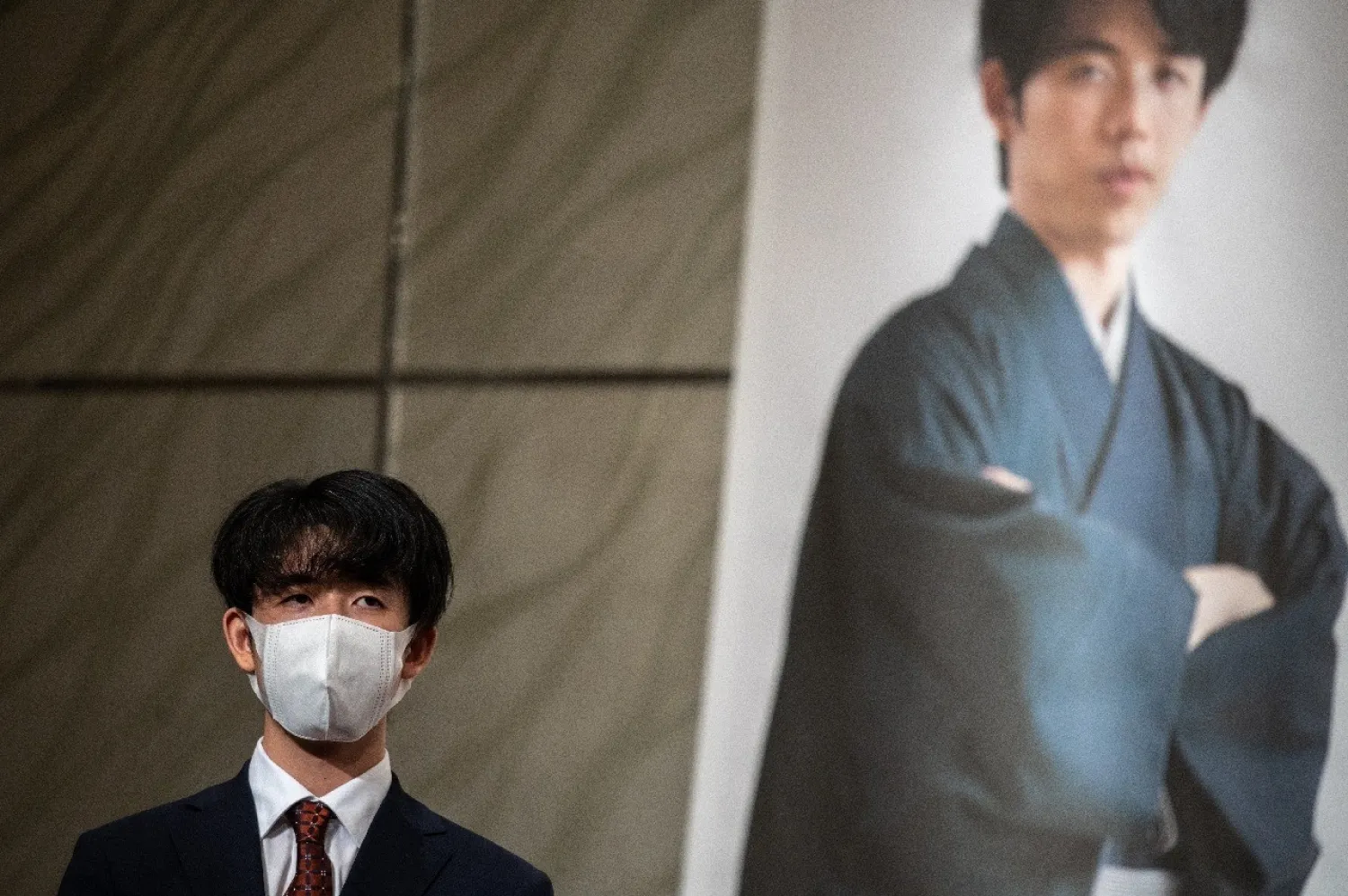
Sota Fujii's incredible success and quirky charm have made him a household name in Japan. Philip FONG AFP
TT

Gawky Teen Star Wins New Fans for Japan's 'Game of Generals'

Sota Fujii's incredible success and quirky charm have made him a household name in Japan. Philip FONG AFP

Shogi, the Japanese chess variant known as the "game of generals", is enjoying a wave of popularity in its homeland thanks to a gawky teenage prodigy with a rock-star following.

Sota Fujii's incredible success and quirky charm have made him a household name in Japan, dusting off the traditional board game's musty image and taking it to a new audience.

The 19-year-old became the youngest player ever to reach shogi's highest rank of ninth dan this summer and last month became the youngest to hold three of the sport's eight major titles.

Fujii launched his bid to capture a fourth in the best-of-seven "Ryuo" championship series earlier this month, and his fellow professionals credit him with breathing new life into the chess-like game.

"It used to be only shogi fans who would follow it, but now general news programs have shogi stories and that has attracted new fans," professional shogi player Taichi Nakamura told AFP.

"There never used to be many female shogi fans. But since Sota Fujii came along, a lot of women have taken an interest."

With his unruly mop of hair, goofy grin and high-pitched, lilting voice, Fujii may appear an unlikely pin-up.

But his face beams out from magazines, billboards and TV screens all over Japan, and his favorite cakes sell out at convenience stores within hours of him eating them during games.

His pronouncements to the media are typically understated.

"I don't pay so much attention to the titles themselves," Fujii said after his latest victory.

"The most important thing for me is how strong I can become."

- Ancient mercenaries -
Shogi is played on a plain wooden board with pieces distinguished by painted Chinese characters. It has existed in its current form for about 400 years.

The rules are similar to chess, with the main difference that captured pieces can switch sides and return to the board -- a practice said to stem from the mercenaries of 15th century Japan.

"I've been playing shogi for more than 50 years now and I've never got bored of it," said retired professional Kazuo Ishida, ranked ninth dan.

"That's because it's a game with infinite variety. You never get the same game twice."

Shogi apprentices must reach first dan by the age of 21 and fourth dan by 26 if they want to turn professional. There are currently around 160 active professional players in Japan.

Professionals receive a salary from the association and can earn extra from prize money and commentating on matches.

Pro player Nakamura says Fujii's high profile has attracted casual fans who are less interested in the intricacies of the game and more in the players themselves.

"There has been a marked increase in the number of people who don't play shogi but watch professional matches," he said.

"People have started enjoying contests in terms of the personal storyline between the two players."

- 'Everyone knows him' -
Popular shogi-themed manga and anime have also helped stoke interest, but Fujii is not the first superstar the sport has produced.

Yoshiharu Habu was the original shogi prodigy, winning his first major title as a 19-year-old in 1989 before going on to hold them all at the same time -- a feat yet to be repeated.

Habu was lauded with Japan's People's Honor Award in 2018 and has won 99 titles over the course of his career.

The retired player Ishida believes Fujii is stronger than Habu was in his prime, but says it remains to be seen if he can match his sustained success.

He thinks there has been a "dramatic" change in the way people enjoy shogi.

"I think there were probably more people playing in Habu's era, but there are now a lot more fans who watch matches," he said.

"'Habu fever' was something to behold, but I think everyone in the whole country knows who Fujii is."

Fujii's influence can certainly be seen in the Sunday morning kids class that Ishida teaches in Kashiwa, near Tokyo.

He says more children have taken up the sport since Fujii's rise to prominence -- and there is no doubt who their favorite player is.

"Sota Fujii is really cool," said seven-year-old Soichi Ishikawa, struggling to make himself heard over the clack of pieces.

"I want to become a professional shogi player when I'm older."


Japan's New Flagship H3 Rocket Fails to Put Geolocation Satellite Into Orbit

Japan's H3 rocket No.8 carrying carrying the Michibiki No. 5 satellite lifts off from the Tanegashima Space Center on the southwestern island of Tanegashima, Kagoshima Prefecture, southwestern Japan, December 22, 2025, in this photo taken by Kyodo. Kyodo/via REUTERS
TT

Japan's New Flagship H3 Rocket Fails to Put Geolocation Satellite Into Orbit

Japan's H3 rocket No.8 carrying carrying the Michibiki No. 5 satellite lifts off from the Tanegashima Space Center on the southwestern island of Tanegashima, Kagoshima Prefecture, southwestern Japan, December 22, 2025, in this photo taken by Kyodo. Kyodo/via REUTERS

Japan's space agency said its H3 rocket carrying a navigation satellite failed to put the payload into a planned orbit, a setback for the country's new flagship rocket and its space launch program.

Monday's failure is the second for Japan's new flagship rocket after its botched 2023 debut flight and six successful flights, The Associated Press reported.

The Japan Aerospace Exploration Agency said the H3 rocket carrying the Michibiki 5 satellite took off from the Tanegashima Space Center on a southwestern Japanese island Monday as part of Japan's plans to have a more precise location positioning system of its own.

The rocket's second-stage engine burn unexpectedly had a premature cutoff and a subsequent separation of the satellite from the rocket could not be confirmed, Masashi Okada, a JAXA executive and launch director, told a news conference.

Whether the satellite was released into space or where it ended up is unknown, and that JAXA is investigating the data to determine the cause and other details, Okada said.

Jun Kondo, an official at the Ministry of Education, Culture, Sports, Science and Technology, told reporters that the failure was “extremely regrettable” and that the government set up a task force to investigate the cause and take necessary measures as soon as possible to “regain credibility.”

Monday's failure is a setback for Japan's new flagship that replaced the earlier mainstay H-2A which had near-perfect success record. It also delays Japan’s satellite launch plans, including one to have a more independent geolocation system for smartphones, maritime navigation and drones without relying on the US GPS system.

The H3 rocket is designed to be more cost-competitive in the global space market. Japan sees a stable, commercially competitive space transport capability as key to its space program and national security.

JAXA's H3 project manager, Makoto Arita, said the new flagship is still in the early stages of operation but can be globally competitive. “We will pull ourselves together so that we won't fall behind rivals. We'll fully investigate the cause and put H3 back on track.”

Monday's launch came five days after JAXA aborted just 17 seconds before liftoff, citing an abnormality of a water spray system at the launch facility, following an earlier problem with the rocket.

In its debut flight in March 2023, H3 failed to ignite the second-stage engine.
Japan currently has the quasi-zenith satellite system, or QZSS, with five satellites for a regional navigation system that first went into operation in 2018. The Michibiki 5 was to be the sixth of its network.

Japan currently relies partially on American GPS and wants to have a seven-satellite network system by March 2026 and an 11-satellite network by the late 2030s.


Scientists and Data Explain Why Kenya’s Lakes Are Rising as Thousands Face an Uncertain Future 

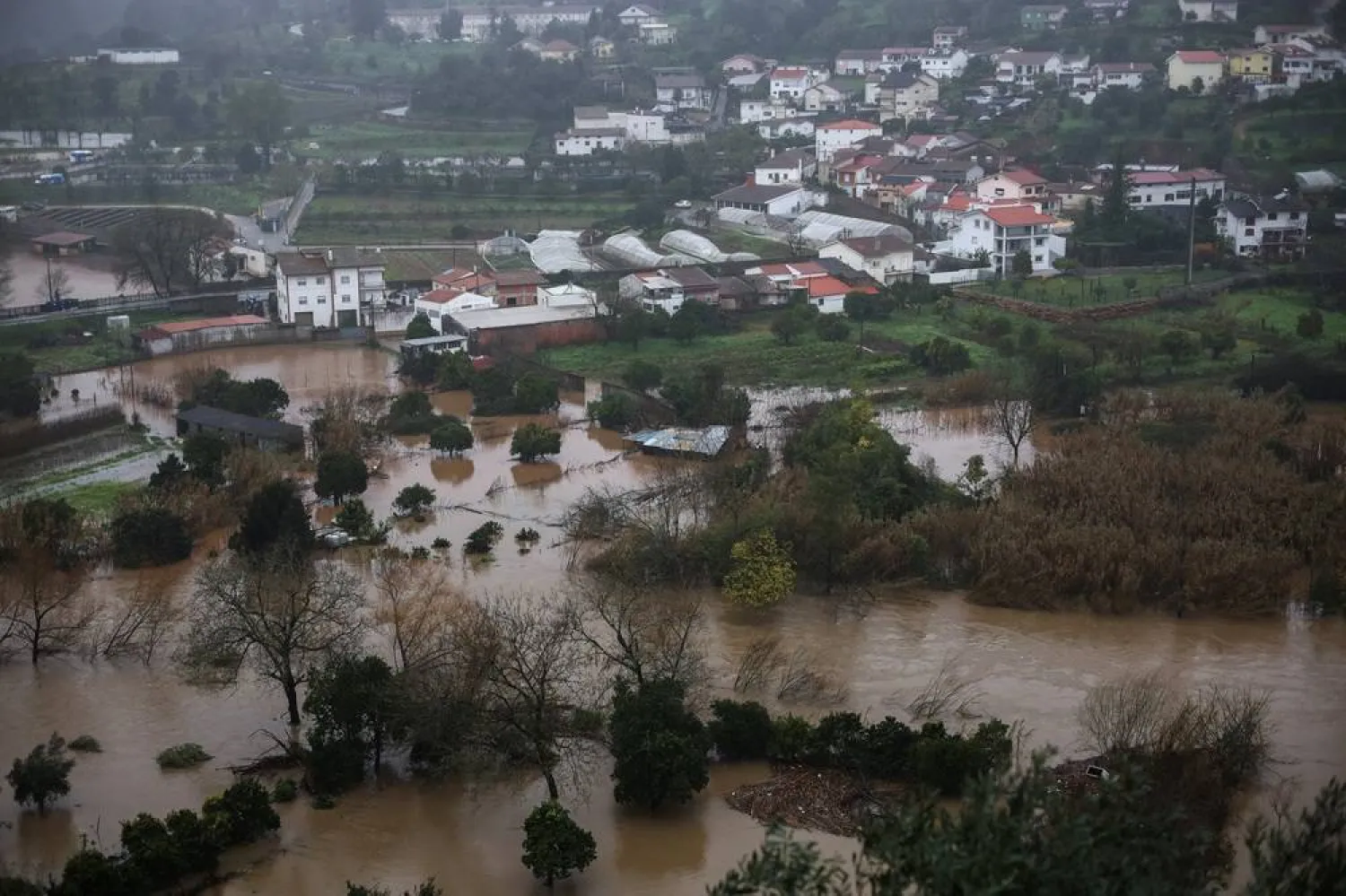
A man stands on a rooftop overlooking submerged homes after rising waters from Lake Naivasha flooded Kihoto Village, displacing hundreds, in Naivasha, Kenya's Rift Valley region, on Tuesday, Nov. 11, 2025. (AP Photo/Andrew Kasuku)
TT

Scientists and Data Explain Why Kenya’s Lakes Are Rising as Thousands Face an Uncertain Future 

A man stands on a rooftop overlooking submerged homes after rising waters from Lake Naivasha flooded Kihoto Village, displacing hundreds, in Naivasha, Kenya's Rift Valley region, on Tuesday, Nov. 11, 2025. (AP Photo/Andrew Kasuku)

When Dickson Ngome first leased his farm at Lake Naivasha in Kenya’s Rift Valley in 2008, it was over 2 kilometers (1.2 miles) from shore. The farm was on 1.5 acres (0.6 hectares) of fertile land where he grew vegetables to sell at local markets.

At the time, the lake was receding and people were worried that it might dry up altogether. But since 2011, the shore has crept ever closer. The rains started early this year, in September, and didn't let up for months.

One morning in late October, Ngome and his family woke up to find their home and farm inside the lake. The lake levels had risen overnight and about a foot of water covered everything.

“It seemed as if the lake was far from our homes,” Ngome’s wife, Rose Wafula, told The Associated Press. “And then one night we were shocked to find our houses flooded. The water came from nowhere.”

The couple and their four children have had to leave home and are camping out on the first floor of an abandoned school nearby.

Some 5,000 people were displaced by the rise in Lake Naivasha’s levels this year. Some scientists attribute the higher levels to increased rains caused by climate change, although there may be other factors causing the lake’s steady rise over the past decade.

The lake is a tourism hot spot and surrounded by farms, mostly growing flowers, which have gradually been disappearing into the water as the lake levels rise.

Rising levels have not been isolated to Naivasha: Kenya’s Lake Baringo, Lake Nakuru and Lake Turkana — all in the Rift Valley — have been steadily rising for 15 years.

“The lakes have risen almost beyond the highest level they have ever reached,” said Simon Onywere, who teaches environmental planning at Kenyatta University in Kenya’s capital Nairobi.

Rising lake levels displaced tens of thousands

A study in the Journal of Hydrology last year found that lake areas in East Africa increased by 71,822 square kilometers (27,730 square miles) between 2011 and 2023. That affects a lot of people: By 2021, more than 75,000 households had been displaced across the Rift Valley, according to a study commissioned that year by the Kenyan Environment Ministry and the United Nations Development Program.

In Baringo, the submerged buildings that made headlines in 2020 and 2021 are still underwater.

“In Lake Baringo, the water rose almost 14 meters,” Onywere said. “Everything went under, completely under. Buildings will never be seen again, like the Block Hotels of Lake Baringo.”

Flower farms taking a beating Lake Naivasha has risen steadily too, “engulfing three quarters of some flower farms,” Onywere said.

Horticulture is a major economic sector in Kenya, generating just over a billion US dollars in revenue in 2024 and providing 40% of the volume of roses sold in the European Union, according to Kenya’s Ministry of Foreign Affairs.

Significant research has gone into the reasons behind the rising lakes phenomenon: A 2021 study on the rise of Kenya’s Rift Valley lakes was coauthored by Kenyan meteorologist Richard Muita, who is now acting assistant director of the Kenya Meteorological Department.

“There are researchers who come up with drivers that are geological, others with reasons like planetary factors,” Muita said. “The Kenya Meteorological Department found that the water level rises are associated with rainfall patterns and temperature changes. When the rains are plentiful, it aligns with the increase in the levels of the Rift Valley lake waters.”

Sedimentation is also a factor. “From the research I have read, there’s a lot of sediment, especially from agricultural related activities, that flows into these lakes,” says Muita.

‘A mess’ made by the government years ago

Naivasha’s official high water mark was demarcated at 1,892.8 meters (6,210 feet) above sea level by the Riparian Association in 1906, and is still used by surveyors today. That means this year’s flooding was still almost a meter (3 feet) below the high mark.

It also means that the community of Kihoto on Lake Naivasha where the Ngomes lived lies on riparian land — land that falls below the high water mark, and can only be owned by the government.

“It’s a mess established by the government ... towards the late 1960s,” said Silas Wanjala, general manager of the Lake Naivasha Riparian Association, which was founded some 120 years ago and has been keeping meticulous records of the lake’s water levels since.

Back then, a farmer was given a “temporary agricultural lease” on Kihoto, said Wanjala. When it later flooded and the farmer packed up and left, the farmworkers stayed on the land and later applied for subdivisions, which were approved. In the 60-odd years since, a whole settlement has grown on land that is officially not for lease or sale.

This also isn’t the first time it’s been flooded, said Wanjala. It's just very rare that the water comes up this high. That’s little consolation for the people who have been displaced by this year’s floods and now cannot go home without risking confrontations with hippopotamuses.

To support those people, the county is focusing its efforts on where the need is greatest.

“We are tackling this as an emergency," says Joyce Ncece, chief officer for disaster management in Nakuru County, which oversees Lake Naivasha. “The county government has provided trucks to help families relocate. We have been helping to pay rent for those who lack the finances.”

Scientists like Onywere and Muita are hoping for longer-term solutions. “Could we have predicted this so that we could have done better infrastructure in less risk-prone areas?” Onywere said.

Muita wants to see a more concerted global effort to combat climate change, as well as local, nature-based solutions centered on Indigenous knowledge, such as “conservation agriculture, where there is very limited disturbance of the land,” to reduce sedimentation of the lakes.

But all of this is of little help to Ngome and Wafula, who are still living at the school with their children. As the rest of the world looks forward to the holidays and new year, their future is uncertain. Lake Naivasha’s continuous rise over the past 15 years does not bode well: They have no idea when, or if, their farm will ever be back on dry land.


Japan Footballer 'King Kazu' to Play on at the Age of 58

Japanese footballer Kazuyoshi Miura is set to join a new team at the age of 58. STR / AFP
TT

Japan Footballer 'King Kazu' to Play on at the Age of 58

Japanese footballer Kazuyoshi Miura is set to join a new team at the age of 58. STR / AFP

Evergreen 58-year-old striker Kazuyoshi Miura is set to join a Japanese third-division team to begin his 41th season as a professional footballer, local media reported Sunday.

Miura, known as "King Kazu", will join Fukushima United on a year-long loan after spending last season with fourth-tier Atletico Suzuka, said AFP.

The signing is not yet official but Miura's recent moves have typically been announced at 11:11am on January 11, in a nod to his shirt number.

The former Japan international will turn 59 in February.

He made seven appearances last season for Suzuka, who were relegated to Japan's regional leagues after finishing second-bottom of the table and losing a playoff.

Miura made his professional debut in 1986 for Brazilian team Santos and he has also played for teams in Italy, Croatia, Australia and Portugal.

He helped put football in Japan on the map when the professional J. League was launched in 1993.

He made his Japan debut in 1990 but was famously left out of the squad for their first World Cup finals appearance in 1998, despite scoring 55 goals in 89 games for the national side.