


Lebanon's Car Culture Questioned In Crisis

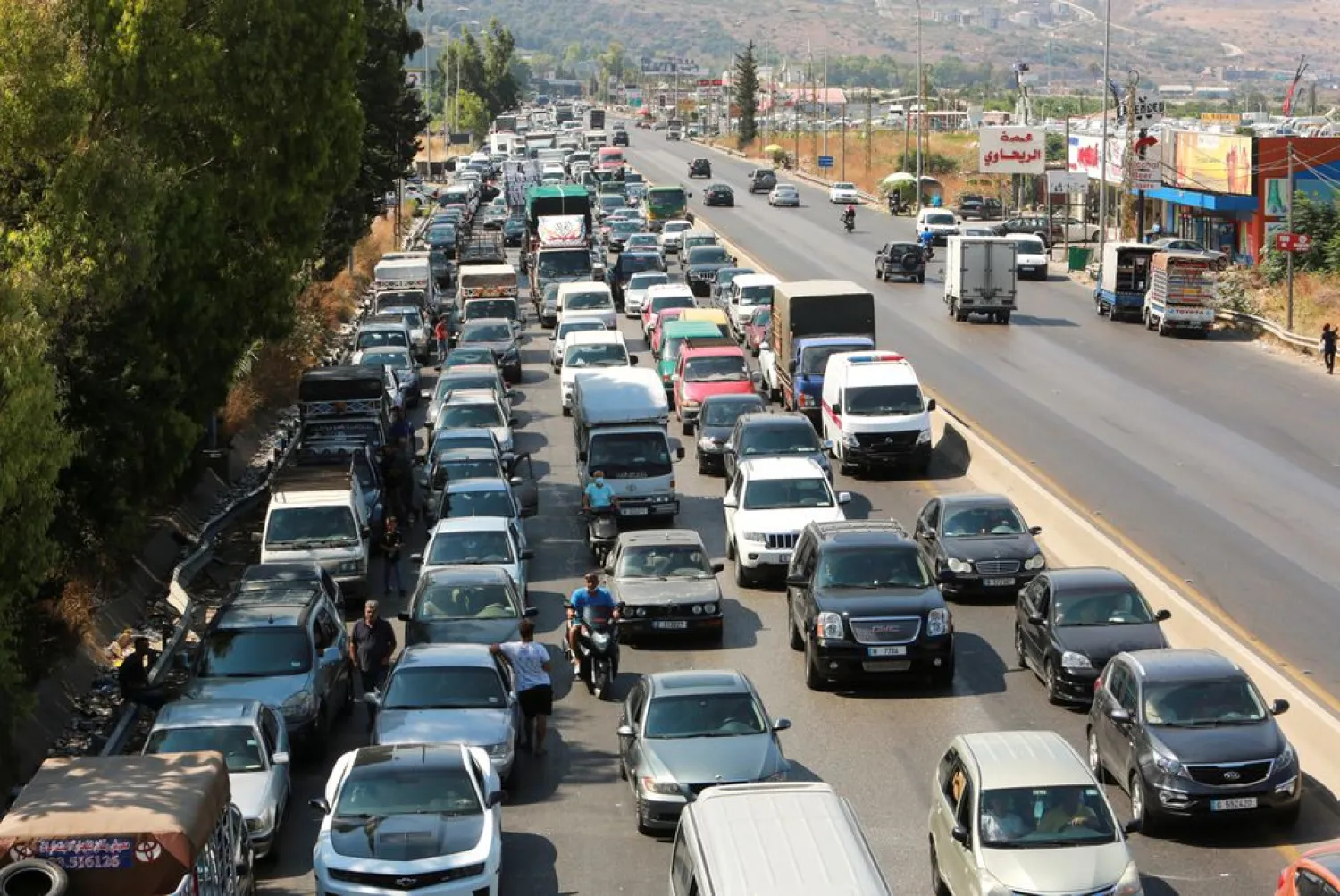
File Photo - A view shows cars stuck in a traffic jam near a gas station in Jiyeh, Lebanon, August 13, 2021. REUTERS/Aziz Taher
TT

Lebanon's Car Culture Questioned In Crisis

File Photo - A view shows cars stuck in a traffic jam near a gas station in Jiyeh, Lebanon, August 13, 2021. REUTERS/Aziz Taher

By challenging Lebanon's national passion for automobile ownership, and driving growing numbers towards greener or more collective transport, the economic crisis is succeeding where everything else failed.

In the absence of a functioning public transport system, car culture has thrived and many households, even modest ones, boast multiple vehicles.

Since 2019, however, an ever worsening financial crisis has made petrol unaffordable for many and long queues at gas stations unbearable for the rest.

One of the by-products of Lebanon's historic shortages and currency crisis is the first meaningful dent in decades in the reign of the private automobile.

Tuk-tuks, bicycles, carpooling and affordable buses -- which were once out of the question for many -- have since become more popular amid changing public attitudes and skyrocketing transport costs, including higher taxi fares.

"Before the crisis, I relied on my family's car or a taxi, but this has all become unaffordable," said Grace Issa, a 23-year-old customer service professional whose workplace is around 20 kilometers (12 miles) from home.

Her only option to get to the office now is a private coach operated by Hadeer, a start-up without which she would not have accepted her new job in the first place.

"I now spend about 30 percent of my salary on transportation instead of 70 percent," she told AFP as she boarded a bus to go back home.

- 'Unclean, unsafe' -
There are more than two million cars for six million people in Lebanon.

Car imports have fallen by 70 percent over the past two years and many Lebanese can no longer afford new vehicles with the local currency losing about 90 percent of its value against the dollar on the black market.

Dwindling foreign currency reserves have forced authorities to scale back subsidies on imports, including fuel, causing prices to skyrocket.

Twenty liters (4.4 gallons) of petrol are now worth around a third of the minimum wage, while nearly 80 percent of the population lives below the poverty line.

In response to the crisis, Boutros Karam, 26, and three friends launched Hadeer, which provides affordable bus transport along the country's northern coastal highway.

Unlike the dilapidated public transport system, buses operate along a fixed schedule, are equipped with wi-fi and tracking services and are relatively safer for women who often report harassment on public coaches and vans.

Sixty percent of Hadeer's customers are women.

"The public transport problem is an old one but it was compounded recently by the fuel crisis and the fact that many can no longer afford to move around" using taxis or their own cars, Karam said.

The start-up, which has also developed a mobile app that allows customers to book seats in advance, is breaking stereotypes Lebanese have harboured regarding mass transit, Karam added.

Many of our customers "were not accustomed to using collective transportation", Karam said.

"They used to refuse it because it was seen as unclean... and unsafe."

- 'Way of life' -
Lebanon has had a railway network since the end of the 19th century but it has been out of service since the start of the country's 1975-1990 civil war.

Several proposals over the decades to revamp public transport have been shelved. In 2018, the World Bank approved a $295 million package to jumpstart the country's first modern public transport system.

The Greater Beirut Public Transport Project, however, never took off and the Lebanese government is now looking to use the funds to help support the country's poorest.

"Discussions are under way with the government of Lebanon regarding the feasibility of restructuring and reprogramming the entire World Bank portfolio which also includes the Greater Beirut Public Transport Project," World Bank spokesperson Zeina El-Khalil told AFP.

In the coastal city of Batroun, a popular tourist hotspot during the summer, the tuk-tuk has gained traction among visitors and residents alike, according to Toni Jerjes, who manages a service offering the auto rickshaws.

"The crisis has changed the Lebanese people's transportation habits. Tuk-tuk is a less expensive and faster option," he said.

In the city of Tripoli further north, Natheer Halawani has relied on a bicycle for nearly two decades to move around.

He has lobbied for a bicycle boom in his car-clogged city for years, but in the end, it was the economic calamity that finally put the wheels in motion, and he says more people are now pedaling through the city's streets.

The private vehicle "is not just a means of transport, it is also a way of life", he said.

For the 35-year-old, the crisis provides "a suitable opportunity to rethink" such old transportation models.




Olympic Tourists in Cortina Can Explore the Dolomites with the New ‘Uber Snowmobile’ Service

 The peaks of the Dolomites are seen from the Cortina Sliding Centre during the Milano Cortina 2026 Winter Olympic Games in Cortina d'Ampezzo on February 5, 2026. (AFP)
The peaks of the Dolomites are seen from the Cortina Sliding Centre during the Milano Cortina 2026 Winter Olympic Games in Cortina d'Ampezzo on February 5, 2026. (AFP)
TT

Olympic Tourists in Cortina Can Explore the Dolomites with the New ‘Uber Snowmobile’ Service

 The peaks of the Dolomites are seen from the Cortina Sliding Centre during the Milano Cortina 2026 Winter Olympic Games in Cortina d'Ampezzo on February 5, 2026. (AFP)
The peaks of the Dolomites are seen from the Cortina Sliding Centre during the Milano Cortina 2026 Winter Olympic Games in Cortina d'Ampezzo on February 5, 2026. (AFP)

The peaks of the Dolomites are seen from the Cortina Sliding Centre during the Milano Cortina 2026 Winter Olympic Games in Cortina d'Ampezzo on February 5, 2026. (AFP)

For one month starting on Saturday, Olympic spectators keen for a side trip to a UNESCO World Heritage Site can use Uber to reserve a ride on a snowmobile along the snow-covered road to the base of the Three Peaks of Lavaredo.

The dramatic, jagged limestone pinnacles stand just 23 kilometers (14.3 miles) from the Cortina venues where athletes are competing in the 2026 Winter Olympics and Paralympics.

One of the Olympic torchbearers, Giulia Baffetti, runs snowmobiling tours through Cortina-based winter activities outfit Snowdreamers. The company partnered with Uber, the official ride-hailing sponsor for the Games, to offer free tours on the weekends in February to people in town.

"Uber Snowmobile" tours, which can only be booked through Uber, include a ride in an Uber transfer bus for up to eight people from Cortina to the spot where riders mount their snowmobiles for departure. Tourgoers then follow the instructor, who leads the line of snowmobiles.

The first slots offered went fast, but Uber spokesperson Caspar Nixon said Friday that it planned to add more.

The three peaks are a magical place, Baffetti said, and this is a way for more people to experience it. Hikers and climbers flock there in the warmer months. In the winter, it’s a prime spot for cross-country skiing, snowshoeing and sledding. Snowmobiling is allowed in a limited area in order to protect the environment.

"We want to give an experience to the tourists, so they can feel the mountains in a different way," she said.

The Associated Press took the one-hour tour on Thursday, ahead of the Saturday launch, along with one other person. Helmets are essential, while heated handgrips are a most welcome feature. And that red button? Passengers can push it to stop the snowmobile if it veers off course or they feel unsafe.

The adrenaline-filled ride reaches speeds up to 40 kph (25 mph) when zooming past snow-covered trees, and drivers are instructed to slow when coming upon cross-country skiers and sledders. Deer and wolves are sometimes seen along the 7-kilometer (4.3-mile) route up to the base of the peaks.

Also visible on Thursday was the southernmost of the three Lavaredo peaks, rising sharply out of the fog. While the Dolomites are breathtaking from Cortina — and on Friday, the sun shone and the view was clear from town — they are even more impressive up close.

The route back includes a short loop around Lake Antorno. Before traversing all the ups and downs, the snowmobile instructor leading the tour offers a reminder about that red button.

Saher Deeb, an Israeli tourist, was along for the ride Thursday, one day after his 29th birthday. It was his first time on a snowmobile, and he was all smiles as he climbed off at the end.

"It was perfect," he said.


French Duo Finish Walking from France to Shanghai After 1.5 Years

 Performers throw molten iron to create sparks during a performance on the Bund promenade along the Huangpu river, ahead of the upcoming Lunar New Year of the Horse in Shanghai on February 2, 2026. (AFP)
Performers throw molten iron to create sparks during a performance on the Bund promenade along the Huangpu river, ahead of the upcoming Lunar New Year of the Horse in Shanghai on February 2, 2026. (AFP)
TT

French Duo Finish Walking from France to Shanghai After 1.5 Years

 Performers throw molten iron to create sparks during a performance on the Bund promenade along the Huangpu river, ahead of the upcoming Lunar New Year of the Horse in Shanghai on February 2, 2026. (AFP)
Performers throw molten iron to create sparks during a performance on the Bund promenade along the Huangpu river, ahead of the upcoming Lunar New Year of the Horse in Shanghai on February 2, 2026. (AFP)

Two French adventurers reached the end of an epic walk from France to Shanghai on Saturday, after nearly a year and a half crossing 16 countries almost entirely on foot.

Loic Voisot and Benjamin Humblot embraced as they stood by the river on the Bund promenade, the financial hub's distinctive skyline glittering in the background.

Voisot and Humblot set off from Annecy in September 2024.

"We were thinking about this moment almost every day for more than a year now, so it's a really strong feeling," Humblot said of reaching their destination.

Hanging out after work one day, the two friends realized they both yearned for a "great adventure".

They wanted to visit China -- but without flying, which they believe is too harmful to the environment.

A plan to set out on foot was hatched, and except for a stretch in Russia which was done by bus for safety reasons, 518 days and around 12,850 kilometers (7,980 miles) later they took the last steps to completing it.

Around 50 people gathered at the start point for the last 10km stretch of their odyssey, many local people who have been following them on social media.

Along the way their numbers swelled, as media, French residents of Shanghai and others joined.

"If your dreams are crazy, just take it step by step and sometimes you will not succeed, but sometimes you will," said Voisot.

Asked what he would do first now the walk was over, he joked: "Sleep a lot!"


Annual Orchids Show Brings Vivid Color to Chicago Winter

Orchids adorn a Volkswagen Beetle as finishing touches are placed on the 12th annual Chicago Botanic Garden Orchid Show, Friday, Feb. 6, 2026, in Glencoe, Ill. (AP)
TT

Annual Orchids Show Brings Vivid Color to Chicago Winter

Orchids adorn a Volkswagen Beetle as finishing touches are placed on the 12th annual Chicago Botanic Garden Orchid Show, Friday, Feb. 6, 2026, in Glencoe, Ill. (AP)

A soft layer of white snow blankets the grounds of the Chicago Botanic Garden. The air is chilly, the sky gray.

Inside, however, the air is warm and lights illuminate more than 10,000 vividly colored orchids. Staff members move in and out of greenhouses, preparing to open the garden’s 12th annual Orchid Show on Saturday.

This year’s theme is “Feelin’ Groovy" with several installations calling back to the 1970s, including a yellow Volkswagen Beetle filled with orchids.

“It’s just a really great way to get out of the winter cold and come into our greenhouses,” said Jodi Zombolo, associate vice president of visitor events and programs. “I think people are really looking for something to kind of bring happiness and something that they will enjoy and find whimsy in.”

The orchid family is one of the largest in the plant world and some of the species in the show are rare, exhibits horticulturist Jason Toth said. One example is the Angraecum sesquipedale, also known as Darwin’s orchid, on display in the west gallery.

Toth said the orchid led Darwin to correctly conclude that pollinators have adapted in order to reach down the flower's very long end.

"It has a great story and it’s quite remarkable-looking,” said Toth.

Elsewhere, massive, gnarly roots dangle from purple, pink and yellow Vanda orchids in the south greenhouse. These epiphytic orchids grow on the surface of trees instead of in soil.

“I think everyone’s tired of the winter,” said Toth. “So having some kind of flower show at this point is what we’re all craving. And 'Orchids' fits the bill.”

The show is expected to draw 85,000 visitors this year.