
Russian warplanes raided the vicinity of Turkish-held positions south of Idlib province in Syria. At the same time, regime forces and Iranian militias bombarded de-escalation zones northwest of the war-torn country, killing a Syrian opposition fighter.
On Tuesday, heavy artillery shelling with advanced Russian projectiles targeted several towns south of Idlib that fall under de-escalation zones in Syria’s northwest, reported opposition activist Baha al-Hassan.
According to al-Hassan, the shelling killed a Syrian opposition fighter and wounded four others. The scope of the attack reached a town in the western countryside of Aleppo.
Al-Hassan added that Russian warplanes renewed their bombardment of Russian-Turkish de-escalation zones in northwestern Syria after a week-long hiatus.
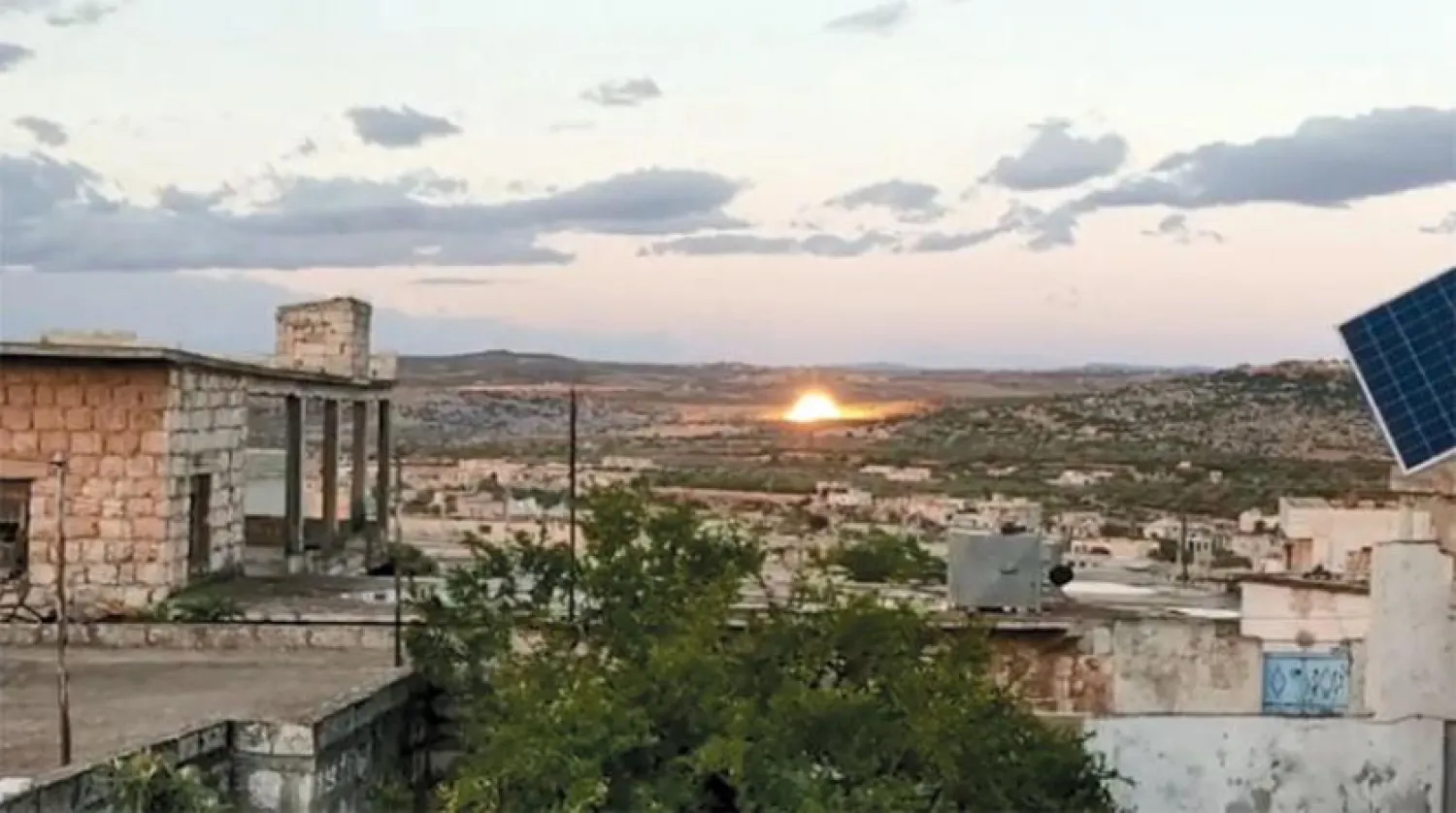
On Tuesday morning, Russian warplanes launched three airstrikes with high-explosive vacuum missiles, during which they targeted the vicinity of the Turkish military point, in the town of Al-Bara in Jabal Al-Zawiya, south of Idlib. No casualties were reported.
Al-Hassan confirmed that Syrian armed opposition factions, with several heavy artillery and mortar shells, bombed regime forces and Iranian militias in the 46th Regiment in the western countryside of Aleppo.
The attack killed a regime forces member in southern Idlib.
Ahmed Al-Mousa, a local from Al-Bara town in the Idlib countryside, said that regime forces and Iranian militias stationed in the Idlib countryside have stepped up their heavy artillery bombardment of different areas in the southern countryside of Idlib.
With over 170 shells fired by pro-regime forces, the escalation coincided with the start of the olive harvest season in the southern countryside of Idlib.
Al-Mousa predicted that farmers would find it difficult to reap olives this season, a matter which will leave large swathes of olive groves unharvested. For local farmers, olives are considered a key source of livelihood.
According to Al-Mousa, as many as 2,000 hectares of olive trees may go unharvested this year. Their proximity to contact lines with regime forces makes picking crops there a dangerous mission for locals.