Dar Al Adab Publishes Arabic Translation of Auður Ava Ólafsdóttir's ‘Hotel Silence’

"Hotel Silence," a novel by Icelandic novelist Auður Ava Ólafsdóttir
TT

Dar Al Adab Publishes Arabic Translation of Auður Ava Ólafsdóttir's ‘Hotel Silence’

"Hotel Silence," a novel by Icelandic novelist Auður Ava Ólafsdóttir

Dar Al Adab has released an Arabic translation of "Hotel Silence," a novel by Icelandic novelist Auður Ava Ólafsdóttir.

Translated by Hussam Mousalli, the novel revolves around a broken man, who goes out to the world holding a drill to fix everything that comes in his way pushed by an irresistible motivation.

The main character is Jónas Ebeneser, a divorced man in his late 40s, who finds out he is not the biological father of his daughter. So, he drowns in existential crisis and loses the will to live.

The plot of the novel raises a fundamental question: Could anyone heal from the fact that he is born? The book explores the potential of a man to restore himself and rediscover the meaning of life from the depths of despair.

"Hotel Silence" won the Nordic Council's Literature Prize, and the Best Icelandic Novel Award.

It was also selected by The Independent as one of the best 10 international novels in 2018.


UNESCO Chair in Translating Cultures Hosts Lectures on Safeguarding Intangible Cultural Heritage

The program was presented as an advanced knowledge initiative that combined theoretical perspectives with practical application - SPA
TT

UNESCO Chair in Translating Cultures Hosts Lectures on Safeguarding Intangible Cultural Heritage

The program was presented as an advanced knowledge initiative that combined theoretical perspectives with practical application - SPA

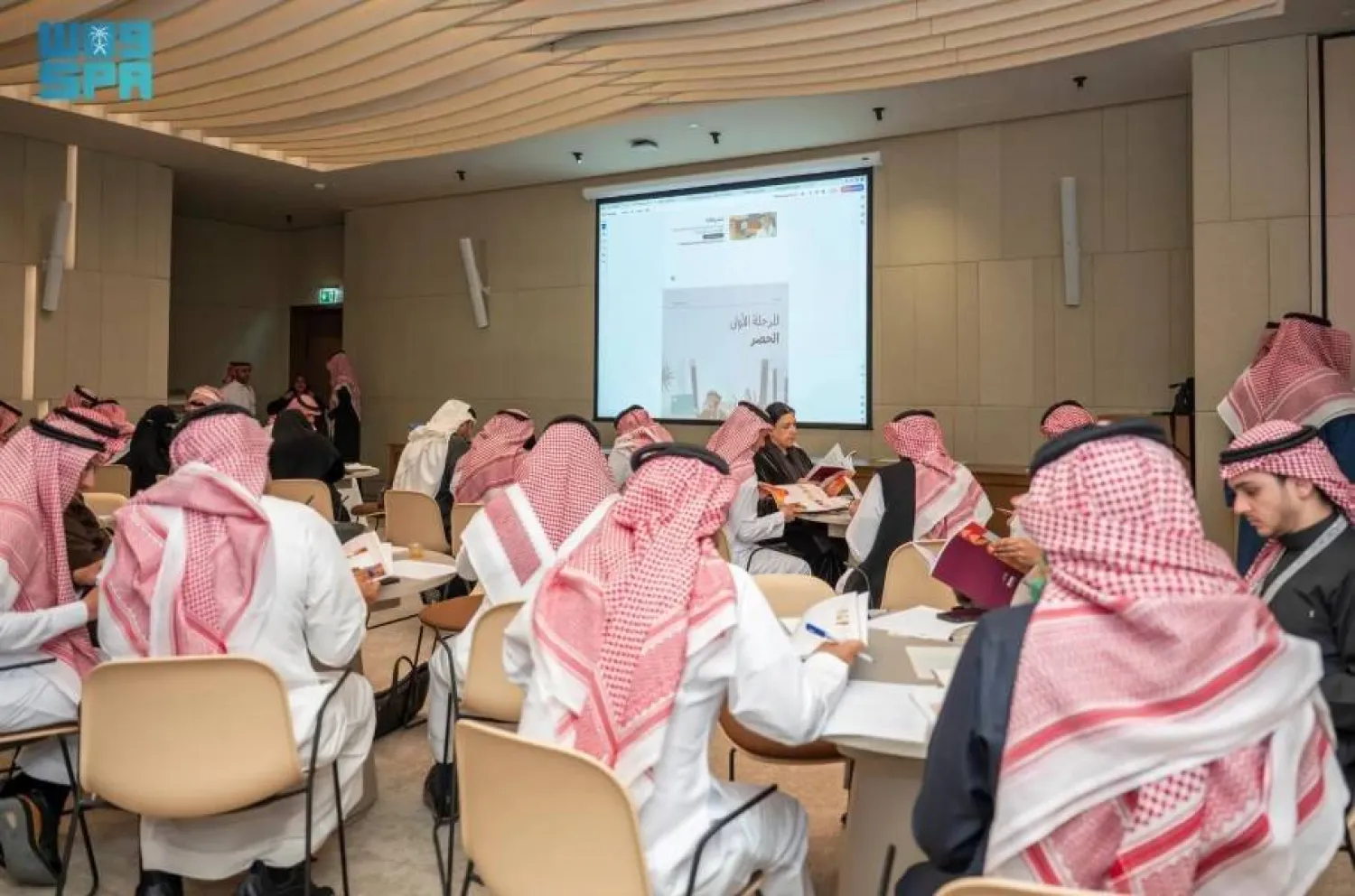
The United Nations Educational, Scientific and Cultural Organization (UNESCO) Chair in Translating Cultures at the King Faisal Center for Research and Islamic Studies (KFCRIS), with support from the Literature, Publishing, and Translation Commission, organized a training course and a series of specialized lectures on the translation and safeguarding of intangible cultural heritage, SPA reported.

The program was presented as an advanced knowledge initiative that combined theoretical perspectives with practical application, opening space for in-depth discussion of the challenges of translating intangible heritage as a living, evolving form of culture closely tied to its cultural, social, and performative contexts.

The course and lectures adopted a comprehensive approach that views translation as a cultural tool for preserving oral memory and building bridges between local specificity and the global sphere.

This approach was reflected through applied models, field experiences, and contemporary conceptual frameworks.


Ancient Egyptian Pharaoh’s Boat Is Being Reassembled in Public at Grand Egyptian Museum

People walk next to King Khufu's boat gem, also known as the Solar Boat, as work to restore the second solar boat has started with wooden planks part of the 1,650-piece structure being installed on a metal frame through Egyptian-Japanese cooperation with two Japanese universities, marking the start of preparations for the second boat's public display at the Grand Egyptian Museum (GEM), near the Giza Pyramid Complex, in Giza, Egypt, December 23, 2025.
TT

Ancient Egyptian Pharaoh’s Boat Is Being Reassembled in Public at Grand Egyptian Museum

People walk next to King Khufu's boat gem, also known as the Solar Boat, as work to restore the second solar boat has started with wooden planks part of the 1,650-piece structure being installed on a metal frame through Egyptian-Japanese cooperation with two Japanese universities, marking the start of preparations for the second boat's public display at the Grand Egyptian Museum (GEM), near the Giza Pyramid Complex, in Giza, Egypt, December 23, 2025.

A boat belonging to an Egyptian pharaoh is being assembled in full view at the Grand Egyptian Museum’s exhibition hall.

Staff began piecing together the cedarwood boat, one of two that were found that belong to King Khufu, Tuesday morning as dozens of visitors watched.

The assembly of the 42-meter (137-foot) -long vessel, which sits next to its already-assembled twin that has been on display, is expected to take around four years, according to Issa Zeidan, head of restoration at the Grand Egyptian Museum. It contains 1,650 wooden pieces.

King Khufu ruled ancient Egypt more than 4,500 years ago and built the Great Pyramid of Giza.

“You’re witnessing today one of the most important restoration projects in the 21st century,” said Tourism and Antiquities Minister Sherif Fathy, who attended the event.

The $1 billion museum, also known as GEM, was touted as the world’s largest when it was lavishly inaugurated last month. It's home to nearly 50,000 artifacts, including the collection of treasures from the tomb of the famed King Tutankhamun, which was discovered in 1922. The museum, located near the pyramids at the edge of Cairo, is expected to boost Egypt’s tourism revenues and help bolster its economy.

The boat was one of two discovered in 1954, opposite the southern side of the Great Pyramid. The excavation of its wooden parts began in 2014, according to the museum’s website.

The exact purpose of the boats remains unclear, but experts believe they were either used to transport King Khufu’s body during his funeral or were meant to be used for his afterlife journey with the sun god Ra, according to the museum.


Louvre Museum Installs Security Bars on Balcony Used in October’s Heist

 Workers install metal security bars over the window where thieves broke into the Louvre museum on Oct.19, Tuesday Dec.23, 2025 in Paris. (AP)
Workers install metal security bars over the window where thieves broke into the Louvre museum on Oct.19, Tuesday Dec.23, 2025 in Paris. (AP)
TT

Louvre Museum Installs Security Bars on Balcony Used in October’s Heist

 Workers install metal security bars over the window where thieves broke into the Louvre museum on Oct.19, Tuesday Dec.23, 2025 in Paris. (AP)
Workers install metal security bars over the window where thieves broke into the Louvre museum on Oct.19, Tuesday Dec.23, 2025 in Paris. (AP)

France's Louvre museum on Tuesday installed security bars on the balcony that burglars used to break in and steal some of the crown jewels.

Four people broke into the world's most visited museum on October 19 and escaped with jewels worth an estimated $102 million, exposing glaring security gaps and revealing its deteriorating state.

They parked a movers' lift outside the museum, jumped on the balcony of the Apollo gallery, smashed a window, cracked open display cases ‌with angle grinders ‌and fled on the ‌back ⁠of scooters driven by ‌accomplices in a heist lasting less than 7 minutes.

On Tuesday, a crane lifted the security grille into place to seal the glass door leading to the balcony.

"The Louvre is learning all the lessons from the theft of October 19 and is continuing its transformation ⁠and the strengthening of its security architecture," the museum said in a ‌post on X.

It also said a ‍mobile police squad was ‍now present at the roundabout in front of ‍the iconic glass pyramid, and 100 more cameras would be deployed around the museum next year.

Police have identified eight suspects in connection with the heist, though the jewels are still missing.

The break-in raised awkward questions about security at the Louvre, which is home to ⁠priceless artworks such as the Mona Lisa.

Louvre officials have admitted there was inadequate security camera coverage of the outside walls of the museum and no coverage of the balcony involved in the break-in.

The heist was one of several woes to hit the museum in recent weeks: another gallery, adjacent to the Apollo, was closed because of structural weakness, a water leak damaged books at the Egyptian antiquities department and the museum ‌was partly closed for several days after its staff went on strike.