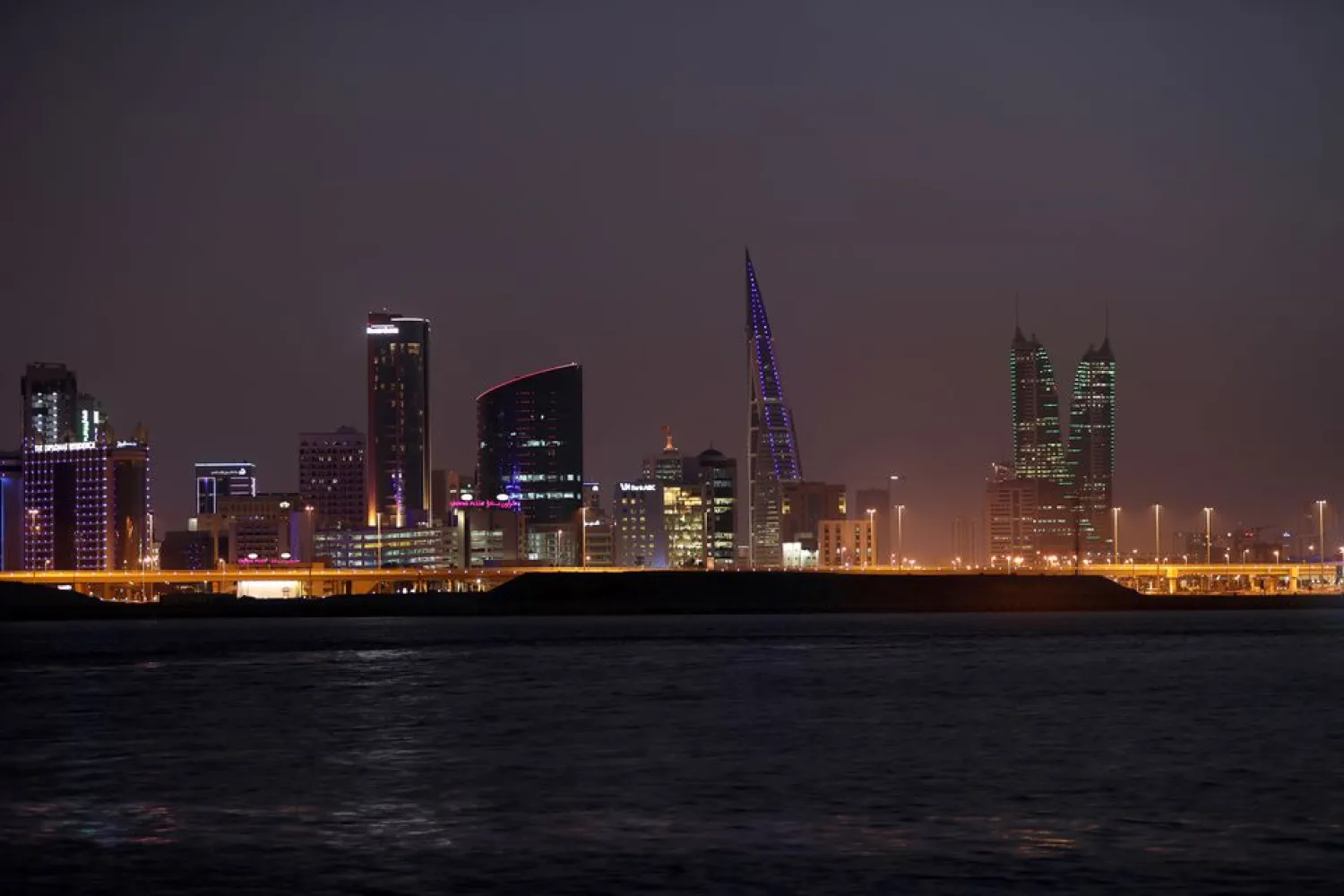
GCC Countries Reiterate Support for Bahrain's Fiscal Program

General view of Bahrain's financial district in Manama, Bahrain, June 20, 2019. REUTERS/ Hamad I Mohammed
TT

GCC Countries Reiterate Support for Bahrain's Fiscal Program

General view of Bahrain's financial district in Manama, Bahrain, June 20, 2019. REUTERS/ Hamad I Mohammed

Saudi Arabia, Kuwait and the United Arab Emirates reiterated their support for Bahrain’s plans to balance its budget, a move expected to help their neighbor in the debt capital markets.

The three Gulf allies extended a $10 billion aid package to Bahrain in 2018 to help it avoid a credit crunch.

Last month, Bahrain said that due to the coronavirus crisis last year, it had postponed the target year for a balanced budget to 2024 and announced plans to hike a value-added tax to boost state coffers.

The fiscal balance program - a set of reforms aimed at balancing the budget - was linked to the pledged $10 billion.

The ministers of finance of Saudi Arabia, Kuwait, and the UAE met with Bahrain's finance minister on Oct. 19 to discuss the kingdom’s progress in improving its finances.

“The ministers welcomed the efforts made by the government of Bahrain in implementing the Fiscal Balance Program, and the progress made by the government despite the challenges posed by the COVID-19 pandemic,” the three countries said in a joint statement, Reuters reported.

Bahrain’s delaying of its fiscal balance program, which pushed back the zero-deficit target by two years, was seen as unlikely to deter investors from buying its debt due to expectations of continued support from richer Gulf allies, bankers and analysts have previously told Reuters.

Bahrain’s public debt climbed to 133 percent of gross domestic product (GDP) last year from 102 percent in 2019, according to the International Monetary Fund.

S&P forecasts Bahrain’s budget deficit, which was 16.8 percent of GDP last year, to average five percent between 2021 and 2024, excluding the impact of a possible hike in value-added tax.


China, US Discuss Tariffs, Farm Trade at First Trade Council Meeting

US and Chinese flags are seen in this illustration taken March 20, 2025. (Reuters)
TT

China, US Discuss Tariffs, Farm Trade at First Trade Council Meeting

US and Chinese flags are seen in this illustration taken March 20, 2025. (Reuters)

China and the United States held their first trade council meeting under a bilateral economic and trade consultation mechanism via ‌video link ‌on Friday, China's ‌commerce ⁠ministry said on ⁠Saturday.

The two sides held "candid, in-depth and constructive discussions" on implementing outcomes ⁠from previous trade consultations, ‌including ‌tariffs, a reciprocal ‌tariff-reduction arrangement involving $30 ‌billion on each side, agricultural trade and other issues of ‌note, the ministry said.

Both sides will ⁠continue ⁠to use the council to address trade concerns, expand cooperation and reduce outstanding issues, it added.


IMF Says More Work Needed on Lebanon Reforms

A man walks past Lebanon's Central Bank headquarters in Beirut on November 10, 2026. (AFP)
TT

IMF Says More Work Needed on Lebanon Reforms

A man walks past Lebanon's Central Bank headquarters in Beirut on November 10, 2026. (AFP)

The International Monetary Fund said on Friday that more work was needed to reach an agreement on restructuring Lebanon's banking sector, one of the steps towards unlocking billions of dollars in financial assistance.

An IMF staff-level agreement reached in April 2022 laid out conditions to unlock assistance, including a law on the distribution of losses in the banking sector, known as the financial gap law, which parliament has still not voted on.

In a statement at the end of meetings that began on Tuesday, the IMF said "there was progress in further clarifying the approaches under consideration by the Banque du Liban (BdL) and the Government regarding banking sector reform, the draft financial regulation law and the recovery of deposits, and aligning them with international standards".

It however noted that "further work is needed to reach an agreement on a strategy for an effective and durable restructuring of Lebanon's banking sector, leading to a sound and resilient system".

The cabinet submitted a draft of the law to parliament in 2025, but the text is contested by the banking sector and political parties, preventing a vote.

Differences over estimates of losses and their distribution have stalled negotiations with the IMF.

In 2022, the government estimated losses resulting from the 2019 financial crisis at around $70 billion, a figure believed to have increased over the last seven years during which the crisis has remained unresolved.

Lebanese Finance Minister Yassin Jaber said during a news conference that he hoped to "achieve progress that would allow us to reach an agreement on a program with the IMF and sign it during the first quarter of next year, and by its end at the latest".

Lebanon's economic crisis, which the World Bank has ranked among the worst since 1850, has deprived depositors of access to all of their funds, destroyed confidence in the banking sector and led to greater reliance on cash liquidity in various economic and commercial activities.


Silver Demand Seen Down 5% This Year Due to Weaker Jewellery Purchases

Silver bars are stacked in the safe deposit boxes room of the Pro Aurum gold house in Munich, Germany, January 10, 2025. (Reuters)
TT

Silver Demand Seen Down 5% This Year Due to Weaker Jewellery Purchases

Silver bars are stacked in the safe deposit boxes room of the Pro Aurum gold house in Munich, Germany, January 10, 2025. (Reuters)

Silver demand is expected to fall by 5% in 2026 due to weaker jewellery demand and lower consumption in solar cells, where high prices have accelerated substitution, research showed on Friday.

Research done by consultancy Metals Focus for the Silver Institute puts demand at 1.08 billion troy ounces this year.

Silver, used in jewellery, electronics, electric vehicles and solar panels as well as for investment, is ‌down 59% ‌to $50 an ounce since retail buying drove prices ‌to ⁠a record high ⁠of $121.6 in January.

The base for that rally was created in 2025, when silver surged 147%, as massive inflows of the metal to US inventories due to tariff uncertainty and into silver-backed exchange-traded products (ETPs) tightened liquidity in the London market.

This year, expectations for higher interest rates, a stronger dollar and higher bond yields have weighed on investment ⁠sentiment.

Silver released through ETP selling, outflows from stocks ‌in the US and a smaller ‌market deficit improved liquidity in the physical market, the Silver Institute and ‌consultancy Metals Focus said on Friday.

Metals Focus sees net ETP ‌outflows of 45 million ounces this year after 278 million ounces of inflows in 2025.

As of early November, ETP holdings stood at 1.25 billion ounces.

Industrial demand is expected to fall by 3% in 2026 as installations ‌in photovoltaics have fallen short of expectations, particularly in China, while January's record silver prices accelerated ⁠substitution.

Meanwhile, demand ⁠for jewellery and silverware is forecast to decline by 22% and 17%, respectively, as higher prices and weaker rural spending in India encouraged purchases of smaller, lighter products.

Demand in China and the US is also subdued. Strong retail investment in late 2025 and early 2026 gave way to far more subdued buying from March as silver prices fell, Metals Focus said.

It expects global bar and coin demand to fall 2% this year, with US retail investment hitting its lowest level since 2010.