



YouTube, TikTok, Snap Execs Face Senators on Kids' Safety

YouTube app is seen on a smartphone in this illustration taken, July 13, 2021. REUTERS/Dado Ruvic/Illustration
TT

YouTube, TikTok, Snap Execs Face Senators on Kids' Safety

YouTube app is seen on a smartphone in this illustration taken, July 13, 2021. REUTERS/Dado Ruvic/Illustration

Bearing down on hugely popular social media platforms and their impact on children, the leaders of a Senate panel have called executives from YouTube, TikTok and Snapchat to face questions on what their companies are doing to ensure young users’ safety.

The Senate Commerce subcommittee on consumer protection is fresh off a highly charged hearing with a former Facebook data scientist, who laid out internal company research showing that the company's Instagram photo-sharing service appears to seriously harm some teens.

The panel is widening its focus to examine other tech platforms, with millions or billions of users, that also compete for young people’s attention and loyalty.

The three executives — Michael Beckerman, a TikTok vice president and head of public policy for the Americas; Leslie Miller, vice president for government affairs and public policy of YouTube’s owner Google; and Jennifer Stout, vice president for global public policy of Snapchat parent Snap Inc. — are due to appear at a subcommittee hearing Tuesday.

The three platforms are woven into the fabric of young people’s lives, often influencing their dress, dance moves and diet, potentially to the point of obsession. Peer pressure to get on the apps is strong. Social media can offer entertainment and education, but platforms have been misused to harm children and promote bullying, vandalism in schools, eating disorders and manipulative marketing, lawmakers say.

“We need to understand the impact of popular platforms like Snapchat, TikTok and YouTube on children and what companies can do better to keep them safe," Sen. Richard Blumenthal, D-Conn., the subcommittee’s chairman, said in a statement.

The panel wants to learn how algorithms and product designs can magnify harm to children, foster addiction and intrusions of privacy, Blumenthal says. The aim is to develop legislation to protect young people and give parents tools to protect their children, The Associated Press reported.

The video platform TikTok, wildly popular with teens and younger children, is owned by the Chinese company ByteDance. In only five years since launching, it has gained an estimated 1 billion monthly users.

TikTok denies allegations, most notably from conservative Republican lawmakers, that it operates at the behest of the Chinese government and provides it with users’ personal data. The company says it stores all TikTok US data in the United States. The company also rejects criticisms of promoting harmful content to children.

TikTok says it has tools in place, such as screen time management, to help young people and parents moderate how long children spend on the app and what they see. The company says it focuses on age-appropriate experiences, noting that some features, such as direct messaging, are not available to younger users.

Early this year after federal regulators ordered TikTok to disclose how its practices affect children and teenagers, the platform tightened its privacy practices for the under-18 crowd.

A separate House committee has investigated video service YouTube Kids this year. Lawmakers said the YouTube offshoot feeds children inappropriate material in “a wasteland of vapid, consumerist content” so it can serve ads to them. The app, with both video hosting and original shows, is available in about 70 countries.

A panel of the House Oversight and Reform Committee told YouTube CEO Susan Wojcicki that the service doesn’t do enough to protect children from potentially harmful material. Instead it relies on artificial intelligence and self-policing by content creators to decide which videos make it onto the platform, the panel’s chairman said in a letter to Wojcicki.

Parent company Google agreed to pay $170 million in 2019 settlements with the Federal Trade Commission and New York state of allegations that YouTube collected personal data on children without their parents’ consent.

Despite changes made after the settlements, the lawmaker’s letter said, YouTube Kids still shows ads to children.

YouTube says it has worked to provide children and families with protections and parental controls like time limits, to limit viewing to age-appropriate content. It emphasizes that the 2019 settlements involved the primary YouTube platform, not the kids’ version.

“We took action on more than 7 million accounts in the first three quarters of 2021 when we learned they may belong to a user under the age of 13 — 3 million of those in the third quarter alone — as we have ramped up our automated removal efforts," Miller, the Google vice president, says in written testimony prepared for the hearing.

Snap Inc.'s Snapchat service allows people to send photos, videos and messages that are meant to quickly disappear, an enticement to its young users seeking to avoid snooping parents and teachers. Hence its “Ghostface Chillah” faceless (and word-less) white logo.

Only 10 years old, Snapchat says an eye-popping 90% of 13- to 24-year-olds in the US use the service. It reported 306 million daily users in the July-September quarter.

The company agreed in 2014 to settle the FTC’s allegations that it deceived users about how effectively the shared material vanished and that it collected users’ contacts without telling them or asking permission. The messages, known as “snaps,” could be saved by using third-party apps or other ways, the regulators said.

Snapchat wasn’t fined but agreed to establish a privacy program to be monitored by an outside expert for the next 20 years — similar to oversight imposed on Facebook, Google and Myspace in privacy settlements in recent years.
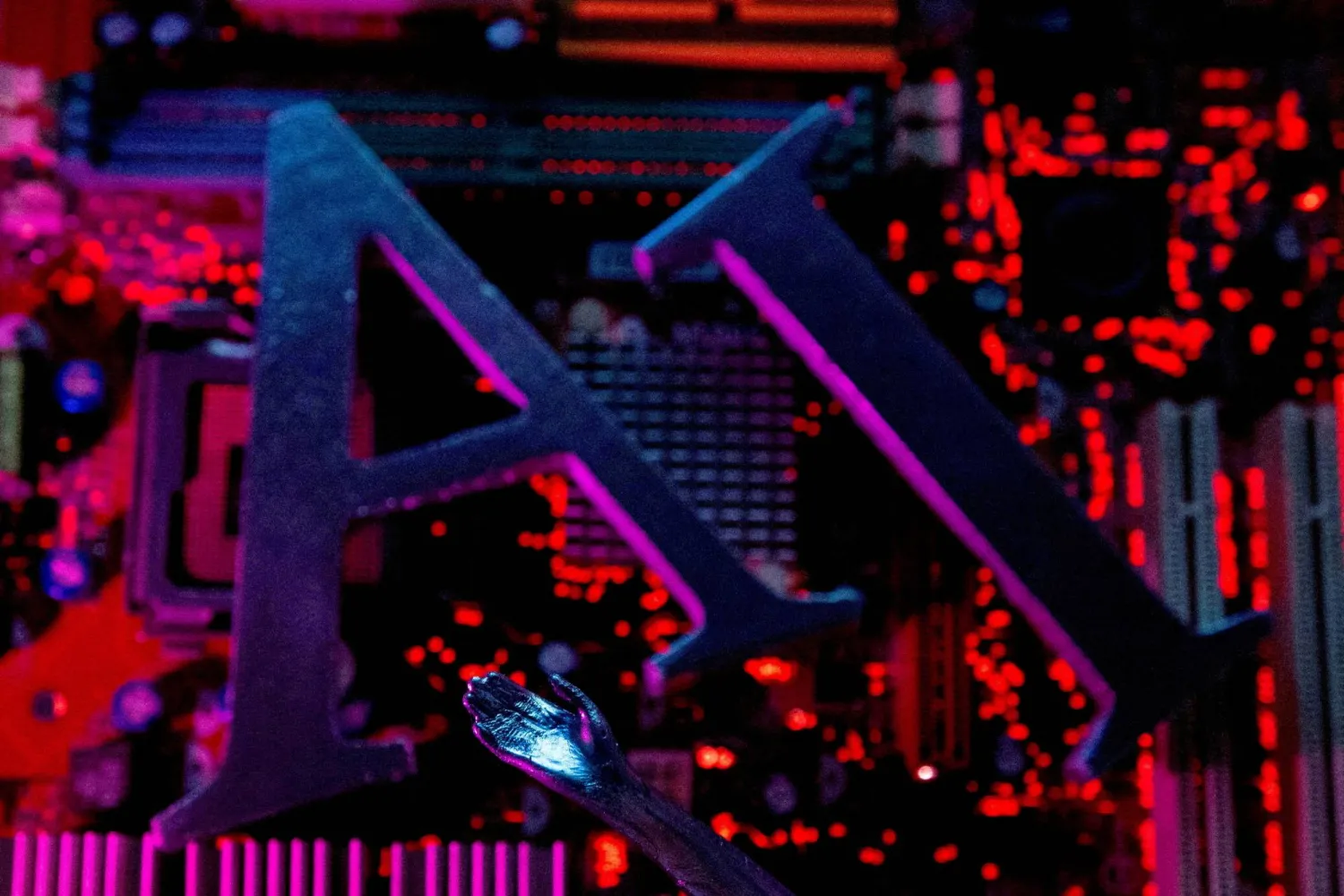



AI No Better Than Other Methods for Patients Seeking Medical Advice, Study Shows

AI (Artificial Intelligence) letters and a robot hand are placed on a computer motherboard in this illustration created on June 23, 2023. (Reuters)
TT

AI No Better Than Other Methods for Patients Seeking Medical Advice, Study Shows

AI (Artificial Intelligence) letters and a robot hand are placed on a computer motherboard in this illustration created on June 23, 2023. (Reuters)

Asking AI about medical symptoms does not help patients make better decisions about their health than other methods, such as a standard internet search, according to a new study published in Nature Medicine.

The authors said the study was important as people were increasingly turning to AI and chatbots for advice on their health, but without evidence that this was necessarily the best and safest approach.

Researchers led by the University of Oxford’s Internet Institute worked alongside a group of doctors to draw up 10 different medical scenarios, ranging from a common cold to a life-threatening hemorrhage causing bleeding on the brain.

When tested without human participants, three large-language models – Open AI's Chat GPT-4o, ‌Meta's Llama ‌3 and Cohere's Command R+ – identified the conditions in ‌94.9% ⁠of cases, ‌and chose the correct course of action, like calling an ambulance or going to the doctor, in an average of 56.3% of cases. The companies did not respond to requests for comment.

'HUGE GAP' BETWEEN AI'S POTENTIAL AND ACTUAL PERFORMANCE

The researchers then recruited 1,298 participants in Britain to either use AI, or their usual resources like an internet search, or their experience, or the National Health Service website to ⁠investigate the symptoms and decide their next step.

When the participants did this, relevant conditions were identified in ‌less than 34.5% of cases, and the right ‍course of action was given in ‍less than 44.2%, no better than the control group using more traditional ‍tools.

Adam Mahdi, co-author of the paper and associate professor at Oxford, said the study showed the “huge gap” between the potential of AI and the pitfalls when it was used by people.

“The knowledge may be in those bots; however, this knowledge doesn’t always translate when interacting with humans,” he said, meaning that more work was needed to identify why this was happening.

HUMANS OFTEN GIVING INCOMPLETE INFORMATION

The ⁠team studied around 30 of the interactions in detail, and concluded that often humans were providing incomplete or wrong information, but the LLMs were also sometimes generating misleading or incorrect responses.

For example, one patient reporting the symptoms of a subarachnoid hemorrhage – a life-threatening condition causing bleeding on the brain – was correctly told by AI to go to hospital after describing a stiff neck, light sensitivity and the "worst headache ever". The other described the same symptoms but a "terrible" headache, and was told to lie down in a darkened room.

The team now plans a similar study in different countries and languages, and over time, to test if that impacts AI’s performance.

The ‌study was supported by the data company Prolific, the German non-profit Dieter Schwarz Stiftung, and the UK and US governments.


Meta Criticizes EU Antitrust Move Against WhatsApp Block on AI Rivals

(FILES) This illustration photograph taken on December 1, 2025, shows the logo of WhatsApp displayed on a smartphone's screen, in Frankfurt am Main, western Germany. (Photo by Kirill KUDRYAVTSEV / AFP)
TT

Meta Criticizes EU Antitrust Move Against WhatsApp Block on AI Rivals

(FILES) This illustration photograph taken on December 1, 2025, shows the logo of WhatsApp displayed on a smartphone's screen, in Frankfurt am Main, western Germany. (Photo by Kirill KUDRYAVTSEV / AFP)

Meta Platforms on Monday criticized EU regulators after they charged the US tech giant with breaching antitrust rules and threaten to halt its block on ⁠AI rivals on its messaging service WhatsApp.

"The facts are that there is no reason for ⁠the EU to intervene in the WhatsApp Business API. There are many AI options and people can use them from app stores, operating systems, devices, websites, and ⁠industry partnerships," a Meta spokesperson said in an email.

"The Commission's logic incorrectly assumes the WhatsApp Business API is a key distribution channel for these chatbots."


Chinese Robot Makers Ready for Lunar New Year Entertainment Spotlight

A folk performer breathes fire during a performance ahead of Lunar New Year celebrations in a village in Huai'an, in China's eastern Jiangsu Province on February 7, 2026. (AFP)
TT

Chinese Robot Makers Ready for Lunar New Year Entertainment Spotlight

A folk performer breathes fire during a performance ahead of Lunar New Year celebrations in a village in Huai'an, in China's eastern Jiangsu Province on February 7, 2026. (AFP)

In China, humanoid robots are serving as Lunar New Year entertainment, with their manufacturers pitching their song-and-dance skills to the general public as well as potential customers, investors and government officials.

On Sunday, Shanghai-based robotics start-up Agibot live-streamed an almost hour-long variety show featuring its robots dancing, performing acrobatics and magic, lip-syncing ballads and performing in comedy sketches. Other Agibot humanoid robots waved from an audience section.

An estimated 1.4 million people watched on the Chinese streaming platform Douyin. Agibot, which called the promotional stunt "the world's first robot-powered gala," did not have an immediate estimate for total viewership.

The ‌show ran a ‌week ahead of China's annual Spring Festival gala ‌to ⁠be aired ‌by state television, an event that has become an important - if unlikely - venue for Chinese robot makers to show off their success.

A squad of 16 full-size humanoids from Unitree joined human dancers in performing at China Central Television's 2025 gala, drawing stunned accolades from millions of viewers.

Less than three weeks later, Unitree's founder was invited to a high-profile symposium chaired by Chinese President Xi Jinping. The Hangzhou-based robotics ⁠firm has since been preparing for a potential initial public offering.

This year's CCTV gala will include ‌participation by four humanoid robot startups, Unitree, Galbot, Noetix ‍and MagicLab, the companies and broadcaster ‍have said.

Agibot's gala employed over 200 robots. It was streamed on social ‍media platforms RedNote, Sina Weibo, TikTok and its Chinese version Douyin. Chinese-language television networks HTTV and iCiTi TV also broadcast the performance.

"When robots begin to understand Lunar New Year and begin to have a sense of humor, the human-computer interaction may come faster than we think," Ma Hongyun, a photographer and writer with 4.8 million followers on Weibo, said in a post.

Agibot, which says ⁠its humanoid robots are designed for a range of applications, including in education, entertainment and factories, plans to launch an initial public offering in Hong Kong, Reuters has reported.

State-run Securities Times said Agibot had opted out of the CCTV gala in order to focus spending on research and development. The company did not respond to a request for comment.

The company demonstrated two of its robots to Xi during a visit in April last year.

US billionaire Elon Musk, who has pivoted automaker Tesla toward a focus on artificial intelligence and the Optimus humanoid robot, has said the only competitive threat he faces in robotics is from Chinese firms.