


G-20 Leaders to Tackle Energy Prices, Other Economic Woes

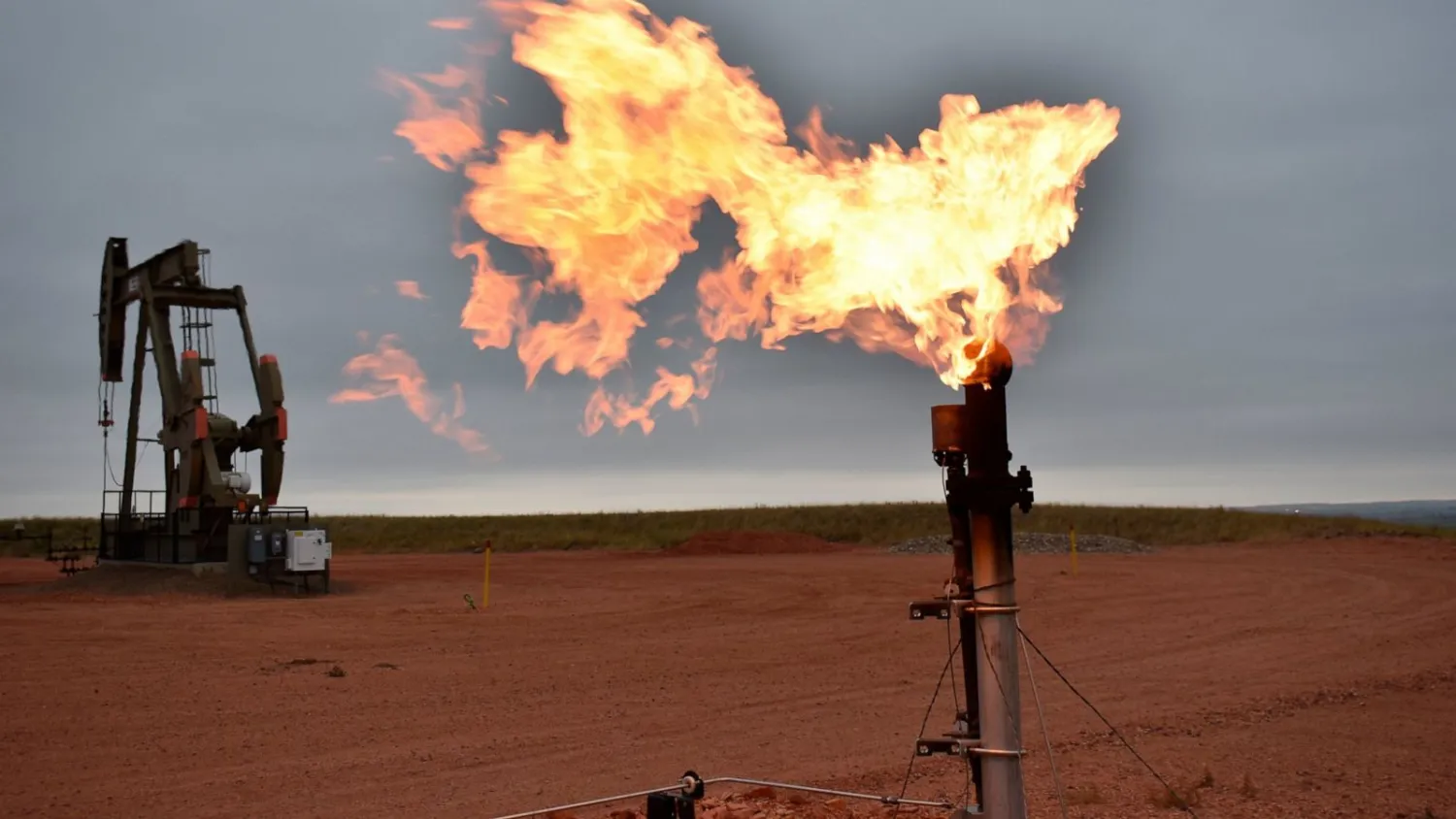
FILE - A flare burns natural gas at an oil well on Aug. 26, 2021, in Watford City, United States. (AP Photo/Matthew Brown, File)
TT

G-20 Leaders to Tackle Energy Prices, Other Economic Woes

FILE - A flare burns natural gas at an oil well on Aug. 26, 2021, in Watford City, United States. (AP Photo/Matthew Brown, File)

Leaders of the Group of 20 countries gathering for their first in-person summit since the pandemic took hold will confront a global recovery hampered by a series of stumbling blocks: an energy crunch spurring higher fuel and utility prices, new COVID-19 outbreaks and logjams in the supply chains that keep the economy humming and goods headed to consumers.

The summit will allow leaders representing 80% of the global economy to talk — and apply peer pressure — on all those issues. Analysts question how much progress they can make to ease the burden right away on people facing rising prices on everything from food and furniture to higher heating bills heading into winter.

Health and financial officials are sitting down in Rome on Friday before presidents and prime ministers gather for the G-20 Saturday and Sunday, but the leaders of major economic players China and Russia won't be there in person. That may not bode well for cooperation, especially on energy issues as climate change takes center stage just before the UN Climate Change Conference begins Sunday in Glasgow, Scotland.

Here's a look at some of the economic issues facing G-20 leaders:

THE PANDEMIC RECOVERY
The International Monetary Fund says the top priority for the economic recovery is simple: speed up the vaccination of the world population. Yet big headlines on vaccine cooperation may not be forthcoming at the Rome summit.

The G-20 countries have supported vaccine-sharing through the UN-backed COVAX program, which has failed to alleviate dire shortages in poor countries. Donated doses are coming in at a fraction of what is needed, and developed countries are focused on booster shots for their own populations.

Negotiations before the summit have not focused on a large number of vaccines that could be made available, though countries talked about strengthening health systems.
Meanwhile, rising consumer prices and government stimulus programs to help economies bounce back from the pandemic may be discussed, but central banks tend to deal with higher prices and stimulus spending is decided at the national level.

GLOBAL TAXES
One major economic deal is already done: The G-20 will likely be a celebration of an agreement on a global minimum corporate tax, aimed at preventing multinational companies from stashing profits in countries where they pay little or no taxes.

All G-20 governments signed on to the deal negotiated among more than 130 countries, and it now faces an ambitious timeline to get approved and enacted through 2023.

US President Joe Biden has tied his domestic agenda to it — creating a global minimum tax can allow the United States to charge higher taxes without the risk of companies shifting their profits to tax havens. US adoption is key because so many multinational companies are headquartered there.

The agreement also helps remove trade tensions between the US and Europe. It allows nations including France, Italy and Spain to back off digital services taxes that targeted US tech companies Google, Facebook and Amazon.

Biden goes to the G-20 with his tax and economic agenda still subject to congressional negotiations. That means he will be unable to show that the US is leading on global corporate taxes, though his national security adviser, Jake Sullivan, said G-20 leaders understand the nature of congressional talks.

“They’ll say, ‘Is President Biden on track to deliver on what he said he’s going to deliver?' And we believe one way or the other, he will be on track to do that,” Sullivan said.

HIGH ENERGY PRICES
The summit offers an opportunity for dialogue on high oil and gas prices because it includes delegations from major energy producers, major consumers in Europe and China, and the US.

Chinese President Xi Jinping and Russian President Vladimir Putin plan to participate remotely.

“Perhaps the most important thing the G20 could do is to tell those among them that are major energy suppliers that they should think about their future,” said Holger Schmieding, chief economist at Berenberg Bank.

If energy prices are too high in the developed world, it will only speed up the move away from fossil fuels, “which is ultimately, in the long run, bad for the suppliers,” he said.

The White House says Biden intends to engage with other key leaders about energy prices, with oil recently hitting a seven-year high in the US at over $84 per barrel and the international Brent crude benchmark reaching a three-year peak at over $86.

“We are definitely in an energy crisis, there is no other way to put it,” said Claudio Galimberti, senior vice president of analysis at Rystad Energy and an expert in oil market demand.

But he said it’s unlikely the G-20 “can take any decision that has immediate impact."

In one bright spot, Russian President Vladimir Putin told state-controlled company Gazprom to pump more gas into storage facilities in Europe, where prices have quintupled this year and fears have spread about winter shortages.

But producing nations “are in a powerful position,” Galimberti said. “There is no one who can put pressure on OPEC+.”

SUPPLY CHAINS
Biden will press for countries to share more information about troubles with supply chains that have slowed growth in the developed world. Port and factory closures, shortages of shipping containers and rising demand have contributed to backlogs at ports and delays for deliveries of everything from bicycles to computer chips used in smartphones and cars.

Sullivan, Biden's national security adviser, said the president would push for more transparency about identifying logjams with other governments: “How do we know, at every level, where there may be bottlenecks or breaks in the supply chain so that we can quickly respond to them?”

Trade expert Chad P. Bown, senior fellow at the Peterson Institute for International Economics, agreed that sharing information can be helpful but said “there’s very little anyone can do" now about the backups over a lack of shipping containers.

Longer term, leaders can discuss efforts to diversify supply of key goods such as masks, other medical protective equipment and semiconductors.

“There is a call to diversify some production of semiconductors geographically” away from Asia, Bown said.

The US and the European Union are talking about finding ways to incentivize chip production at home without starting a subsidy war — for instance, by agreeing on which sectors of the semiconductor industry each side would seek to attract.



Top Trump Iran Negotiator Says Visits US Aircraft Carrier in Middle East

US Special Envoy Steve Witkoff delivers a press conference upon the signing of the declaration on deploying post-ceasefire force in Ukraine, during the so-called "Coalition of the Willing" summit, at the Elysee Palace in Paris, France, January 6, 2026. (Reuters)
TT

Top Trump Iran Negotiator Says Visits US Aircraft Carrier in Middle East

US Special Envoy Steve Witkoff delivers a press conference upon the signing of the declaration on deploying post-ceasefire force in Ukraine, during the so-called "Coalition of the Willing" summit, at the Elysee Palace in Paris, France, January 6, 2026. (Reuters)

US President Donald Trump's lead Iran negotiator Steve Witkoff on Saturday said he visited the USS Abraham Lincoln aircraft carrier currently in the Arabian Sea, with Washington and Tehran due to hold further talks soon.

"Today, Adm. Brad Cooper, Commander of US Naval Forces Central Command, Jared Kushner, and I met with the brave sailors and Marines aboard the USS Abraham Lincoln, her strike group, and Carrier Air Wing 9 who are keeping us safe and upholding President Trump's message of peace through strength," said Witkoff in a social media post.

Iranian Foreign Minister Abbas Araghchi said on Saturday he hoped talks with the United States would resume soon, while reiterating Tehran's red lines and warning against any American attack.


Israel’s Netanyahu Expected to Meet Trump in US on Wednesday and Discuss Iran

Israeli Prime Minister Benjamin Netanyahu delivers a speech during a special session to mark the 77th anniversary of the Knesset's establishment and the 60th anniversary of the dedication of the current building at the Knesset, the Israeli parliament, in Jerusalem, 02 February 2026. (EPA)
TT

Israel’s Netanyahu Expected to Meet Trump in US on Wednesday and Discuss Iran

Israeli Prime Minister Benjamin Netanyahu delivers a speech during a special session to mark the 77th anniversary of the Knesset's establishment and the 60th anniversary of the dedication of the current building at the Knesset, the Israeli parliament, in Jerusalem, 02 February 2026. (EPA)

Israeli Prime Minister Benjamin Netanyahu is expected to meet US President Donald Trump on Wednesday in Washington, where they will discuss negotiations with Iran, Netanyahu's office said on Saturday.

Iranian and US officials held indirect nuclear ‌talks in the ‌Omani capital ‌Muscat ⁠on Friday. ‌Both sides said more talks were expected to be held again soon.

A regional diplomat briefed by Tehran on the talks told Reuters Iran insisted ⁠on its "right to enrich uranium" ‌during the negotiations with ‍the US, ‍and that Tehran's missile capabilities ‍were not raised in the discussions.

Iranian officials have ruled out putting Iran's missiles - one of the largest such arsenals in the region - up ⁠for discussion, and have said Tehran wants recognition of its right to enrich uranium.

"The Prime Minister believes that any negotiations must include limiting ballistic missiles and halting support for the Iranian axis," Netanyahu's office said in a ‌statement.


Italy FM Rules Out Joining Trump’s ‘Board of Peace’

Italy's Minister for Foreign Affairs Antonio Tajani speaks to the press during the EPP Leaders’ meeting, in Zagreb, Croatia, 30 January 2026. (EPA)
TT

Italy FM Rules Out Joining Trump’s ‘Board of Peace’

Italy's Minister for Foreign Affairs Antonio Tajani speaks to the press during the EPP Leaders’ meeting, in Zagreb, Croatia, 30 January 2026. (EPA)

Italy will not take part in US President Donald Trump's "Board of Peace", Italian Foreign Minister Antonio Tajani said Saturday, citing "insurmountable" constitutional issues.

Trump launched his "Board of Peace" at the World Economic Forum in Davos in January and some 19 countries have signed its founding charter.

But Italy's constitution bars the country from joining an organization led by a single foreign leader.

Prime Minister Giorgia Meloni, a Trump ally, last month noted "constitutional problems" with joining, but suggested Trump could perhaps reopen the framework "to meet the needs not only of Italy, but also of other European countries".

Tajani appeared Saturday to rule that out.

"We cannot participate in the Board of Peace because there is a constitutional limit," he told the ANSA news agency.

"This is insurmountable from a legal standpoint," he said, the day after meeting US Secretary of State Marco Rubio and US Vice President JD Vance at the Olympics in Milan.

Although originally meant to oversee Gaza's rebuilding, the board's charter does not limit its role to the Palestinian territory and appears to want to rival the United Nations.