A World Remembers: Memorials Honor COVID-19's 5 Million Dead

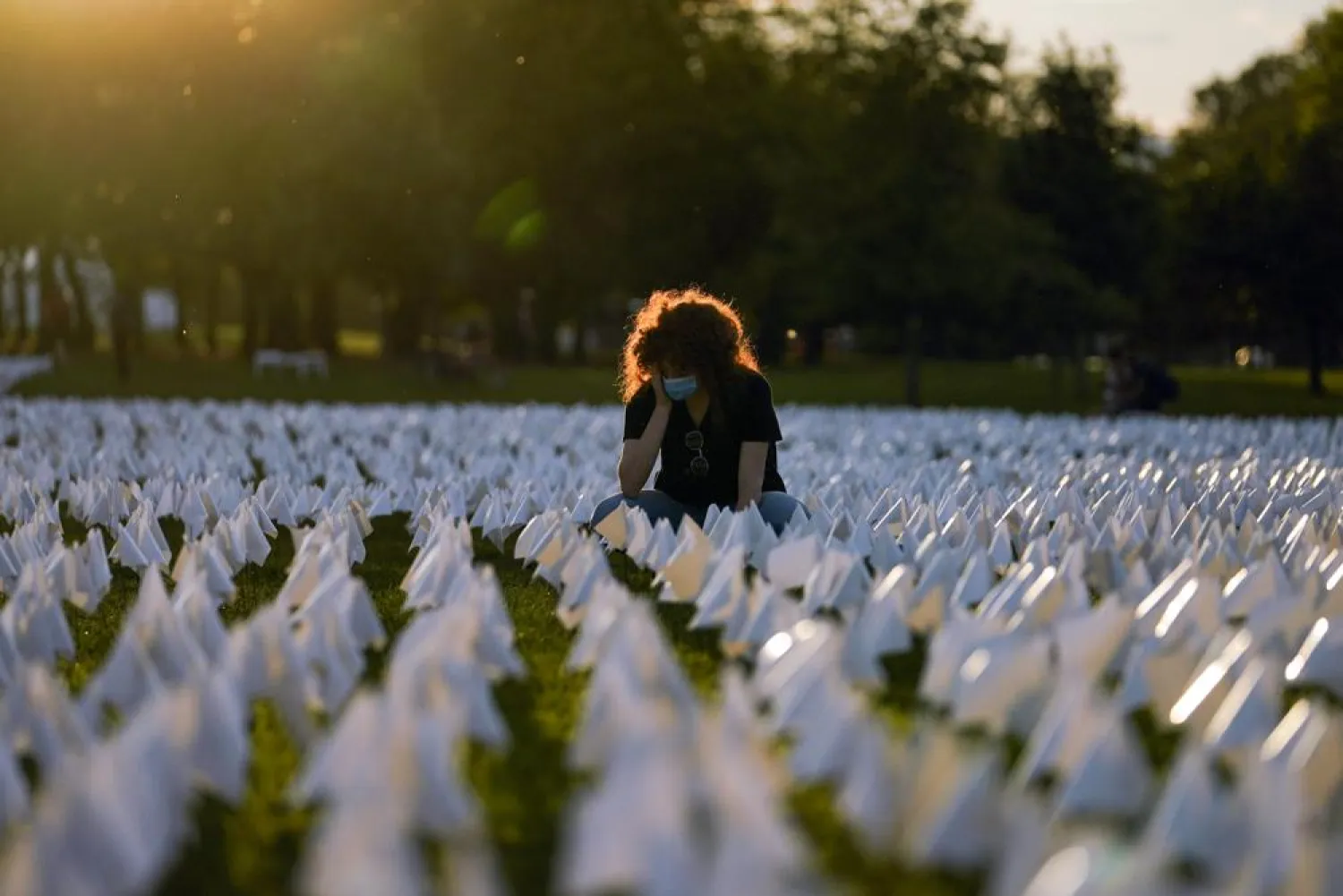
FILE - In this Sept. 17, 2021, file photo, Zoe Nassimoff, of Argentina, looks at white flags that are part of artist Suzanne Brennan Firstenberg's temporary art installation, "In America: Remember," in remembrance of Americans who have died of COVID-19, on the National Mall in Washington. Nassimoff's grandparent who lived in Florida died from COVID-19. (AP Photo/Brynn Anderson, File)
TT

A World Remembers: Memorials Honor COVID-19's 5 Million Dead

FILE - In this Sept. 17, 2021, file photo, Zoe Nassimoff, of Argentina, looks at white flags that are part of artist Suzanne Brennan Firstenberg's temporary art installation, "In America: Remember," in remembrance of Americans who have died of COVID-19, on the National Mall in Washington. Nassimoff's grandparent who lived in Florida died from COVID-19. (AP Photo/Brynn Anderson, File)

The Italian city that suffered the brunt of COVID-19’s first deadly wave is dedicating a vivid memorial to the pandemic dead: A grove of trees, creating oxygen in a park opposite the hospital where so many died, unable to breathe.

Bergamo, in northern Italy, is among the many communities around the globe dedicating memorials to commemorate lives lost in a pandemic that is nearing the terrible threshold of 5 million confirmed dead, The Associated Press said.

Some have been drawn from artist’s ideas or civic group proposals, but others are spontaneous displays of grief and frustration. Everywhere, the task of creating collective memorials is fraught, with the pandemic far from vanquished and new dead still being mourned.

Memorial flags, hearts, ribbons: These simple objects have stood in for virus victims, representing lost lives in eye-catching memorials from London to Washington D.C., and Brazil to South Africa.

The collective impact of white flags covering 20 acres on the National Mall in the US capital was literally breathtaking, representing the more than 740,000 Americans killed by COVID-19, the highest official national death toll in the world.

One honored 80-year-old Carey Alexander Washington of South Carolina, who was vaccinated and contracted the virus while still working as a clinical psychologist in March. His 6-year-old granddaughter Izzy collapsed in grief when she found her ‘’papa’s” flag -- a moment captured by a photographer and shared on Twitter.

“Families like mine, we’re still grieving,” said Washington's daughter, Tanya, who traveled from Atlanta to see the memorial. “It was important to witness that honor that was being given to them. It gave a voice to all our loved ones that have been lost.”

A memorial wall in London similarly conveys the scale of loss, with pink and red hearts painted by bereaved loved ones on a wall along the River Thames. Walking the memorial’s length without pausing to read names and inscriptions takes a full nine minutes. The hearts represent the over 140,000 coronavirus deaths in Britain, Europe’s second-highest toll after Russia; like elsewhere in the world, the actual number is estimated to be much higher:160,000.

“It shocks people,’’ said Fran Hall, a spokeswoman for the COVID-19 Bereaved Families for Justice. She lost her husband, Steve Mead, in September 2020, the day before his 66th birthday. “Every time we are here, people stop and talk to us, and quite often they are moved to tears as they are walking by, and thank us.”

In Brazil’s capital, relatives of COVID-19 victims planted thousands of white flags in front of Brazil’s Congress in a one-day, emotion-laden action meant to raise awareness of Brazil’s toll of more than 600,000, the second-highest in the world.

And in South Africa, blue and white ribbons are tied to a fence at the St. James Presbyterian Church in Bedford Gardens, east of Johannesburg, to remember the country’s 89,000 dead: each blue ribbon counting for 10 lives, white for one.

How victims of war, atrocities and even health crises are remembered has evolved through the ages. Victorious statues of generals gave way to tombs of the unknown soldier after World War I, in a bid to remember the sacrifices of ordinary soldiers. Paris’ Arche de Triomphe was one of the first.

“World War I was a benchmark, which is particularly relevant because it was followed by the 1918 flu pandemic,” said Jennifer Allen, an assistant professor of history at Yale University who has studied memorial culture.

That pandemic seems to have been little memorialized, partly because of the keen focus on the war dead. “It was a period of mass death," Allen said. "That is why we talk about the lost generation.”

Holocaust memorials were the next major testaments to mass killing, Allen said. They span big, traditional monuments like Berlin’s Holocaust Memorial, and more personalized tributes where victims are named, like the so-called Stumbling Stones outside buildings were Jews lived before the Holocaust.

Not since the AIDS quilt made its way across the United States, with loved ones adding squares for people who had succumbed, has a health crisis been the object of memorials of a scale like those now honoring the COVID-19 dead. The quilt has grown to nearly 50,000 squares, representing more than 105,000 individuals.

Memorials like the AIDS quilt and the Stumbling Stones have helped solidify a trend toward grass-roots remembrances and the desire to honor victims as individuals, Allen said. Both are emerging in the COVID-19 memorials.

“We want to get to the individuals, who make up all of the millions of deaths,’’ Allen said. “As people so often point out: These were mothers, fathers, brothers, sisters, children, neighbors. ”

Collectively memorializing the coronavirus dead has been complicated by the weight of private grief, which was too often borne alone in the first wave, when funerals could not take place and loved ones too often died without the presence or caress of a loved one.

An Italian Facebook group, Noi Denunceremo, was started as a place to publicly, if virtually, remember the dead during the country’s first draconian lockdown, and developed quickly into a collection of data on alleged failures that have been turned over to prosecutors.

In India, one of the world's most affected countries, an online memorial was launched in February, www.nationalcovidmemorial.in, inviting submissions verified with death certificates. So far, it has only 250 tributes, a minute fraction of the over 457,000 confirmed dead, which is itself a vast undercount.

“It’s not memorializing only, it’s how we can pay respect and dignity" to the dead, said Abhijit Chowdhury of the COVID Care Network that started the memorial from the eastern city of Kolkata.

In Russia’s second-largest city, St. Petersburg, a bronze statue called “Sad Angel” was placed in March outside a medical school to honor the dozens of doctors and medical workers who died of COVID-19. The sculpture of an angel with his shoulders slumped and head hanging disconsolately is especially poignant because its creator, Roman Shustrov, himself died of the virus in May 2020.

Italy has not dedicated a national monument to its some 132,000 confirmed dead, but it has designated a coronavirus remembrance day. Premier Mario Draghi stood among the first newly planted trees in Bergamo’s Trucca Park on March 18, the first anniversary of the indelible image of army trucks bringing dead to other cities for cremation after the city’s morgue was overwhelmed.

Bergamo’s mayor said the city considered proposals for statues or plaques bearing the names of the dead. One was too monumental; the other ignored that so many dead were not officially counted due to lack of testing.

“The Woods of Memory is a living monument, and it immediately seemed to us to be the most convincing, the most emotive and the one that was closest to our sentiments,’’ Bergamo Mayor Giorgio Gori said.

Only 100 trees have been planted so far of the 700 that are planned, facing the hospital’s morgue. The rest should be planted by next year's March 18 remembrance day.
There are no plans to add names, but in at least one case, loved ones have claimed a sapling: Roses are planted at the base, with personal mementoes hanging from it and a white rock bearing the handwritten name of a dearly departed: Sergio.


Trump Says Takes ‘Very Seriously’ Possible Iran Threat to Washington

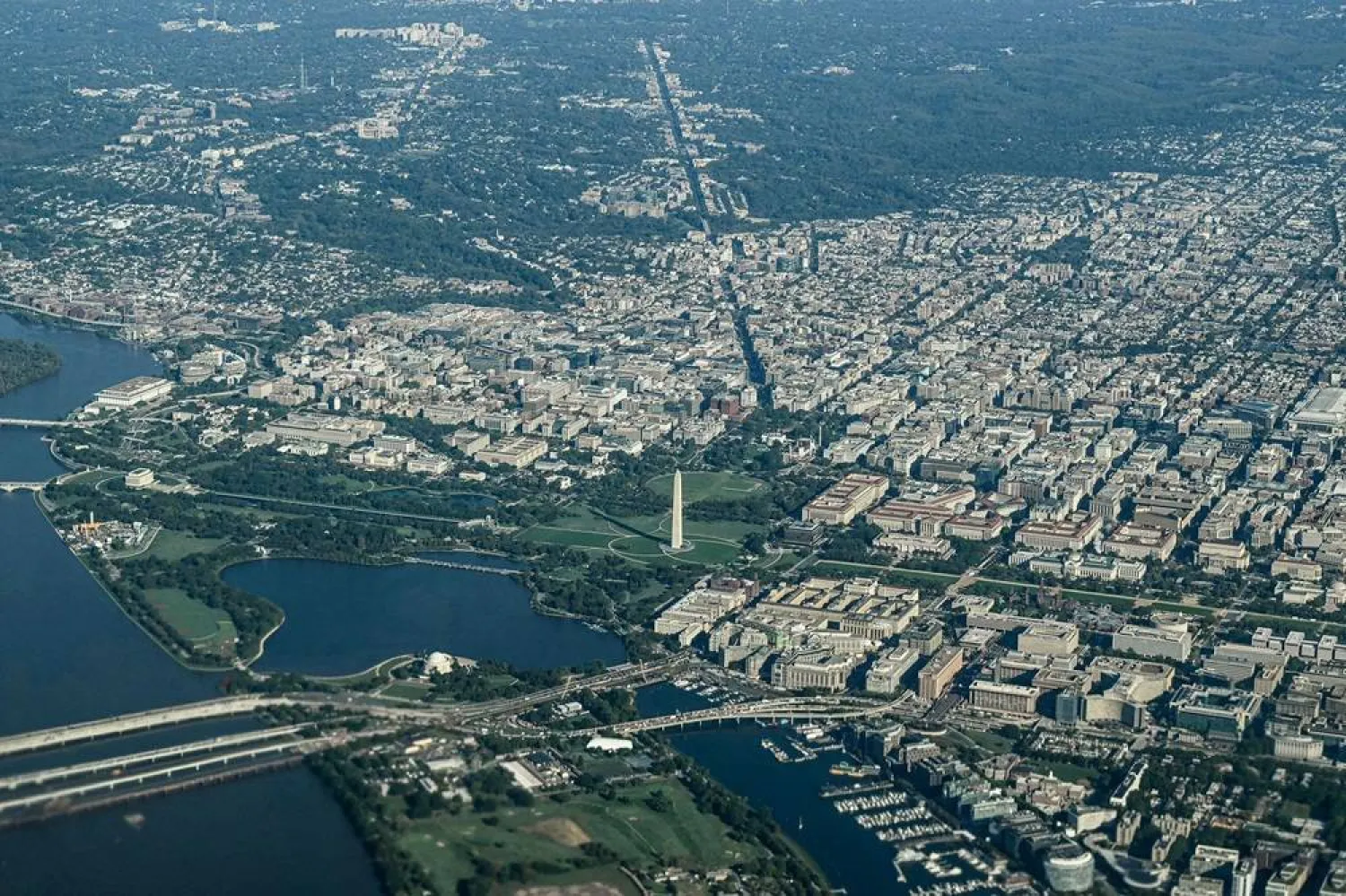
 An aerial view of Washington, DC is seen on October 13. (AFP/Getty Images)
An aerial view of Washington, DC is seen on October 13. (AFP/Getty Images)
TT

Trump Says Takes ‘Very Seriously’ Possible Iran Threat to Washington

 An aerial view of Washington, DC is seen on October 13. (AFP/Getty Images)
An aerial view of Washington, DC is seen on October 13. (AFP/Getty Images)

President Donald Trump said Tuesday that US authorities take "very seriously" any possible threat to Washington, after reports of Iran preparing a so-called dirty bomb plot.

"They will pay a price the likes of which no other country has ever paid before," Trump said, referring to Iran. "We take it very seriously because they happen to be crazy."

Earlier on Tuesday, Iran's Foreign Ministry spokesperson denied a CNN report that it ‌planned to ‌detonate a dirty ‌bomb ⁠in Washington, saying ⁠the allegations were "baseless".

CNN ‌cited ‌sources as saying that US intelligence ‌indicates that Tehran is developing ⁠plans ⁠to potentially detonate a dirty bomb in Washington DC.

Sources familiar with the latest intelligence characterized the Iranian planning as, for now, an effort to give itself options rather than an indicator of an imminent attack, reported CNN. But the plotting picked up by the US has been very specific and includes locations and targets, two of the sources said, and has sparked a flurry of US contingency planning.  

In a statement, White House spokesperson Lauren Bis said that the US is “monitoring any and all potential threats, but at this time there are no credible threats to the homeland.” 


Trump Arrives in Manila for Quad Talks Ahead of China Visit

US President Donald Trump waves as he walks to board Air Force One at Joint Base Andrews, Maryland, on November 16, 2026. (AFP)
TT

Trump Arrives in Manila for Quad Talks Ahead of China Visit

US President Donald Trump waves as he walks to board Air Force One at Joint Base Andrews, Maryland, on November 16, 2026. (AFP)

US President Donald Trump arrived in the Philippines on Tuesday at the tail end of a Southeast Asian summit, with protests awaiting him as he prepares for the first meeting in two years of the Quad group of Indo-Pacific countries.

Trump's Asia trip, which includes the Asia-Pacific Economic Cooperation (APEC) forum in Shenzhen and a much-anticipated trilateral meeting with his Chinese and Russian counterparts, comes after his Republican Party's defeat in midterm elections, plus spy allegations and new US curbs on China's access to AI chips that could complicate a fragile trade-war truce.

Demonstrators gathered in Manila for a fifth day of protests that have included the burning of Trump effigies, calls for an end to the Middle East war and scrapping of the US-led Pax Silica supply chain initiative.

Trump arrived late afternoon at the end of the Association of Southeast Asian Nations summit ‌and will join a ‌US-ASEAN "Special Summit" later on Tuesday.

He will first hold a meeting of the Quad – ‌the ⁠US, Japan, Australia and ⁠India – which will be his first and takes place two years after the last gathering of the group, which Trump's predecessor Joe Biden regarded as a signature foreign policy initiative.

It comes ahead of the APEC gathering hosted by Chinese President Xi Jinping, who has previously objected to the Quad as an effort to encircle Beijing. Quad members have said the grouping is not directed against any one country.

QUAD MEETING THE 'BEST POSSIBLE SIGNAL'

At the ASEAN summit on Monday, Chinese Premier Li Qiang hailed what he called "truly extraordinary" economic achievements of China and ASEAN in the face of global trade restrictions, expressing Beijing's commitment to free trade and the need to "stand united, ward off interference, and work together".

China ⁠is ASEAN's largest trading partner and a key source of investment, but the biggest economies ‌of the 11-member bloc – which has a combined GDP of more than $3.9 trillion – ‌want to deepen ties with the US despite protracted trade and diplomatic uncertainty under the Trump administration.

Former US Deputy Secretary of State Kurt ‌Campbell credited Washington's top diplomat, Marco Rubio, with the timing and reconvening of the Quad, which he said had lost ambition ‌under Trump.

"Part of what he (Rubio) is thinking is that this is probably the best possible signal if you're going to go into a trilateral meeting," said Campbell, co-founder of The Asia Group, referring to Thursday's US-China-Russia talks.

"The linchpin of everything that we do in Asia is the US-Japan relationship, and a perception that this is not at the top of the president's mind would concern me."

White House spokesperson Olivia Wales on Friday ‌said that under Trump's leadership, the Quad had demonstrated it is "a partnership of action, tackling the region's toughest challenges and driving opportunities to ensure a free and open Indo-Pacific".

A Japanese foreign ⁠ministry official said it was ⁠expected that Quad leaders would try to show unity, with maritime security, export restrictions, critical-minerals supply-chain diversification and AI among potential discussion points.

Undersea cables, emerging technology and disaster relief were also likely to be covered, a source familiar with the matter said.

JAPAN TO PLAY MORE PROACTIVE ROLE, PM SAYS

ASEAN's leaders held meetings on Tuesday involving counterparts of Japan, South Korea, China and India.

Japanese Prime Minister Sanae Takaichi pledged to work with ASEAN to boost regional economic and energy resilience to address export restrictions and vulnerabilities from rapid AI development, and strengthen supply chains, including on critical minerals.

"While the international order is experiencing a period of great instability, Japan will play an ever more proactive role," Takaichi said.

Trump will sign a joint statement with Thai Prime Minister Anutin Charnvirakul on Tuesday on an agreement on reciprocal trade. Thai media have reported the two would hold talks and the statement would be about progress on negotiations.

The US is Thailand's largest export market, accounting for 24% of its total shipments this year. The US designated Thailand as a major non-NATO ally in 2003.

Trump will on Wednesday meet Ferdinand Marcos Jr, president of US defense ally the Philippines, before heading to Shenzhen.


Pakistan Army Chief and Iran FM Discuss Regional Peace, Security

Vessels at the Strait of Hormuz, as seen from Musandam, Oman, November 17, 2026. (Reuters)
TT

Pakistan Army Chief and Iran FM Discuss Regional Peace, Security

Vessels at the Strait of Hormuz, as seen from Musandam, Oman, November 17, 2026. (Reuters)

Asim Munir, the powerful army chief of mediating country Pakistan, met with Iranian foreign minister Abbas Araghchi, the Pakistani military said Tuesday, during continued efforts to end the war between the United States and Iran.

Pakistan brokered a June accord that led to a brief halt in fighting between the United States and Iran and set a roadmap for further agreement on reopening the crucial Strait of Hormuz waterway and for negotiations on Tehran's nuclear program.

But the truce collapsed with Washington and Tehran accusing each other of violating the agreement and prompting months of shuttle diplomacy to resuscitate the ceasefire, led principally by mediators Qatar and Pakistan.

During the meeting on Monday, "matters of mutual interest, regional security dynamics and evolving geopolitical developments were discussed," the Pakistani military's media wing said in a statement.

Munir "underscored the importance of sustained engagement, mutual trust and close coordination between the two brotherly countries for promoting regional peace and stability", it added.

Araghchi arrived in Pakistan late on Sunday for a meeting of the Economic Cooperation Organization, a group of nations from Central and South Asia and the Middle East.

Pakistani Foreign Minister Ishaq Dar said on Monday he had held "very candid, very frank" discussions with Araghchi, during the conference confirming that Iran had put forward a two-day proposal to reopen the Strait of Hormuz as part of efforts to end the war with the United States.

He said Washington had not yet responded.

The United States and Israel launched the war on February 28, killing members of Iran's leadership and demanding it cease any nuclear-related activities.

The war plunged the Middle East into violence, with Tehran's retaliatory strikes targeting Gulf countries and sending global energy prices skyrocketing.

Tehran has insisted that Washington meet conditions including the release of frozen assets abroad, sanctions relief and an end to the US naval blockade of Iranian ports in exchange for reopening the Strait of Hormuz.