


Iraq PM Kadhimi: Former Journalist, Spy Chief Without Enmities

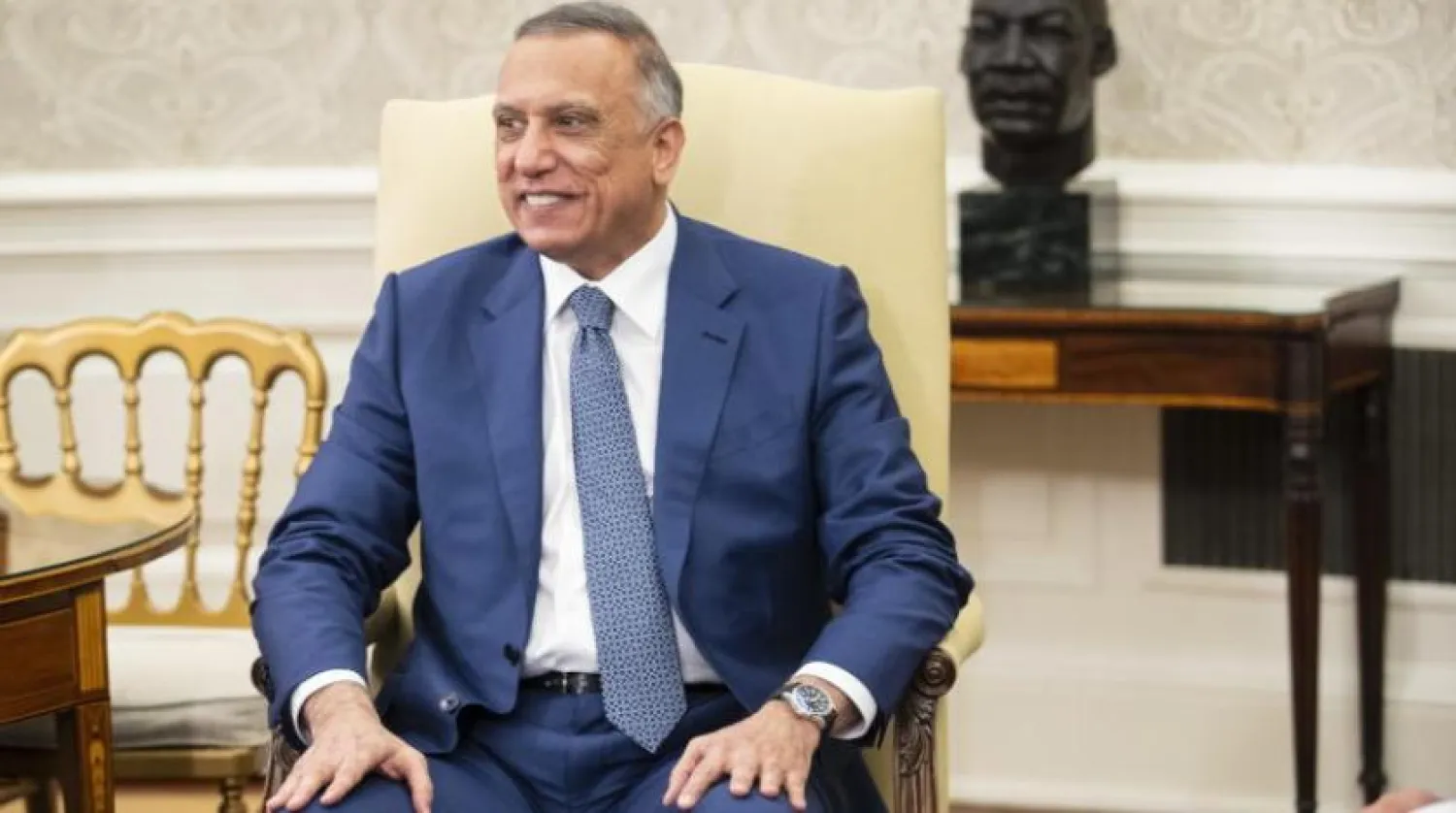
Mustafa Al-Kadhimi, the Iraqi Prime Minister, during his meeting with US President Joe Biden in Washington (E.P.A.)
TT

Iraq PM Kadhimi: Former Journalist, Spy Chief Without Enmities

Mustafa Al-Kadhimi, the Iraqi Prime Minister, during his meeting with US President Joe Biden in Washington (E.P.A.)

Iraq's prime minister Mustafa al-Kadhimi -- who survived an assassination attempt on Sunday -- is a former spy chief and skilled negotiator who faces an uncertain future following last month's legislative elections.

Kadhimi, who headed Iraq's National Intelligence Service (INIS), took the reins in May last year after parliament granted his cabinet a vote of confidence, capping weeks of horse-trading over ministerial positions.

Born in Baghdad in 1967, he studied law in Iraq but then left for Europe to escape the regime of Saddam Hussein, working as an opposition journalist.

After the US-led 2003 invasion toppled Hussein, Kadhimi returned to help launch the Iraqi Media Network, archived crimes of the former regime at the Iraqi Memory Foundation and worked as a human rights advocate.

But he made an unusual career jump in 2016, when then-PM Haider al-Abadi handpicked him to head the INIS at the height of the war against the ISIS group.

It was there, sources close to Kadhimi say, that he formed his uniquely close links with top players of key nations including in Washington, London and closer to home.

"He's got a pragmatic mindset, relationships with all the key players on the Iraqi scene and good ties with the Americans -- and he was recently able to put his ties to the Iranians back on track," a political source and friend told AFP.

- 'Unprecedented' consensus -
Kadhimi was first floated as premier in 2018 but political blocs instead opted for Adel Abdel Mahdi -- the caretaker PM who resigned in December 2019 after months of protests, and whom Kadhimi replaced.

The intel chief's name began circulating a few months later as President Barham Saleh's preferred candidate, but a political adviser close to the talks told AFP he had hesitated to take the risk.

"He did not want to agree unless it was going to be a sure thing," the adviser said, having seen two candidates -- lawmaker Adnan Zurfi and ex-minister Mohammad Allawi -- fail before him.

Allawi could not pull together a cabinet by his 30-day deadline while Zurfi dropped his bid under pressure from Shiite parties close to Iran, who saw the lawmaker as worryingly close to Washington.

In January 2020, those same factions had accused Kadhimi of being involved in the US drone strike that killed Iranian general Qasem Soleimani and Iraqi commander Abu Mahdi al-Muhandis in Baghdad.

But Kadhimi worked through the caretaker PM's influential chief of staff Mohammad al-Hashemi to repair ties with Iran and its allies in Iraq, the adviser and a diplomat based in Baghdad told AFP.

With pro-Tehran factions on board, the adviser said, Kadhimi scored "an unprecedented Shiite-wide consensus".

- 'Superb negotiator' -
That set Kadhimi up with better chances than the two prior candidates, but he has faced a host of challenges, from the country's ailing economy to the coronavirus.

He brought forward elections, originally scheduled for 2022, in response to the anti-government protests over endemic corruption, unemployment and failing public services.

But the results of those elections now mean he is facing an uncertain future, with coalition wrangling and accusations of fraud.

A figure like Kadhimi could have the right connections to steer Iraq through these crises, observers say.

"Kadhimi is a superb negotiator and an incredibly astute player," said Toby Dodge, head of the London School for Economics' Middle East Centre.



EU Condemns Israel's West Bank Control Measures

The Israeli settlement of Har Homa, seen from the West Bank city of Bethlehem, Tuesday, Dec. 17, 2024. (AP)
TT

EU Condemns Israel's West Bank Control Measures

The Israeli settlement of Har Homa, seen from the West Bank city of Bethlehem, Tuesday, Dec. 17, 2024. (AP)

The European Union on Monday condemned new Israeli measures to tighten control of the West Bank and pave the way for more settlements in the occupied Palestinian territory, AFP reported.

"The European Union condemns recent decisions by Israel's security cabinet to expand Israeli control in the West Bank. This move is another step in the wrong direction," EU spokesman Anouar El Anouni told journalists.


Atrocities in Sudan's El-Fasher Were 'Preventable Human Rights Catastrophe'

Sudanese displaced people who left El Fasher after its fall, sit in the shade in Tawila at the Rwanda camp reception point on December 17, 2025. (Photo by AFP)
TT

Atrocities in Sudan's El-Fasher Were 'Preventable Human Rights Catastrophe'

Sudanese displaced people who left El Fasher after its fall, sit in the shade in Tawila at the Rwanda camp reception point on December 17, 2025. (Photo by AFP)

The atrocities unleashed on El-Fasher in Sudan's Darfur region last October were a "preventable human rights catastrophe", the United Nations said Monday, warning they now risked being repeated in the neighbouring Kordofan region.


"My office sounded the alarm about the risk of mass atrocities in the besieged city of El-Fasher for more than a year ... but our warnings were ignored," UN rights chief Volker Turk told the Human Rights Council in Geneva.


He added that he was now "extremely concerned that these violations and abuses may be repeated in the Kordofan region".


Arab League Condemns Israel's Decisions to Alter Legal, Administrative Status of West Bank

A general view shows the opening session of the meeting of Arab foreign ministers at the Arab League Headquarters (Reuters)
TT

Arab League Condemns Israel's Decisions to Alter Legal, Administrative Status of West Bank

A general view shows the opening session of the meeting of Arab foreign ministers at the Arab League Headquarters (Reuters)

The General Secretariat of the Arab League strongly condemned decisions by Israeli occupation authorities to impose fundamental changes on the legal and administrative status of the occupied Palestinian territories, particularly in the West Bank, describing them as a dangerous escalation and a flagrant violation of international law, international legitimacy resolutions, and signed agreements, SPA reported.

In a statement, the Arab League said the measures include facilitating the confiscation of private Palestinian property and transferring planning and licensing authorities in the city of Hebron and the area surrounding the Ibrahimi Mosque to occupation authorities.

It warned of the serious repercussions of these actions on the rights of the Palestinian people and on Islamic and Christian holy sites.

The statement reaffirmed the Arab League’s firm support for the legitimate rights of the Palestinian people, foremost among them the establishment of their independent state on the June 4, 1967 borders, with East Jerusalem as its capital.