

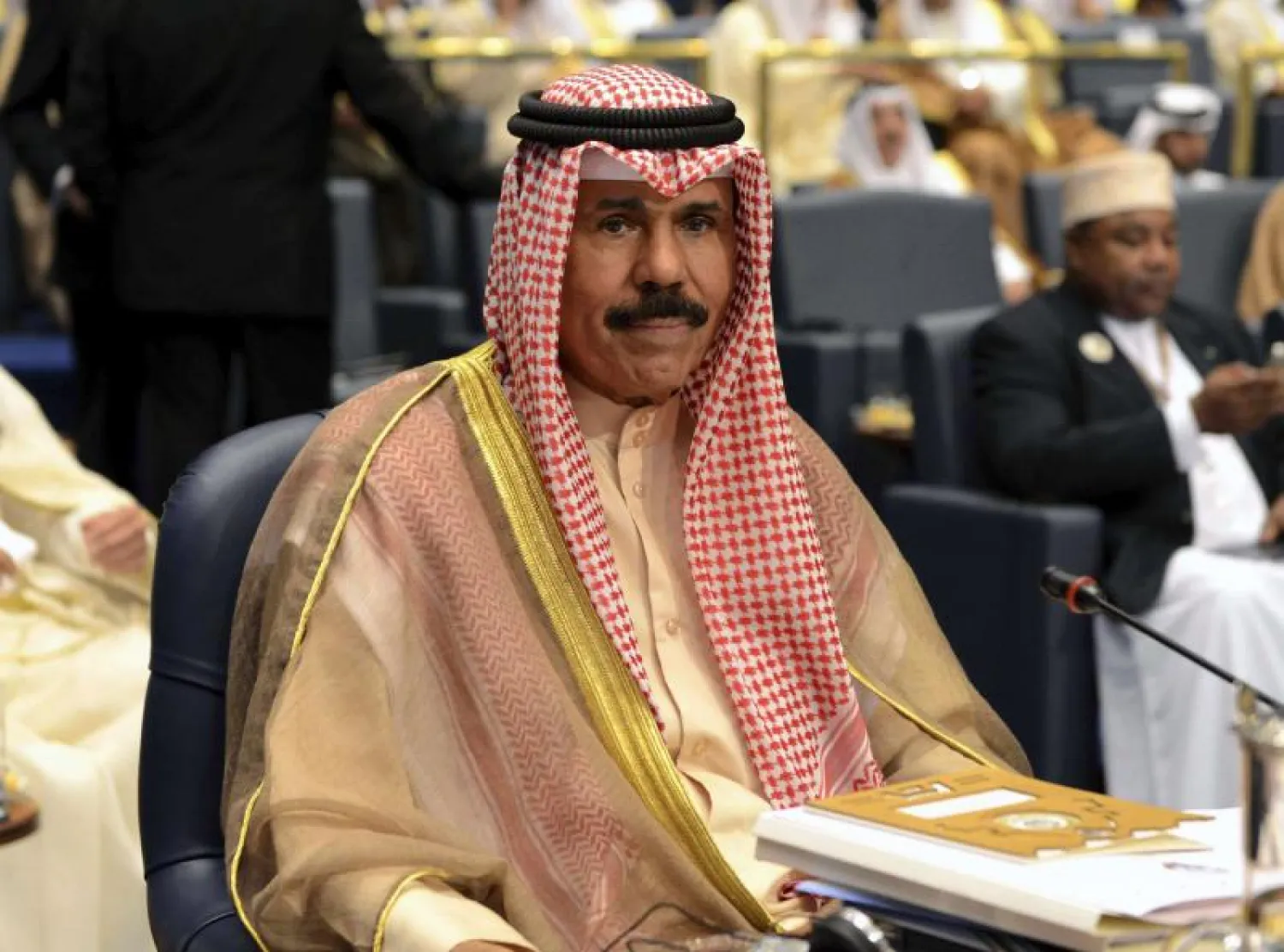

Royal Amnesty in Kuwait Caps Reconciliation Efforts

Emir of Kuwait Sheikh Nawaf Al-Ahmad Al-Jaber Al-Sabah. (AP file photo)
TT

Royal Amnesty in Kuwait Caps Reconciliation Efforts

Emir of Kuwait Sheikh Nawaf Al-Ahmad Al-Jaber Al-Sabah. (AP file photo)

The Kuwaiti government approved during its extraordinary meeting the necessary draft decrees to grant amnesty to indicted Kuwaitis, including those accused of storming the National Assembly in 2011.

The draft decree will be submitted to Emir Sheikh Nawaf Al-Ahmad Al-Jaber Al-Sabah.

“The Council of Ministers approved the necessary draft decrees which will be referred to the Amir,” the Cabinet statement said.

It added that the Emir used his constitutional right to grant amnesty to the “indicted sons of Kuwait.”

“Under the Sovereign instructions, the Cabinet approved the necessary draft decrees, which will be tendered to the Emir for final endorsement under Article 75 of the Constitution, according to a statement released by the Cabinet following its extraordinary session,” reported the KUNA official news agency.

The decree will help in ending the political dispute with the parliamentary opposition. It will be issued Monday and will be effective immediately.

Informed sources stated that the amnesty includes 67 lawmakers and activists living in exile in Turkey, including parliamentarian Musallam al-Barrak. It also includes former deputies sentenced to prison in 2017 and seven members affiliated with the Abdali cell arrested on August 13, 2015.



Coalition Intercepts Houthi Missiles, Vows Response to Targeting of Civilians

Airstrikes targeted Houthi military capabilities, weapons depots, and logistical supplies in Sanaa, Saada, Ibb, Taiz, and Mokha. (EPA)
TT

Coalition Intercepts Houthi Missiles, Vows Response to Targeting of Civilians

Airstrikes targeted Houthi military capabilities, weapons depots, and logistical supplies in Sanaa, Saada, Ibb, Taiz, and Mokha. (EPA)

Airstrikes on Houthi positions in Yemen continued on Saturday as Saudi air defenses intercepted six missiles launched by the group toward Riyadh and the Southern Region. The escalation coincided with ongoing clashes on the Taiz fronts and intensifying Houthi attacks on residential areas that left civilians dead and wounded, including women and children.

The airstrikes targeted Houthi military capabilities, weapons depots, and logistical supplies in Sanaa, Saada, Ibb, Taiz, and Mokha, according to local sources, who reported violent, successive explosions at a group weapons depot near Mount Ayban in Sanaa after it was hit.

Meanwhile, the Coalition to Support Legitimacy in Yemen announced the interception and destruction of five missiles fired by the group toward Saudi Arabia, four ballistic missiles and one cruise missile, with one targeting the Riyadh Region and the others the Southern Region.

Coalition spokesperson Major General Turki Al-Maliki said a ballistic missile launched by the group toward Al-Shuqaiq was also intercepted and destroyed.

Interception debris fell without causing civilian injuries, he added.

Al-Maliki warned the Houthis of a military response, stressing that "attempts to target civilians and civilian objects will be met with a response."

These developments coincided with ongoing Yemeni government military operations under Operation Dawn of Yemen, as well as exchanges of fire across several battlefronts, particularly in Taiz, where clashes are raging around the city and on its southern and western fronts.

The Yemeni Armed Forces carried out hundreds of strikes against Houthi positions, gatherings, reinforcements, and fortifications.

Military statements reported neutralizing dozens of the group's fighters and disabling combat vehicles and equipment, as government forces, backed by the Popular Resistance and air support, pressed ahead with defensive and offensive operations on the Taiz fronts.

Clashes spread to the Al-Aqroud front in the Al-Misrakh district south of Taiz, alongside government artillery shelling targeting Houthi positions and gatherings in Al-Dhabab west of the city.

Operations also covered fronts north and west of Marib, Al-Jawf, Tur Al-Bahah, Al-Maqatirah, and Hayfan, as well as Karish, Mukayras, Al-Dhale, and Shabwa, where airstrikes hit the group's sites and reinforcements while government forces repelled armed movements and attempts to set up new fortifications and combat positions.


Kuwait, Qatar Condemn Continued Houthi Attacks Against Saudi Arabia

General view of Riyadh, Saudi Arabia. (SPA)
TT

Kuwait, Qatar Condemn Continued Houthi Attacks Against Saudi Arabia

General view of Riyadh, Saudi Arabia. (SPA)

Kuwait and Qatar strongly condemned on Saturday the continued Houthi attacks against Saudi Arabia, including a strike on an oil refinery in the Jazan region that killed one worker and injured several others, as well as an attack targeting the port of Jazan.

Both countries described the attacks as violations of Saudi Arabia's sovereignty and international law, warning of their implications for regional security and stability.

In a statement carried by the Kuwait News Agency, Kuwait's Foreign Ministry rejected attacks on civilians, civilian facilities and vital infrastructure, describing them as a dangerous escalation that threatens regional stability and global energy supplies.

Qatar's Foreign Ministry, in a statement carried by the Qatar News Agency, also condemned the attack on the refinery as an act of aggression and sabotage, saying the targeting of oil facilities threatens the security of global energy supplies.

Both countries reaffirmed their solidarity with Saudi Arabia and support for measures taken by the Kingdom to protect its sovereignty and security. Qatar added that Saudi Arabia's security was integral to the security of Qatar and other Gulf Cooperation Council states.

The two ministries also offered condolences to the family of the worker killed in the attack and wished those injured a speedy recovery.


Khalid bin Salman: Makkah Alliance Boosts Political, Defense Cooperation

Saudi Defense Minister Prince Khalid bin Salman led the Kingdom's delegation to the second meeting of the Makkah Defense Alliance's Political and Defense Strategic Committee. (SPA)
TT

Khalid bin Salman: Makkah Alliance Boosts Political, Defense Cooperation

Saudi Defense Minister Prince Khalid bin Salman led the Kingdom's delegation to the second meeting of the Makkah Defense Alliance's Political and Defense Strategic Committee. (SPA)

Saudi Defense Minister Prince Khalid bin Salman said the Second Meeting of the Strategic Political and Defense Committee of the Makkah Alliance for Defense in Islamabad underscored the importance of continued cooperation among member states on political and defense issues.

The meeting on Friday highlighted the need for joint efforts to advance cooperation on both fronts, he said in a post on X.

The meeting also reaffirmed the member states' unified position and active role in responding to current developments, which require close coordination to strengthen security and stability, he added.

Prince Khalid met Pakistani Prime Minister Shehbaz Sharif on the sidelines of the meeting, with discussions focusing on strengthening the strategic partnership among alliance members and following up on the outcomes of previous meetings.

The Saudi minister and Turkish Defense Minister Yasar Guler praised the meeting's outcomes and stressed the need to deepen military and defense cooperation in pursuit of their countries' shared interests and to promote security and stability.

Prince Khalid also met Pakistan's Chief of Defense Forces and Army Chief, Field Marshal Asim Munir. They discussed ways to strengthen military and defense capabilities to address regional challenges and threats, while highlighting the alliance's role in supporting security and stability.

Saudi Arabia, Türkiye and Pakistan signed the Makkah agreement on August 7, reflecting their commitment to strengthening their security and promoting peace and stability in the region and beyond.

The agreement aims to establish collective deterrence against aggression, stipulating that an armed attack on any one of the three countries would be considered an attack on all. It also provides for expanded defense cooperation among the signatories.