


Report: 6 Palestinian Rights Activists Hacked by Israel’s NSO Spyware

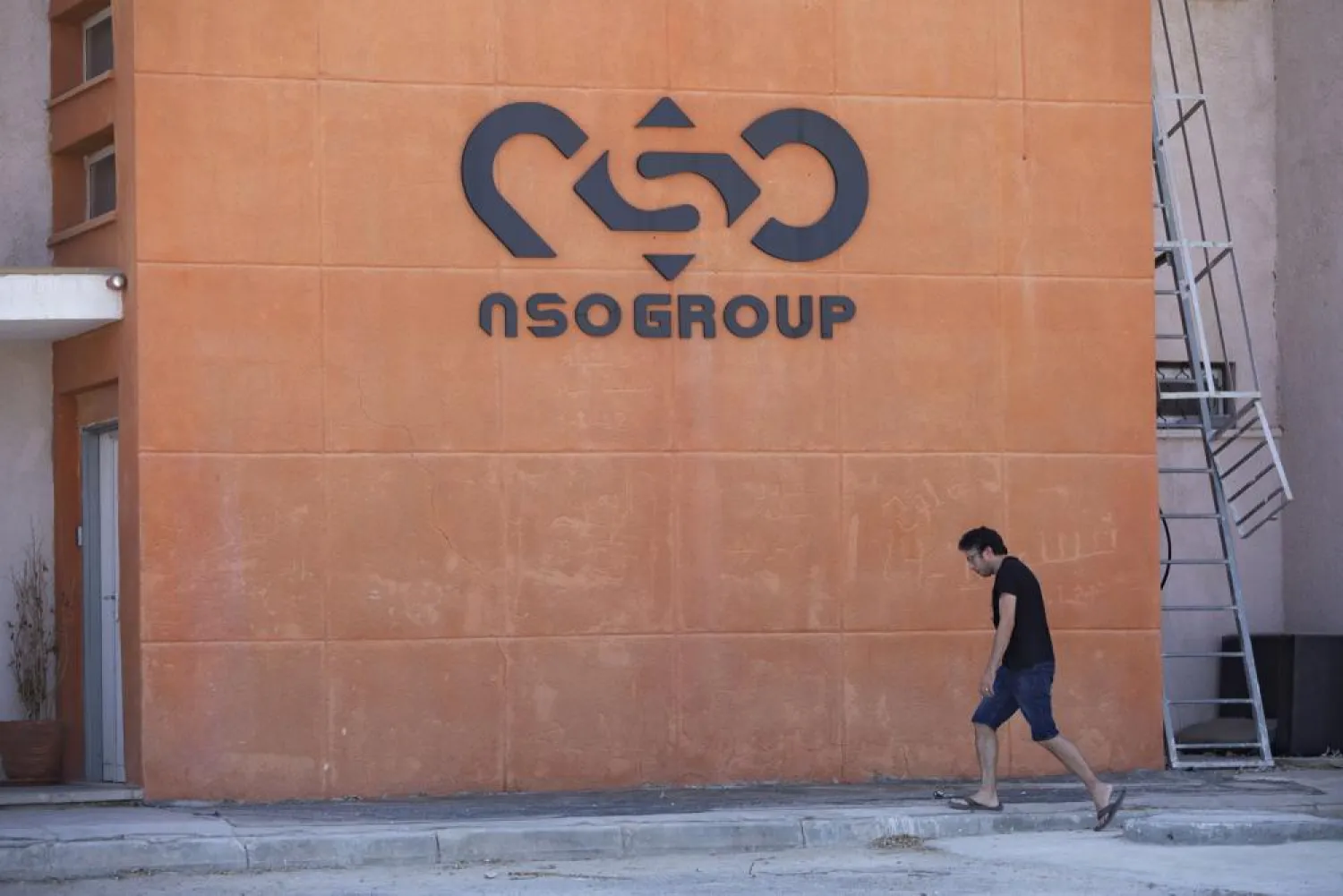
A logo adorns a wall on a branch of the Israeli NSO Group company, near the southern Israeli town of Sapir, Aug. 24, 2021. (AP)
TT

Report: 6 Palestinian Rights Activists Hacked by Israel’s NSO Spyware

A logo adorns a wall on a branch of the Israeli NSO Group company, near the southern Israeli town of Sapir, Aug. 24, 2021. (AP)

Security researchers disclosed Monday that spyware from the notorious Israeli hacker-for-hire company NSO Group was detected on the cellphones of six Palestinian human rights activists, half affiliated with groups that Israel’s defense minister controversially claimed were involved in terrorism.

The revelation marks the first known instance of Palestinian activists being targeted by the military-grade Pegasus spyware. Its use against journalists, rights activists and political dissidents across the globe has been documented since 2015.

A successful Pegasus infection surreptitiously gives intruders access to everything a person stores and does on their phone, including real-time communications.

It’s not clear who placed the NSO spyware on the activists’ phones, said the researcher who first detected it, Mohammed al-Maskati of the nonprofit Frontline Defenders. The hacking began in July 2020, according to researchers.

Shortly after the first two intrusions were identified in mid-October, Israeli Defense Minister Benny Gantz declared six Palestinian civil society groups to be terrorist organizations. Ireland-based Frontline Defenders and at least two of the victims say they consider Israel the main suspect and believe the designation may have been timed to try to overshadow the hacks’ discovery, though they have provided no evidence to substantiate those assertions.

Israel has provided little evidence publicly to support the terrorism designation, which the Palestinian groups say aims to dry up their funding and muzzle opposition to Israeli military rule. Three of the hacked Palestinians work for the civil society groups. The others do not, and wish to remain anonymous, Frontline Defenders says.

The forensic findings, independently confirmed by security researchers from Amnesty International and the University of Toronto’s Citizen Lab in a joint technical report, come as NSO Group faces growing condemnation over the abuse of its spyware and Israel takes heat for lax oversight of its digital surveillance industry.

Last week, the Biden administration blacklisted the NSO Group and a lesser-known Israeli competitor, Candiru, barring them from US technology.

Asked about the allegations its software was used against the Palestinian activists, NSO Group said in a statement that it does not identify its customers for contractual and national security reasons, is not privy to whom they hack and sells only to government agencies for use against “serious crime and terror.”

An Israeli defense official said in a brief statement that the designation of the six organizations was based on solid evidence and that any claim it is related to the use of NSO software is unfounded. The statement had no other details, and officials declined requests for further comment. The official spoke on condition of anonymity to discuss security matters.

Israel’s Defense Ministry approves the export of spyware produced by NSO Group and other private Israeli companies that recruit from the country’s top cyber-capable military units. Critics say the process is opaque.

It’s not known precisely when or how the phones were violated, the security researchers said. But four of the six hacked iPhones exclusively used SIM cards issued by Israeli telecom companies with Israeli +972 area code numbers, said the Citizen Lab and Amnesty researchers. That led them to question claims by NSO Group that exported versions of Pegasus cannot be used to hack Israeli phone numbers. NSO Group has also said it doesn’t target US numbers.

Among those hacked was Ubai Aboudi, a 37-year-old economist and US citizen. He runs the seven-person Bisan Center for Research and Development in Ramallah, in the Israeli-occupied West Bank, one of the six groups Gantz slapped with terrorist designations on Oct. 22.

The other two hacked Palestinians who agreed to be named are researcher Ghassan Halaika of the Al-Haq rights group and attorney Salah Hammouri of Addameer, also a human rights organization. The other three designated groups are Defense for Children International-Palestine, the Union of Palestinian Women’s Committees and the Union of Agricultural Work Committees.

Aboudi said he lost “any sense of safety” through the “dehumanizing” hack of a phone that is at his side day and night and holds photos of his three children. He said his wife, the first three nights after learning of the hack, “didn’t sleep from the idea of having such deep intrusions into our privacy.”

He was especially concerned about eavesdroppers being privy to his communications with foreign diplomats. The researchers’ examination of Aboudi’s phone determined it was infected by Pegasus in February.

Aboudi accused Israel of “sticking the terrorist logo” on the groups after failing to persuade European governments and others to cut off financial support.

Israel says the groups are linked to the Popular Front for the Liberation of Palestine, a leftist political faction with an armed wing that has killed Israelis. Israel and Western governments consider the PFLP a terror group. Aboudi served a 12-month sentence last year after being convicted of charges of involvement in the PFLP but denies ever belonging to the group.

Tehilla Shwartz Altshuler, a legal expert at the Israel Democracy Institute, called the findings “really disturbing,” especially if it is proven that Israel’s security agencies, who are largely exempt from the country’s privacy laws, have been using NSO Group’s commercial spyware.

“This actually complicates the relationship of the government with NSO," said Altshuler, if the government is indeed both a client and regulator in a relationship conducted under secrecy.

Aboudi, along with representatives from Al-Haq and Addameer, held a press conference in the occupied West Bank on Monday in which they condemned the hacks as an attack on civil society. Addameer director Sahar Francis called for an international investigation.

“Of course we are not going to close our organizations,” Francis said. “We will continue our work, continue providing services.”

The executive director of Frontline Defenders, Andrew Anderson, said the NSO Group cannot be trusted to ensure its spyware is not used illegally by its customers and says Israel should face international reproach if it does not bring the company to heel.

“If the Israeli government refuses to take action then this should have consequences in terms of the regulation of trade with Israel,” he said via email.

Al-Maskati, the researcher who discovered the hacks, said he was first alerted on Oct. 16 by Halaika, whose phone was determined to have been hacked in July 2020. Al-Haq engages in sensitive communications with the International Criminal Court, among others, involving alleged human rights abuses.

“As human rights defenders living under occupation, we expect it was the (Israeli) occupation,” Halaika said when asked who he believed was behind the hack.

The phone of the third named hacking victim, Hammouri, was apparently compromised in April, the researchers said. A dual French national living in Jerusalem, Hammouri previously served a seven-year sentence for security offenses, and Israel considers him a PFLP operative, allegations he denies.

Hammouri declined to speculate who was behind the hack, saying “we have to determine who had the ability and who had the motive.”

After Halaika alerted him, Al-Maskati said he scanned 75 phones of Palestinian activists, finding the six infections. He could not determine how the phones were hacked, he said, though the timeline of evidence encountered indicated the use of a so-called “iMessage zero-click” exploit NSO Group used on iPhones. The exploit is highly effective, requiring no user intervention, as phishing attempts typically do.

Facebook has sued NSO Group over the use of a somewhat similar exploit that allegedly intruded via its globally popular encrypted WhatsApp messaging app.

A snowballing of new revelations about the hacking of public figures has occurred since a consortium of international news organizations reported in July on a list of possible NSO Group surveillance targets. The list was obtained from an unnamed source by Amnesty International and the Paris-based journalism nonprofit Forbidden Stories. Among those listed was an Associated Press journalist.

From that list of 50,000 phone numbers, reporters from various news organizations were able to confirm at least 47 additional successful hacks, the Washington Post has reported. NSO Group denied ever maintaining such a list.


Israel Says US Gaza Executive Board Composition Against its Policy

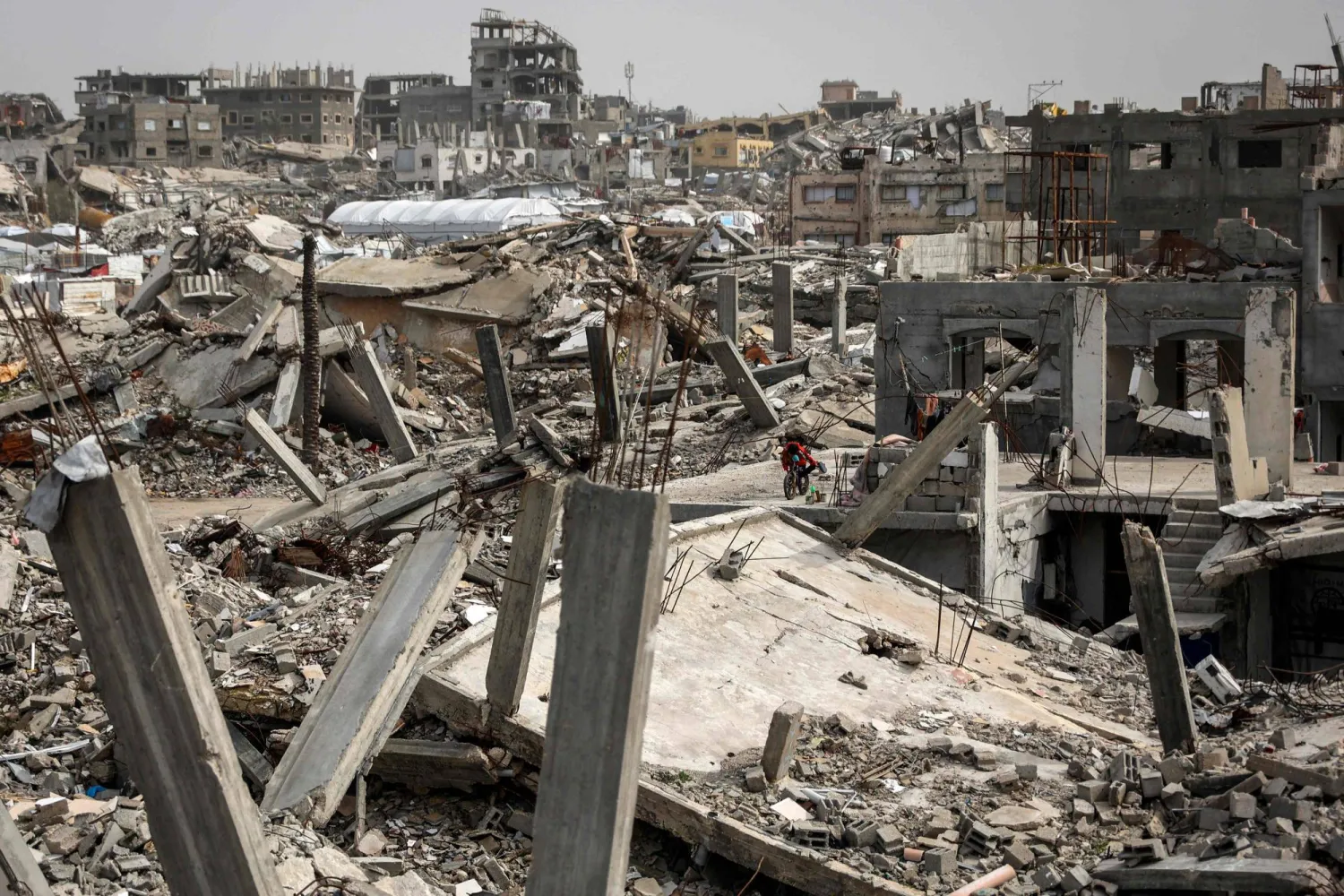
FILE - A displacement camp sheltering Palestinians on a beach amid stormy weather is seen in Gaza City, Jan. 13, 2026. (AP Photo/Jehad Alshrafi, File)
TT

Israel Says US Gaza Executive Board Composition Against its Policy

FILE - A displacement camp sheltering Palestinians on a beach amid stormy weather is seen in Gaza City, Jan. 13, 2026. (AP Photo/Jehad Alshrafi, File)

Prime Minister Benjamin Netanyahu's office said on Saturday that this week's Trump administration announcement on the composition of a Gaza executive board was not coordinated with Israel and ran counter to government policy.

It said Foreign Minister Gideon Saar would raise the issue with US Secretary of State Marco Rubio.

The ⁠statement did not specify what part of the board's composition contradicted Israeli policy. An Israeli government spokesperson declined to comment.

The board, unveiled by the White House on Friday, includes Turkish Foreign Minister Hakan Fidan. Israel ⁠has repeatedly opposed any Turkish role in Gaza.

Other members of the executive board include Sigrid Kaag, the UN special coordinator for the Middle East peace process; an Israeli-Cypriot billionaire; and a minister from the United Arab Emirates.

Washington this week also announced the start of the second phase of President ⁠Donald Trump's plan, announced in September, to end the war in Gaza. This includes creating a transitional technocratic Palestinian administration in the enclave.

The first members of the so-called Board of Peace - to be chaired by Trump and tasked with supervising Gaza's temporary governance - were also named. Members include Rubio, billionaire developer Steve Witkoff and Trump's son-in-law Jared Kushner.


Sisi Says he Values Trump Offer to Mediate Egypt-Ethiopia Dispute on GERD

FILE PHOTO: US President Donald Trump points as he attends a meeting with oil industry executives, at the White House in Washington, D.C., US, January 9, 2026. REUTERS/Evelyn Hockstein/File Photo
TT

Sisi Says he Values Trump Offer to Mediate Egypt-Ethiopia Dispute on GERD

FILE PHOTO: US President Donald Trump points as he attends a meeting with oil industry executives, at the White House in Washington, D.C., US, January 9, 2026. REUTERS/Evelyn Hockstein/File Photo

Egyptian President Abdel Fattah al-Sisi said he valued an offer by US President Donald Trump to mediate ⁠a dispute over Nile River waters between Egypt and Ethiopia.

In a post on ⁠X, Sisi said on Saturday that he addressed Trump's letter by affirming Egypt's position and concerns about the country's water ⁠security in regards to Ethiopia's Grand Ethiopian Renaissance Dam (GERD).

"I am ready to restart US mediation between Egypt and Ethiopia to responsibly resolve the question of 'The Nile Water Sharing' once and for all," Trump wrote to Sisi in the letter that was also posted on Trump’s Truth Social account.

Addis Ababa's September 9 inauguration of GERD has been a source of anger ⁠in Cairo, which is downstream on the Nile.

Ethiopia sees the $5 billion dam on a tributary of the Nile as central to its economic ambitions.

Egypt says the dam violates international treaties and could cause both droughts ⁠and flooding.

Sudan, another ​downstream country, has expressed concern about the regulation and safety of ⁠its own water supplies and dams.

Sudan's army leader Abdel Fattah al-Burhan also welcomed Trump's mediation offer on Saturday.


Kurds Say Sharaa's Decree Falls Short, Syrian Government Forces Enter Deir Hafer

Syrian army convoys enter the Deir Hafer area in the eastern Aleppo countryside, Syria, after the Kurdish-led Syrian Democratic Forces (SDF) announced the handover of the area west of the Euphrates to the Syrian government, 17 January 2026. EPA/AHMAD FALLAHA
TT

Kurds Say Sharaa's Decree Falls Short, Syrian Government Forces Enter Deir Hafer

Syrian army convoys enter the Deir Hafer area in the eastern Aleppo countryside, Syria, after the Kurdish-led Syrian Democratic Forces (SDF) announced the handover of the area west of the Euphrates to the Syrian government, 17 January 2026. EPA/AHMAD FALLAHA

Syria's Kurds on Saturday said a presidential decree recognizing the minority's rights and making Kurdish an official language fell short of their expectations as Syrian government forces entered the outskirts of a northern town.

In a statement, the Kurdish administration in Syria's north and northeast said the decree issued by President Ahmed al-Sharaa on Friday was "a first step, however it does not satisfy the aspirations and hopes of the Syrian people".

It added that "rights are not protected by temporary decrees, but... through permanent constitutions that express the will of the people and all components" of society.

Al-Sharaa’s decree affirmed that Syrian citizens of Kurdish origin are an integral and original part of the Syrian people, and that their cultural and linguistic identity is an inseparable component of Syria’s inclusive national identity.

The decree commits the state to protecting cultural and linguistic diversity and guarantees Kurdish citizens the right to preserve their heritage, arts, and mother tongue within the framework of national sovereignty.

It recognizes Kurdish as a national language and allows it to be taught in public and private schools in areas where Kurds make up a significant proportion of the population.

It also grants Syrian nationality to all residents of Kurdish origin living on Syrian territory, including those previously unregistered, while ensuring full equality in rights and duties.

The decree further designates Nowruz, celebrated annually on March 21, as an official public holiday.

Syrian government forces entered the outskirts of the northern town of Deir Hafer Saturday morning after the command of Kurdish-led fighters said it would evacuate the area in an apparent move to avoid conflict.

This came after deadly clashes erupted earlier this month between government troops and the US-backed and Kurdish-led Syrian Democratic Forces in the city of Aleppo, Syria’s largest.

It ended with the evacuation of Kurdish fighters from three neighborhoods taken over by government forces.

An Associated Press reporter saw on Saturday government tanks, armored personnel carriers and other vehicles, including pickup trucks with heavy machine-guns mounted on top of them, rolling toward the town of Deir Hafer from nearby Hamima after bulldozers removed barriers. There was no SDF presence on the edge of the town.

Meanwhile, the Syrian military said Saturday morning its forces were in full control of Deir Hafer, captured the Jarrah airbase east of the town, and were working on removing all mines and explosives. It added that troops would also move toward the nearby town of Maskana.

On Friday night, after government forces started pounding SDF positions in Deir Hafer, the Kurdish-led fighters’ top commander Mazloum Abdi posted on X that his group would withdraw from contested areas in northern Syria. Abdi said SDF fighters would relocate east of the Euphrates River starting 7 a.m. (0400 gmt) Saturday.

The easing of tension came after US military officials visited Deir Hafer on Friday and held talks with SDF officials in the area.

The United States has good relations with both sides and has urged calm.