


Iran-Backed Militia Staged Drone Attack on Iraqi PM, Say Officials

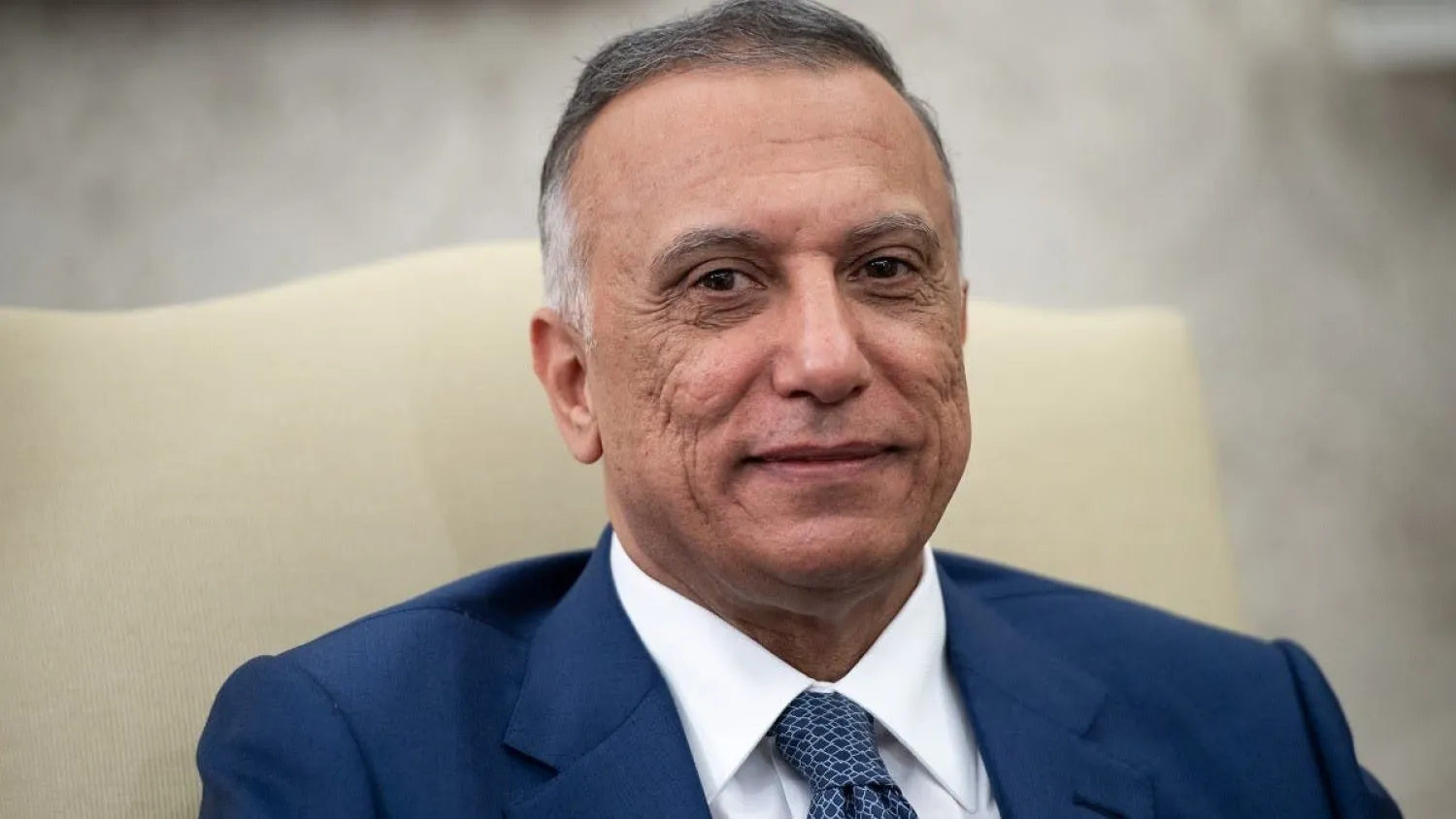
Iraqi Prime Minister Mustafa al-Kadhimi. (AFP file photo)
TT

Iran-Backed Militia Staged Drone Attack on Iraqi PM, Say Officials

Iraqi Prime Minister Mustafa al-Kadhimi. (AFP file photo)

A drone attack that targeted the Iraqi prime minister on Sunday was carried out by at least one Iran-backed militia, Iraqi security officials and militia sources said, weeks after pro-Iran groups were routed in elections they say were rigged.

But the neighboring country is unlikely to have sanctioned the attack as Tehran is keen to avoid a spiral of violence on its western border, the sources and independent analysts said.

Prime Minister Mustafa al-Kadhimi escaped unhurt when three drones carrying explosives were launched at his residence in Baghdad. Several of his bodyguards were injured.

The incident whipped up tensions in Iraq, where powerful Iran-backed paramilitaries are disputing the result of a general election last month that dealt them a crushing defeat at the polls and greatly reduced their strength in parliament.

Many Iraqis fear that tension among the main Shiite groups that dominate government and most state institutions, and also boast paramilitary branches, could spiral into broad civil conflict if further such incidents occur.

Baghdad’s streets were emptier and quieter than usual on Monday, and additional military and police checkpoints in the capital appeared intent on keeping a lid on tensions.

Iraqi officials and analysts said the attack was meant as a message from militias that they are willing to resort to violence if excluded from the formation of a government, or if their grip on large areas of the state apparatus is challenged.

“It was a clear message of, ‘We can create chaos in Iraq - we have the guns, we have the means’,” said Hamdi Malik, a specialist on Iraq’s Shiite militias at the Washington Institute.

No group has claimed responsibility for the attack.

Iran-backed militia groups did not immediately comment and the Iranian government did not respond to Reuters requests for comment.

Two regional officials who spoke on condition of anonymity said Tehran had knowledge about the attack before it was carried out, but that Iranian authorities had not ordered it.

Militia sources said the commander of Iran’s Revolutionary Guards overseas Quds Force travelled to Iraq on Sunday after the attack to meet paramilitary leaders and urge them to avoid any further escalation of violence.

Two Iraqi security officials, speaking to Reuters on Monday on condition of anonymity, said the Kataib Hezbollah and Asaib Ahl al-Haq groups carried out the attack in tandem.

A militia source said that Kataib Hezbollah was involved and that he could not confirm the role of Asaib.

Neither group commented for the record.

Intra-Shiite tensions
The main winner from the election, Shiite cleric Moqtada al-Sadr, is a rival of the Iran-backed groups who, unlike them, preaches Iraqi nationalism and opposes all foreign interference, including American and Iranian.

Malik said the drone strike indicated that the Iran-backed militias are positioning themselves in opposition to Sadr, who also boasts an armed faction - a scenario that would hurt Iran’s influence and therefore would likely be opposed by Tehran.

“I don’t think Iran wants a Shiite-Shiite civil war. It would weaken its position in Iraq and allow other groups to grow stronger,” he said.

Many Iran-aligned militias have watched Sadr’s political rise with concern, fearing he may strike a deal with Kadhimi and moderate Shiites allies, and even minority Sunnis and Kurds, that would freeze them out of power.

The Iran-backed groups, which like patron Iran are Shiite, regard Kadhimi as both Sadr’s man and friendly towards Tehran’s arch-foe the United States.

Iran-backed militias have led cries of fraud in the Oct. 10 election but offered no evidence. Since then their supporters have staged weeks of protests near Iraqi government buildings.

Made in Iran
One of the Iraqi security officials said the drones used were of the “quadcopter” type and that each was carrying one projectile containing high explosives capable of damaging buildings and armored vehicles.

The official added that these were the same type of Iranian-made drones and explosives used in attacks this year on US forces in Iraq, which Washington blames on Iran-aligned militias including Kataib Hezbollah.

The United States last month targeted Iran’s drone program with new sanctions, saying Tehran’s Revolutionary Guards had deployed drones against US forces, Washington’s regional allies and international shipping.



Israeli Strikes Damage Hospital in Lebanon

File photo: Destroyed houses that were hit in an Israeli airstrike in Saksakiyeh village, south Lebanon, Friday, April 3, 2026. (AP Photo/Hussein Malla)
TT

Israeli Strikes Damage Hospital in Lebanon

File photo: Destroyed houses that were hit in an Israeli airstrike in Saksakiyeh village, south Lebanon, Friday, April 3, 2026. (AP Photo/Hussein Malla)

A hospital in the coastal Lebanese city of Tyre was damaged by Israeli airstrikes on nearby buildings that wounded 11 people, the health ministry said on Saturday.

The director of the Lebanese Italian Hospital told the state-run National News Agency (NNA) that it would "remain open to provide the necessary medical care" despite the damage.

Strikes destroyed two buildings nearby, an AFP correspondent saw, shattering windows and causing suspended ceilings to collapse in the hospital, the facility's management said.

A series of attacks hit the Tyre region on Saturday, including one on its port that struck a small boat and damaged others moored nearby, the AFP correspondent said.

Israel has been carrying out strikes across Lebanon and launched a ground invasion in the south after Hezbollah entered the war in the Middle East on the side of its backer Iran on March 2.

Tens of thousands of people have left Tyre, but around 20,000 remain, including 15,000 displaced from surrounding villages, despite Israeli evacuation warnings covering most of the city and a broad swathe of southern Lebanon.

The NNA also reported that Israeli forces abducted a man in Shebaa, near the Israeli border in the east, at around 3:00 am on Saturday.


Indonesia Slams 'Unacceptable' Peacekeeper Casualties in Lebanon

FILE PHOTO: UNIFIL vehicles drive on a main road in Qlayaa, amid escalating hostilities between Israel and Hezbollah, as the US-Israel conflict with Iran continues, in Qlayaa, southern Lebanon, March 27, 2026. REUTERS/Karamallah Daher/File Photo
TT

Indonesia Slams 'Unacceptable' Peacekeeper Casualties in Lebanon

FILE PHOTO: UNIFIL vehicles drive on a main road in Qlayaa, amid escalating hostilities between Israel and Hezbollah, as the US-Israel conflict with Iran continues, in Qlayaa, southern Lebanon, March 27, 2026. REUTERS/Karamallah Daher/File Photo

The Indonesian government on Saturday slammed as "unacceptable" an explosion that injured three of its peacekeepers in Lebanon within days of three other blue helmets from the Southeast Asian nation being killed.

The United Nations Interim Force in Lebanon (UNIFIL) said three peacekeepers were wounded in a blast that occurred inside a UN facility near Adaisseh on Friday afternoon, and rushed to hospital.

Two were seriously wounded.

The UN Information Center in Jakarta said the "origin of the explosion" was unknown but identified the injured soldiers as Indonesian.

"Repeated attacks or incidents of this kind are unacceptable," the Indonesian foreign ministry said in a statement.

"Regardless of their cause, these events underscore the urgent need to strengthen protection for UN peacekeeping forces amid an increasingly dangerous conflict situation."

The government urged the UN Security Council to investigate the events and "to immediately convene a meeting of troop-contributing countries to UNIFIL to conduct a review and take measures to enhance the protection of personnel serving with UNIFIL".

Friday's incident came just days after an Indonesian peacekeeper died when a projectile exploded on March 29 in southern Lebanon, where Israel and Hezbollah have been fighting since Lebanon was drawn into the Middle East war.

A UN security source told AFP on condition of anonymity Tuesday that fire from an Israeli tank was responsible for that attack.

A day later, two more Indonesian peacekeepers died after an explosion struck a UNIFIL logistics convoy, also in southern Lebanon.

The father of one of the two fallen soldiers, 33-year-old Zulmi Aditya Iskandar, said this week he was shocked that peacekeepers were losing their lives in the conflict.

"We were really sad and regretful, because this is a UN troop, a peacekeeping troop, not deployed for war," 60-year-old Iskandarudin told reporters at his house in West Java province.

The bodies of the three peacekeepers are scheduled to arrive in Jakarta on Saturday evening, according to the military.

The Indonesian National Armed Forces has said it will deploy more than 750 personnel to Lebanon next month as part of the scheduled UNIFIL peacekeeping troop rotation.


Strike Kills One Iraqi Fighter near Syria Border

Mourners attend the funeral of members of Iraq's Hashed al-Shaabi, who were killed in an airstrike in the town of al‑Qaim near the Syrian border, amid heightened regional tensions due to the US-Israel conflict with Iran, in Baghdad, Iraq, March 12, 2026. REUTERS/Stringer
TT

Strike Kills One Iraqi Fighter near Syria Border

Mourners attend the funeral of members of Iraq's Hashed al-Shaabi, who were killed in an airstrike in the town of al‑Qaim near the Syrian border, amid heightened regional tensions due to the US-Israel conflict with Iran, in Baghdad, Iraq, March 12, 2026. REUTERS/Stringer

An attack killed one fighter from the former paramilitary coalition Hashed al-Shaabi on Saturday, the alliance said, blaming the US and Israel.

Iraq has been dragged into the war between the United States, Israel and Iran, with strikes targeting both US interests and pro-Iran groups in the country, reported AFP.

"This treacherous attack resulted in the martyrdom of one PMF fighter and the wounding of four others, as well as a member of the ministry of defense," said a short statement from the group, which is also known as the Popular Mobilization Forces (PMF), adding it was a "Zionist-American attack".

The PMF is a coalition of armed groups -- formed in 2014 to fight extremists-- that is now part of Iraq's regular army, but also contains pro-Iran factions who have a reputation for acting independently.

PMF positions have been repeatedly targeted since the outbreak of war, with the group consistently blaming the attacks on the US and Israel.

According to the group's statement, the latest attack targeted a position in western Anbar province of the 45th Brigade, which belongs to the US-blacklisted, pro-Iran Kataeb Hezbollah group.

Kataeb Hezbollah is part of the umbrella movement known as the Islamic Resistance in Iraq, which has been claiming daily attacks since the start of the war on US interests in Iraq and the region.

The Pentagon has said helicopters have carried out strikes against pro-Iran armed groups in Iraq during the war.

Washington has strongly denied claims it has targeted Iraqi security forces.