


Germany’s COVID Death Toll Passes 100,000

Germany weathered earlier bouts of the pandemic better than many other European countries, but has seen a recent resurgence Christof STACHE AFP
TT

Germany’s COVID Death Toll Passes 100,000

Germany weathered earlier bouts of the pandemic better than many other European countries, but has seen a recent resurgence Christof STACHE AFP

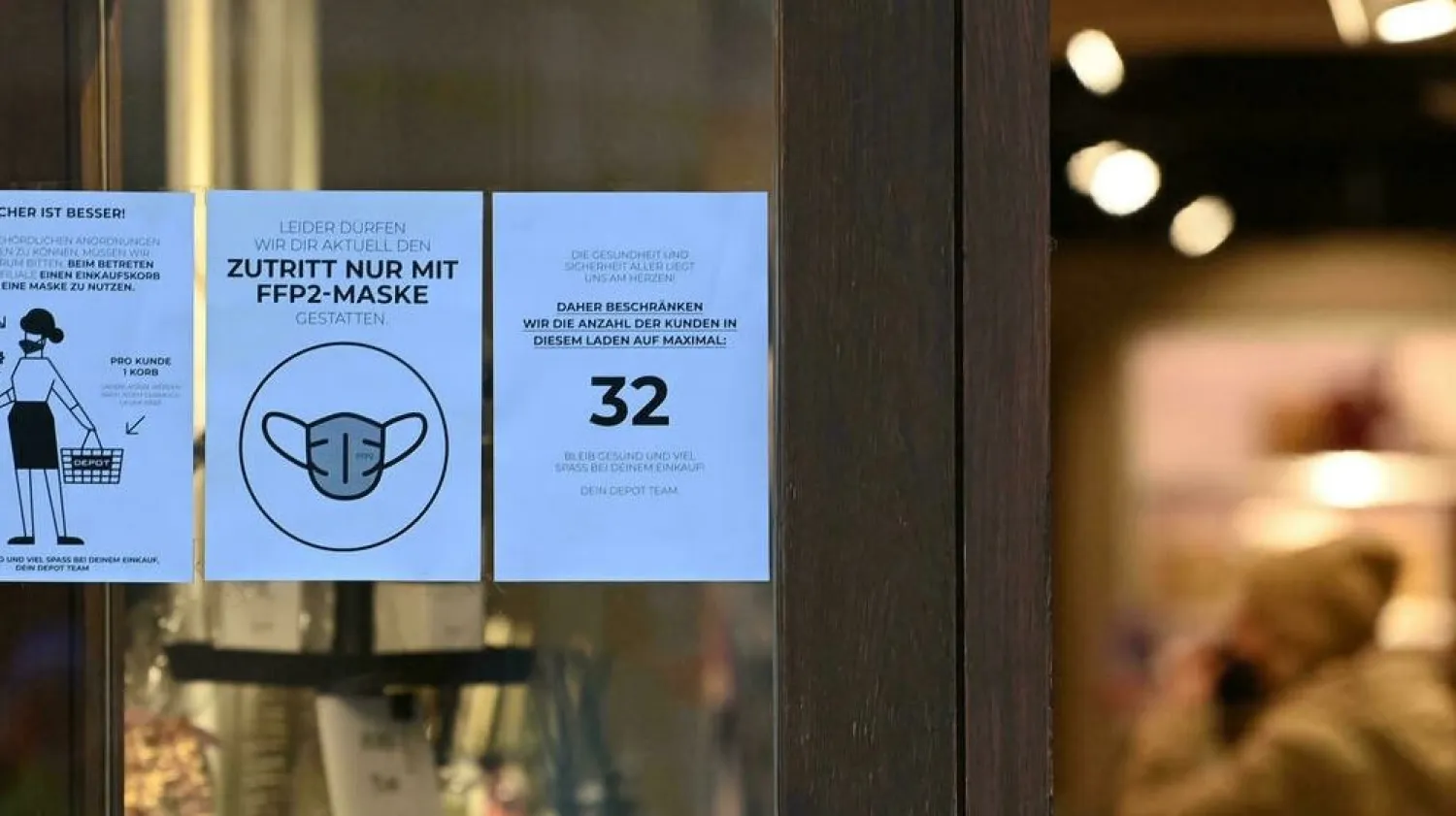
Germany announced record coronavirus fatalities and infections Thursday as its total death toll passed 100,000, with its most severe virus wave yet breaking just as a new government prepares to take the reins.

Germany weathered earlier bouts of the pandemic better than many other European countries, but has seen a recent resurgence, with intensive care beds rapidly filling up.

Europe's largest economy recorded 351 fatalities in the past 24 hours, bringing the total death toll since the start of the pandemic to 100,119, according to figures from the Robert Koch Institute, a public health agency.

The weekly incidence rate also hit an all-time high of 419.7 new infections per 100,000 people, RKI announced, AFP reported.

The escalating health crisis poses an immediate challenge to the new coalition government set to take over from Angela Merkel's cabinet next month.

The spike in Germany comes as Europe has re-emerged as the pandemic's epicenter, with the continent battling sluggish vaccine uptake in some nations, the highly contagious Delta variant, colder weather moving people indoors and the easing of restrictions.

Last week, more than 2.5 million cases and almost 30,000 Covid-related deaths were recorded in Europe, making it by far the region currently worst hit by the virus, according to AFP's tally.

- 'Acute overload'-

In a sign of the severity of the virus wave hitting Germany, its health sector has had to call on hospitals elsewhere in the EU for help.

Some hospitals are already facing an "acute overload" that has made it necessary to transfer Covid-19 patients abroad, according to Gernot Marx, head of the German Interdisciplinary Association for Intensive Care and Emergency Medicine.

Germany last week announced tougher restrictions, including requiring people to prove they are vaccinated, have recovered from Covid-19 or have recently tested negative for the virus before they can travel on public transport or enter workplaces.

Several of the worst-hit areas have gone further, cancelling large events like Christmas markets and barring the unvaccinated from bars, gyms and leisure facilities.

The spike has ignited a fierce debate about whether to follow Austria's example and make vaccination mandatory for all citizens.

Incoming chancellor Olaf Scholz has voiced support for compulsory vaccinations for health staff, and said that his government would "do everything necessary to bring our country safely through this time".

"The situation is serious," said Scholz's Social Democrats after announcing a coalition agreement with the Greens and the FDP liberals on Wednesday.

Earlier this week, outgoing Chancellor Merkel, who is retiring from politics after four terms, summoned the new center-left-led alliance's top brass for pandemic talks.

Scholz said his new government would invest one billion euros in bonuses for healthcare workers on the frontlines of the pandemic.

But his critics accused him of lacking the urgency needed to tackle the national catastrophe.

"It sounded like he wanted to be the leader of the Hamburg health authorities," snapped Spiegel online.

Germany's Covid-19 crisis has in part been blamed on its relatively low vaccination rate of about 69 percent, compared to other Western European countries such as France, where it is 75 percent.

The country has urged all inoculated adults to get a booster to combat waning efficacy after six months.



Russia: Man Suspected of Shooting Top General Detained in Dubai

An investigator works outside a residential building where the assassination attempt on Russian Lieutenant General Vladimir Alexeyev took place in Moscow, Russia February 6, 2026. REUTERS/Anastasia Barashkova
TT

Russia: Man Suspected of Shooting Top General Detained in Dubai

An investigator works outside a residential building where the assassination attempt on Russian Lieutenant General Vladimir Alexeyev took place in Moscow, Russia February 6, 2026. REUTERS/Anastasia Barashkova

Russia's Federal Security Service (FSB) said on Sunday that the man suspected of shooting top Russian military intelligence officer Vladimir Alexeyev in Moscow has been detained in Dubai and handed over to Russia.

Lieutenant General Vladimir Alexeyev, deputy head of the GRU, ⁠Russia's military intelligence arm, was shot several times in an apartment block in Moscow on Friday, investigators said. He underwent surgery after the shooting, Russian media ⁠said.

The FSB said a Russian citizen named Lyubomir Korba was detained in Dubai on suspicion of carrying out the shooting.

Russian Foreign Minister Sergei Lavrov accused Ukraine of being behind the assassination attempt, which he said was designed to sabotage peace talks. ⁠Ukraine said it had nothing to do with the shooting.

Alexeyev's boss, Admiral Igor Kostyukov, the head of the GRU, has been leading Russia's delegation in negotiations with Ukraine in Abu Dhabi on security-related aspects of a potential peace deal.


Factory Explosion Kills 8 in Northern China

Employees work on an electric vehicle (EV) production line at the Volkswagen Anhui factory in Hefei, Anhui province, China, February 4, 2026. REUTERS/Florence Lo
TT

Factory Explosion Kills 8 in Northern China

Employees work on an electric vehicle (EV) production line at the Volkswagen Anhui factory in Hefei, Anhui province, China, February 4, 2026. REUTERS/Florence Lo

An explosion at a biotech factory in northern China has killed eight people, Chinese state media reported Sunday, increasing the total number of fatalities by one.

State news agency Xinhua had previously reported that seven people died and one person was missing after the Saturday morning explosion at the Jiapeng biotech company in Shanxi province, citing local authorities.

Later, Xinhua said eight were dead, adding that the firm's legal representative had been taken into custody.

The company is located in Shanyin County, about 400 kilometers west of Beijing, AFP reported.

Xinhua said clean-up operations were ongoing, noting that reporters observed dark yellow smoke emanating from the site of the explosion.

Authorities have established a team to investigate the cause of the blast, the report added.

Industrial accidents are common in China due to lax safety standards.
In late January, an explosion at a steel factory in the neighboring province of Inner Mongolia left at least nine people dead.


Iran Warns Will Not Give Up Enrichment Despite US War Threat

Traffic moves through a street in Tehran on February 7, 2026. (Photo by ATTA KENARE / AFP)
TT

Iran Warns Will Not Give Up Enrichment Despite US War Threat

Traffic moves through a street in Tehran on February 7, 2026. (Photo by ATTA KENARE / AFP)

Iran will never surrender the right to enrich uranium, even if war "is imposed on us,” its foreign minister said Sunday, defying pressure from Washington.

"Iran has paid a very heavy price for its peaceful nuclear program and for uranium enrichment," Abbas Araghchi told a forum in Tehran.

"Why do we insist so much on enrichment and refuse to give it up even if a war is imposed on us? Because no one has the right to dictate our behavior," he said, two days after he met US envoy Steve Witkoff in Oman.

The foreign minister also declared that his country was not intimidated by the US naval deployment in the Gulf.

"Their military deployment in the region does not scare us," Araghchi said.