


Pentagon Plans Stronger US Posture toward China, Russia

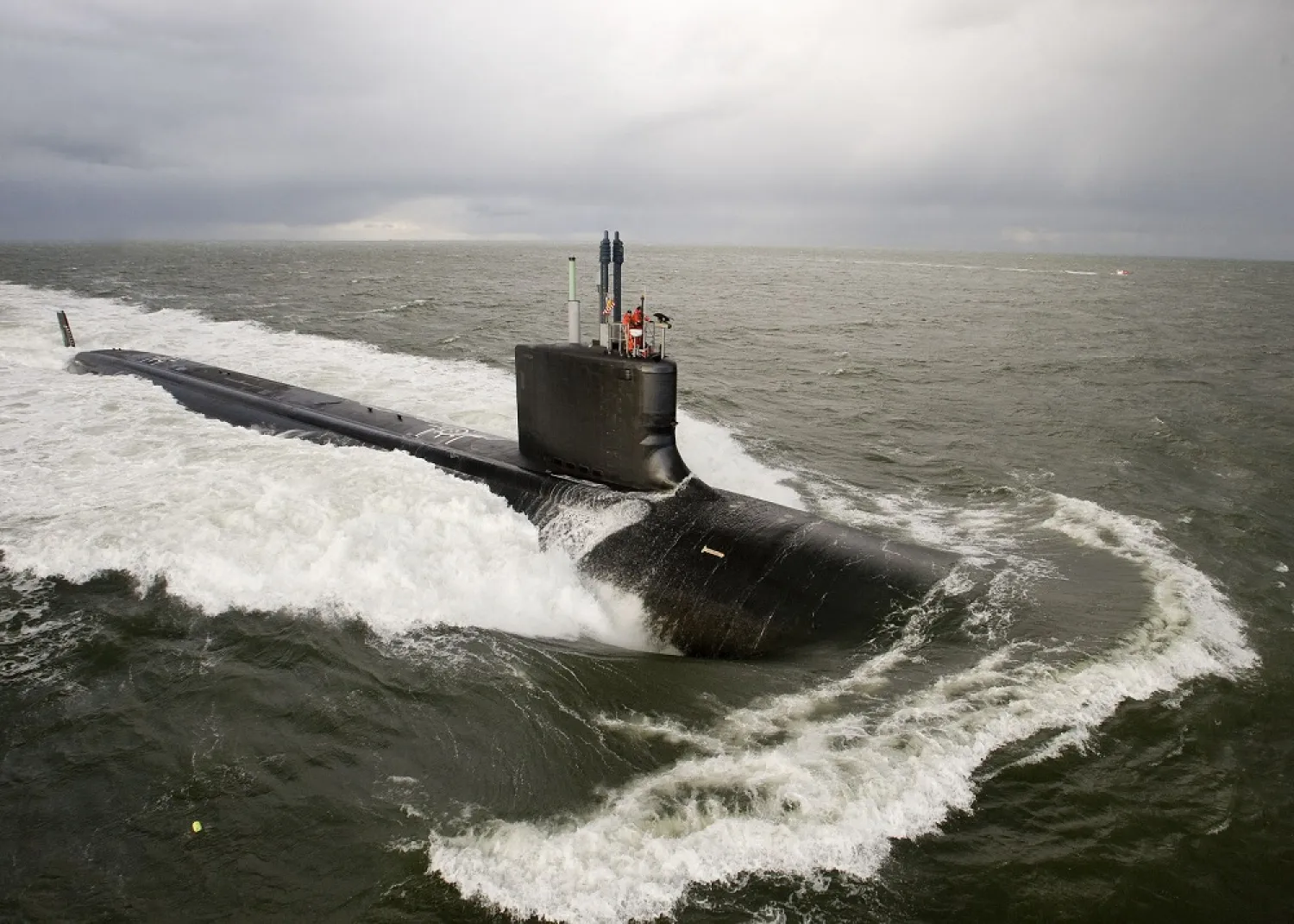
A new Pentagon planning document called the "global posture review" emphasizes building defenses in the Indo-Pacific region against potential threats from China. (AFP)
TT

Pentagon Plans Stronger US Posture toward China, Russia

A new Pentagon planning document called the "global posture review" emphasizes building defenses in the Indo-Pacific region against potential threats from China. (AFP)

The US military will reinforce deployments and bases directed at China and Russia, while maintaining forces in the Middle East adequate to deter Iran and extremist groups, the Pentagon said Monday, referencing results of a review.

The US Defense Department will be upgrading and expanding military facilities in Guam and Australia, underscoring its focus on China as the country's leading defense rival, officials said.

The details of the "global posture review," commissioned by President Joe Biden's administration early this year, would remain classified, the officials added, so as not to reveal plans to rivals.

The move comes in the wake of the formation of a new defense alliance between the United States, Britain and Australia -- dubbed AUKUS -- to counter a rising China, which has been building up its own navy and testing decades of US military dominance across Asia.

That pact was formed as Beijing solidifies its control over the disputed South China Sea and intensifies its military threats towards Taiwan, of which the United States is a key ally and arms supplier.

The review confirmed the priority region for the US military was the Indo-Pacific, said Mara Karlin, a top Pentagon policy official.

The review "directs additional cooperation with allies and partners across the region to advance initiatives that contribute to regional stability and deter potential military aggression from China and threats from North Korea," she told reporters.

In addition, it "strengthens the combat-credible deterrent against Russian aggression in Europe and enables NATO forces to operate more effectively," she said.

The Middle East, however, remains an area of flux for the Pentagon after the long wars in Iraq and Afghanistan.

Global responsibilities "require us to make continuous changes to our Middle East posture, but we always have the capability to rapidly deploy forces to the region based on the threat environment," Karlin said.

China's foreign ministry on Tuesday hit back at the review, accusing the Pentagon of "creating an imaginary enemy," and "sparing no efforts to encircle and contain China."

"We firmly oppose the United States' use of the 'China Threat theory' as an excuse to increase military spending and expand military strength and hegemony," foreign ministry spokesman Zhao Lijian said at a regular press briefing.

Rebuilding trust
However, a senior Pentagon official who declined to be identified downplayed any idea of radical shifts.

"In the first year of an administration, it's not the time when we would develop a major strategic-level change to our posture," the official said.

The official added that the Biden team felt the review necessary after the disruptive approach of his predecessor Donald Trump, who altered US commitments abruptly.

Under Trump, "there were oftentimes a devaluing of ally and partner input and engagement, which eroded US credibility and hard-won trust," the official said.

The officials declined to answer questions on how the global posture review sees US force presence in ongoing conflict zones like the Middle East, East and West Africa, and Eastern Europe.

But they confirmed previously announced plans to do more in Guam and Australia.

"In Australia, you'll see new rotational fighter and bomber aircraft deployments, you'll see ground forces training and increased logistics cooperation," said Karlin.

In Guam, the Northern Mariana Islands and Australia there will also be upgrades to airports and fuel and munitions storage facilities, she said.

Asked if the review foresaw more increases in the US presence in the Pacific region, Karlin said: "We're moving the needle a bit."

"And what I'd like to think is, over the coming years, you will see that needle move more," she said.




Top Trump Iran Negotiator Says Visits US Aircraft Carrier in Middle East

US Special Envoy Steve Witkoff delivers a press conference upon the signing of the declaration on deploying post-ceasefire force in Ukraine, during the so-called "Coalition of the Willing" summit, at the Elysee Palace in Paris, France, January 6, 2026. (Reuters)
TT

Top Trump Iran Negotiator Says Visits US Aircraft Carrier in Middle East

US Special Envoy Steve Witkoff delivers a press conference upon the signing of the declaration on deploying post-ceasefire force in Ukraine, during the so-called "Coalition of the Willing" summit, at the Elysee Palace in Paris, France, January 6, 2026. (Reuters)

US President Donald Trump's lead Iran negotiator Steve Witkoff on Saturday said he visited the USS Abraham Lincoln aircraft carrier currently in the Arabian Sea, with Washington and Tehran due to hold further talks soon.

"Today, Adm. Brad Cooper, Commander of US Naval Forces Central Command, Jared Kushner, and I met with the brave sailors and Marines aboard the USS Abraham Lincoln, her strike group, and Carrier Air Wing 9 who are keeping us safe and upholding President Trump's message of peace through strength," said Witkoff in a social media post.

Iranian Foreign Minister Abbas Araghchi said on Saturday he hoped talks with the United States would resume soon, while reiterating Tehran's red lines and warning against any American attack.


Israel’s Netanyahu Expected to Meet Trump in US on Wednesday and Discuss Iran

Israeli Prime Minister Benjamin Netanyahu delivers a speech during a special session to mark the 77th anniversary of the Knesset's establishment and the 60th anniversary of the dedication of the current building at the Knesset, the Israeli parliament, in Jerusalem, 02 February 2026. (EPA)
TT

Israel’s Netanyahu Expected to Meet Trump in US on Wednesday and Discuss Iran

Israeli Prime Minister Benjamin Netanyahu delivers a speech during a special session to mark the 77th anniversary of the Knesset's establishment and the 60th anniversary of the dedication of the current building at the Knesset, the Israeli parliament, in Jerusalem, 02 February 2026. (EPA)

Israeli Prime Minister Benjamin Netanyahu is expected to meet US President Donald Trump on Wednesday in Washington, where they will discuss negotiations with Iran, Netanyahu's office said on Saturday.

Iranian and US officials held indirect nuclear ‌talks in the ‌Omani capital ‌Muscat ⁠on Friday. ‌Both sides said more talks were expected to be held again soon.

A regional diplomat briefed by Tehran on the talks told Reuters Iran insisted ⁠on its "right to enrich uranium" ‌during the negotiations with ‍the US, ‍and that Tehran's missile capabilities ‍were not raised in the discussions.

Iranian officials have ruled out putting Iran's missiles - one of the largest such arsenals in the region - up ⁠for discussion, and have said Tehran wants recognition of its right to enrich uranium.

"The Prime Minister believes that any negotiations must include limiting ballistic missiles and halting support for the Iranian axis," Netanyahu's office said in a ‌statement.


Italy FM Rules Out Joining Trump’s ‘Board of Peace’

Italy's Minister for Foreign Affairs Antonio Tajani speaks to the press during the EPP Leaders’ meeting, in Zagreb, Croatia, 30 January 2026. (EPA)
TT

Italy FM Rules Out Joining Trump’s ‘Board of Peace’

Italy's Minister for Foreign Affairs Antonio Tajani speaks to the press during the EPP Leaders’ meeting, in Zagreb, Croatia, 30 January 2026. (EPA)

Italy will not take part in US President Donald Trump's "Board of Peace", Italian Foreign Minister Antonio Tajani said Saturday, citing "insurmountable" constitutional issues.

Trump launched his "Board of Peace" at the World Economic Forum in Davos in January and some 19 countries have signed its founding charter.

But Italy's constitution bars the country from joining an organization led by a single foreign leader.

Prime Minister Giorgia Meloni, a Trump ally, last month noted "constitutional problems" with joining, but suggested Trump could perhaps reopen the framework "to meet the needs not only of Italy, but also of other European countries".

Tajani appeared Saturday to rule that out.

"We cannot participate in the Board of Peace because there is a constitutional limit," he told the ANSA news agency.

"This is insurmountable from a legal standpoint," he said, the day after meeting US Secretary of State Marco Rubio and US Vice President JD Vance at the Olympics in Milan.

Although originally meant to oversee Gaza's rebuilding, the board's charter does not limit its role to the Palestinian territory and appears to want to rival the United Nations.