UN General Assembly Says Any Action to Change Status Quo in Jerusalem Is Illegal

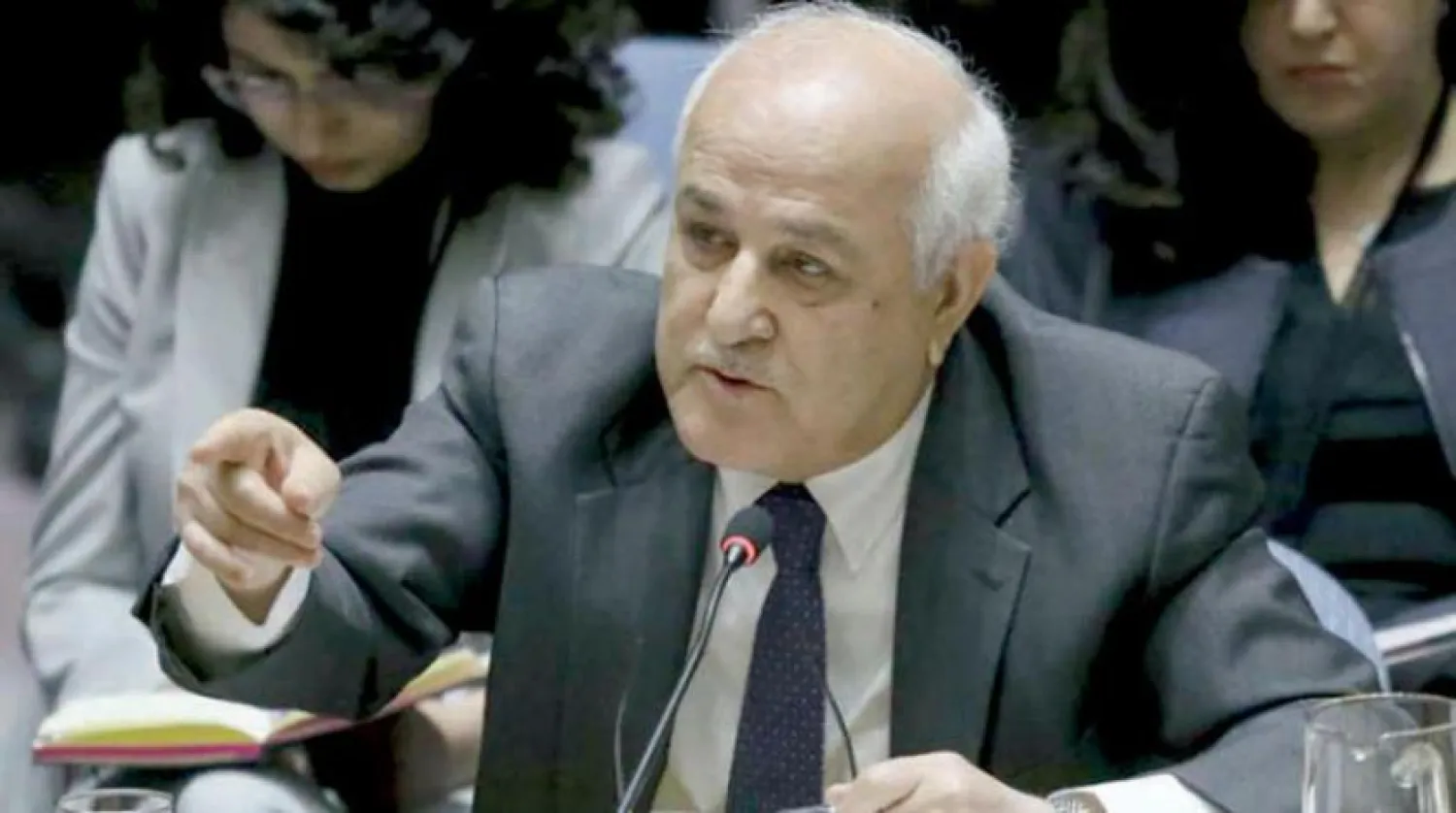
 Permanent Observer for the State of Palestine Riyad Mansour during a previous United Nation General Assembly meeting. (AP)
Permanent Observer for the State of Palestine Riyad Mansour during a previous United Nation General Assembly meeting. (AP)
TT

UN General Assembly Says Any Action to Change Status Quo in Jerusalem Is Illegal

 Permanent Observer for the State of Palestine Riyad Mansour during a previous United Nation General Assembly meeting. (AP)
Permanent Observer for the State of Palestine Riyad Mansour during a previous United Nation General Assembly meeting. (AP)

The United Nations General Assembly adopted a new resolution reiterating that any actions taken by Israel, the occupying power, to impose its laws, jurisdiction and administration on the Holy City of Jerusalem are “illegal.”

The Assembly stressed that a comprehensive, just and lasting solution the question of the City of Jerusalem should take into account the legitimate concerns of both the Palestinian and Israeli sides.

The resolution urges halting incitement, especially in religiously sensitive sites, with the need to preserve the historical and legal status quo in the city.

Also, a majority of 148 member states voted for a resolution dubbed “Peaceful settlement of the Palestinian cause,” while nine states objected it and 14 states refused to vote.

The Assembly reiterated its call for the achievement of a comprehensive, just and lasting peace in the Middle East. The United States and Israel objected both resolutions.

The lack of progress on this issue, despite it having been on the United Nations’ Agenda since 1948, is “disheartening,” President of the General Assembly Abdullah Shahid said in his opening remarks.

“Year after year we speak of the appalling humanitarian crisis in Palestine, especially the Gaza Strip,” he noted, stressing that words are insufficient.

“Words cannot substitute for the lack of running water, electricity, proper sanitation and decent living conditions that millions of Palestinians endure.”

Today marks 74 years since the General Assembly adopted Resolution 181, he said.

“We recall that this resolution provided the legal foundation for the formation of the State of Israel – and a State of Palestine for the Palestinian People, yet, until now, we have not achieved the establishment of a state for the Palestinian people in line with international law.”

The Permanent Observer for the State of Palestine, Riyad Mansour, said it is time to end this deplorable situation, calling for collective, responsible action to protect human life and uphold the rule of law.

“It is time to stop appeasing Israel and rewarding its transgressions,” he said, stressing that the “absence of a credible political horizon — and failure to enforce accountability for Israel’s systematic human‑rights abuses and war crimes — has only prolonged the conflict.”

Israel’s ambassador to the UN Gilad Erdan slammed the vote on both resolutions stressing that “valuable time, effort and resources are wasted, instead of focused on the world’s most pressing challenges.”

He said “Israel is the primary focus of the UN and endures endless attacks,” he said.

“The Iranian regime, which murders thousands of its citizens, is hardly mentioned, along with Syria, which uses chemical weapons on its citizens and has made millions of them homeless.”


Stability in Southern Lebanon Tops Agenda for Next Round of Talks with Israel

Smoke rises from Mansouri in southern Lebanon after Israeli detonations on Sept. 28. (Reuters)
TT

Stability in Southern Lebanon Tops Agenda for Next Round of Talks with Israel

Smoke rises from Mansouri in southern Lebanon after Israeli detonations on Sept. 28. (Reuters)

Preparations for the next round of Lebanese-Israeli talks in Tampa, Florida, have stirred debate in Lebanon: Do they mark a shift from political negotiations over withdrawal and sovereignty to military administration of the south?

Lebanese sources following the talks reject that interpretation, saying the focus is on resolving outstanding military and security issues.

A ministerial source told Asharq Al-Awsat that those issues require decisions and action on the ground before other tracks can advance.

“We have not moved to military administration of the south. Most issues that remain unresolved are military matters on the ground: halting bulldozing, house demolitions, gunfire and combat operations; securing Israeli withdrawal; identifying new model areas; addressing the issue of prisoners; and returning residents to their villages,” the source said.

“These are not political, economic or legal issues for specialists in those fields. We are discussing details on the ground: where withdrawal takes place, where operations stop, how the Lebanese army deploys and which areas residents can return to. It is natural for military personnel to discuss these details.”

Combat operations continue, though at a lower intensity, the source said. Other steps cannot advance seriously until a minimum level of security and stability is achieved.

“How can the Lebanese army deploy without an Israeli withdrawal or an end to gunfire? How can residents return to their villages while demolitions, bulldozing and military operations continue?”

Resolving military issues

The United States is focused at this stage on resolving outstanding military and security issues with Israel, the source said. These include completing the withdrawal, identifying model areas and halting bulldozing, demolitions and gunfire so other issues can move forward.

“This does not mean a military track is replacing the political track,” the source said.

“Negotiations have followed two tracks from the outset, political and military. But progress on political issues has remained closely tied to conditions on the ground. No political process can be built upon without a degree of stability and an effective ceasefire.”

That explains the military and security focus of the current meetings, the source said.

“What is needed is decisions on the ground. That is why this stage involves a meeting focused on military and security matters, to resolve outstanding points through US pressure on Israel.”

The US role, according to the ministerial source, is to press Israel to resolve those issues, rather than establish an alternative military administration for the south.

A shift in direction

Lawmaker Ashraf Rifi sees a broader shift. In his view, the growing military emphasis is more than a temporary technical measure: It reflects a change in how the situation is being managed.

Rifi told Asharq Al-Awsat he expected “a very violent round” of fighting in the south, with escalation potentially concentrated in Rihan, Soujoud and surrounding areas.

“I do not think the escalation will extend to Beirut unless assassinations take place,” he said.

Asked whether negotiations over Israeli withdrawal were giving way to a military approach to managing the south, Rifi said the region was heading toward “military, intelligence and security administration under US supervision.”

The process, he said, had moved beyond negotiating Israeli withdrawal to broader military and security administration of the south. Withdrawal would remain part of that process, under US supervision.

“We have moved from negotiating withdrawal to military, intelligence and security administration of the south under US supervision. This administration naturally includes Israeli withdrawal, but places it within broader arrangements overseen by the United States,” he said.

“The military dimension has come to the fore at this stage,” Rifi added. The arrangements would become clearer as conditions on the ground developed and the anticipated round of fighting ended.

No separate military track

Lebanon’s former ambassador to Washington, Antoine Chedid, disputed that reading. A greater military emphasis, he said, does not change the process or its political authority, given the limits of the Lebanese army’s powers.

“Lebanon has not moved from political negotiations over withdrawal and sovereignty to military negotiations or military administration of the south,” Chedid told Asharq Al-Awsat.

The Tampa discussions continue the existing process, he said, even if the venue and participants suggest a military character.

“Tampa is a military hub, but that does not mean Lebanon has entered military negotiations with Israel,” he said.

“The Lebanese army implements decisions made by the government, the political authorities and the president. It cannot independently enter military negotiations with the Israelis, even under US mediation, or make decisions that fall within the authority of Lebanon’s political leadership.”

The talks, Chedid said, continue the political framework and discussions that began in Washington and Rome.

“The Tampa talks are not strictly military discussions. They are a continuation of the political framework and the discussions that began in Washington and Rome, but in a different format. The venue and those present may give the impression of military negotiations.”

“The Lebanese army cannot decide in Tampa on matters that fall within the authority of Lebanon’s political leadership,” he added.

“The army operates under political authority, as it should. I therefore do not see what is happening in Tampa as a shift to a separate military track.”



Yemen Armed Forces Advance in Taiz, Coalition Carries out Operation to Protect Marine Navigation

This image taken from undated video released Monday, Oct. 5, 2026, by the Yemeni government-allied Southern Giants Brigades media office shows its fighters firing a weapon mounted on a pickup truck during clashes with the Iran-backed Houthi group in Dhubab district, Taiz, Yemen. (Southern Giants Brigades Media Office via AP)
TT

Yemen Armed Forces Advance in Taiz, Coalition Carries out Operation to Protect Marine Navigation

This image taken from undated video released Monday, Oct. 5, 2026, by the Yemeni government-allied Southern Giants Brigades media office shows its fighters firing a weapon mounted on a pickup truck during clashes with the Iran-backed Houthi group in Dhubab district, Taiz, Yemen. (Southern Giants Brigades Media Office via AP)

The Yemeni army announced on Tuesday that it has seized control of new positions in the Haifan district, south of the Taiz province, as battles continued to rage across several of the province's frontlines.

Meanwhile, the Coalition to Support Legitimacy in Yemen announced that its naval forces carried out a military operation in the Hodeidah province as part of its objectives to protect the security of maritime navigation in the Bab al-Mandeb Strait.

Coalition spokesperson Major General Turki al-Malki said that a plot for imminent attacks targeting waterways in the southern Red Sea had been thwarted, confirming the destruction of weapons depots, warehouses for booby-trapped boats, and naval mines.

Later, the Coalition announced the destruction of a ballistic missile launched in Sanaa, as well as a warehouse in a mountain storing 20 missiles in Saada.

Saudi Defense Minister Prince Khalid bin Salman had said that the meeting of the Strategic-Political and Defense Committee of the Makkah Alliance for Defense reaffirmed the solidarity of its member states and their unified stance in confronting attacks against Saudi Arabia and holy sites.

The meeting underscored the activation of collective deterrence against these attacks and anyone behind them within the framework of the alliance, he added.

The committee decided to move immediately to the practical implementation of the collective defense commitments and to take the necessary measures to provide the agreed military forces and capabilities and ensure their rapid deployment in the Kingdom, in line with the approved arrangements and the national legislation of the parties, thereby boosting readiness, military integration, and the collective capacity to confront and counter threats.


Israel Puts Military on Alert for Oct 7 Anniversary, Warns Gazans

Residents gather on a hill on October 1, 2026, in Sderot, one of the areas in southern Israel attacked by Hamas three years prior. Oded Balilty, AP
TT

Israel Puts Military on Alert for Oct 7 Anniversary, Warns Gazans

Residents gather on a hill on October 1, 2026, in Sderot, one of the areas in southern Israel attacked by Hamas three years prior. Oded Balilty, AP

Israel's defense minister on Tuesday said he had put the military on high alert before the anniversary of Hamas's October 7, 2023 attack, warning Gazans would pay a "heavy price" if forces were harmed.

The office of Defense Minister Israel Katz said the instruction came "in light of intelligence regarding Hamas's intentions to attempt to carry out attacks and terror operations against our forces in Gaza on that day".

"If, heaven forbid, our forces are harmed, the ones who will pay the heavy price will be Hamas and the population of Gaza -- beyond all proportion," the statement added.

Hamas's October 7, 2023 attack was the deadliest day in Israel's history, resulting in the deaths of 1,221 people, according to an AFP tally based on official Israeli figures.

Militants also dragged 251 hostages into Gaza, 44 of them already dead.

In response, Israel launched a military offensive that has left most of Gaza in ruins and killed more than 74,200 people, according to Gaza's health ministry, which is under Hamas authority and whose figures are considered reliable by the United Nations.

Since a ceasefire was declared last October, Israeli forces have killed more than 1,440 people in Gaza, according to the ministry.

On Monday, during a state ceremony to mark three years since the attack, Israeli Prime Minister Benjamin Netanyahu said there would be "no Hamas rule in Gaza" and vowed to continue targeting anyone who was involved in the attack or who held hostages.