US Airstrike Kills Senior Qaeda Leader In Northwest Syria

This US Air Force handout photo shows an MQ-9 Reaper unmanned aerial vehicle (UAV or drone) flying over the Nevada Test and Training Range on January 14, 2020.  © William Rosado, AFP
This US Air Force handout photo shows an MQ-9 Reaper unmanned aerial vehicle (UAV or drone) flying over the Nevada Test and Training Range on January 14, 2020. © William Rosado, AFP
TT

US Airstrike Kills Senior Qaeda Leader In Northwest Syria

This US Air Force handout photo shows an MQ-9 Reaper unmanned aerial vehicle (UAV or drone) flying over the Nevada Test and Training Range on January 14, 2020.  © William Rosado, AFP
This US Air Force handout photo shows an MQ-9 Reaper unmanned aerial vehicle (UAV or drone) flying over the Nevada Test and Training Range on January 14, 2020. © William Rosado, AFP

A Qaeda commander was killed in a US drone strike in northwest Syria Friday, the Syrian Observatory for Human Rights reported.

SOHR sources reported that the International Coalition against ISIS targeted an unidentified man on a motorcycle on the road to al-Mastuma in Idlib countryside with three missiles, killing him immediately.

The London-based war monitor also said that a family of six, including women and children sustained various injuries, as the car they were traveling in was passing near the site of the drone attack.

Earlier in October, the US Central Command also reported killing a senior Qaeda leader in a drone strike in northwest Syria.

"Abdul Hamid al-Matar was killed in an attack by an MQ-9 Reaper drone," said Army Maj. John Rigsbee, a CENTCOM spokesman, in a statement posted on the command’s website.

“Al-Qaeda continues to present a threat to America and our allies. Al-Qaeda uses Syria as a safe haven to rebuild, coordinate with external affiliates, and plan external operations,” said Rigsbee at the time.

“Al-Qaeda also uses Syria as a base for threats reaching into Syria, Iraq and beyond."


Israel Says Struck Hezbollah Weapons Site in East Lebanon

Smoke rises following an Israeli strike in the southern village of Kfar Tebnit, Lebanon, Thursday, Nov. 19, 2026. (AP)
TT

Israel Says Struck Hezbollah Weapons Site in East Lebanon

Smoke rises following an Israeli strike in the southern village of Kfar Tebnit, Lebanon, Thursday, Nov. 19, 2026. (AP)

The Israeli military said it struck a previous Hezbollah missile production and storage site in eastern Lebanon on Thursday, marking the second attack in the region this week.

"A short while ago, the Israeli Air Force conducted a strike, guided by precise intelligence, in the Janta area in the Bekaa region of Lebanon, targeting a site that was previously used by the Hezbollah terrorist organization for missile production and the storage of weapons," the military said in a statement.

"The site was struck by the army several times during the war. The army identified that Hezbollah terrorists had arrived at the site recently and struck the site's entrances in order to prevent its restoration," it added.

Lebanon's official National News Agency reported that "enemy aircraft launched five airstrikes" in eastern Lebanon.

On Monday, the Israeli military had carried out a bombing in the same region, saying it "struck a weapons shipment transferred from Syria to Lebanon, intended for the Hezbollah terrorist organization".

"The military will not allow the Hezbollah terrorist organization to restore its capabilities and harm Israeli civilians and soldiers," the army said Thursday.

Hezbollah has been weakened by two successive wars with Israel since 2023, most recently after it drew Lebanon into the Middle East conflict in March this year with rocket fire at Israel, which responded with airstrikes and a ground invasion.

Hezbollah lawmakers have nonetheless maintained that the group is rebuilding its military capacities.

Hostilities in Lebanon have declined since June after a US-Iran understanding over the broader regional war, and a US-sponsored Israel-Lebanon framework agreement.

The framework involves the disarmament of Hezbollah, a gradual Israeli troop withdrawal from south Lebanon, and the deployment of the Lebanese army to the area.

But implementation has stalled and Hezbollah has refused to surrender its weapons.

Israel's army still carries out strikes in south Lebanon, where its forces are operating in a self-declared occupied "security zone" running around 10 kilometers (six miles) deep along the border.


Cairo, Tripoli Deepen Ties Despite Maritime Dispute

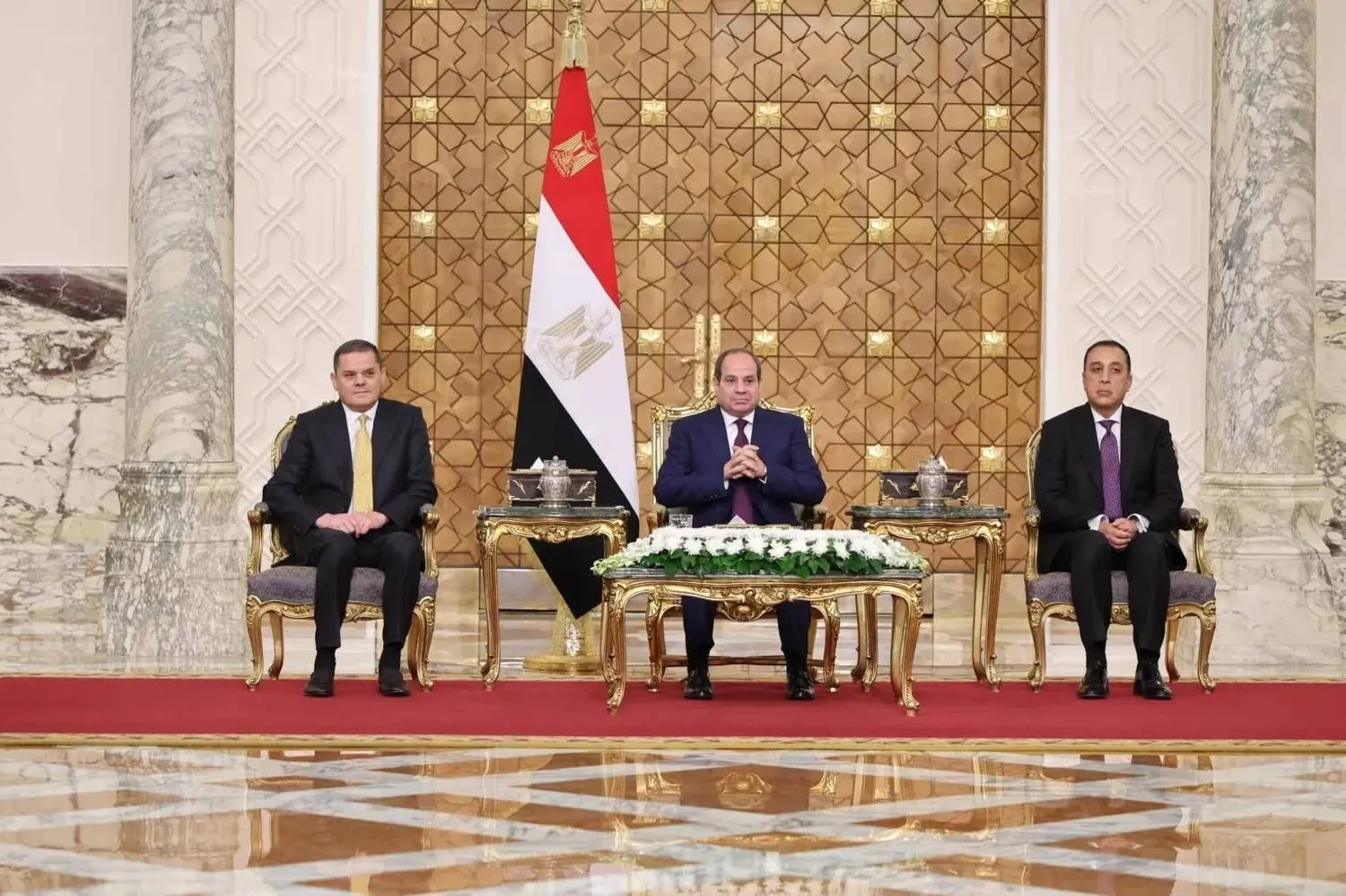
(From left to right) Libya’s interim Prime Minister Abdul Hamid al-Dbeibeh, Egyptian President Abdel Fattah al-Sisi and Egyptian Prime Minister Mostafa Madbouly in Cairo on Thursday. (Egyptian Presidency)
TT

Cairo, Tripoli Deepen Ties Despite Maritime Dispute

(From left to right) Libya’s interim Prime Minister Abdul Hamid al-Dbeibeh, Egyptian President Abdel Fattah al-Sisi and Egyptian Prime Minister Mostafa Madbouly in Cairo on Thursday. (Egyptian Presidency)

Egyptian President Abdel Fattah al-Sisi met Libya’s interim Prime Minister Abdul Hamid al-Dbeibeh in Cairo on Thursday, strengthening political and economic ties with western Libya despite a dispute over a maritime agreement between Libya and Türkiye.

The meeting marked Dbeibeh’s fourth visit to Egypt and his first since Cairo rejected the agreement approved by Libya’s House of Representatives on October 20.

Dbeibeh arrived Wednesday evening with a high-level ministerial delegation and was received by Egyptian Prime Minister Mostafa Madbouly.

The talks, seen as a sign of unprecedented rapprochement, covered bilateral relations, Libya’s political developments, regional security and cooperation in trade, investment, energy and reconstruction.

Egypt presidential spokesman Mohamed el-Shennawy said Sisi stressed the importance of strengthening the two countries’ historic ties and expanding cooperation in priority sectors.

Sisi also reaffirmed Egypt’s commitment to Libya’s security, stability, unity and territorial integrity.

Dbeibeh expressed his government’s determination to strengthen bilateral relations and praised Cairo’s efforts to preserve stability in Libya, said the Egyptian presidency.

Diplomatic engagement intensifies

Dbeibeh’s visit followed two trips to Tripoli by senior Egyptian officials this month.

Foreign Minister Badr Abdelatty reopened Egypt’s embassy in the Libyan capital during a November 7 visit, while intelligence chief Hassan Rashad traveled there on November 16.

Cairo’s intensified engagement with western Libya comes amid disagreements with eastern Libyan authorities over the maritime agreement, which Egypt continues to reject.

Analysts have linked the diplomatic shift to those differences, although Cairo has maintained contacts with both sides of Libya’s political divide.

Dbeibeh signaled flexibility during an October 24 telephone conversation with Rashad, expressing a willingness to address Egyptian concerns through dialogue and coordination while protecting both countries’ legitimate maritime rights and interests.

Egypt considers the agreement null and void, without legal effect, and maintains that its ratification by Libya’s House of Representatives creates no legal obligations for Cairo.

The Egyptian Foreign Ministry previously announced that Abdelatty had conveyed Cairo’s categorical rejection of the ratification to Turkish Foreign Minister Hakan Fidan during talks in Istanbul.

Economic agreements

Sisi and Dbeibeh witnessed the signing of several agreements and memoranda of understanding covering infrastructure development, natural gas, petroleum refining, natural resources, scientific research and labor.

Other agreements addressed training, capacity-building, technical support, professional development, leadership training, small and medium-sized enterprises, media cooperation, government communications and institutional coordination, as well as fisheries and lake development.

The latest agreements build on earlier economic cooperation between Egypt and western Libyan authorities.

In September 2021, the two sides signed 13 agreements during a meeting of their joint higher committee attended by Dbeibeh and Madbouly.

Those agreements covered transportation, electricity, petroleum, infrastructure, youth and sports, and social insurance. The committee had not met since 2009.

Egyptian companies are also involved in major reconstruction projects in Libya.


Iraqi Security Forces to Deploy in Jurf al-Sakhar, Security Officials Say

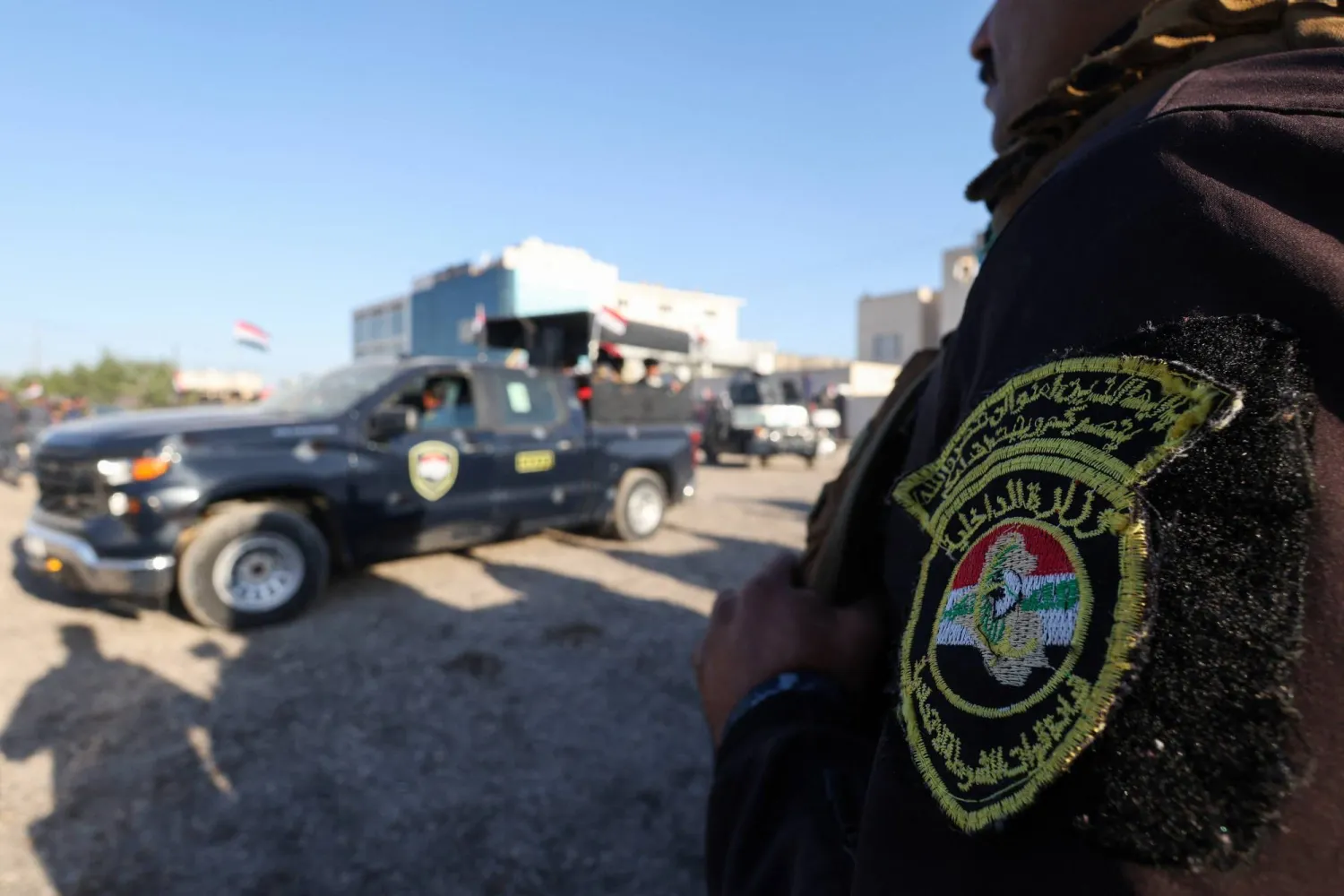
 Members of the Iraqi police take part in a security deployment on the outskirts of Jurf al-Sakhar, Babil province, Iraq, November 20, 2026. (Reuters)
Members of the Iraqi police take part in a security deployment on the outskirts of Jurf al-Sakhar, Babil province, Iraq, November 20, 2026. (Reuters)
TT

Iraqi Security Forces to Deploy in Jurf al-Sakhar, Security Officials Say

 Members of the Iraqi police take part in a security deployment on the outskirts of Jurf al-Sakhar, Babil province, Iraq, November 20, 2026. (Reuters)
Members of the Iraqi police take part in a security deployment on the outskirts of Jurf al-Sakhar, Babil province, Iraq, November 20, 2026. (Reuters)

Iraqi security forces will deploy in Jurf al-Sakhar, a stronghold of the Kataib Hezbollah armed group, on Friday, security officials told a press conference, under a compromise deal designed to ease tensions with the most powerful Iran-aligned armed faction in the country. 

Prime Minister Ali al-Zaidi earlier this week ordered security forces to prepare to move against Kataib Hezbollah, which officials accused of running an oil smuggling network siphoning state-owned oil worth hundreds of millions of dollars. 

Under the deal, brokered by Shiite politicians, Kataib members were expected to withdraw to other parts of Iraq, a major oil producer and ally of both the United States and Iran. 

Kataib Hezbollah, ‌branded a terrorist group by the United States, has rejected ‌the ⁠smuggling accusations. So far, ⁠nine senior security and oil officials have been dismissed following an investigation focused on Jurf al-Sakhar in Babil province, a Kataib stronghold about 50 km (30 miles) south of Baghdad. 

Any direct confrontation with the Iran-backed armed factions in Iraq could be risky. 

After one of al-Zaidi's predecessors ordered a similar crackdown on factions five years ago, the prime minister's Baghdad home was hit in a drone strike that authorities described at the time as an assassination attempt. 

US President Donald Trump has pressured ⁠al-Zaidi to disarm the factions that have struck US troops and facilities ‌in Saudi Arabia and the United Arab Emirates in ‌solidarity with Tehran since the United States and Israel launched attacks on Iran at the end of February. ‌Kataib Hezbollah and other groups have refused to hand over their weapons to the ‌state. 

Pro-Iranian factions, including Kataib Hezbollah, enjoy a semi-official status in Iraq, which critics say encourages them to act with impunity. A shadowy group with no announced leadership structure, Kataib Hezbollah has thousands of hardened fighters. 

It forms several battalions in Iraq's Popular Mobilization Forces (PMF), a grouping of armed factions set up in 2014 to fight ‌ISIS and subsequently recognized as an official security force. 

Fighters receive state salaries and Kataib Hezbollah members, including some designated as terrorists ⁠by the US, hold senior ⁠positions in the PMF. 

While it is technically under the command of Iraq's prime minister as part of the PMF, the group often operates outside the chain of command and has defied and challenged government statements calling for an end to attacks on US forces. 

Kataib Hezbollah has its own political party, called Huquq, or Rights, with five lawmakers. An Iraqi official report said the group also generates cash through businesses, such as construction, housing, trade, tourism and currency exchange, though the group denies this and says it is dedicated to security. 

In August, Iraqi special forces reporting directly to the prime minister arrested the intelligence chief of the Iran-aligned faction Harakat al-Nujaba on accusations of involvement in drone attacks against US interests. 

The detention, which lasted 48 hours, triggered threats of retaliation from the group and prompted intervention by senior Shiite politicians who helped defuse tensions. A week later, Iraqi special forces arrested four faction members over allegations they facilitated attacks on US interests.