


As Iran Nuclear Talks Hit Snags, Israel Seeks Harder US Line

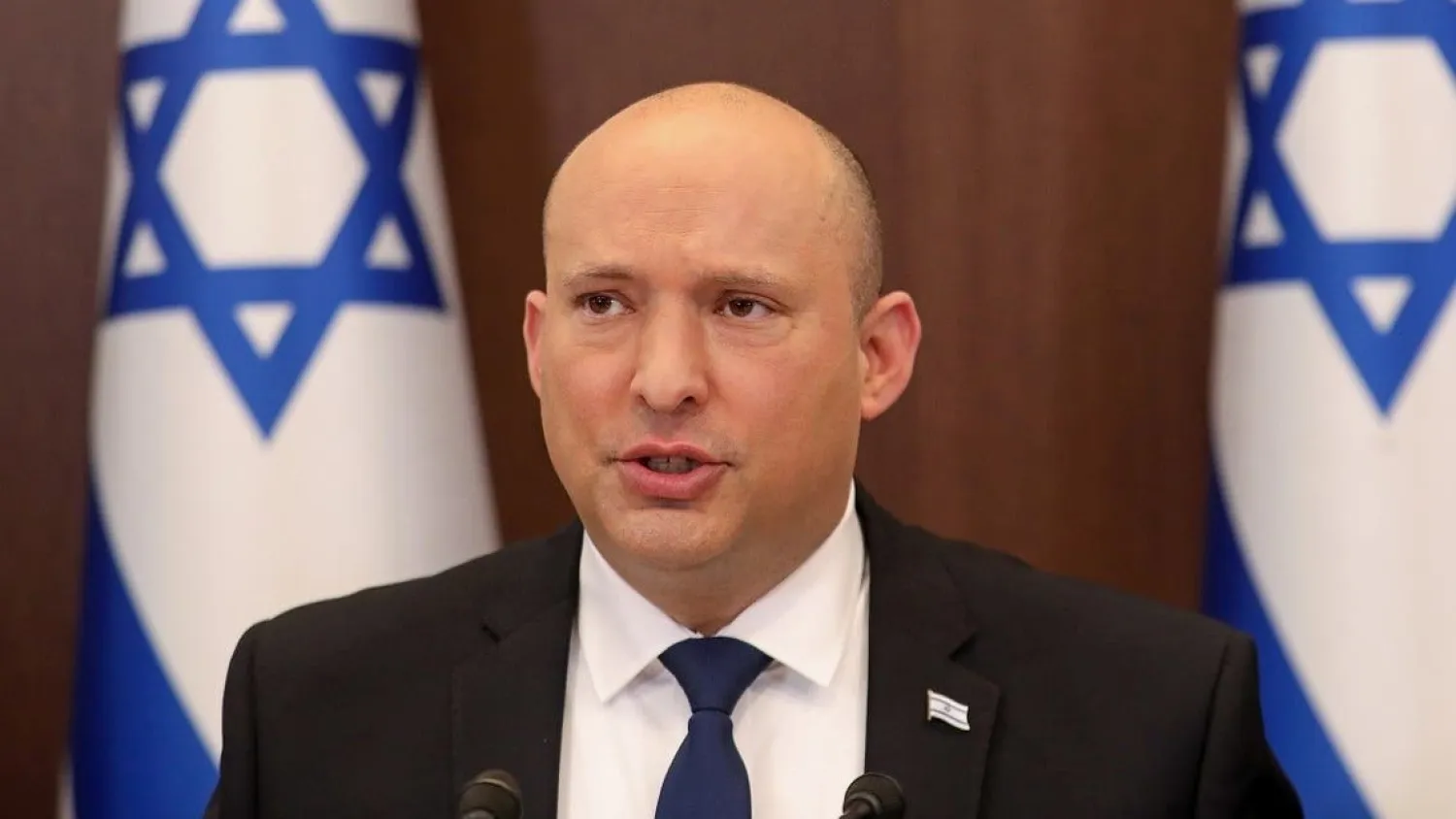
Israeli Prime Minister Naftali Bennett chairs a weekly cabinet meeting in Jerusalem, Israel, December 5, 2021. (Reuters)
TT

As Iran Nuclear Talks Hit Snags, Israel Seeks Harder US Line

Israeli Prime Minister Naftali Bennett chairs a weekly cabinet meeting in Jerusalem, Israel, December 5, 2021. (Reuters)

The long-delayed resumption of nuclear talks with Iran has gotten off to a rough start — with Iran digging in and its negotiating partners openly voicing frustration and pessimism.

After five days of talks in Vienna ended last week, the United States said Iran did not appear to be serious. European diplomats accused Iran of backtracking on previous promises. Even Russia, which has stronger relations with Iran, questioned Iran’s commitment to the process. Israel, an outside observer with a stake in the outcome of the talks, has ramped up its rhetoric and is dispatching two top security officials to Washington for consultations.

“I call on every country negotiating with Iran in Vienna to take a strong line and make it clear to Iran that they cannot enrich uranium and negotiate at the same time,” Prime Minister Naftali Bennett said Sunday. “Iran must begin to pay a price for its violations.”

Perhaps the most encouraging outcome of last week’s talks was an agreement to continue talking. When negotiators reconvene in coming days, it could become clearer if the wide gaps visible last week were a sign of posturing or a serious crisis.

The negotiations seek to revive the 2015 nuclear accord between Iran and six world powers. That agreement, spearheaded by President Barack Obama, granted Iran relief from crippling sanctions in exchange for curbs on its nuclear program.

But three years later, President Donald Trump, with strong encouragement from then-Israeli Prime Minister Benjamin Netanyahu, withdrew from the deal, causing it to unravel. Since then, Iran has stepped up its nuclear activities -- amassing a stockpile of highly enriched uranium that goes well beyond the bounds of the accord.

Iran last week took a hard stance, suggesting everything discussed in previous rounds of diplomacy could be renegotiated. In the midst of the negotiations, the UN’s nuclear watchdog confirmed that Iran had begun enriching uranium up to 20% purity at its underground facility at Fordo – a site where enrichment is not permitted under the deal.

Despite Iran's claims that its nuclear activities are for peaceful purposes only, the continued advances in its atomic program have further raised the stakes.

Last week’s talks in Vienna came after a hiatus of more than five months and were the first in which Iran’s new hard-line government participated. The United States, no longer a party to the agreement, was not in the room and negotiated remotely through mediators.

A senior US State Department official said over the weekend that negotiators had expected Iran to “show seriousness” at the talks. He said that even Russia and China, important trading outlets for Iran that have traditionally taken a softer line, were concerned about the prospects for a deal.

“Every day that goes by is a day where we come closer to the conclusion that they don’t have in mind a return" to the deal, said the official, who spoke on condition of anonymity to brief reporters on the US assessment.

European negotiators also expressed frustration. In a joint statement, senior diplomats from Germany, Britain and France said Iran has “fast-forwarded its nuclear program” and “backtracked on diplomatic progress.”

“Unclear how these new gaps can be closed in a realistic time frame on the basis of Iranian drafts,” they said.

Mikhail Ulyanov, a senior Russian diplomat in Vienna, said that Iran had offered a “radical revision” of previous understandings.

“Technically, amendments are always possible,” he said. “However, it is desirable that such amendments ... do not turn into a roadblock to progress.”

On Sunday, Iran’s Foreign Ministry issued a nine-page document that appeared to slightly step back from its tough positions.

“Other parties only need to show political determination and express readiness to take necessary practical steps,” the document read. “Then, ways will be opened for the conclusion of a deal and settlement of differences.”

But the document gave few specifics on what Iran might have in mind.

That is unlikely to satisfy Israel, which has returned to its role as possible spoiler.

Israel considers Iran to be its greatest enemy and it strongly opposed the 2015 deal.

It says it wants an improved deal that places tighter restrictions on Iran’s nuclear program and addresses Iran’s long-range missile program and its support for hostile proxies along Israel’s borders.

Israel also says that the negotiations must be accompanied by a “credible” military threat to ensure that Iran does not delay indefinitely.

Bennett said Israel was using the time between rounds to persuade the Americans to “use a different toolkit” against Iran’s nuclear program, without elaborating.

The head of Israel’s Mossad intelligence service, David Barnea, was traveling to Washington on Sunday, and Israeli Defense Minister Benny Gantz, a former military chief, heads there later this week.

Israel’s figurehead president, Isaac Herzog, delivered an uncharacteristically blunt message Sunday as he welcomed the new American ambassador to Israel, Thomas Nides.

“If the international community does not take a vigorous stance on this issue, Israel will do so. Israel will protect itself,” Herzog said.

Despite Israel’s support for Trump’s withdrawal in 2018, prominent voices in the country are now saying in retrospect that the move was a blunder.

Former Prime Minister Ehud Barak wrote in the Yediot Ahronot daily Sunday that pulling out “was a delusional decision that allowed the Iranians to move forward quickly in the direction of becoming a nuclear threshold state.”

Barak, who reportedly favored a military strike when he served as Netanyahu’s defense minister early last decade, said Netanyahu, who is now Israel’s opposition leader, had failed to put together with the US a “Plan B in the form of a surgical military operation.”

Over the past decade, Iran has greatly complicated any military operation by scattering its nuclear sites and hiding some deep underground. Israeli officials insist military action is still feasible.

Yoel Guzansky, a senior fellow and Iran expert at Israel’s Institute for National Security Studies, said the Israeli threats should be taken seriously, especially in light of questions over America’s willingness to use force in the region.

“I think the United States doesn’t understand our red lines,” he said. “They think we’re bluffing, but we’re not.”

Over the weekend, Iran said it had tested a surface-to-air missile defense system near its Natanz nuclear facility. Late Saturday, people leaving nearby saw a light in the sky and heard a loud explosion.

“Any threat from the enemies will be met with a decisive and firm response,” state TV quoted Lt. Cmdr. Ali Moazeni as saying.



Top Trump Iran Negotiator Says Visits US Aircraft Carrier in Middle East

US Special Envoy Steve Witkoff delivers a press conference upon the signing of the declaration on deploying post-ceasefire force in Ukraine, during the so-called "Coalition of the Willing" summit, at the Elysee Palace in Paris, France, January 6, 2026. (Reuters)
TT

Top Trump Iran Negotiator Says Visits US Aircraft Carrier in Middle East

US Special Envoy Steve Witkoff delivers a press conference upon the signing of the declaration on deploying post-ceasefire force in Ukraine, during the so-called "Coalition of the Willing" summit, at the Elysee Palace in Paris, France, January 6, 2026. (Reuters)

US President Donald Trump's lead Iran negotiator Steve Witkoff on Saturday said he visited the USS Abraham Lincoln aircraft carrier currently in the Arabian Sea, with Washington and Tehran due to hold further talks soon.

"Today, Adm. Brad Cooper, Commander of US Naval Forces Central Command, Jared Kushner, and I met with the brave sailors and Marines aboard the USS Abraham Lincoln, her strike group, and Carrier Air Wing 9 who are keeping us safe and upholding President Trump's message of peace through strength," said Witkoff in a social media post.

Iranian Foreign Minister Abbas Araghchi said on Saturday he hoped talks with the United States would resume soon, while reiterating Tehran's red lines and warning against any American attack.


Israel’s Netanyahu Expected to Meet Trump in US on Wednesday and Discuss Iran

Israeli Prime Minister Benjamin Netanyahu delivers a speech during a special session to mark the 77th anniversary of the Knesset's establishment and the 60th anniversary of the dedication of the current building at the Knesset, the Israeli parliament, in Jerusalem, 02 February 2026. (EPA)
TT

Israel’s Netanyahu Expected to Meet Trump in US on Wednesday and Discuss Iran

Israeli Prime Minister Benjamin Netanyahu delivers a speech during a special session to mark the 77th anniversary of the Knesset's establishment and the 60th anniversary of the dedication of the current building at the Knesset, the Israeli parliament, in Jerusalem, 02 February 2026. (EPA)

Israeli Prime Minister Benjamin Netanyahu is expected to meet US President Donald Trump on Wednesday in Washington, where they will discuss negotiations with Iran, Netanyahu's office said on Saturday.

Iranian and US officials held indirect nuclear ‌talks in the ‌Omani capital ‌Muscat ⁠on Friday. ‌Both sides said more talks were expected to be held again soon.

A regional diplomat briefed by Tehran on the talks told Reuters Iran insisted ⁠on its "right to enrich uranium" ‌during the negotiations with ‍the US, ‍and that Tehran's missile capabilities ‍were not raised in the discussions.

Iranian officials have ruled out putting Iran's missiles - one of the largest such arsenals in the region - up ⁠for discussion, and have said Tehran wants recognition of its right to enrich uranium.

"The Prime Minister believes that any negotiations must include limiting ballistic missiles and halting support for the Iranian axis," Netanyahu's office said in a ‌statement.


Italy FM Rules Out Joining Trump’s ‘Board of Peace’

Italy's Minister for Foreign Affairs Antonio Tajani speaks to the press during the EPP Leaders’ meeting, in Zagreb, Croatia, 30 January 2026. (EPA)
TT

Italy FM Rules Out Joining Trump’s ‘Board of Peace’

Italy's Minister for Foreign Affairs Antonio Tajani speaks to the press during the EPP Leaders’ meeting, in Zagreb, Croatia, 30 January 2026. (EPA)

Italy will not take part in US President Donald Trump's "Board of Peace", Italian Foreign Minister Antonio Tajani said Saturday, citing "insurmountable" constitutional issues.

Trump launched his "Board of Peace" at the World Economic Forum in Davos in January and some 19 countries have signed its founding charter.

But Italy's constitution bars the country from joining an organization led by a single foreign leader.

Prime Minister Giorgia Meloni, a Trump ally, last month noted "constitutional problems" with joining, but suggested Trump could perhaps reopen the framework "to meet the needs not only of Italy, but also of other European countries".

Tajani appeared Saturday to rule that out.

"We cannot participate in the Board of Peace because there is a constitutional limit," he told the ANSA news agency.

"This is insurmountable from a legal standpoint," he said, the day after meeting US Secretary of State Marco Rubio and US Vice President JD Vance at the Olympics in Milan.

Although originally meant to oversee Gaza's rebuilding, the board's charter does not limit its role to the Palestinian territory and appears to want to rival the United Nations.