Putin Lauds India as Military, Energy Ties Bolstered

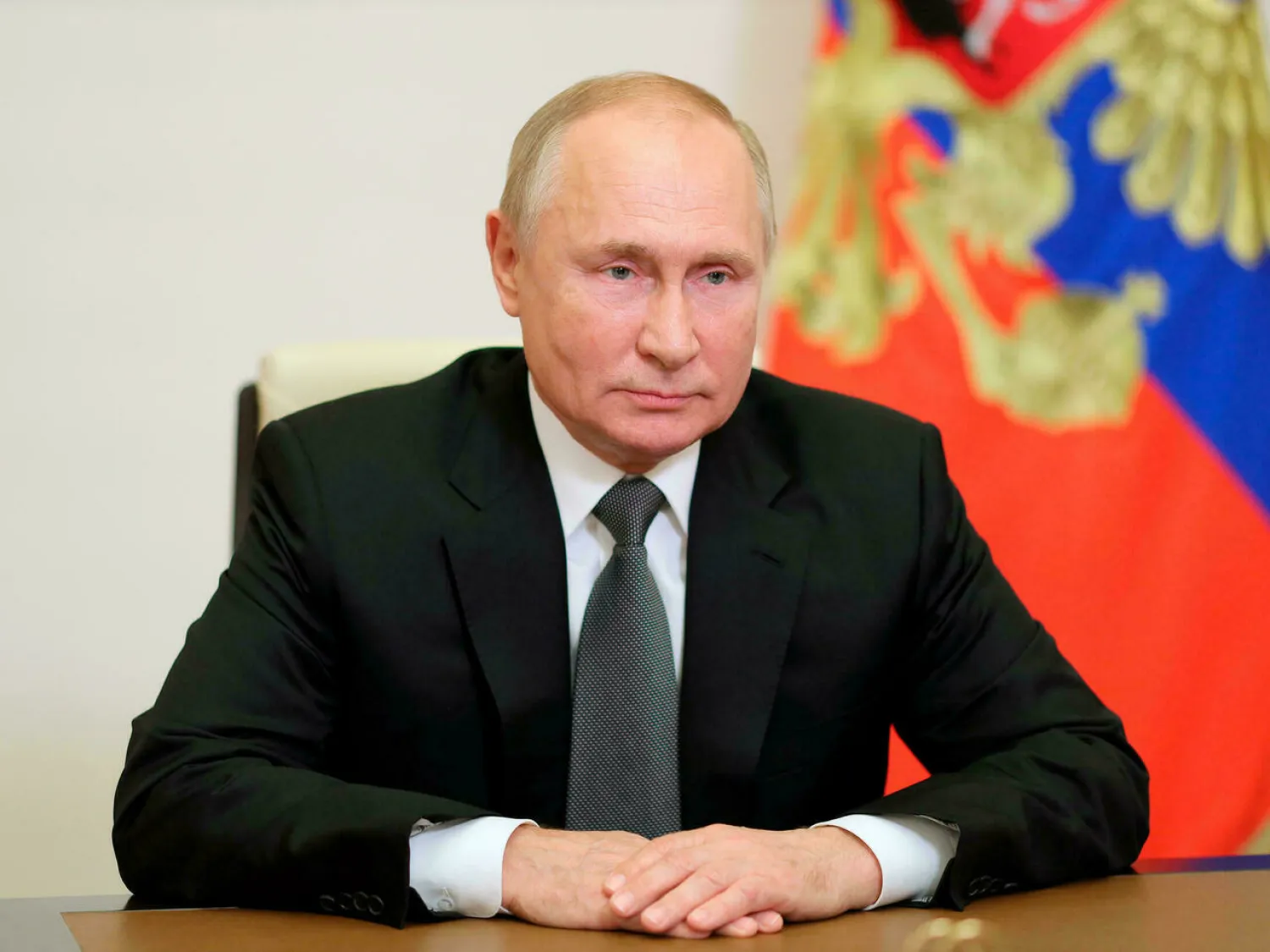
Russian President Vladimir Putin's visit to India will be only his second trip abroad since the coronavirus pandemic began - SPUTNIK/AFP
TT

Putin Lauds India as Military, Energy Ties Bolstered

Russian President Vladimir Putin's visit to India will be only his second trip abroad since the coronavirus pandemic began - SPUTNIK/AFP

Russian President Vladimir Putin lauded India as "a great power" in New Delhi on Monday as the traditional allies bolstered their military and energy ties, despite Washington's increasing courtship of the world's largest democracy.

India confirmed that Russia this month began deliveries of its long-range S-400 ground-to-air missile defense system, which has prompted threats of US sanctions.

A 10-year defense technical cooperation agreement and a one-year oil contract were among the deals signed as Putin held talks with Indian Prime Minister Narendra Modi.

It was only Putin's second trip abroad since the coronavirus pandemic began -- he skipped both the G20 and COP26 summits this year -- and comes after a June summit with US President Joe Biden in Geneva.

"We perceive India as a great power, a friendly nation and a time-tested friend," Putin said in the Indian capital alongside Modi.

Russia has long been a key arms supplier to India, which is looking to modernize its armed forces, and the S-400 missile system is one of their most high-profile current contracts.

"Supplies have begun this month and will continue," Indian foreign secretary Harsh Vardhan Shringla said after the summit.

The deal is worth over $5 billion and was first signed in 2018, but it threatens to upend the burgeoning relationship between New Delhi and Washington.

The United States has warned of sanctions under the Countering America's Adversaries Through Sanctions Act (CAATSA), which is aimed at reining in Russia, and the State Department said last week that no decisions had been made on any waivers for India.

"Our Indian friends clearly explained that they are a sovereign country and that they will decide whose weapons to buy and who will be India's partner," Kremlin spokesman Dmitry Peskov told reporters on Monday.

India was close to the Soviet Union during the Cold War, a relationship that has endured, with both calling it a "special privileged strategic partnership".

Putin's visit was "hugely symbolic", said Nandan Unnikrishnan from the New Delhi-based Observer Research Foundation think tank.

"There has been a lot of speculation about the nature of the India-Russia relationship and whether it is fraying because of Russia's closeness with China and India's with the US, but this visit puts all that to rest."

In its efforts to address a rising China, Washington has set up the QUAD security dialogue with India, Japan, and Australia, raising concerns in both Beijing and Moscow.

Putin's visit comes in the shadow of complex regional dynamics, with tensions mounting between New Delhi and Beijing, traditionally an ally of Moscow, following deadly clashes in a disputed Himalayan region.

"Russia's influence in the region is very limited," said Tatiana Belousova of OP Jindal Global University in Haryana, "mostly because of its close ties with China and unwillingness to act in dissonance with the Chinese regional interests."

'New order evolving'

Talks were dominated by defense and energy issues, with the boss of Russian energy giant Rosneft, Igor Sechin, also attending as a "number of important energy agreements" were on the table.

Rosneft said in a statement it will supply of up to two million tons of oil to India through the Black Sea port city of Novorossiysk in southern Russia.

New Delhi has long sought to diversify its military imports but analysts believe it could take some time before it moves away from Russia.

The 10-year defense agreement signed Monday showed both the strength of its ties with Russia "and the difficult path India has to traverse to diversify its arms suppliers and develop its indigenous production capacity," Unnikrishnan said.

India is also keen to increase domestic production and has launched a joint venture with Russia to manufacture AK-203 assault rifles.

Kalashnikov Concern said Monday that it had agreed on a contract to supply more than 600,000 AK-203 assault rifles manufactured in India for the Indian defense ministry.

"We are ready to start production of modern AK-203s ... within the next few months," said general director Vladimir Lepin.

India and Russia normally hold annual summits, but the leaders' last in-person meeting was on the sidelines of the 2019 BRICS Summit in Brazil.

Putin's visit "reiterated the importance of this moment when a new order is evolving and that together they have a better chance of shaping it," Samir Saran of the Observer Research Foundation told AFP.

The two countries' foreign and defense ministers held talks Monday ahead of Putin's arrival.

Moscow and New Delhi hold "identical or near-identical positions on the most important global and security issues", said Russian foreign minister Sergei Lavrov.


Trump Arrives in Manila for Quad Talks Ahead of China Visit

US President Donald Trump waves as he walks to board Air Force One at Joint Base Andrews, Maryland, on November 16, 2026. (AFP)
TT

Trump Arrives in Manila for Quad Talks Ahead of China Visit

US President Donald Trump waves as he walks to board Air Force One at Joint Base Andrews, Maryland, on November 16, 2026. (AFP)

US President Donald Trump arrived in the Philippines on Tuesday at the tail end of a Southeast Asian summit, with protests awaiting him as he prepares for the first meeting in two years of the Quad group of Indo-Pacific countries.

Trump's Asia trip, which includes the Asia-Pacific Economic Cooperation (APEC) forum in Shenzhen and a much-anticipated trilateral meeting with his Chinese and Russian counterparts, comes after his Republican Party's defeat in midterm elections, plus spy allegations and new US curbs on China's access to AI chips that could complicate a fragile trade-war truce.

Demonstrators gathered in Manila for a fifth day of protests that have included the burning of Trump effigies, calls for an end to the Middle East war and scrapping of the US-led Pax Silica supply chain initiative.

Trump arrived late afternoon at the end of the Association of Southeast Asian Nations summit ‌and will join a ‌US-ASEAN "Special Summit" later on Tuesday.

He will first hold a meeting of the Quad – ‌the ⁠US, Japan, Australia and ⁠India – which will be his first and takes place two years after the last gathering of the group, which Trump's predecessor Joe Biden regarded as a signature foreign policy initiative.

It comes ahead of the APEC gathering hosted by Chinese President Xi Jinping, who has previously objected to the Quad as an effort to encircle Beijing. Quad members have said the grouping is not directed against any one country.

QUAD MEETING THE 'BEST POSSIBLE SIGNAL'

At the ASEAN summit on Monday, Chinese Premier Li Qiang hailed what he called "truly extraordinary" economic achievements of China and ASEAN in the face of global trade restrictions, expressing Beijing's commitment to free trade and the need to "stand united, ward off interference, and work together".

China ⁠is ASEAN's largest trading partner and a key source of investment, but the biggest economies ‌of the 11-member bloc – which has a combined GDP of more than $3.9 trillion – ‌want to deepen ties with the US despite protracted trade and diplomatic uncertainty under the Trump administration.

Former US Deputy Secretary of State Kurt ‌Campbell credited Washington's top diplomat, Marco Rubio, with the timing and reconvening of the Quad, which he said had lost ambition ‌under Trump.

"Part of what he (Rubio) is thinking is that this is probably the best possible signal if you're going to go into a trilateral meeting," said Campbell, co-founder of The Asia Group, referring to Thursday's US-China-Russia talks.

"The linchpin of everything that we do in Asia is the US-Japan relationship, and a perception that this is not at the top of the president's mind would concern me."

White House spokesperson Olivia Wales on Friday ‌said that under Trump's leadership, the Quad had demonstrated it is "a partnership of action, tackling the region's toughest challenges and driving opportunities to ensure a free and open Indo-Pacific".

A Japanese foreign ⁠ministry official said it was ⁠expected that Quad leaders would try to show unity, with maritime security, export restrictions, critical-minerals supply-chain diversification and AI among potential discussion points.

Undersea cables, emerging technology and disaster relief were also likely to be covered, a source familiar with the matter said.

JAPAN TO PLAY MORE PROACTIVE ROLE, PM SAYS

ASEAN's leaders held meetings on Tuesday involving counterparts of Japan, South Korea, China and India.

Japanese Prime Minister Sanae Takaichi pledged to work with ASEAN to boost regional economic and energy resilience to address export restrictions and vulnerabilities from rapid AI development, and strengthen supply chains, including on critical minerals.

"While the international order is experiencing a period of great instability, Japan will play an ever more proactive role," Takaichi said.

Trump will sign a joint statement with Thai Prime Minister Anutin Charnvirakul on Tuesday on an agreement on reciprocal trade. Thai media have reported the two would hold talks and the statement would be about progress on negotiations.

The US is Thailand's largest export market, accounting for 24% of its total shipments this year. The US designated Thailand as a major non-NATO ally in 2003.

Trump will on Wednesday meet Ferdinand Marcos Jr, president of US defense ally the Philippines, before heading to Shenzhen.


Pakistan Army Chief and Iran FM Discuss Regional Peace, Security

Vessels at the Strait of Hormuz, as seen from Musandam, Oman, November 17, 2026. (Reuters)
TT

Pakistan Army Chief and Iran FM Discuss Regional Peace, Security

Vessels at the Strait of Hormuz, as seen from Musandam, Oman, November 17, 2026. (Reuters)

Asim Munir, the powerful army chief of mediating country Pakistan, met with Iranian foreign minister Abbas Araghchi, the Pakistani military said Tuesday, during continued efforts to end the war between the United States and Iran.

Pakistan brokered a June accord that led to a brief halt in fighting between the United States and Iran and set a roadmap for further agreement on reopening the crucial Strait of Hormuz waterway and for negotiations on Tehran's nuclear program.

But the truce collapsed with Washington and Tehran accusing each other of violating the agreement and prompting months of shuttle diplomacy to resuscitate the ceasefire, led principally by mediators Qatar and Pakistan.

During the meeting on Monday, "matters of mutual interest, regional security dynamics and evolving geopolitical developments were discussed," the Pakistani military's media wing said in a statement.

Munir "underscored the importance of sustained engagement, mutual trust and close coordination between the two brotherly countries for promoting regional peace and stability", it added.

Araghchi arrived in Pakistan late on Sunday for a meeting of the Economic Cooperation Organization, a group of nations from Central and South Asia and the Middle East.

Pakistani Foreign Minister Ishaq Dar said on Monday he had held "very candid, very frank" discussions with Araghchi, during the conference confirming that Iran had put forward a two-day proposal to reopen the Strait of Hormuz as part of efforts to end the war with the United States.

He said Washington had not yet responded.

The United States and Israel launched the war on February 28, killing members of Iran's leadership and demanding it cease any nuclear-related activities.

The war plunged the Middle East into violence, with Tehran's retaliatory strikes targeting Gulf countries and sending global energy prices skyrocketing.

Tehran has insisted that Washington meet conditions including the release of frozen assets abroad, sanctions relief and an end to the US naval blockade of Iranian ports in exchange for reopening the Strait of Hormuz.


US Probes Why a Router Installation Sparked Mass Flight Grounding

A person takes a photo of a screen displaying information of delayed and cancelled flights at Hartsfield-Jackson Atlanta International Airport in Atlanta, Georgia, US, November 13, 2026. (Reuters)
TT

US Probes Why a Router Installation Sparked Mass Flight Grounding

A person takes a photo of a screen displaying information of delayed and cancelled flights at Hartsfield-Jackson Atlanta International Airport in Atlanta, Georgia, US, November 13, 2026. (Reuters)

US Transportation Secretary Sean Duffy said on Monday it remains unclear why a router installed by L3Harris Technologies in a remote Arkansas facility triggered a nearly five-hour nationwide aviation ground stop on Friday.

Shares of L3Harris, the contractor for the Federal Aviation Administration, closed down 3.7% after the government blamed the mass flight shutdown on its router installation. Airlines canceled more than 18,000 flights as a result.

Shares of Hewlett Packard Enterprise, which owns Juniper Networks, the maker of the routers that L3Harris installed, dropped 4.5% on Monday.

L3Harris has said it is ‌cooperating with ‌the official investigation into what went wrong.

Duffy, speaking on CNBC, said the ‌installation ⁠at an FAA radio ⁠communications site in El Dorado, Arkansas, led to an overload of a key government communications system at a rate of 1,000 connection attempts every four to five seconds.

That destabilized aircraft communications and radar feeds, affecting 17 of 22 FAA en route air traffic control centers that were using old routers and prompting the ground stop, Duffy said. He added that he has urged Congress to fund the construction of a new telecom network that is not owned by L3Harris.

Duffy is set to brief US senators ⁠on the investigation on Tuesday.

The FAA had said on Sunday that the ‌initial investigation suggested the data overload could have happened in ‌two locations: the El Dorado site and a radar site in Amarillo, Texas. Duffy said L3Harris had replaced ‌the router in Amarillo three weeks earlier.

Duffy said testing of the two routers was taking ‌place at an L3Harris lab in Florida overseen by the FAA. He invited the FBI to attend the investigation to make sure the review is being done correctly.

The FAA said that after the data "inconsistencies" occurred, L3Harris ultimately blocked those two locations, stabilizing the network. The broadcasting function was also disabled on all the new routers as ‌well as 60 other routers in the system as a precaution, it added.

L3Harris had been installing Juniper Networks routers to replace Cisco routers, produced ⁠in 2001, which ⁠were supposed to have been replaced in 2006, the FAA said.

"Based on what we know and have been told by others, our equipment was working as configured," HPE said on Monday. "The FAA is assessing the configuration and performance of all infrastructure involved to determine the cause."

Duffy has asked for billions of dollars from Congress to build a new fiber network operated by AT&T, Verizon and Lumen to replace the old L3Harris-owned copper network.

"I have the architecture ready. These companies are ready to deploy tomorrow. All I need is the money to tell them to start," he said on NBC on Sunday. "I want to get away from L3Harris and get to a new one. But they own the network. So I can’t cancel the network that they own and I operate on."

The FAA said the Arkansas router replacement was part of the $1 billion a year it spends to maintain and sustain the existing 1980s telecom network, but not part of its broader modernization effort.