


Myanmar Junta Chief Halves Suu Kyi Jail Term

Aung San Suu Kyi has been detained since the generals ousted her government in the early hours of February 1, ending Myanmar’s brief democratic interlude. (AP)
TT

Myanmar Junta Chief Halves Suu Kyi Jail Term

Aung San Suu Kyi has been detained since the generals ousted her government in the early hours of February 1, ending Myanmar’s brief democratic interlude. (AP)

Myanmar's junta chief reduced the prison sentence of ousted leader Aung San Suu Kyi to two years on Monday, after she was jailed for four years for incitement against the military and breaching Covid rules.

Suu Kyi, 76, has been detained since the generals staged a coup and ousted her government on February 1, ending the Southeast Asian country's brief period of democracy.

She has since been hit with a series of charges, including violating the official secrets act, illegally importing walkie talkies and electoral fraud, and faces decades in prison.

On Monday Suu Kyi was sentenced to two years for incitement against the military and another two years for breaching a natural disaster law relating to Covid, junta spokesman Zaw Min Tun told AFP by phone.

Former president Win Myint was also initially jailed for four years on the same charges, which the US later blasted as an "affront" to justice.

Junta chief Min Aung Hlaing later "pardoned" the sentences of both to "two years imprisonment", according to a statement read out on state TV.

They would serve their sentences under the house arrest they have been kept under in the capital of Naypyidaw, the statement said, without giving further details.

On Monday evening residents in parts of commercial capital Yangon banged pots and pans -- a practice traditionally associated with driving out evil spirits but which has been used since February to show dissent against the military.

Suu Kyi's incitement conviction related to statements her National League for Democracy party published shortly after the coup condemning the generals' takeover.

The Covid charge is linked to last year's election, which the NLD won in a landslide, but the details are not clear with the government imposing a gag order on the court proceedings.

Journalists have been barred from attending the special court hearings in Naypyidaw and Suu Kyi's lawyers were recently banned from speaking to the media.

In recent weeks, other senior members of the NLD have received long sentences.

A former chief minister was sentenced to 75 years in jail, while a close Suu Kyi aide was jailed for 20.

Suu Kyi also faces multiple corruption charges -- each of which carries a possible sentence of 15 years in prison.

Monday's verdict was on "the soft charges which the regime could have spared her, but chose not to," independent analyst Soe Myint Aung, told AFP.

"The military seems to have doubled down on its highly oppressive approach toward the NLD and Aung San Suu Kyi herself."

'Stage managed'

The pardon was "more stage managed than even the sentencing itself," International Crisis Group's Myanmar senior advisor Richard Horsey told AFP.

"If it was an attempt at magnanimity, it has fallen flat."

Amnesty International immediately condemned the original sentences against Suu Kyi.

"The harsh sentences handed down to Aung San Suu Kyi on these bogus charges are the latest example of the military´s determination to eliminate all opposition and suffocate freedoms in Myanmar," said Amnesty deputy regional director for Campaigns Ming Yu Hah.

UN rights chief Michelle Bachelet said the conviction "following a sham trial in secretive proceedings before a military-controlled court is nothing but politically-motivated".

UK foreign minister Liz Truss slammed the sentence, adding "the arbitrary detention of elected politicians only risks further unrest".

The military, which has dominated life in Myanmar for decades, has defended its coup, claiming fraud allegations in last year's general election.

International pressure on the junta to restore democracy swiftly has shown no sign of knocking the generals off course, and bloody clashes with anti-coup protesters continue across the country.

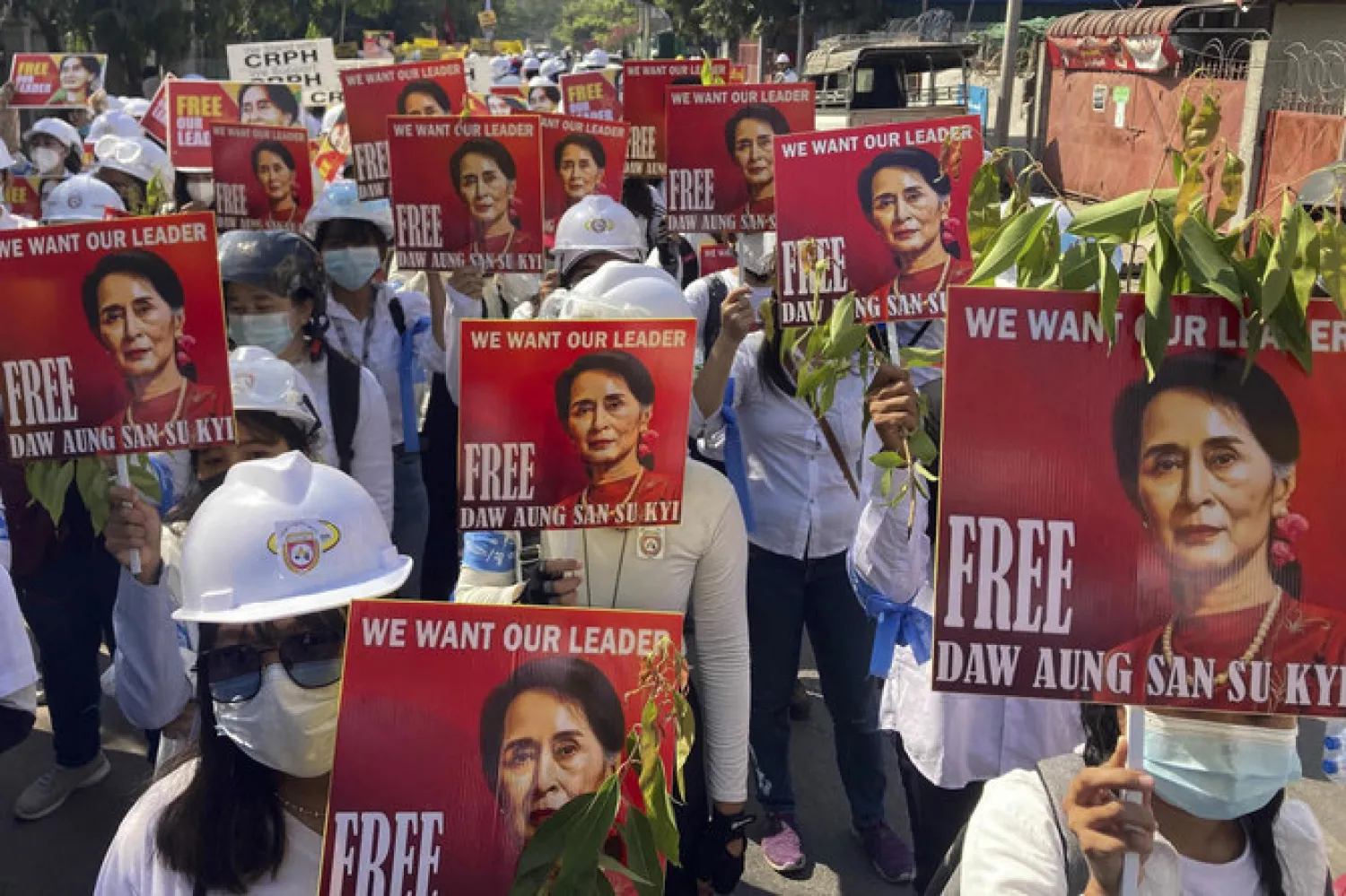
On Sunday soldiers in Yangon wounded at least three people after ramming a car into peaceful demonstrators, some of whom were carrying pro Suu Kyi banners, eyewitnesses said.

State media said one had sustained serious wounds and 11 had been arrested for protesting "without asking for permission".



Adviser to Iran's Supreme Leader to Visit Oman on Tuesday

FILED - 06 February 2009, Bavaria, Munich: Ali Larijani, then chairman of the Iranian parliament, speaks at the 45th Munich Security Conference in Munich. Photo: Andreas Gebert/dpa
TT

Adviser to Iran's Supreme Leader to Visit Oman on Tuesday

FILED - 06 February 2009, Bavaria, Munich: Ali Larijani, then chairman of the Iranian parliament, speaks at the 45th Munich Security Conference in Munich. Photo: Andreas Gebert/dpa

Ali Larijani, an adviser to Iran's Supreme Leader Ali Khamenei, will visit Oman accompanied by a delegation on Tuesday, the ‌semi-official Tasnim news ‌agency reported ‌on ⁠Monday.

American and ‌Iranian diplomats held indirect talks in Oman last week, aimed at reviving diplomacy amid a US ⁠naval buildup near Iran and ‌Tehran's vows ‍of a ‍harsh response if ‍attacked.

"During this trip, (Larijani) will meet with high-ranking officials of the Sultanate of Oman and discuss the latest regional ⁠and international developments and bilateral cooperation at various levels," Tasnim said.

The date and venue of the next round of talks are yet to be announced.


Russia’s Lavrov Sees No ‘Bright Future’ for Economic Ties with US

06 February 2026, Russia, Moscow: Russian Foreign Minister Sergei Lavrov gives a press conference following a meeting with Organization for Security and Cooperation in Europe (OSCE) Chairperson-in-Office Ignazio Cassis, head of Switzerland's Federal Department of Foreign Affairs, Federal Councilor of the Swiss Confederation, and OSCE Secretary General Feridun Sinirlioglu at the Russian Foreign Ministry's Reception House. (Sofya Sandurskaya/TASS via ZUMA Press/dpa)
TT

Russia’s Lavrov Sees No ‘Bright Future’ for Economic Ties with US

06 February 2026, Russia, Moscow: Russian Foreign Minister Sergei Lavrov gives a press conference following a meeting with Organization for Security and Cooperation in Europe (OSCE) Chairperson-in-Office Ignazio Cassis, head of Switzerland's Federal Department of Foreign Affairs, Federal Councilor of the Swiss Confederation, and OSCE Secretary General Feridun Sinirlioglu at the Russian Foreign Ministry's Reception House. (Sofya Sandurskaya/TASS via ZUMA Press/dpa)

Russia remains open for cooperation with the United States but is not hopeful about economic ties despite Washington's ongoing efforts to end the Ukraine war, Russian Foreign Minister Sergei Lavrov said in an interview published on Monday.

Speaking to Russia-based media outlet TV BRICS, ‌Lavrov cited what ‌he called the ‌United ⁠States' declared ‌aim of "economic dominance".

"We also don't see any bright future in the economic sphere," Lavrov said.

Russian officials, including envoy Kirill Dmitriev, have previously spoken of the prospects for a major restoration ⁠of economic relations with the United States as ‌part of any eventual Ukraine ‍peace settlement.

But although ‍President Donald Trump has also ‍spoken of reviving economic cooperation with Moscow and has hosted his Russian counterpart Vladimir Putin on US soil since returning to the White House, he has imposed further onerous sanctions on Russia's vital ⁠energy sector.

Lavrov also cited Trump's hostility to the BRICS bloc, which includes Russia, China, India, Brazil and other major developing economies.

"The Americans themselves create artificial obstacles along this path (towards BRICS integration)," he said.

"We are simply forced to seek additional, protected ways to develop our financial, economic, logistical and ‌other projects with the BRICS countries."


Prince William, Kate 'Deeply Concerned' by Latest Epstein Revelations

Britain's Prince William (R), Prince of Wales and Catherine (C), Princess of Wales arrive to meet with the Archbishop of Canterbury Sarah Mullally at Lambeth Palace in London on February 5, 2026. (Photo by Aaron Chown / POOL / AFP)
TT

Prince William, Kate 'Deeply Concerned' by Latest Epstein Revelations

Britain's Prince William (R), Prince of Wales and Catherine (C), Princess of Wales arrive to meet with the Archbishop of Canterbury Sarah Mullally at Lambeth Palace in London on February 5, 2026. (Photo by Aaron Chown / POOL / AFP)

Britain's Prince William and his wife Catherine have been "deeply concerned" by the latest revelations linking William's uncle Prince Andrew to late US sex offender Jeffrey Epstein, Kensington Palace said Monday.

"I can confirm that the Prince and Princess of Wales have been deeply concerned by the continued revelations," the palace said in a statement.

The statement -- first public comments from the heir to the throne and his wife on the scandal since the latest release of Epstein files more than a week ago -- added that "their thoughts remain focused on the victims" of Epstein, who died in prison awaiting trial on sex trafficking charges in 2019.

King Charles III’s 65-year-old brother is now known simply as Andrew Mountbatten-Windsor.

The king last week forced Mountbatten-Windsor to leave his longtime home at Royal Lodge near Windsor Castle, accelerating a move that was first announced in October but wasn’t expected to be completed until later this year.

Mountbatten-Windsor is now living on the king’s Sandringham estate in eastern England. He will live temporarily at Wood Farm Cottage while his permanent home on the estate undergoes repairs.