ECB Plans to Redesign Euro Bills, Decision Expected in 2024

The European Central Bank is pushing back against market expectations that it will lift borrowing costs in 2022 - AFP via Getty Images
TT

ECB Plans to Redesign Euro Bills, Decision Expected in 2024

The European Central Bank is pushing back against market expectations that it will lift borrowing costs in 2022 - AFP via Getty Images

The European Central Bank said Monday that it plans to redesign its euro banknotes, with a final decision on the new look expected in 2024.

The euro was introduced in cash form in 2002, with banknotes based on what the Frankfurt-based central bank for the 19-nation euro area calls an “ages and styles” theme — with generic windows, doorways and bridges from various eras that don't represent any specific place or monument. They have undergone one relatively minor update in that time, The Associated Press reported.

“After 20 years, it’s time to review the look of our banknotes to make them more relatable to Europeans of all ages and backgrounds,” ECB President Christine Lagarde said in a statement.

She said that euro banknotes "are a tangible and visible symbol that we stand together in Europe, particularly in times of crisis, and there is still a strong demand for them.”

The ECB said it will create focus groups to gather opinions from people across the continent on possible themes for the future notes. A “theme advisory group” with one expert from each eurozone country will then submit a shortlist of suggested new themes to the ECB's governing council.

The bank said it will seek public input on the proposals, then hold a design competition for the new banknotes before again consulting the public. Its governing council will make a final decision and decide on when the new banknotes might be issued.


Oil Drops 1% as US, Iran Pledge to Continue Talks

The sun rises behind the Tishrin oil field in the eastern Hasakah countryside, northeastern Syria (AP)
TT

Oil Drops 1% as US, Iran Pledge to Continue Talks

The sun rises behind the Tishrin oil field in the eastern Hasakah countryside, northeastern Syria (AP)

Oil prices fell 1% on Monday as immediate fears of a conflict in the Middle East eased after the US and Iran pledged to continue talks about Tehran's nuclear program over the weekend, calming investors anxious about supply disruptions.

Brent crude futures fell 67 cents, or 1%, to $67.38 a barrel on Monday by 0444 GMT, while US West Texas Intermediate crude was at $62.94 a barrel, down 61 cents, or 1%.

"With more talks on the horizon the immediate ‌fear of supply disruptions ‌in the Middle East has eased ‌quite ⁠a bit," IG ‌market analyst Tony Sycamore said.

Iran and the US pledged to continue the indirect nuclear talks following what both sides described as positive discussions on Friday in Oman despite differences. That allayed fears that failure to reach a deal might nudge the Middle East closer to war, as the US has positioned more military forces in the area.

Investors are also worried about possible disruptions to supply ⁠from Iran and other regional producers as exports equal to about a fifth of the world's ‌total oil consumption pass through the Strait of ‍Hormuz between Oman and Iran.

Both ‍benchmarks fell more than 2% last week on the easing tensions, their ‍first decline in seven weeks.

However, Iran's foreign minister said on Saturday Tehran will strike US bases in the Middle East if it is attacked by US forces, showing the threat of conflict is still alive.

"Volatility remains elevated as conflicting rhetoric persists. Any negative headlines could quickly reignite risk premiums in oil prices this week," said Priyanka Sachdeva, senior market analyst at ⁠Phillip Nova.

Investors are also continuing to grapple with efforts to curb Russian income from its oil exports for its war in Ukraine. The European Commission on Friday proposed a sweeping ban on any services that support Russia's seaborne crude oil exports.

Refiners in India, once the biggest buyer of Russia's seaborne crude, are avoiding purchases for delivery in April and are expected to stay away from such trades for longer, refining and trade sources said, which could help New Delhi seal a trade pact with Washington.

"Oil markets will remain sensitive to how broadly this pivot away from Russian crude unfolds, whether ‌India’s reduced purchases persist beyond April, and how quickly alternative flows can be brought online," Sachdeva said.


Indian Refiners Avoid Russian Oil in Push for US Trade Deal

An employee walks inside the premises of an oil refinery of Essar Oil in Vadinar in the western state of Gujarat, India, October 4, 2016. REUTERS/Amit Dave/File Photo
TT

Indian Refiners Avoid Russian Oil in Push for US Trade Deal

An employee walks inside the premises of an oil refinery of Essar Oil in Vadinar in the western state of Gujarat, India, October 4, 2016. REUTERS/Amit Dave/File Photo

Indian refiners are avoiding Russian oil purchases for delivery in April and are expected to stay away from such trades for longer, refining and trade sources said, a move that could help New Delhi seal a trade pact with Washington, according to Reuters.

The US and India moved closer to a trade pact on Friday, announcing a framework for a deal they hope to conclude by March that would lower tariffs and deepen economic cooperation.

Indian Oil, Bharat Petroleum and Reliance Industries are not accepting offers from traders for Russian oil loading in March and April, said a trader who approached the refiners.

These refiners, however, had already scheduled some deliveries of Russian oil in March, refining sources said. Most other refiners have stopped buying Russian crude.

A foreign ministry spokesperson said: “Diversifying our energy sourcing in keeping with objective market conditions and evolving international dynamics is at the core of our strategy” to ensure energy security for the world's most-populous nation.

Although a US-India statement on the trade framework did not mention Russian oil, President Donald Trump rescinded his 25% tariffs on Indian goods, imposed over Russian oil purchases, because, he said, New Delhi had “committed to stop directly or indirectly” importing Russian oil.

New Delhi has not announced plans to halt Russian oil imports.

India became the top buyer of discounted Russian seaborne crude after Russia invaded Ukraine in 2022, spurring a backlash from Western nations that had targeted Russia's energy sector with sanctions aimed at curtailing Moscow's revenue and making it harder to fund the war.

One regular Indian buyer is Russia-backed private refiner Nayara, which relies solely on Russian oil for its 400,000-barrel-per-day refinery. Sources said Nayara may be allowed to keep buying Russian oil because other crude sellers pulled back after the European Union sanctioned the refiner in July.

Nayara also does not plan to import Russian crude in April due to a month-long refinery maintenance shutdown, a source familiar with its operations said.

Nayara did not respond to an email seeking comment.

Indian refiners may change their plan and place orders for Russian oil only if advised by the government, sources said.

Trump's order said US officials would monitor and recommend reinstating the tariffs if India resumed oil procurement from Russia.

Sources said last month that India was preparing to cut Russian oil imports below 1 million bpd by March, with volumes eventually falling to 500,000–600,000 bpd, compared with an average 1.7 million bpd last year. India's Russian oil imports topped 2 million bpd in mid-2025.

The intake of Russian oil by India, the world's third-biggest oil consumer and importer, declined to its lowest level in two years in December, data from trade and industry sources show.


IMF and Arab Monetary Fund Sign MoU to Enhance Cooperation

The MoU was signed by IMF Managing Director Dr. Kristalina Georgieva and AMF Director General Dr. Fahad Alturki - SPA
TT

IMF and Arab Monetary Fund Sign MoU to Enhance Cooperation

The MoU was signed by IMF Managing Director Dr. Kristalina Georgieva and AMF Director General Dr. Fahad Alturki - SPA

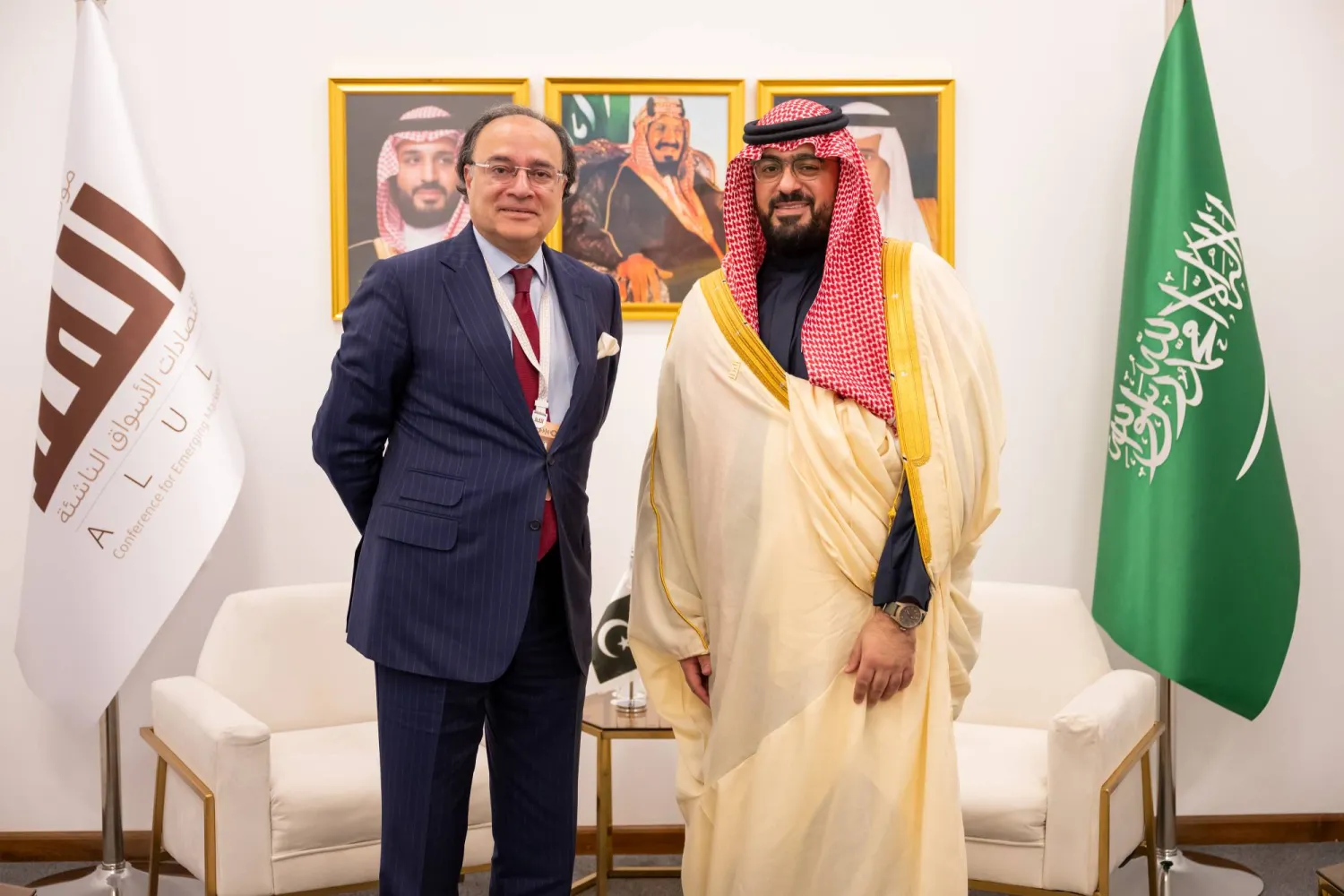
The International Monetary Fund (IMF) and the Arab Monetary Fund (AMF) signed a memorandum of understanding (MoU) on the sidelines of the AlUla Conference on Emerging Market Economies (EME) to enhance cooperation between the two institutions.

The MoU was signed by IMF Managing Director Dr. Kristalina Georgieva and AMF Director General Dr. Fahad Alturki, SPA reported.

The agreement aims to strengthen coordination in economic and financial policy areas, including surveillance and lending activities, data and analytical exchange, capacity building, and the provision of technical assistance, in support of regional financial and economic stability.

Both sides affirmed that the MoU represents an important step toward deepening their strategic partnership and strengthening the regional financial safety net, serving member countries and enhancing their ability to address economic challenges.