Oil Rebounds Following Saudi Arabia’s Decision to Raise Crude Price

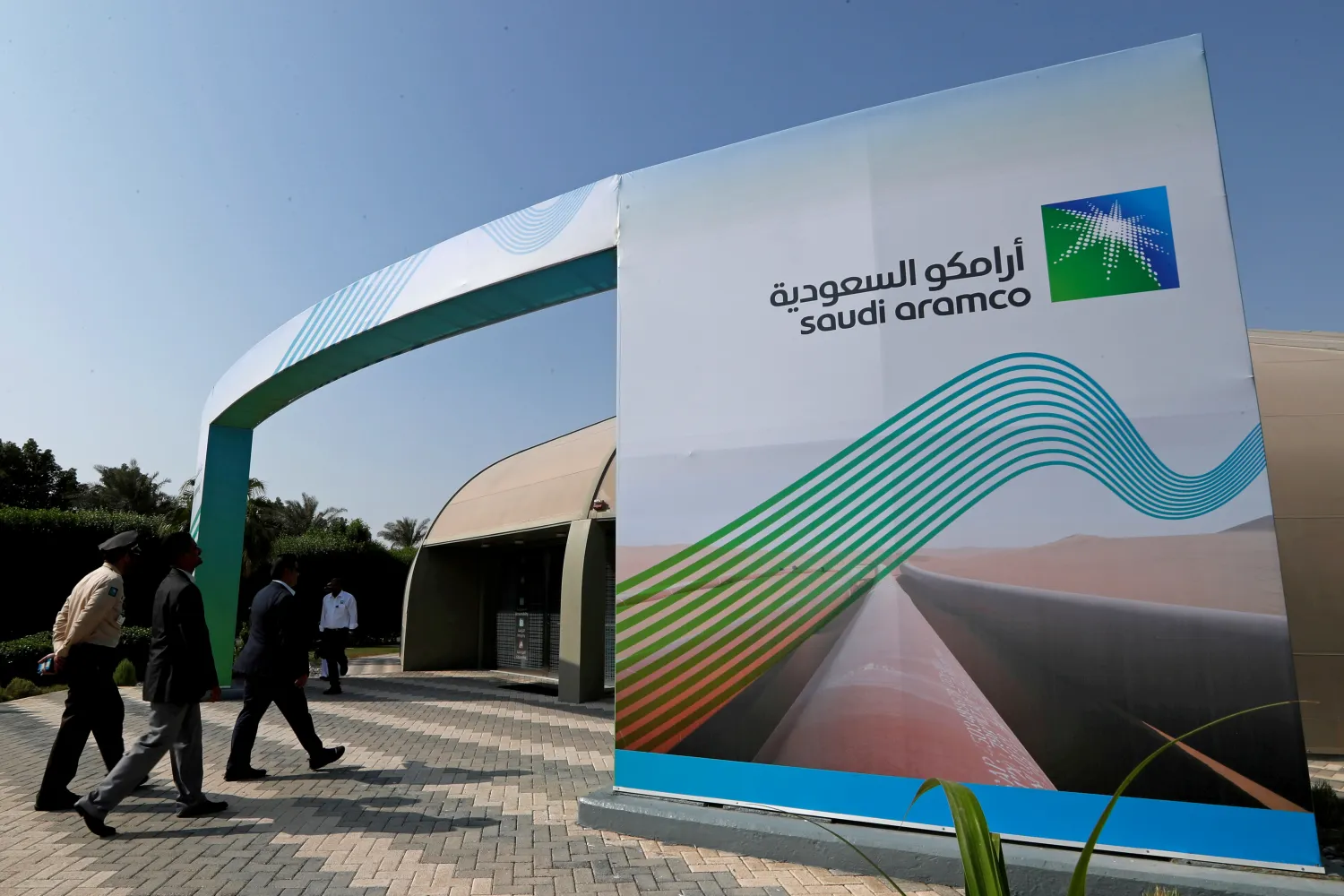
 The logo of Aramco is seen as security personnel walk before the start of a press conference by Aramco at the Plaza Conference Center in Dhahran, Saudi Arabia November 3, 2019. REUTERS/Hamad I Mohammed/File Photo
The logo of Aramco is seen as security personnel walk before the start of a press conference by Aramco at the Plaza Conference Center in Dhahran, Saudi Arabia November 3, 2019. REUTERS/Hamad I Mohammed/File Photo
TT

Oil Rebounds Following Saudi Arabia’s Decision to Raise Crude Price

 The logo of Aramco is seen as security personnel walk before the start of a press conference by Aramco at the Plaza Conference Center in Dhahran, Saudi Arabia November 3, 2019. REUTERS/Hamad I Mohammed/File Photo
The logo of Aramco is seen as security personnel walk before the start of a press conference by Aramco at the Plaza Conference Center in Dhahran, Saudi Arabia November 3, 2019. REUTERS/Hamad I Mohammed/File Photo

Oil prices rebounded on Monday after Saudi Arabia, the world’s largest oil exporter, raised the prices of its crude sold to Asia and the United States.

Brent crude for February delivery rose 2.3 percent to $71.53 per barrel. US West Texas Intermediate (WTI) crude futures rose 2.2 percent, to $67.67 a barrel.

On Sunday, Saudi Arabia increased the official selling price of Arab Light crude to Asia and the United States in January by 80 cents compared to the previous month.

The price hikes were implemented despite a decision last week by the Organization of the Petroleum Exporting Countries and their allies including Russia, a group known as OPEC+, to continue increasing supplies by 400,000 barrels per day in January.

Prices also received a boost as prospects for an increase in Iranian oil exports diminished after indirect talks between Washington and Tehran aimed at reviving the 2015 nuclear deal were suspended.

Meanwhile, the World Petroleum Council conference kicked off this week; but the list of attendees of energy sector executives and ministers to discuss the future of the oil market has shrunk sharply, as the spread of the new Omicron strain of the coronavirus has disrupted travel.

The four-day conference, which was postponed from 2020 due to the pandemic, brings together stakeholders in the sector every three years.

Officials from countries including Saudi Arabia, Nigeria, India and the US were expected to attend and discuss the role of new technology and strategies to reduce carbon emissions. However, travel restrictions and concerns about the new covid-19 strain prompted organizers on Sunday to scramble to fill in the gaps on the agenda.

Officials from the World Petroleum Council said on Monday that the energy ministers of Saudi Arabia, Kazakhstan, Qatar, Argentina, Equatorial Guinea, Greece, Turkey and Romania announced their withdrawal from the conference, along with the CEOs of BP, Sonatrach and Qatar Energy.

The conference sessions began on Monday with talks by executives from Chevron, ExxonMobil, Saudi Aramco, Equinor and Total Energies, during which they presented their approach to the world’s shift away from fossil fuels.

The Secretary-General of the Organization of the Petroleum Exporting Countries (OPEC), Mohammed Barkindo, will be addressing the participants via video conference on Tuesday.


Iraq Oil Output Exceeds 5 million bpd

Majnoon oil field near the Iraqi city of Basra (Reuters)
TT

Iraq Oil Output Exceeds 5 million bpd

Majnoon oil field near the Iraqi city of Basra (Reuters)

Iraq produces more than 5 million barrels of oil per day (bpd), Oil Minister Basim Mohammed told state news agency INA on Saturday.

According to Reuters, Iraq is pushing for a higher OPEC production quota as the economic fallout from the Iran war and new investment by oil majors increase pressure on Baghdad to boost output, potentially putting it at odds with the producer group.

The conflict has hit Iraq particularly hard, forcing major export cuts and depriving the state of oil revenue, which accounted for 88% of government income last year.


IMF: Any Slowdown in AI-driven Growth Would be Factor for Central Banks

IMF Managing Director Kristalina Georgieva speaks during the Annual Meetings Plenary at the Annual Meetings of the International Monetary Fund (IMF) and the World Bank Group (WBG) at the Queen Sirikit National Convention Center (QSNCC) in Bangkok on October 16, 2026. (Photo by Lillian SUWANRUMPHA / AFP)
TT

IMF: Any Slowdown in AI-driven Growth Would be Factor for Central Banks

IMF Managing Director Kristalina Georgieva speaks during the Annual Meetings Plenary at the Annual Meetings of the International Monetary Fund (IMF) and the World Bank Group (WBG) at the Queen Sirikit National Convention Center (QSNCC) in Bangkok on October 16, 2026. (Photo by Lillian SUWANRUMPHA / AFP)

Central bankers around the world would need to consider any slowdown in AI-driven growth as they assess steps in their fight against inflation, International Monetary Fund Managing Director Kristalina Georgieva said on Friday.

Georgieva said concerns about dependence on the AI investment boom and high valuations were impacting markets around the world.

"Things are going up and down, and this is likely to continue," she told an audience at IMF headquarters in Washington, adding that the volatility would complicate the job of central banks at a time when risks to price stability had been growing.

A steep rout in technology stocks on Thursday rippled through markets on fears that ⁠the Democrats' victory ⁠in the US midterm elections would increase regulatory scrutiny of AI and slow the data center build-out, sending investors to the safety of bonds.

The political jitters are hitting an AI trade already on shaky footing due to worry about return on massive spending on AI-related infrastructure, with the meltdown spurring margin calls and spooking retail investors and hedge ⁠funds alike.

Georgieva said the AI investment boom was lifting growth in some countries, helping to offset a negative oil-supply shock triggered by the war in the Middle East, but it was also adding to inflationary pressures and financial stability concerns.

The IMF last month flagged significant growth and financial stability risks from a potential ending of the AI investment boom, among other factors, including a prolonged Middle East war. At the time, it warned that a steep drop in AI investment could lead to a sharp fall in asset prices, ultimately cutting global GDP ⁠by 1.1% ⁠by 2028, including a 1.8% drop in US output.

Georgieva did not repeat the downside forecast on Friday, but acknowledged the recent market volatility.

"Should there be a slowdown in the AI-driven growth impulse, it would need to be factored in as central banks assess the necessary steps in the fight against stubborn inflation," she said.

Democrats are planning to unleash a flood of new legislation targeting artificial intelligence systems and data-center development when they take control of the US Congress in January, Reuters reported on Friday, citing congressional aides and advocates.

That would mark a sharp shift from the Republican-led Congress, where lawmakers largely focused on promoting AI development and declined to pass legislation restricting the technology.


World Food Prices Dip in October, but Remain Higher Than a Year Ago

A worker carries loaves of bread for sale at a bakery in the capital city of Cairo, Egypt November 4, 2026. (Reuters)
TT

World Food Prices Dip in October, but Remain Higher Than a Year Ago

A worker carries loaves of bread for sale at a bakery in the capital city of Cairo, Egypt November 4, 2026. (Reuters)

World food prices edged lower in October as weaker import demand contributed to monthly declines in cereal, dairy and meat prices, but were still nearly 6% higher than a year earlier, the United Nations' Food and Agriculture Organization said on Friday.

The FAO Food Price Index, which tracks monthly changes in international prices for a basket of food commodities, ‌averaged 133.9 points ‌in October, down from a revised ‌135.6 ⁠in September.

The index ⁠was 5.9% higher than a year earlier, but remained 16.4% below its March 2022 peak.

FAO's cereal price index fell 4.5% from September and was 12.6% lower than a year ago, as wheat and maize quotations declined. Wheat prices eased on weak import demand ⁠and improved production prospects, especially in Argentina.

"Expectations of ‌easing constraints on Black ‌Sea export flows added to the downward pressure on prices, ‌although continued disruptions to Black Sea logistics limited the decline," ‌FAO said in a statement.

Maize prices also eased after reaching a three-year high in September, pressured by the US harvest, expectations of ample supplies in South America and renewed ‌prospects of easing tensions in the Black Sea region.

Vegetable oil prices edged up 0.3%, ⁠as ⁠higher soybean and sunflower oil prices more than offset a fall in rapeseed oil prices.

Sugar prices rose 6.6%, their fourth straight monthly increase, to the highest level since December 2024, after rainfall disrupted harvesting in Brazil. They were now 28.8% above a year ago.

The dairy index fell 1.1%, as lower butter and cheese prices linked to ample supplies and subdued demand outweighed gains in milk powder.

The meat index declined 1.2%, while still slightly above its year-earlier level, as ovine and bovine meat prices fell.