


Tunisia Keen to Fulfill Foreign Debt Obligations

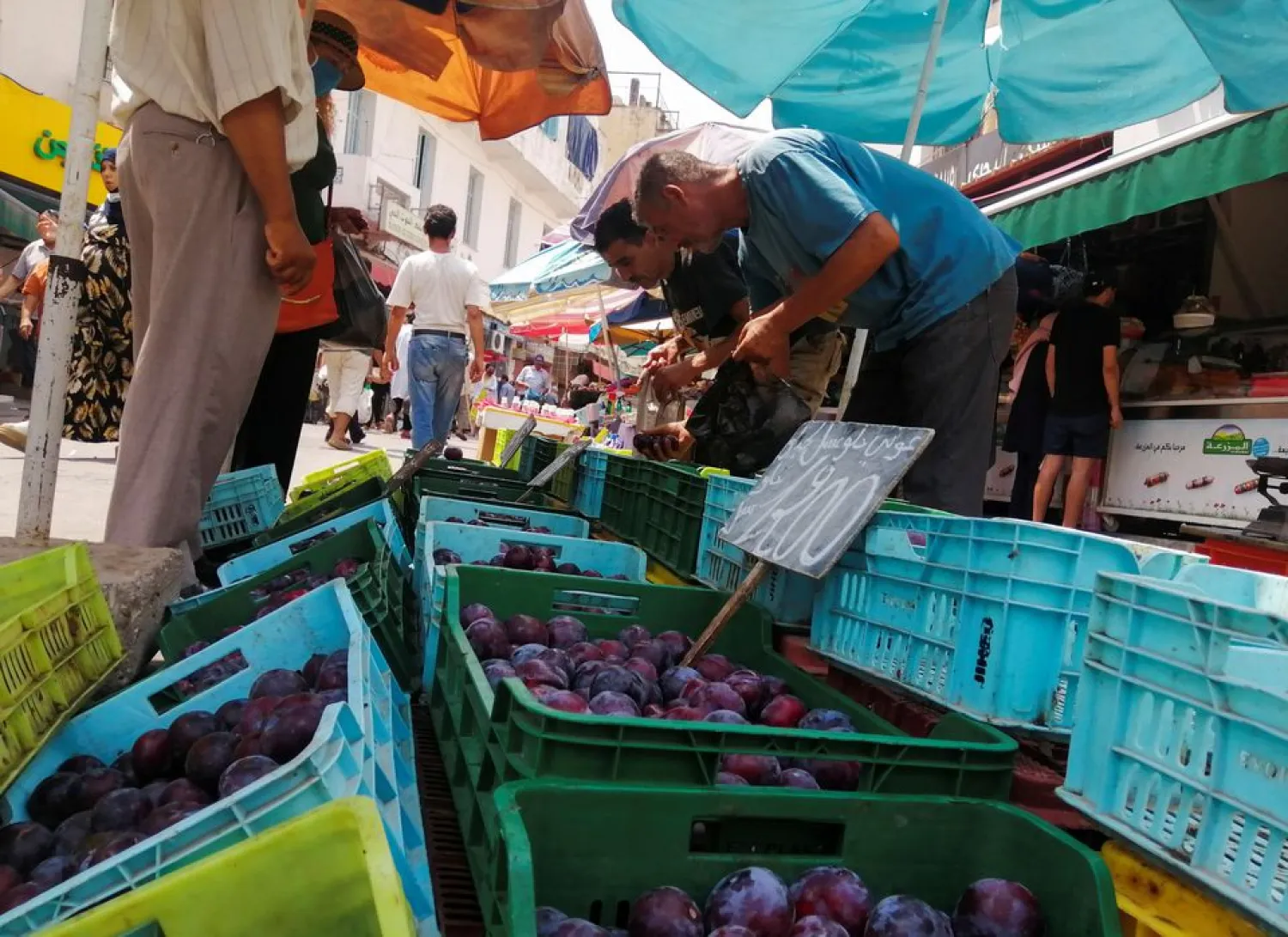
People shop for fruits at Sidi Bahri market in Tunis, Tunisia August 12, 2021. Picture taken August 12, 2021. (Reuters)
TT

Tunisia Keen to Fulfill Foreign Debt Obligations

People shop for fruits at Sidi Bahri market in Tunis, Tunisia August 12, 2021. Picture taken August 12, 2021. (Reuters)

Tunisia will continue to fulfill its foreign debt obligations, and it has started preparatory work for an International Monetary Fund (IMF) deal, Prime Minister Najla Bouden said on Friday, as talk of a possible default swirls among local and foreign analysts.

“The Tunisian state holds and will continue to meet its external debt obligations due to the level of Tunisia’s foreign exchange reserves,” Bouden said at an economic conference in Sousse.

The North Africa country resumed talks last month with the IMF on a loan package predicated on Tunis imposing painful and unpopular reforms.

Bouden told the conference the government had started preparing an advanced draft in order to reach a deal with the IMF that will send positive signals to partners and allow for an improvement in its credit rating.

The country is facing its worst economic crisis after its economy contracted 8.8% last year and the fiscal deficit reached a record 11.4%.

Central bank governor Maroaune Abassi said on Thursday the government hopes to reach an agreement with the IMF in the first quarter of next year on a bailout package.

He added the agreement with the IMF will be a very good sign that Tunisia will start its reforms and could push growth.

Central bank figures showed on Friday that foreign currency reserves had reached 7.02 billion, the equivalent of 119 days of imports.

Finance Minister Sihem Boughdiri said at an economic conference that Tunisia is far from rescheduling its debts within the Paris Club, despite its financial difficulties.

Tunisia was plunged in crisis in July when the president sacked the government, suspended parliament and seized an array of powers. A new government, with reduced powers, was announced in October.

The country has received economic aid from the European Union and is seeking its fourth aid program in 10 years from the IMF, aiming to receive a nearly $4 billion loan before the end of the year.

Saudi Arabia Tightens Auto Dealer Obligations to Protect Consumers, Improve Ownership Experience

People are seen at the Riyadh Motor Show. (Riyadh Season)
TT

Saudi Arabia Tightens Auto Dealer Obligations to Protect Consumers, Improve Ownership Experience

People are seen at the Riyadh Motor Show. (Riyadh Season)

Saudi Arabia’s auto market is moving toward greater discipline and competition as the Ministry of Commerce steps up oversight of dealers, seeking to strengthen consumer protection and improve compliance with after-sales service requirements.

The ministry announced it had suspended an auto dealership, barred it from importing vehicles and fined it SAR 8.12 million ($2.1 million) after recording 175 violations. These included failure to provide spare parts and replacement vehicles to customers during maintenance, as well as other breaches involving consumer rights, the Commercial Agencies Law and its implementing regulations.

The ministry investigated the violations, contacted affected consumers and followed up to ensure they received their rights and due compensation, including replacement vehicles.

It also summoned the manufacturer, oversaw corrective measures and recall campaigns, and began transferring the brand to another dealer after verifying its readiness and ability to provide the necessary services.

Mohammed Al-Farraj, chief asset management officer at Arbah Capital, told Asharq Al-Awsat that Saudi Arabia’s large auto market and sustained demand make it one of the region’s most attractive, supported by population and economic growth, expansion of the non-oil economy and mega-projects, and growth in tourism and logistics.

The availability and variety of financing options play a key role in supporting demand, particularly because cars are a necessity for a large segment of the population rather than a luxury, Al-Farraj noted.

Market performance is influenced by vehicle prices, financing costs, income levels and supply, as well as competition among brands and the quality of after-sales services.

Al-Farraj described the ministry’s tougher oversight as a positive step toward protecting consumers and improving market discipline, stressing that a dealer’s obligations do not end with a sale but extend to warranties, maintenance, spare parts and replacement vehicles when needed.

Stronger after-sales compliance should bolster market confidence and gradually shift competition toward quality and reliability rather than price alone.

Al-Farraj expects intensifying competition to push dealers to focus more on the value offered throughout vehicle ownership, including total cost of ownership and customer service.


Mega-Projects, Investment Flows Draw Bank of Jordan to Saudi Arabia

A group photo of Bank of Jordan officials following the inauguration ceremony for the bank’s first branch in Riyadh. (Asharq Al-Awsat)
TT

Mega-Projects, Investment Flows Draw Bank of Jordan to Saudi Arabia

A group photo of Bank of Jordan officials following the inauguration ceremony for the bank’s first branch in Riyadh. (Asharq Al-Awsat)

Saudi Arabia’s appeal extends beyond rising foreign investment and expanding mega-projects to the banking sector, where institutions see the economic transformation driven by Vision 2030 as an opportunity to establish a long-term presence in one of the region’s fastest-growing markets.

Bank of Jordan Group’s entry into the Kingdom reflects growing interest among regional financial institutions in tapping the country’s expanding investment cycle.

The group opened its first branch in Riyadh on Monday, launching its financial and banking operations in Saudi Arabia. The move underscores the Kingdom’s ability to attract not only capital, but also financial institutions seeking to finance the next phase of investment.

Mega-projects, private sector expansion and growing foreign and domestic investment are creating significant opportunities for banks to provide financing solutions and services to companies and investors. At the same time, Saudi Arabia is seeking to deepen the financial sector’s role as a driver of growth and economic diversification.

Saleh Hammad, general manager of Bank of Jordan Group, told Asharq Al-Awsat that the bank’s strategy is based on a clear view of the economic transformations reshaping Saudi Arabia and the wider region.

The group has pursued carefully considered regional expansion, focusing on markets with sustainable economic fundamentals and strategic importance, with Saudi Arabia at the forefront.

Hammad said the Kingdom is undergoing an unprecedented economic transformation under Vision 2030, fueled by investment growth, private-sector expansion and the development of its financial and banking environment.

Establishing a presence in one of the region’s leading financial and economic hubs strengthens Bank of Jordan’s position as a regional institution capable of supporting trade, development and investment opportunities, he noted.

Hammad also highlighted Saudi Arabia’s strong banking system and evolving regulatory environment, supported by the Saudi Central Bank, as key advantages that enhance the group’s position while creating added value for clients and investors.


Gold Eases from Over Two-Month Peak, Inflation Reports in Focus

Ingots of 99.99 percent pure gold are placed in a workroom at Krastsvetmet precious metals plant in the Siberian city of Krasnoyarsk, Russia, January 31, 2023. (Reuters)
TT

Gold Eases from Over Two-Month Peak, Inflation Reports in Focus

Ingots of 99.99 percent pure gold are placed in a workroom at Krastsvetmet precious metals plant in the Siberian city of Krasnoyarsk, Russia, January 31, 2023. (Reuters)

Gold ticked lower on Tuesday after hitting its highest level in more than two months, while investors focused on upcoming inflation data for clues on the U.S. interest-rate outlook.

Spot gold was down 0.3% to $4,374.82 per ounce by 0548 GMT, after hitting its highest level since June 5 earlier in the session at $4,434.84.

US gold futures rose 0.4% ‌to $4,435.00.

Gold's move higher ‌in early session trading beyond $4,400 appears to ‌be ⁠driven primarily by ⁠renewed flows into the metal and a notable shift in the metal market sentiment, said Ahmad Assiri, Research Strategist at Pepperstone.

"If this change in sentiment continues to attract further flows, it could remain an important factor in determining whether gold can consolidate around $4,400 and potentially extend the recovery towards higher levels."

The US ⁠consumer price report due on Wednesday and ‌producer price data on Thursday are ‌likely to shape monetary policy expectations after weak July US jobs ‌data last week led markets to scale back bets that ‌the Federal Reserve would raise rates next month.

At its July meeting, the Federal Reserve kept rates steady, with three officials dissenting in favor of a hike.

Lower interest rates tend to support gold as ‌bullion pays no interest.

"If the data continue to point towards a cooling economy without a meaningful ⁠resurgence in ⁠inflation, markets could further reduce expectations for tighter policy. That would likely leave the dollar vulnerable and provide another supportive backdrop for gold," Fawad Razaqzada, a market analyst at Forex.com, said in a note.

On the geopolitical front, US President Donald Trump responded to Iran's conditions for a peace deal with his own demands that Iran pay compensation for people killed in wars, attacks and protests, in a rhetorical escalation likely to complicate efforts to reopen the Strait of Hormuz.

Among other metals, spot silver fell 1.7% to $64.64, platinum lost 0.4% to $1,745.68 and palladium declined 0.8% to $1,372.44.
