

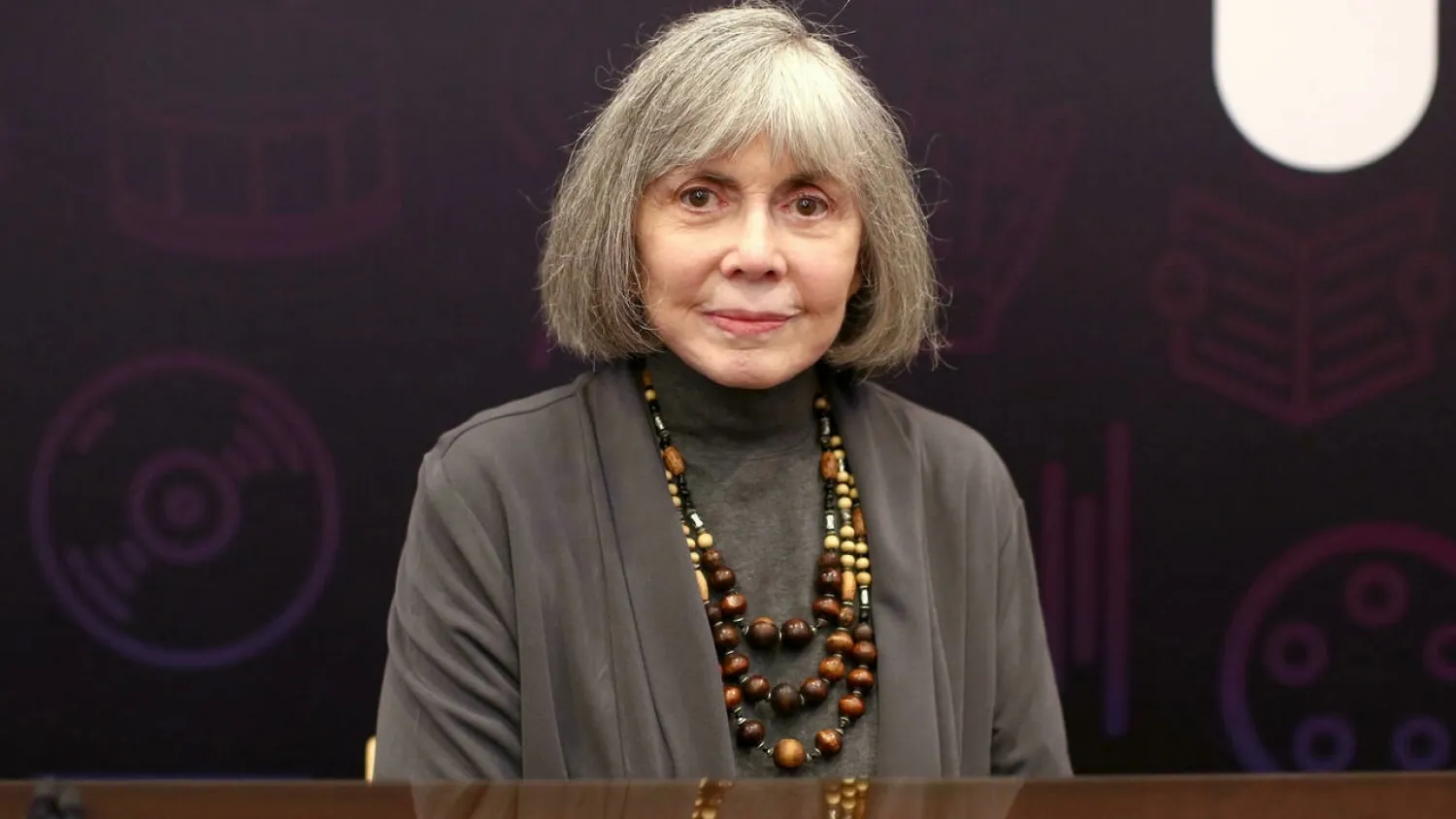

Anne Rice, Author of Gothic Novels, Dead at 80

Anne Rice sold more than 150 million books worldwide. (Getty Images)
TT

Anne Rice, Author of Gothic Novels, Dead at 80

Anne Rice sold more than 150 million books worldwide. (Getty Images)

Anne Rice, the gothic novelist widely known for her bestselling novel “Interview With the Vampire,” died late Saturday at the age of 80.

Rice died due to complications from a stroke, her son Christopher Rice announced on her Facebook page and his Twitter page.

“In her final hours, I sat beside her hospital bed in awe of her accomplishments and her courage,” Christopher Rice wrote in the statement.

Anne Rice was the author of the 1976 novel “Interview With the Vampire,” which was later adapted, with a script by Rice, into the 1994 movie directed by Neil Jordan and starring Tom Cruise and Brad Pitt. It’s also set to be adapted again in an upcoming TV series on AMC and AMC+ set to premiere next year.

“Interview With the Vampire,” in which reporter Daniel Molloy interviews Louis de Pointe du Lac, was Rice’s first novel but over the next five decades, she would write more than 30 books and sell more than 150 million copies worldwide. Thirteen of them were part of the “Vampire Chronicles” begun with her 1976 debut.

Born Howard Allen Frances O’Brien in 1941, she was raised in New Orleans, where many of her novels were set. Her father worked for the postal service but made sculptures and wrote fiction on the side. Her older sister, Alice Borchardt, also wrote fantasy and horror fiction. Rice’s mother died when Rice was 15.

Raised in an Irish Catholic family, Rice wrote about her fluctuating spiritual journey, including the 2008 memoir “Called Out of Darkness: A Spiritual Confession.” But in 2010, she announced that she was no longer Christian.

“I believed for a long time that the differences, the quarrels among Christians didn’t matter a lot for the individual, that you live your life and stay out of it. But then I began to realize that it wasn’t an easy thing to do,” Rice told The Associated Press then. “I came to the conclusion that if I didn’t make this declaration, I was going to lose my mind.”

Rice was expected to be interred during a private ceremony at a family mausoleum in New Orleans on an undisclosed date, according to the statement. A public celebration of life was to take place next year.


Visitors Flock to Hira Cultural District for Immersive Islamic Heritage Experiences

The district is among the key projects highlighting Makkah's cultural and civilizational dimension in line with Saudi Vision 2030 - SPA
TT

Visitors Flock to Hira Cultural District for Immersive Islamic Heritage Experiences

The district is among the key projects highlighting Makkah's cultural and civilizational dimension in line with Saudi Vision 2030 - SPA

The Hira Cultural District in Makkah is witnessing a growing influx of domestic and international visitors with the start of the summer vacation, cementing its status as one of the Holy Capital's most prominent cultural and educational destinations.

Located at the foot of Mount Hira, home to Hira Cave, where revelation first descended upon Prophet Muhammad (peace be upon him), the district offers educational content through modern interactive technologies that blend authenticity with innovation, SPA reported.

The Revelation Exhibition, the district's most prominent component, documents the story of the first revelation through visual and audio presentations. The district also houses the Holy Quran Museum, which displays rare Quranic manuscripts and traces the stages of writing and developing the Holy Quran across Islamic eras.

Supporting facilities include open squares, restaurants, cafés, shops, and visitor reception areas, providing a suitable environment for families and visitors of all nationalities.

The district is among the key projects highlighting Makkah's cultural and civilizational dimension in line with Saudi Vision 2030's objectives to develop the cultural and tourism sectors and showcase Islamic heritage.


Saudi Arabia’s Rafha Heritage Museum Showcases over 3,000 Rare Coins, Currencies from World Civilizations

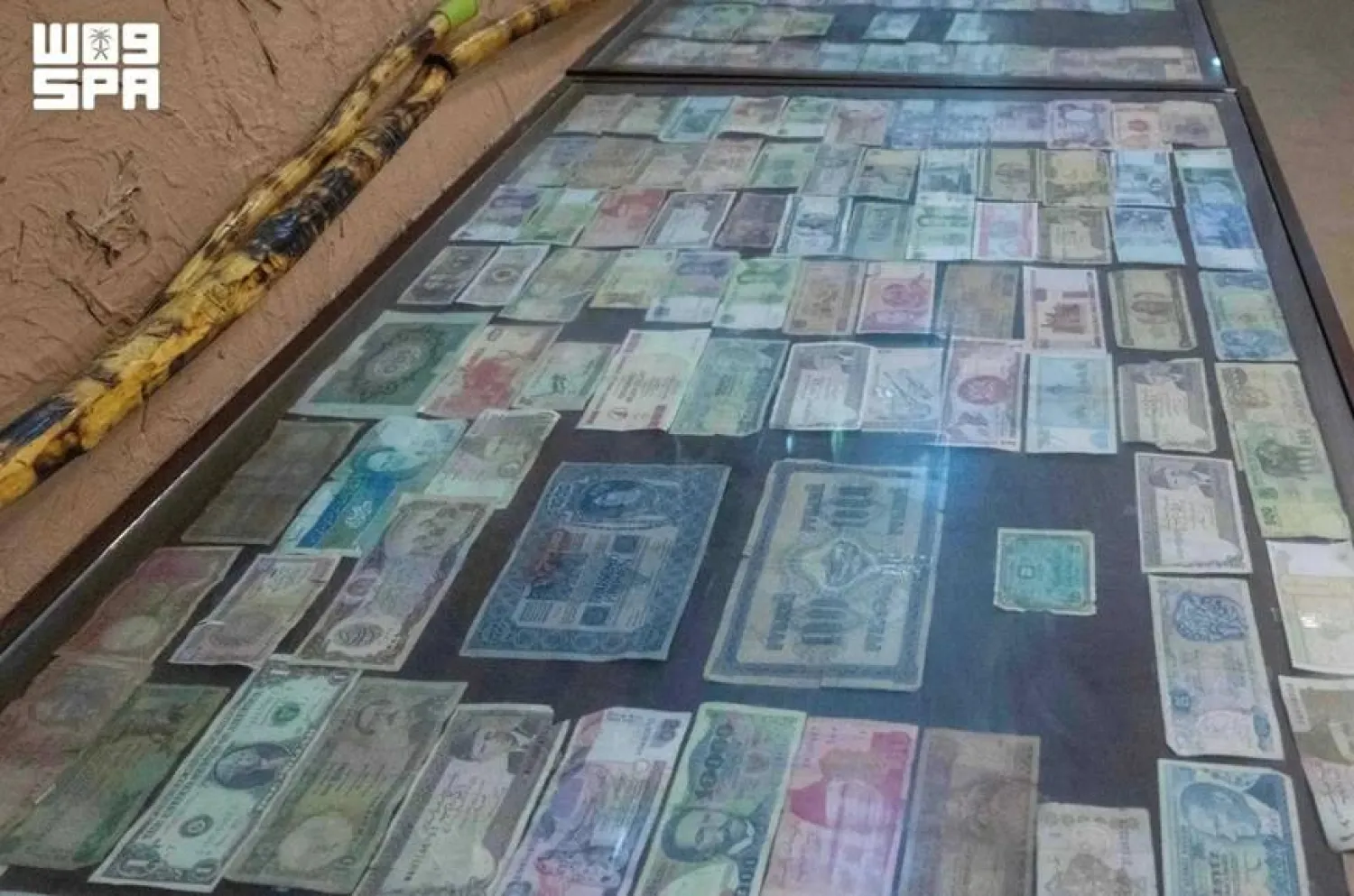
The collection documents the evolution of civilizations. SPA
TT

Saudi Arabia’s Rafha Heritage Museum Showcases over 3,000 Rare Coins, Currencies from World Civilizations

The collection documents the evolution of civilizations. SPA

The cultural heritage museum in Rafha Governorate, licensed by the Saudi Museums Commission, houses a collection of more than 3,000 rare coins and currencies, both paper and metal, from around the world.

Spanning successive historical periods, the collection documents the evolution of civilizations and offers insight into the economic and cultural developments that have shaped societies throughout history.

During a tour of the museum, the Saudi Press Agency (SPA) observed a dedicated section featuring coins from a wide range of historical periods.

The collection includes ancient Saudi coins, as well as currency from the Umayyad, Abbasid, and Ottoman eras.

The museum welcomes visitors, heritage enthusiasts, and researchers to explore its extensive collection of coins and other historical artifacts.

Beyond preserving rare collections, heritage museums play a vital role in safeguarding national and human heritage, promoting awareness of civilizational history, and connecting generations to their cultural and historical legacy.


Italy Displays Paintings from an Ancient Etruscan Tomb, Its Latest Cultural Acquisition

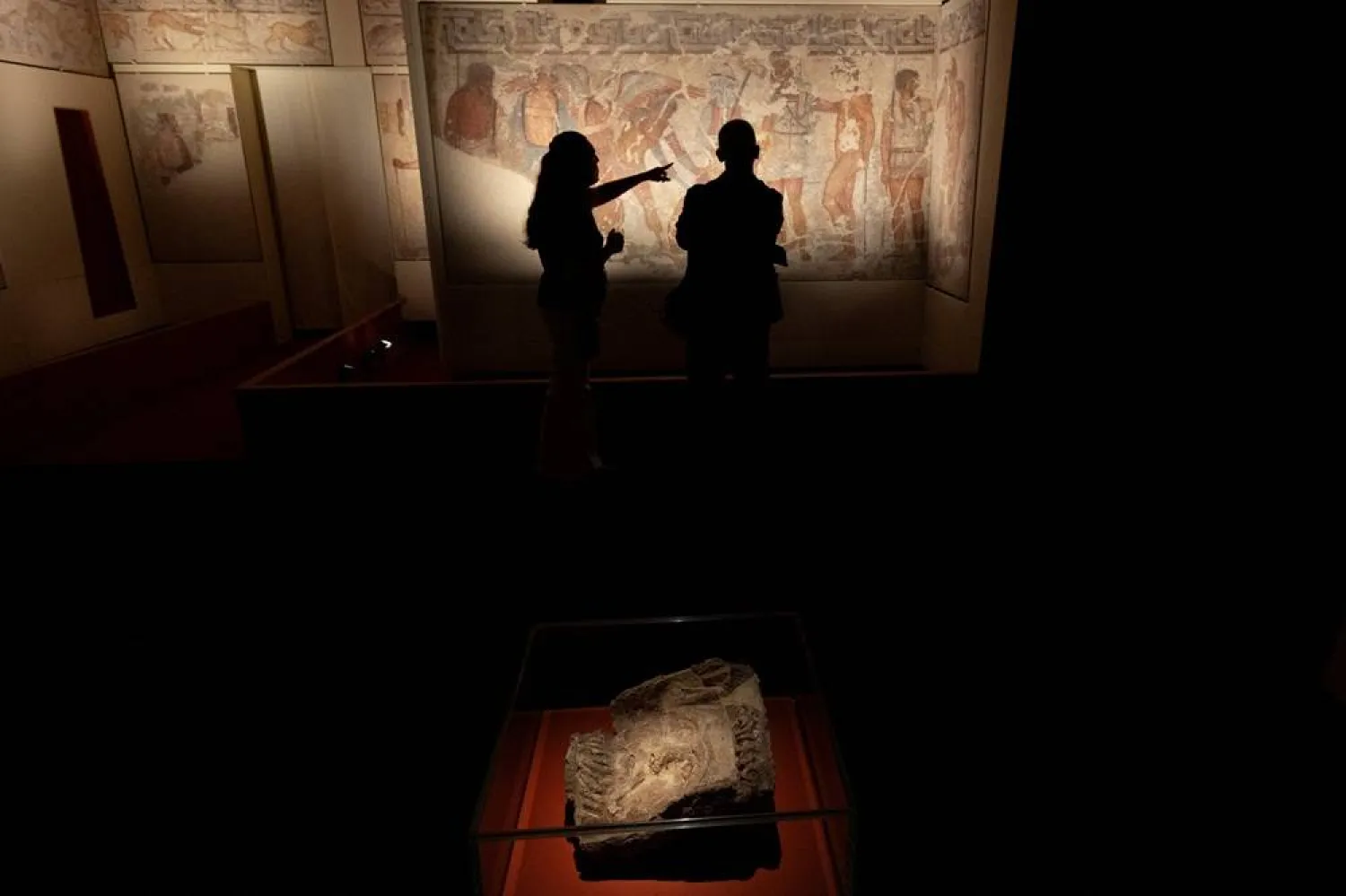
 People look at the newly acquired Tomb of Francois, a 4th-century BC masterpiece bought last month by Italy's Culture Ministry for 15 million euros, at the National Etruscan Museum of Villa Giulia in Rome, Italy, June 30, 2026. (Reuters)
People look at the newly acquired Tomb of Francois, a 4th-century BC masterpiece bought last month by Italy's Culture Ministry for 15 million euros, at the National Etruscan Museum of Villa Giulia in Rome, Italy, June 30, 2026. (Reuters)
TT

Italy Displays Paintings from an Ancient Etruscan Tomb, Its Latest Cultural Acquisition

 People look at the newly acquired Tomb of Francois, a 4th-century BC masterpiece bought last month by Italy's Culture Ministry for 15 million euros, at the National Etruscan Museum of Villa Giulia in Rome, Italy, June 30, 2026. (Reuters)
People look at the newly acquired Tomb of Francois, a 4th-century BC masterpiece bought last month by Italy's Culture Ministry for 15 million euros, at the National Etruscan Museum of Villa Giulia in Rome, Italy, June 30, 2026. (Reuters)

Italy on Tuesday put on display one of the best-known examples of Etruscan painting, panels from a tomb that it acquired for 15 million euros ($17 million) in the Culture Ministry’s buying spree of big-ticket pieces of the country's cultural heritage.

The ministry announced in May that it had acquired the fresco panels, dating from the 4th century, from members of the Torlonia family, one of Italy’s ancient noble families whose vast collection of antiquity has long been kept out of the public domain.

The Francois Tomb was discovered in 1857 by the French archaeologist Alessandro Francois in Vulci, on land owned by the Torlonia family. The frescoes were detached from the necropolis in 1863 and became part of the Torlonia private collection, while the contents of the tomb were divided up among Francois, colleagues and the family.

The Italian government has been trying to get possession of the tomb since 1921, as part of its effort to bring back into the Italian public patrimony artifacts and antiquities that were acquired or looted during the boom of archaeological excavations in the 1800s and beyond.

The Etruscan Civilization occupied swaths of what is today central Italy for centuries was a major Mediterranean trading power. Much of it was destroyed by the subsequent Roman Empire.

The tomb is opening to the public Wednesday at Rome’s Villa Giulia National Etruscan Museum. Alongside the fresco panels are jewels, Etruscan vases and other items that were discovered inside the tomb, now belong in museum collections around the world and were loaned to Italy for the exhibition.

The tomb marks the Culture Ministry’s third major acquisition this year of expensive, culturally important artworks. It paid $14.9 million for Antonello da Messina’s “Ecce Homo” and around $35 million for a rare portrait by Caravaggio depicting Maffeo Barberini, the future Pope Urban VIII.

The funds have come from the ministry’s annual budget for acquisitions, but Culture Minister Alessandro Giuli has prioritized buying fewer, bigger-ticket items of cultural importance rather than smaller, lesser artworks and antiquities, officials said.

“In recent months, the Ministry of Culture has invested a great deal of money in acquiring masterpieces,” said Massimo Osanna, director general of Italian museums in the ministry.

Giuli has said the tomb is a “fundamental” part of Italian history that was now being returned to the Italian public to enjoy.

Luana Toniolo, director of the Villa Giulia museum, called the tomb one of the greatest masterpieces of antiquity and Etruscan painting, and one of the best preserved. Among other things, the paintings depict the sacrifice of Trojan prisoners and battles of Etruscan heroes.