


Washington Confirms Saudi Arms Deal Aligns with ‘Biden’s Desire’

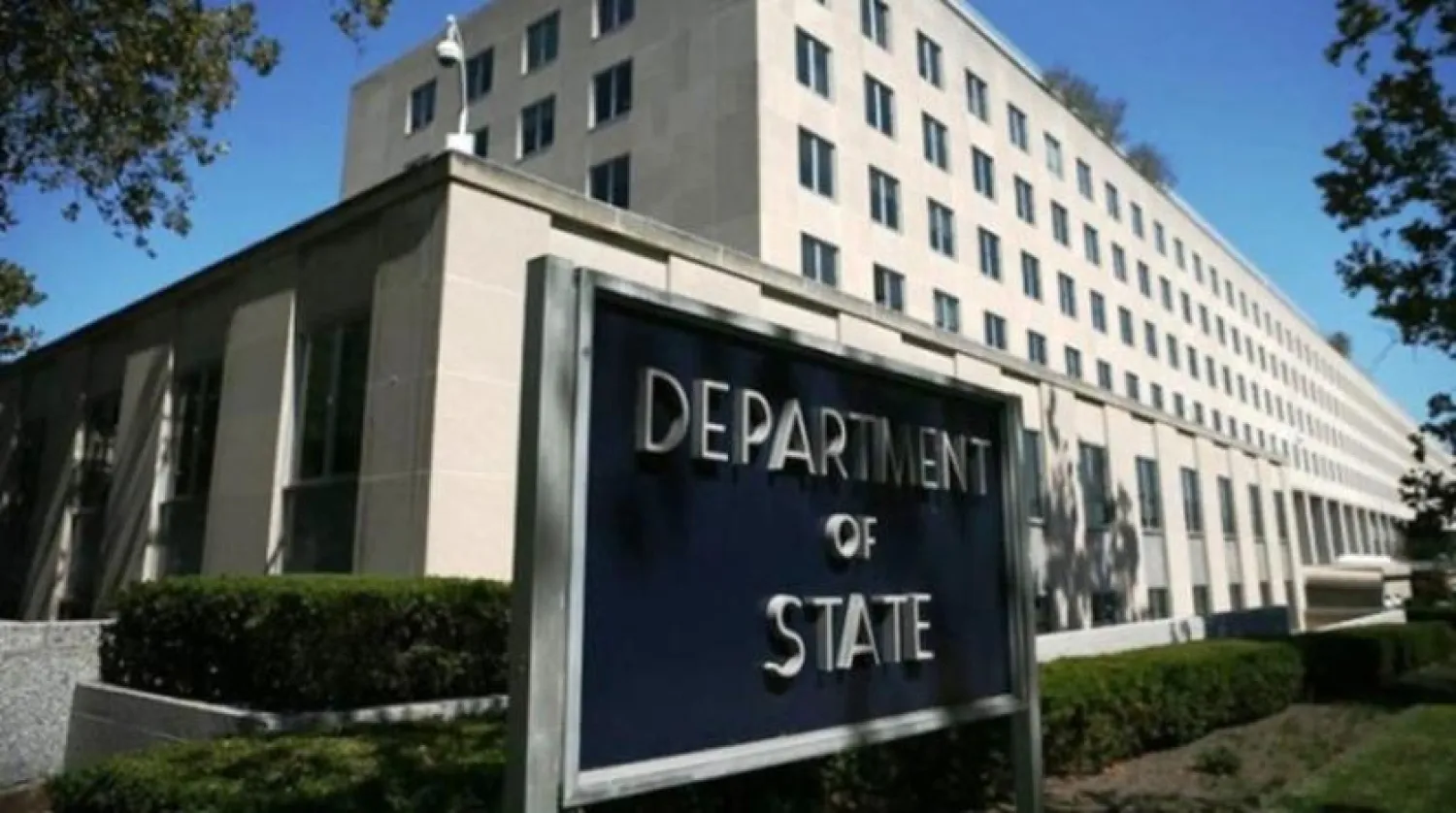
The US Department of State
TT

Washington Confirms Saudi Arms Deal Aligns with ‘Biden’s Desire’

The US Department of State

The US has reaffirmed its “steadfast” position in supporting Saudi Arabia in the face of any threats, stressing that it will continue to provide the necessary defensive means to the Kingdom to defend its territories against any cross-border attacks.

A US State Department official told Asharq Al-Awsat that the recent arms sales deal approved by the US administration on November 4 comes as part of President Joe Biden’s pledge to enhance Saudi Arabia’s possession of the necessary means to defend itself.

Speaking under the condition of anonymity, the source stated that the arms deal includes the purchase of up to 280 air-to-air missiles at a total cost of $650 million.

“This deal is to renew Saudi Arabia’s current stockpile of air-to-air defensive missiles while ensuring that it has the means to defend itself against the increasing number of air attacks on its territory by the Iran-backed Houthi group and from elsewhere in the region,” they noted.

Although Saudi Arabia has succeeded in responding to more than 375 cross-border attacks since the beginning of 2021, the assaults remain a matter of concern that threatens residents’ and civilians’ security.

The source also noted that more than 70,000 US citizens reside in Saudi Arabia.

Before the Senate voted on a resolution that would have barred the sale of arms to Saudi Arabia last Tuesday, the White House confirmed the US administration’s strong opposition to the ban and stressed that the November arms deal does not include missiles for engaging with ground targets.

Instead, the deal ensures boosting Saudi Arabia’s defense capacity against aerial cross-border attacks such as those carried out by explosive-laden drones launched by Houthi militias in Yemen.

In a statement, the Biden administration confirmed its dedication to diplomatic leadership to end the Yemen conflict.

Nevertheless, it also said it was committed to the security and protection of Saudi Arabia by ensuring the Kingdom has the means to defend itself from attacks staged by Iran-backed Houthi militias.

Republican Rand Paul had introduced the bill for blocking the transfer of weapons to the Kingdom. It would have “undermined Biden’s commitment to aiding the defenses of an ally such as at a time of increasing missile and drone attacks against civilians in Saudi Arabia.”

US legislators have shown a change of heart towards the arms deal, especially Democrats who long opposed such sales to Saudi Arabia. They now have supported the agreement, with two-thirds of the Senate backing it while moving toward the diplomatic track to end Yemen’s crisis.

Some Congress members went as far as sharply criticizing their colleagues for seeking to block the arms deal, noting that Houthi attacks on Saudi Arabia target a partner and strategic ally of the US in the region.

The chamber on Tuesday voted 67 to 30 against the resolution.

When speaking on the Senate floor, those opposing the bill to ban the arms sales referred to the multitude of diplomatic measures the Saudi and Yemeni governments had offered for a ceasefire in Yemen. Those offers were met by Houthi insistence on military escalation that disregards the demands of Yemenis and protracts their suffering.

Moreover, Saudi diplomacy in Washington had the effect of changing some of the “hardened positions” of some US legislators.

“There’s no denying that the Houthis have been deploying increasingly more sophisticated weapons, particularly armed aerial drones, to target civilian populations in Saudi Arabia,” said Senate Foreign Relations Chair Bob Menendez ahead of the vote.

“Saudi Arabia is literally surrounded by violent threats conceived, funded and orchestrated by Iran,” Senate Minority Leader Mitch McConnell said.

“A vote to block the sale of defensive military systems to Saudi Arabia would undermine one of our most important regional partners,” he added.

Many media outlets have confirmed US officials strongly supporting the deal and calling on Biden to change his stance towards the war in Yemen and support Saudi Arabia and the Yemeni government to prevent Yemen’s northern Marib Governorate from falling into the hands of Houthis.



Saudi Arabia, Iraq Underscore their Continued Security Coordination

Saudi Defense Minister Prince Khalid bin Salman and Iraqi Armed Forces Commander General Abdul Amir al-Shammari meet in Riyadh on Thursday. (Saudi Defense Ministry)
TT

Saudi Arabia, Iraq Underscore their Continued Security Coordination

Saudi Defense Minister Prince Khalid bin Salman and Iraqi Armed Forces Commander General Abdul Amir al-Shammari meet in Riyadh on Thursday. (Saudi Defense Ministry)

Saudi Defense Minister Prince Khalid bin Salman held talks in Riyadh on Thursday with Iraqi Armed Forces Commander General Abdul Amir al-Shammari.

They discussed bilateral relations between their countries in the military and defense fields. They also tackled regional developments.

“We underscored the importance of continuing coordination and cooperation between our countries to serve common interests and achieve regional security and stability,” Prince Khalid said in a post on the X platform.

“Iraq will remain a dear neighbor,” he added, saying: “We share fraternal bonds with its government and people.”

Saudi Arabia will always stand by Iraq to support its security, stability, development and prosperity, he declared.

Al-Shammari had arrived in the Kingdom earlier on Thursday to discuss security files and issues of common interest.


Egypt, UAE Urge US and Iran to Restore Calm

Egyptian Foreign Minister Dr. Badr Abdelatty and UAE Deputy Prime Minister and Minister of Foreign Affairs Sheikh Abdullah bin Zayed Al Nahyan during a previous meeting in Abu Dhabi. (Egyptian Foreign Ministry)
TT

Egypt, UAE Urge US and Iran to Restore Calm

Egyptian Foreign Minister Dr. Badr Abdelatty and UAE Deputy Prime Minister and Minister of Foreign Affairs Sheikh Abdullah bin Zayed Al Nahyan during a previous meeting in Abu Dhabi. (Egyptian Foreign Ministry)

Egypt and the United Arab Emirates have called for a return to compliance with the Memorandum of Understanding between the United States and Iran, in order to pave the way for resuming political and diplomatic tracks and to prevent the expansion of the conflict.

This came during a phone call on Thursday between Egyptian Foreign Minister Dr. Badr Abdelatty and UAE Deputy Prime Minister and Minister of Foreign Affairs Sheikh Abdullah bin Zayed Al Nahyan, according to a statement by the Egyptian Ministry of Foreign Affairs.

The statement said that the call "comes within the framework of ongoing consultation and coordination between the two brotherly countries regarding bilateral relations and regional developments."

The ministers exchanged views on the latest developments in the region, and stressed "the importance of intensifying efforts aimed at de-escalation and containing tensions."

They underscored "the importance of respecting the rules of international law and safeguarding the security, safety, and freedom of international navigation."

The call also addressed developments in the Gaza Strip and the West Bank amid ongoing escalatory measures and Israeli violations. The FMs affirmed "the importance of completing the implementation of all obligations of the first phase of US President Donald Trump’s peace plan in Gaza, in accordance with the announced roadmap, to contribute to stabilizing the situation and preparing conditions for transitioning to the next phases of the plan."

According to the Egyptian Foreign Ministry statement, they stressed the need for halting Israeli escalatory measures and practices in the West Bank.

They rejected "any actions that would undermine the chances of achieving peace and the two-state solution, emphasizing the importance of preserving the territorial unity of the Palestinian territories in Gaza and the West Bank."

They covered developments in Sudan, where the ministers exchanged views on the latest updates of the crisis and the regional and international efforts being made to handle it. They stressed "the importance of continued coordination and consultation to contribute to supporting the security and stability of Sudan and alleviating the humanitarian suffering of the Sudanese people."

The ministers agreed to continue close coordination and consultation during the coming period on various issues of common interest, contributing to the support of regional security and stability.

On the level of bilateral relations, the FMs praised the depth and distinctiveness of the brotherly and strategic relations binding their two countries, and the continuous development they are witnessing across various fields.

They underlined "a shared keenness to continue strengthening the frameworks of bilateral cooperation and building upon the existing momentum in relations to achieve the interests of both countries and their brotherly peoples."


Saudi Arabia: Royal Orders Reconstitute Cabinet Under Crown Prince Mohammed bin Salman

Joint photo of King Salman bin Abdulaziz Al-Saud and Saudi Crown Prince Mohammed bin Salman bin Abdulaziz Al-Saud - File Photo
TT

Saudi Arabia: Royal Orders Reconstitute Cabinet Under Crown Prince Mohammed bin Salman

Joint photo of King Salman bin Abdulaziz Al-Saud and Saudi Crown Prince Mohammed bin Salman bin Abdulaziz Al-Saud - File Photo

Custodian of the Two Holy Mosques King Salman bin Abdulaziz Al Saud issued three royal orders on Thursday, including the reconstitution of the Cabinet under the chairmanship of Crown Prince and Prime Minister Mohammed bin Salman bin Abdulaziz Al Saud, with its current members.

The orders follow two previous royal orders concerning the formation of the Cabinet, as well as related royal orders, and Article 9 of the Council of Ministers Law, which stipulates that the term of the Cabinet shall not exceed four years, during which it shall be reconstituted by royal order.

The new royal orders included relieving Bandar Alkhorayef of his position as Chairman of the Board of Directors of the Local Content and Government Procurement Authority and appointing Prince Abdulaziz bin Salman bin Abdulaziz as Chairman of the Board.

They also included relieving Mohammed ElKuwaiz of his position as Chairman of the Capital Market Authority and appointing Mazen Al-Sudairi as his successor, with the rank of minister.