


Sudan: The Aftermath of Hamdok's Resignation

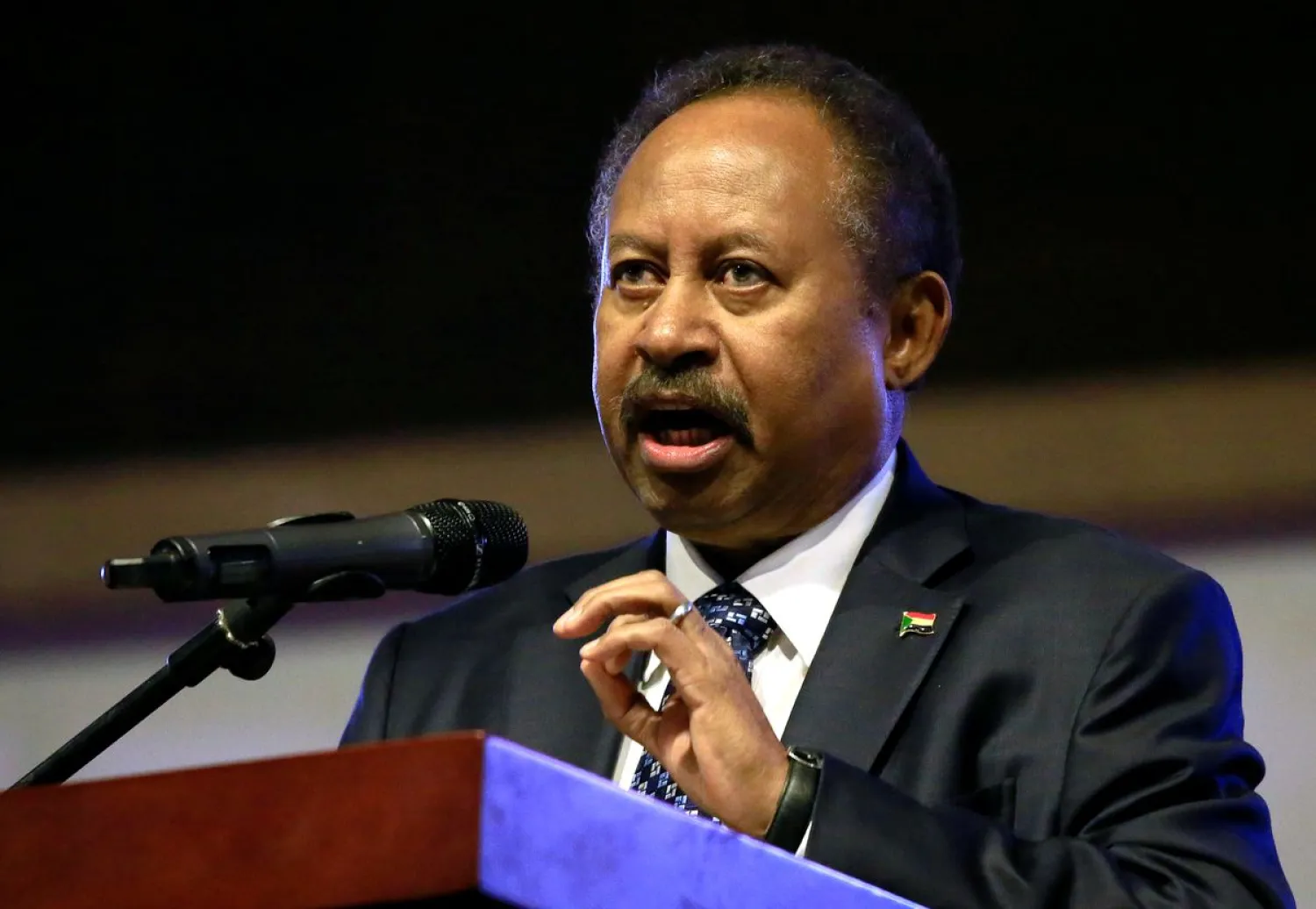
Prime Minister Abdalla Hamdok addresses people at the Friendship Hall in Khartoum, Sudan December 25, 2019. Picture taken December 25, 2019. (Reuters)
TT

Sudan: The Aftermath of Hamdok's Resignation

Prime Minister Abdalla Hamdok addresses people at the Friendship Hall in Khartoum, Sudan December 25, 2019. Picture taken December 25, 2019. (Reuters)

Prime Minister Abdalla Hamdok threw the Sudanese political scene into disarray by announcing his resignation and therefore compounding the crisis and division in the country.

It appears as though the hopes that were pinned on Hamdok to help Sudan out of its plight and lead it towards becoming a stable, modern and prosperous state have all but evaporated.

In his resignation speech, Hamdok said his first and second governments had faced fateful challenges and massive difficulties. The end result was more division between the military and civilian partners that reflected on the government and society and hampered the state on various levels.

Hamdok had warned that the division had reached society and its various segments. Hate speech, accusations of treason and failure to recognize the other had started to emerge in the country, while dialogue appeared impossible between the parties. This all rendered the transition process fragile and fraught with hurdles and challenges.

Hamdok's resignation was largely expected among political and popular circles. Speculation over his resignation had occupied the country for about two weeks.

His eventual stepping down has exposed new flaws and left the country vulnerable and fearful of slipping into chaos and beyond.

Since last Sunday, the political scene was grappling with major questions over the fate of the country in wake of the vacuum left by Hamdok's resignation. Who will succeed him? Constitutionally, who has the right to appoint a new prime minister, knowing that work on the new constitutional document had come to a halt since the military coup on October 25. Does the current sovereign council, which was appointed by army commander, Abdul Fattah al-Burhan, have the authority to name a new premier? Or will an agreement be reached in coming days over another side that can?

It appears as though the leaders of the army are aware of what will happen. Burhan had underscored during a meeting with senior military leaders on Monday the need to form an independent caretaker government comprised of experts within weeks. The ministers would be tasked with specified duties that are agreed on by all Sudanese. Reports have said that a small committee would be formed in order to meet with civilian figures to agree on a new prime minister.

The question here is how will the civilian component react to the measures the army is determined to carry out? Will it approve of them or will the crisis escalate again?

Deputy Chairperson of National Ummah Party (NUP) Dr. Ibrahim Al-Amin said the measures announced by the army on October 25 - that effectively eliminated their civilian partner, dissolved the government, and removed articles from the constitutional document that governed the transitional period - were viewed by the civilian component as a total coup.

Any decisions taken after this are therefore considered unconstitutional. This includes the appointment of a prime minister, he added.

"At the moment, no party enjoys the constitutional right to name a new prime minister. The country is now ruled by a small group of people and they are managing affairs as they like," he remarked.

Burhan has two choices, said Al-Amin. He can continue with his coup and appoint a new prime minister. In this case, he will be confronted with more rejection, division, popular anger, violence and blood, and perhaps even the collapse of the state contract.

His other option is reconsidering his coup, announcing courageous decisions and ending the current collapse, added Al-Amin.

Meanwhile, the media has leaked the names of potential prime minister candidates, including former finance minister in Hamdok's first government, Ibrahim al-Badawi, who confirmed that he has been contacted, but demanded that national consensus, including the approval of the youth revolution bloc, be reached before he takes on the job.

Other candidates include Sudan's former ambassador to Washington, Noureddine Sati, who told Asharq Al-Awsat that he learned through social media that he was being considered for the post.

He stressed that he would refuse the candidacy, saying that all civilian forces of the revolution should be the ones to hold consultations to name a prime minister, who will play a pivotal role in ending the current crisis.

He added: "This is an opportunity for the revolutionary forces to prove their ability to overcome their differences and agree on a roadmap and a joint program over what remains of the transitional period."

Furthermore, he stressed that the sovereign council was not qualified to name Hamdok's successor.

"The sovereign council is tasked with approving the prime minister, who is chosen by the civilian component," he explained.

Hamdok's departure from the political scene "has complicated the situation and led to constitutional vacuum and caused an imbalance between the civilian and military components," Sati remarked.

He warned that Sudan was facing the worst case scenario because no political solution is in sight.

"The situation will only become right when the constitutional authority is reinstated, the constitutional document clause on naming a prime minister from the civilian component is implemented and a civilian government with executive powers is formed to lead the country to safety," he continued.

He urged the need to listen to the demands of the youth as they are the real force of change and they will form the future.

Journalist and political analyst Al-Gamil Al-Fadil shared a different view. He believes that Hamdok's exit from the political scene will have great benefits and create positive momentum that would revive the revolutionary movement.

He said that during the recent period, the military component had used Hamdok to avoid implementing the goals of the revolution.

"The mask now has fallen," he stated.

He explained that it was in the interest of the generals and the old political camp to have Hamdok around.

The old political camp had sought to reproduce past political practices that were adopted in the first democratic phase in the 1960s, the second in the 1980s and third in 2019.

"Hamdok was like an alien body that was planted in the political scene. His fabric is not aligned with the spirit of the constitution," said Al-Fadil.

"Revolution is an act of rebellion and rejection. It is an expression of change and attempt to reap several gains and hang on to them. His departure from the scene is therefore a rare opportunity for the revolutionary forces to retake the spotlight," he stressed.



Lebanon PM Pledges Reconstruction on Visit to Ruined Border Towns

This handout picture released by the Lebanese Government Press Office shows Lebanon's Prime Minister Nawaf Salam being showered with confetti as he is received by locals during a tour in the heavily-damaged southern village of Dhayra near the border with Israel on February 7, 2026. (Lebanese Government Press Office / AFP)
TT

Lebanon PM Pledges Reconstruction on Visit to Ruined Border Towns

This handout picture released by the Lebanese Government Press Office shows Lebanon's Prime Minister Nawaf Salam being showered with confetti as he is received by locals during a tour in the heavily-damaged southern village of Dhayra near the border with Israel on February 7, 2026. (Lebanese Government Press Office / AFP)

Lebanese Prime Minister Nawaf Salam visited heavily damaged towns near the Israeli border on Saturday, pledging reconstruction.

It was his first trip to the southern border area since the army said it finished disarming Hezbollah there, in January.

Swathes of south Lebanon's border areas remain in ruins and largely deserted more than a year after a US-brokered November 2024 ceasefire sought to end hostilities between Israel and the Iran-backed group.

Lebanon's government has committed to disarming Hezbollah, and the army last month said it had completed the first phase of its plan to do so, covering the area between the Litani River and the Israeli border about 30 kilometers (20 miles) further south.

Visiting Tayr Harfa, around three kilometers from the border, and nearby Yarine, Salam said frontier towns and villages had suffered "a true catastrophe".

He vowed authorities would begin key projects including restoring roads, communications networks and water in the two towns.

Locals gathered on the rubble of buildings to greet Salam and the delegation of accompanying officials in nearby Dhayra, some waving Lebanese flags.

In a meeting in Bint Jbeil, further east, with officials including lawmakers from Hezbollah and its ally the Amal movement, Salam said authorities would "rehabilitate 32 kilometers of roads, reconnect the severed communications network, repair water infrastructure" and power lines in the district.

Last year, the World Bank announced it had approved $250 million to support Lebanon's post-war reconstruction, after estimating that it would cost around $11 billion in total.

Salam said funds including from the World Bank would be used for the reconstruction and rehabilitation projects.

The second phase of the government's disarmament plan for Hezbollah concerns the area between the Litani and the Awali rivers, around 40 kilometers south of Beirut.

Israel, which accuses Hezbollah of rearming, has criticized the army's progress as insufficient, while Hezbollah has rejected calls to surrender its weapons.

Despite the truce, Israel has kept up regular strikes on what it usually says are Hezbollah targets and maintains troops in five south Lebanon areas.

Lebanese officials have accused Israel of seeking to prevent reconstruction in the heavily damaged south with repeated strikes on bulldozers, excavators and prefabricated houses.

Visiting French Foreign Minister Jean-Noel Barrot on Friday said the reform of Lebanon's banking system needed to precede international funding for reconstruction efforts.

The French diplomat met Lebanon's army chief Rodolphe Haykal on Saturday, the military said.


Over 2,200 ISIS Detainees Transferred to Iraq from Syria, Says Iraqi Official

 One of the American buses transporting ISIS fighters, according to a security source from the Syrian Democratic Forces, heads from Syria towards Iraq, in Qamishli, Syria, February 7, 2026. (Reuters)
One of the American buses transporting ISIS fighters, according to a security source from the Syrian Democratic Forces, heads from Syria towards Iraq, in Qamishli, Syria, February 7, 2026. (Reuters)
TT

Over 2,200 ISIS Detainees Transferred to Iraq from Syria, Says Iraqi Official

 One of the American buses transporting ISIS fighters, according to a security source from the Syrian Democratic Forces, heads from Syria towards Iraq, in Qamishli, Syria, February 7, 2026. (Reuters)
One of the American buses transporting ISIS fighters, according to a security source from the Syrian Democratic Forces, heads from Syria towards Iraq, in Qamishli, Syria, February 7, 2026. (Reuters)

Iraq has so far received 2,225 ISIS group detainees, whom the US military began transferring from Syria last month, an Iraqi official told AFP on Saturday.

They are among up to 7,000 ISIS detainees whose transfer from Syria to Iraq the US Central Command (CENTCOM) announced last month, in a move it said was aimed at "ensuring that the terrorists remain in secure detention facilities".

Previously, they had been held in prisons and camps administered by the Kurdish-led Syrian Democratic Forces (SDF) in northeast Syria.

The announcement of the transfer plan last month came after US envoy to Syria Tom Barrack declared that the SDF's role in confronting ISIS had come to an end.

Saad Maan, head of the security information cell attached to the Iraqi prime minister's office, told AFP on Saturday that "Iraq has received 2,225 terrorists from the Syrian side by land and air, in coordination with the international coalition", which Washington has led since 2014 to fight IS.

He said they are being held in "strict, regular detention centers".

A Kurdish military source confirmed to AFP the "continued transfer of ISIS detainees from Syria to Iraq under the protection of the international coalition".

On Saturday, an AFP photographer near the Kurdish-majority city of Qamishli in northeastern Syria saw a US military convoy and 11 buses with tinted windows.

- Iraq calls for repatriation -

ISIS seized swathes of northern and western Iraq starting in 2014, until Iraqi forces, backed by the international coalition, managed to defeat it in 2017.

Iraq is still recovering from the severe abuses committed by the extremists.

In recent years, Iraqi courts have issued death and life sentences against those convicted of terrorism offences.

Thousands of Iraqis and foreign nationals convicted of membership in the group are incarcerated in Iraqi prisons.

On Monday, the Iraqi judiciary announced it had begun investigative procedures involving 1,387 detainees it received as part of the US military's operation.

In a statement to the Iraqi News Agency on Saturday, Maan said "the established principle is to try all those involved in crimes against Iraqis and those belonging to the terrorist ISIS organization before the competent Iraqi courts".

Among the detainees being transferred to Iraq are Syrians, Iraqis, Europeans and holders of other nationalities, according to Iraqi security sources.

Iraq is calling on the concerned countries to repatriate their citizens and ensure their prosecution.

Maan noted that "the process of handing over the terrorists to their countries will begin once the legal requirements are completed".


Drone Attack by RSF in Sudan Kills 24, Including 8 Children, Doctors’ Group Says

Displaced Sudanese wait to receive humanitarian aid at the Abu al-Naga displacement camp in the Gedaref State, some 420km east of the capital Khartoum on February 6, 2026. (AFP)
TT

Drone Attack by RSF in Sudan Kills 24, Including 8 Children, Doctors’ Group Says

Displaced Sudanese wait to receive humanitarian aid at the Abu al-Naga displacement camp in the Gedaref State, some 420km east of the capital Khartoum on February 6, 2026. (AFP)

A drone attack by a notorious paramilitary group hit a vehicle carrying displaced families in central Sudan Saturday, killing at least 24 people, including eight children, a doctors’ group said.

The attack by the Rapid Support Forces occurred close to the city of Rahad in North Kordofan province, said the Sudan Doctors Network, which tracks the country’s ongoing war.

The vehicle transported displaced people who fled fighting in the Dubeiker area of North Kordofan, the doctors’ group said in a statement. Among the dead children were two infants, the group said.

The doctors’ group urged the international community and rights organizations to “take immediate action to protect civilians and hold the RSF leadership directly accountable for these violations.”

There was no immediate comment from the RSF, which has been at war against the Sudanese military for control of the country for about three years.

Sudan plunged into chaos in April 2023 when a power struggle between the military and the RSF exploded into open fighting in the capital, Khartoum, and elsewhere in the country.

The devastating war has killed more than 40,000 people, according to UN figures, but aid groups say that is an undercount and the true number could be many times higher.

It created the world’s largest humanitarian crisis with over 14 million people forced to flee their homes. It fueled disease outbreaks and pushed parts of the country into famine.