


China Foreign Minister in Sri Lanka to Discuss Belt and Road

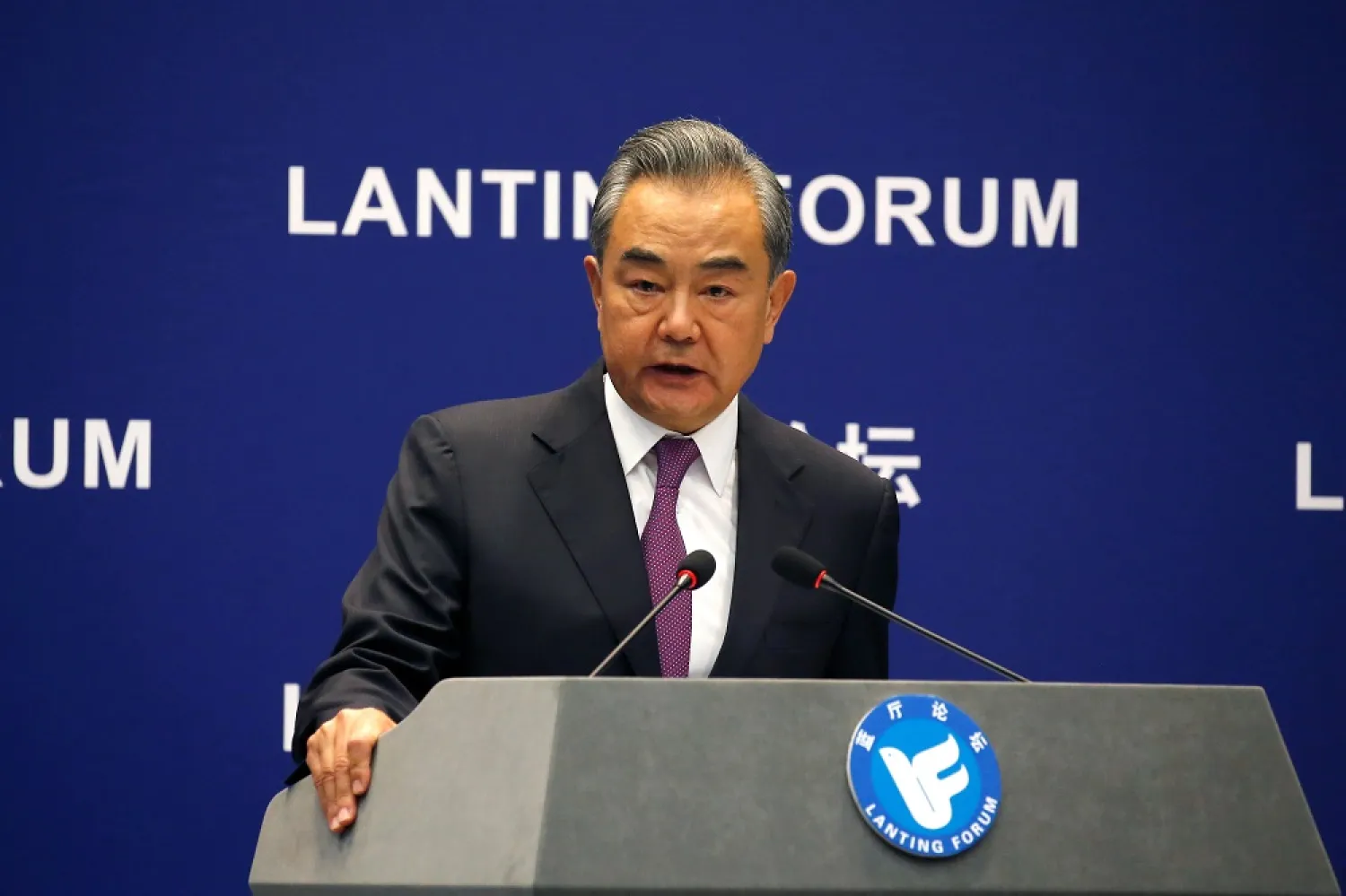
 Chinese Foreign Minister Wang Yi speaks in Beijing, China Jun. 25, 2021. (Reuters)
Chinese Foreign Minister Wang Yi speaks in Beijing, China Jun. 25, 2021. (Reuters)
TT

China Foreign Minister in Sri Lanka to Discuss Belt and Road

 Chinese Foreign Minister Wang Yi speaks in Beijing, China Jun. 25, 2021. (Reuters)
Chinese Foreign Minister Wang Yi speaks in Beijing, China Jun. 25, 2021. (Reuters)

Chinese Foreign Minister Wang Yi was in Sri Lanka on Sunday seeking to advance China's ambitious Belt and Road Initiative, as the island nation looked to Beijing for help as it tries to rescue itself from a foreign currency and debt crisis.

Wang arrived in Sri Lanka on Saturday from the Maldives on the last leg of a multi-city trip that also took him to Eritrea, Kenya and Comoros in Africa.

In Sri Lanka, Wang was scheduled to meet President Gotabaya Rajapaksa and Prime Minister Mahinda Rajapaksa. Later, Wang and Prime Minister Rajapaksa were to speak at Colombo’s Port City, a reclaimed island developed with Chinese investment.

The diplomatic visit comes as Sri Lanka faces one of its worst-ever economic crises, with foreign reserves down to around $1.6 billion, barely enough for a few weeks of imports. It also has foreign debt obligations exceeding $7 billion in 2022, including repayment of bonds worth $500 million in January and $1 billion in July.

The declining foreign reserves are partly due to infrastructure built with Chinese loans that don’t generate revenue. China loaned money to build a sea port and airport in the southern Hambantota district, in addition to a wide network of roads.

Central Bank figures show that current Chinese loans to Sri Lanka total around $3.38 billion not including loans to state-owned businesses, which are accounted for separately.

“Technically we can claim we are bankrupt now,” said Muttukrishna Sarvananthan, principal researcher at the Point Pedro Institute of Development. “When you have foreign reserves in the red, that means you are technically bankrupt.”

The situation has left households facing severe shortages. People wait in long lines to buy essential goods like milk powder, cooking gas and kerosene. Prices have increased sharply and the Central Bank says the inflation rate rose to 12.1% by the end of December from 9.9% in November. Food inflation increased to over 22% in the same period.

Because of a currency shortage, importers are unable to clear their cargo containing essentials and manufactures are not able to buy raw materials from overseas.

Expatriate remittances have also fallen after the government ordered the mandatory conversion of foreign currency and controls over exchange rates.

Rating agency downgrades have resulted in Sri Lanka losing much of its borrowing power. In December, Fitch Ratings noted an increased probability of credit default.

The Central Bank has added a currency swap in Chinese currency worth $1.5 billion to the reserves but economists disagree whether it can be part of foreign reserves or not.

Wang’s visit also has regional significance, as both China and India, Sri Lanka’s closest neighbor, vie for influence in the island.

“We can see Sri Lanka being saddled between India and China for a potential bailout package,” said political analyst Ranga Kalansooriya.

“India is dragging its feet for some time while China is trying to manipulate the situation to the maximum,” he added.

India has been wary of China’s increased investments and loans in Sri Lanka since a civil war ended in 2009. India considers Sri Lanka part of its territory of influence. China considers Sri Lanka to be a critical link in its Belt and Road global infrastructure initiative.

Kalansooriya says Wang may also be looking to iron out relations with Sri Lanka after they were recently strained over a shipment of fertilizer that allegedly contained harmful bacteria and business agreements that were inked with China’s rivals, the United States and India.

Kalansooriya said that China is unlikely to bail Sri Lanka out of its economic crisis.

“They will look for more business opportunities, fishing in the troubled waters of economic doldrums in the country,” he said.



Saudi PIF Backs Multibillion-Dollar Projects to Boost Sustainability

A solar power project in Saudi Arabia (SPA)
TT

Saudi PIF Backs Multibillion-Dollar Projects to Boost Sustainability

A solar power project in Saudi Arabia (SPA)

Saudi Arabia’s Public Investment Fund has fully allocated the proceeds of its green bond issuance, directing $9 billion to eligible projects, in a move that highlights the sovereign wealth fund’s growing role in shaping a more sustainable future and delivering lasting positive impact worldwide.

According to a recent report issued by the Public Investment Fund, reviewed by Asharq Al-Awsat, the expected impact of the fund’s eligible green projects includes generating 427 megawatts of renewable energy, avoiding emissions equivalent to 5.1 million tons of carbon dioxide, and treating 4 million cubic meters of wastewater.

The Public Investment Fund aims to establish itself as an active participant in global debt markets, while also fostering the development of a dynamic domestic market. This would enable the fund to access short- or long-term liquidity through a diverse range of financing instruments.

Financing strategy

The fund’s capital markets program aims to further strengthen its financing strategy and execution capabilities, both at the level of the Saudi sovereign wealth fund and across its portfolio companies, while enabling deeper engagement with global and local debt markets.

The program will also support expanding the fund’s capacity to raise debt and deploy it as a source of investment financing, in line with its overall funding strategy. This approach is designed to instill greater discipline in cash flow management and enhance returns on equity for the fund and its portfolio companies.

The green bond issuance will provide the fund with access to a broader pool of investors who prioritize environmental, social, and governance considerations in their investment decisions. It will also allow investors to diversify their portfolios through green assets, a step expected to help accelerate the pace of green investment globally.

Climate change

The fund has taken concrete steps to advance governance and policy, focusing on sustainability, and is a founding member of the One Planet Sovereign Wealth Funds initiative. This international platform aims to accelerate the integration of climate change considerations into asset management decisions and investment opportunities.

As an investment vehicle, the Public Investment Fund operates through acquiring stakes in companies aligned with its mandate, including ACWA Power and Lucid.

It has also established the Saudi Investment Recycling Company, a leader in waste management and recycling, manages the National Energy Services Company, Tarshid, and supports the creation of a voluntary carbon market in the Middle East and North Africa.

These efforts aim to strengthen Saudi Arabia’s position as one of the world’s most energy-efficient countries.

The green bond issuance will finance tangible projects on the ground, helping to accelerate the green transition and advance the Kingdom’s core targets of achieving net zero emissions by 2060 and generating 50 percent of electricity consumption from renewable energy sources by 2030.

This forms a key pillar of the renewable energy program implemented by the fund, which involves developing 70 percent of renewable power generation capacity.


Saudi E-Commerce Hits Record Monthly Sales over SAR30.7 Billion in October

A view of Riyadh, Saudi Arabia. (SPA file)
TT

Saudi E-Commerce Hits Record Monthly Sales over SAR30.7 Billion in October

A view of Riyadh, Saudi Arabia. (SPA file)

E-commerce sales in Saudi Arabia via "mada" cards soared to an all-time monthly high in October 2025, surpassing SAR30.7 billion.

The surge in sales represents a 68% year-on-year increase, totaling about SAR12.4 billion more than the SAR18.3 billion recorded in October 2024, according to the Saudi Central Bank (SAMA) statistical bulletin on Wednesday.

E-commerce sales for the third quarter (Q3) of 2025 hit SAR88.3 billion, up 15.2% from the previous quarter, representing an increase of about SAR11.6 billion over the SAR76.6 billion recorded in Q2.

On a monthly basis, e-commerce sales in October rose 6%, gaining approximately SAR1.6 billion over September’s total of SAR29.1 billion.

From January to October, "mada" data showed e-commerce sales grew 47.3%, rising by around SAR9.9 billion over the SAR20.9 billion recorded in January.

These figures cover transactions made via "mada" cards on e-commerce websites, apps, and digital wallets, and do not include credit-card payments.


Jeddah's King Abdulaziz Airport Launches First Direct Flight to Moscow

The expansion supports Jeddah Airports Company’s goal of broadening travel options and increasing air traffic revenue, leveraging the Kingdom's strategic location. (SPA)
TT

Jeddah's King Abdulaziz Airport Launches First Direct Flight to Moscow

The expansion supports Jeddah Airports Company’s goal of broadening travel options and increasing air traffic revenue, leveraging the Kingdom's strategic location. (SPA)

Jeddah's King Abdulaziz International Airport (KAIA) celebrated the launch of its first direct flynas flight to Moscow, operating three weekly flights between Jeddah and Vnukovo International Airport.

This initiative, in partnership with the Saudi Tourism Authority and the Air Connectivity Program, boosts air links between Saudi Arabia and Russia.

It marks KAIA's third direct Russian destination, following Makhachkala and Mineralnye Vody, which were inaugurated earlier this month by Azimuth Airlines.

The expansion supports Jeddah Airports Company’s goal of broadening travel options and increasing air traffic revenue, leveraging the Kingdom's strategic location.