


Europe Gas Crisis Hinges on Cold, High Prices Luring Supply

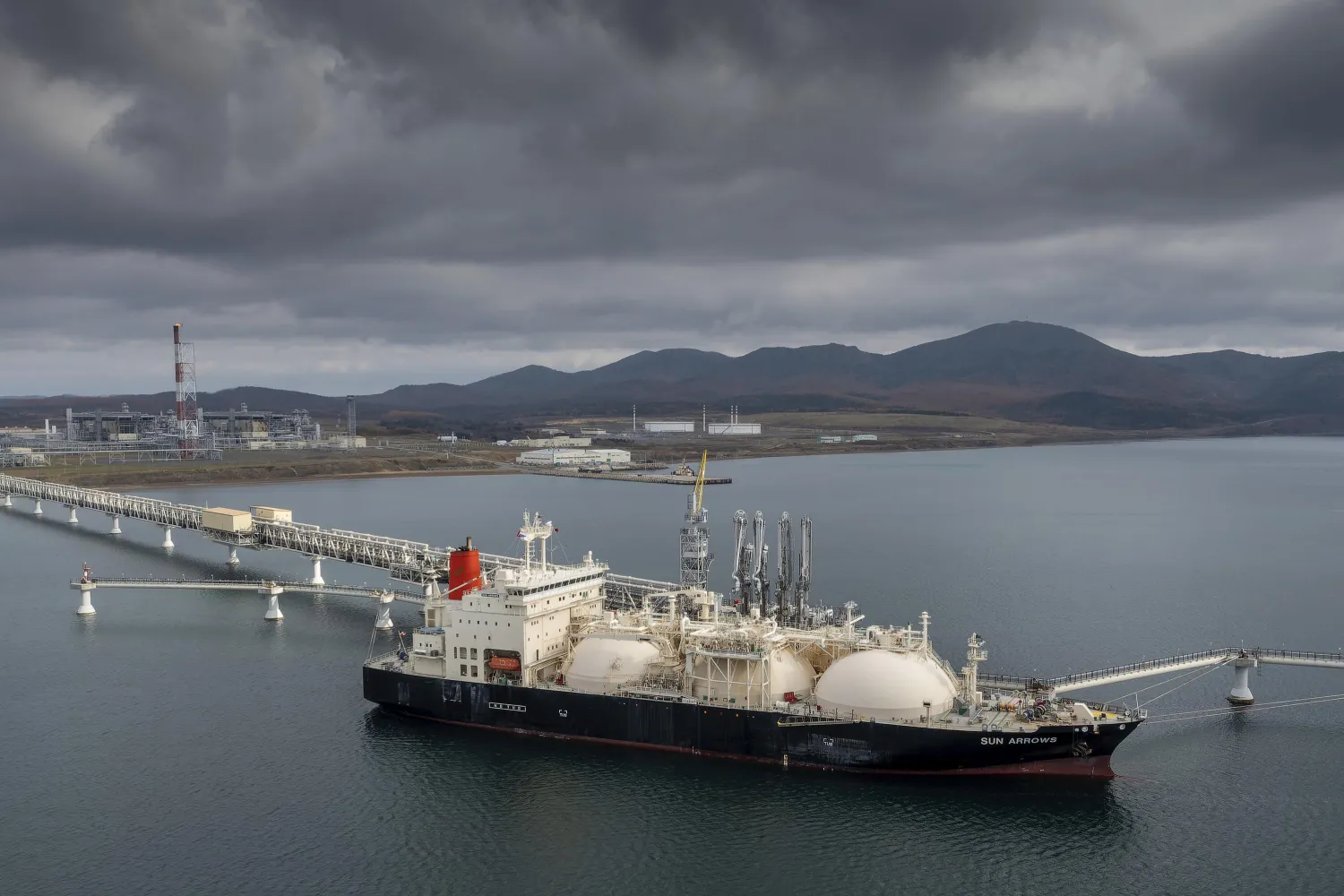
FILE - The tanker Sun Arrows loads its cargo of liquefied natural gas from the Sakhalin-2 project in the port of Prigorodnoye, Russia, on Friday, Oct. 29, 2021. (AP Photo, File)
TT

Europe Gas Crisis Hinges on Cold, High Prices Luring Supply

FILE - The tanker Sun Arrows loads its cargo of liquefied natural gas from the Sakhalin-2 project in the port of Prigorodnoye, Russia, on Friday, Oct. 29, 2021. (AP Photo, File)

Europe’s natural gas crisis isn't letting up. Reserves are low. Prices are high. Utility customers are getting hit with higher bills. Major Russian supplier Gazprom isn't selling gas like it used to.

It all raises the question: How exactly is Europe, which imports most of its energy, going to make it through the winter without a gas disaster, especially if the season turns out to be colder or longer than usual?

Here's how the European Union, home to 447 million people, will try to deal with the crisis:

THE PROBLEM IS LOW STORAGE LEVELS: Utilities turn to gas stored in underground caverns to handle sudden additional demand for gas for heating or electricity. But Europe started 2020 with gas storage only 56% full, compared with 73% a year earlier. The reasons vary: cold weather last winter, lack of Russian deliveries on the spot market and robust demand in Asia for liquid natural gas that comes by ship. Europe's association of pipeline operators says cold weather would mean needing to import 5% to 10% more gas than the maximum volumes observed in recent years to avoid the risk of shutoffs.

AS A RESULT, GAS PRICES HAVE SOARED: The benchmark price in Europe is around 80 euros per megawatt hour, more than four times its level of 19 euros at the start of 2021 and up from as low as 4 euros in 2020. Prices have eased from as much as nine times their level at the start of last year. That price shock is feeding through to utility bills, alarming consumers and politicians.

EUROPE IS RELYING ON HIGH PRICES ATTRACTING MORE SUPPLY: Analysts at Rystad Energy used ship-tracking data last month to watch 11 tankers bringing liquid natural gas, or LNG, to Asia make U-turns in the middle of the ocean to take advantage of lucrative sales in Europe. With prices so high, traders were tempted to divert cargoes to Europe even if they had to offer 100% of the price as compensation, analysts at data firm Energy Intelligence said.

“I wouldn't say that LNG is 100% enough, but it will play a very important role" in Europe's energy solution, said Xi Nan, head of liquid natural gas markets at Rystad. But she added a caveat: “Depending on how much Europe is willing to pay.”

RUSSIA HASN'T SENT AS MUCH GAS: State-owned Gazprom has sold less short-term gas through its pipelines crossing Poland and Ukraine and hasn't filled as much of its European storage as it normally does, though it appears to be fulfilling its long-term contracts. Analysts believe Russia may be underlining its desire for Europe to approve the Nord Stream 2 pipeline to Germany that bypasses Poland and Ukraine. There also are increased tensions with Europe over Russian troop deployments near the Ukraine border.

LETTING STORAGE FALL TOO LOW CAN BE A PROBLEM: As storage caverns are depleted toward winter's end, the pressure falls and gas comes out more slowly. That means reserves might not fall all the way to zero but might deliver gas too slowly to meet a sudden surge in demand.

IN THE SHORT TERM: European governments are offering cash subsidies to consumers to soften the blow. Sweden became the latest Wednesday by announcing 6 billion kronor ($661 million) to help households most affected by higher electric prices.

LONGER TERM: The solution is more investment in renewables such as wind and solar. Yet officials concede gas will play a role for years during that transition.

POLITICAL UNREST IN KAZAKHSTAN ISN'T CONTRIBUTING: The resource-rich Central Asian country supplies oil to the EU — but not gas — and the oil flow wasn't affected by violent protests that began over soaring fuel prices but quickly spread, reflecting wider discontent over Kazakhstan’s authoritarian government.

EUROPE REMEMBERS WHAT A BAD WINTER CAN MEAN: A late-winter cold snap in 2018 sent energy prices skyrocketing. Britain warned that some industrial uses of electricity powered by natural gas could face shutoffs. It didn’t come to that, but no one wants to see that scenario. Nor a repeat of the disruption from January 2009, when a pricing dispute between Gazprom and Ukraine led to a two-week shutoff in southeast Europe. It cut off gas heat to 70,000 apartments in Sarajevo, the capital of Bosnia-Herzegovina, forcing people to stay with relatives and emptying stores of space heaters.

IF ALL ELSE FAILS: EU legislation requires countries to help each other in the case of a gas shortfall. Governments can declare a gas emergency and shut off industrial customers to spare households, hurting the economy but sparing a humanitarian and political disaster.

In theory, they can demand cross-border gas supplies from each other. In recent years, Europe has built more reversible pipeline connections but not enough to cover the entire continent, leaving some countries more exposed than others.

Yet the system has never been tested, and there are questions about how willing countries would be to share gas in a crisis. The European Commission, the EU's executive branch, is working on revising the rules to include joint gas purchases but on a voluntary basis, said Ruven C. Fleming, energy law blogger and assistant professor at the University of Groningen in the Netherlands.

The revision “is a quite clear indication that even those who installed the mechanism don't think it would work very well,” Fleming said.



Gold Bounces Back on Softer Dollar, US-Iran Concerns; Silver Rebounds

Gold and silver bars are stacked in the safe deposit boxes room of the Pro Aurum gold house in Munich, Germany, January 10, 2025. REUTERS/Angelika Warmuth
TT

Gold Bounces Back on Softer Dollar, US-Iran Concerns; Silver Rebounds

Gold and silver bars are stacked in the safe deposit boxes room of the Pro Aurum gold house in Munich, Germany, January 10, 2025. REUTERS/Angelika Warmuth

Gold rebounded on Friday and was set for a weekly gain, helped by bargain hunting, a slightly weaker dollar and lingering concerns over US-Iran talks in Oman, while silver recovered from a 1-1/2-month low.

Spot gold rose 3.1% to $4,916.98 per ounce by 09:31 a.m. ET (1431 GMT), recouping losses posted during a volatile Asia session that followed a fall of 3.9% on Thursday. Bullion was headed for a weekly gain of about 1.3%.

US gold futures for April delivery gained 1% to $4,939.70 per ounce.

The US dollar index fell 0.3%, making greenback-priced bullion cheaper for the overseas buyers.

"The gold market is seeing perceived bargain hunting from bullish traders," said Jim Wyckoff, senior analyst at Kitco Metals.

Iran and the US started high-stakes negotiations via Omani mediation on Friday to try to overcome sharp differences over Tehran's nuclear program.

Wyckoff said gold's rebound lacks momentum and the metal is unlikely to break records without a major geopolitical trigger.

Gold, a traditional safe haven, does well in times of geopolitical and economic uncertainty.

Spot silver rose 5.3% to $74.98 an ounce after dipping below $65 earlier, but was still headed for its biggest weekly drop since 2011, down over 10.6%, following steep losses last week as well.

"What we're seeing in silver is huge speculation on the long side," said Wyckoff, adding that after years in a boom cycle, gold and silver now appear to be entering a typical commodity bust phase.

CME Group raised margin requirements for gold and silver futures for a third time in two weeks on Thursday to curb risks from heightened market volatility.

Spot platinum added 3.2% to $2,052 per ounce, while palladium gained 4.9% to $1,695.18. Both were down for the week.


Europe, Türkiye Agree to Work Toward Updating Customs Union

European Union (R) and Turkish flags fly at the business and financial district of Levent in Istanbul, Türkiye September 4, 2017. REUTERS/Osman Orsal
TT

Europe, Türkiye Agree to Work Toward Updating Customs Union

European Union (R) and Turkish flags fly at the business and financial district of Levent in Istanbul, Türkiye September 4, 2017. REUTERS/Osman Orsal

The European enlargement chief and the Turkish foreign minister said on Friday they had agreed to continue work toward modernizing the EU-Türkiye customs union and to improve its implementation, Reuters reported.

European Commissioner for Enlargement Marta Kos met Turkish Foreign Minister Hakan Fidan in the capital Ankara on Friday.

"They shared a willingness to work for paving the way for the modernization of the Customs Union and to achieve its full potential in order to support competitiveness, and economic security and resilience for both sides," they said in a joint statement afterward.

The sides also welcomed the gradual resumption of European Investment Bank (EIB) operations in Türkiye and said they intended to support projects across the country and neighbouring regions in cooperation with the bank.


Bitcoin Falls 8% and Asian Shares Mostly Slip after Wall Street is Hit by Tech Stock Losses

FILE PHOTO: Representation of Bitcoin cryptocurrency in this illustration taken September 10, 2025. REUTERS/Dado Ruvic/Illustration/File Photo
TT

Bitcoin Falls 8% and Asian Shares Mostly Slip after Wall Street is Hit by Tech Stock Losses

FILE PHOTO: Representation of Bitcoin cryptocurrency in this illustration taken September 10, 2025. REUTERS/Dado Ruvic/Illustration/File Photo

US futures and Asian shares traded mostly lower on Friday, tracking Wall Street’s losses as technology stocks again dragged on markets.

Bitcoin sank to roughly half its record price, giving back all it gained since US President Donald Trump won the White House for his second term.

Tokyo’s Nikkei 225 was up 0.8% to 54,253.68, recovering from losses earlier this week, with technology-related stocks leading gains. SoftBank Group rose 2.2% and chipmaker Tokyo Electron rose 2.6%. Japan will also be holding its general election on Sunday, in which Prime Minister Sanae Takaichi expects to win a stronger public mandate for her policies.

Shares of Toyota Motor were up 2%. The carmaker said Friday its CEO Koji Sato will be stepping down in April, and is to be replaced by Chief Financial Officer Kenta Kon, The Associated Press said.

South Korea’s Kospi lost 1.4% to 5,089.14, weighed down by tech shares. Samsung Electronics, the country’s biggest listed company, fell 0.4%. Chipmaker SK Hynix was also down 0.4%.

Hong Kong’s Hang Seng fell 1.4% to 26,519.60. The Shanghai Composite index was down 0.3% to 4,065.58.

In Australia, the S&P/ASX 200 shed 2% to 8,708.80.

Taiwan’s Taiex was mostly flat. India's Sensex traded 0.1% lower.

Against the backdrop of the technology sell-off this week, bitcoin, the world’s largest cryptocurrency, saw dimming enthusiasm and was trading about 8% lower at just under $65,000 early Friday, after it briefly sank over 12% to below $64,000 on Thursday. That’s down from a record of above $124,000 in October.

The future for the S&P 500 was 0.2% lower, while that for the Dow Jones Industrial Average fell 0.1%.

On Thursday, the S&P 500 fell 1.2% to 6,798.40, its sixth loss in the seven days. The Dow Jones Industrial Average fell 1.2% to 48,908.72. The Nasdaq composite dropped 1.6% to 22,540.59.

Technology stocks were among the worst hit as concerns persist over whether massive AI investments by many of the Big Tech firms will pay off.

Chipmaker Qualcomm sank 8.5% despite better-than-expected quarterly revenues. Alphabet lost 0.5% as investors were focused on its huge spendings on AI.

Amazon fell 11% in after hours trading Thursday after it announced plans to boost capital spending by more than 50% to $200 billion in AI and other areas.

American artificial intelligence startup Anthropic ’s new AI tools also fueled the sell-off of software stocks on Wall Street this week, as its sophistication means many traditional software development services and products could be disrupted or replaced.

Gold and silver prices have been volatile this week following a monthslong rally as investors moved into safe haven assets prompted by factors including elevated geopolitical tensions. Gold prices fell 0.6% on Friday to $4,858.60 per ounce, after nearing $5,600 last week.

Silver prices dropped 5.5% to $72.52 per ounce after rising earlier this week. It lost more than 31% last Friday.

In other dealings early Friday, US benchmark crude oil gained 35 cents to $63.64 a barrel. Brent crude, the international standard, rose 36 cents to $67.91 a barrel.

The US dollar fell to 156.74 Japanese yen from 157.03 yen. The euro was trading at $1.1789, up from $1.1777.