


Migrants at Hungary Border Become Part of Election Campaign

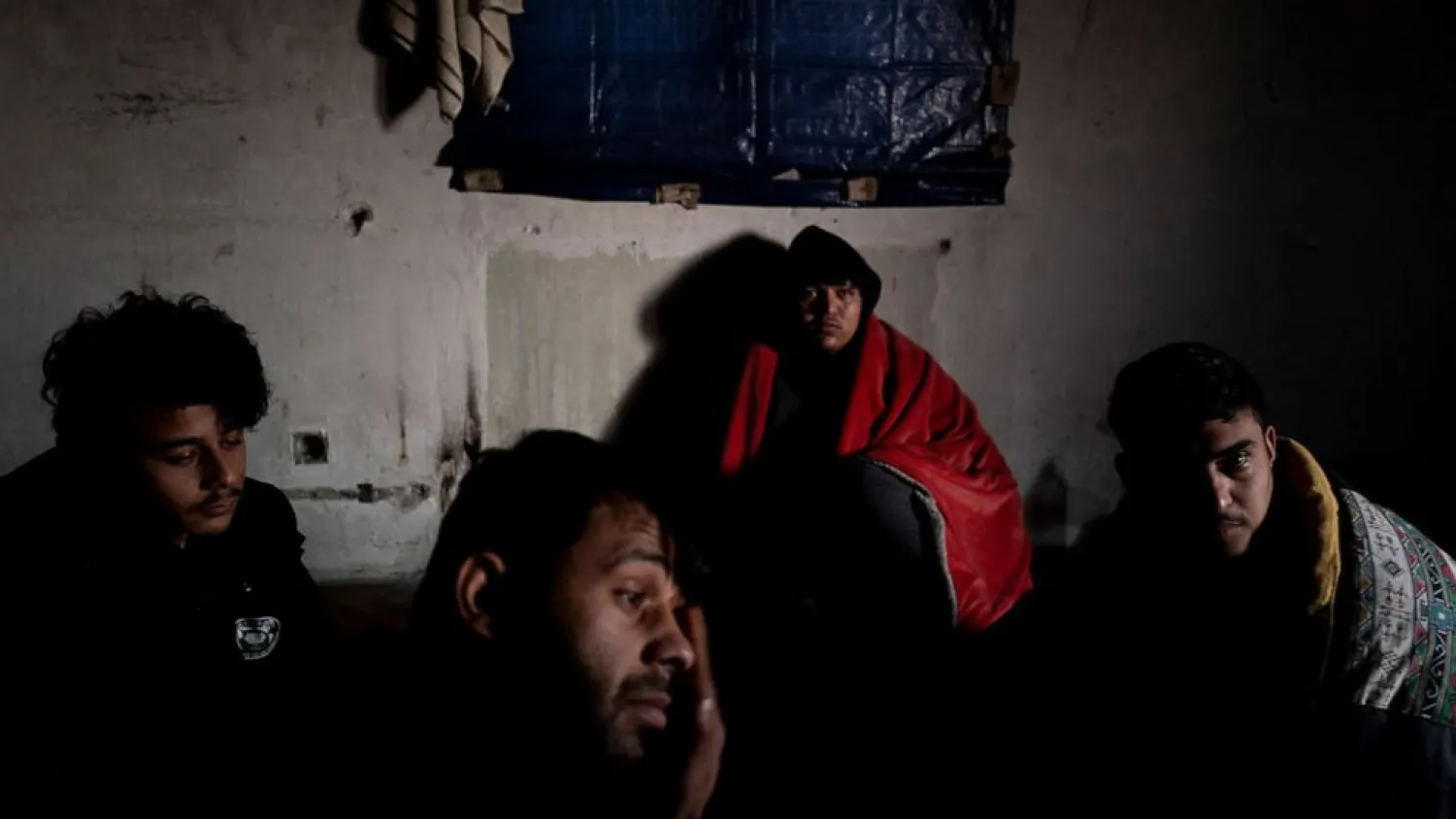
Migrants gather near the Hungarian border, outside of the village of Martonosh, Serbia, Thursday, Jan. 13, 2022. (AP)
TT

Migrants at Hungary Border Become Part of Election Campaign

Migrants gather near the Hungarian border, outside of the village of Martonosh, Serbia, Thursday, Jan. 13, 2022. (AP)

A group of migrants huddles beside a small, smoky fire inside an abandoned building in northern Serbia, the last moments of warmth before they set out into the driving snow toward the razor wire, cameras and sensors of Hungary's electrified border fence.

A few hours later, they return, their efforts to cross through Hungary and toward Western Europe thwarted by the three-meter (10-foot) fence and heavy Hungarian police patrols which, after intercepting them, escorted them back across the border into Serbia.

“I’m going to Austria, I’m going to Germany, I’m going to the Netherlands," says Muhtar Ahmad, a 26-year-old from Aleppo, Syria, who is squatting with around 35 other migrants in the makeshift camp outside the Serbian village of Majdan, a mile (less than two kilometers) from the Hungarian border.

“I’m not staying in Hungary. What’s the problem?”

As migrants from Syria, Afghanistan and other countries embark on the last stretch of their long journeys toward Europe's wealthier nations, their efforts to cross irregularly into the European Union through Hungary — and the country's contentious practice of returning them to Serbia when they are caught — have made them part of a political campaign with which Hungary's nationalist leader hopes to win an upcoming general election.

Prime Minister Viktor Orban, who polls suggest will face his closest election in more than a decade in April, is campaigning on a strict anti-immigration platform and is keen to use the prospect of a wave of migrants amassing at Hungary's border as a means to mobilize his conservative voter base.

“Just this year we stopped and detained ... more than 100,000 people,” Orban claimed at a rare appearance before journalists in December. "If the Hungarian fence had not stood there, more than 100,000 more illegal migrants would be now first in Austria, then in Germany.”

One of the most outspoken opponents of immigration in Europe, Orban has said that migration threatens to replace the continent's Christian culture, and that illegal migrants are responsible for bringing infections like COVID-19 variants into his country.

"We do not want to be an immigrant country,” Orban said during an interview with state radio this week.

As the April 3 election approaches, he has portrayed current migration pressures as higher than in 2015, when hundreds of thousands of refugees came into the EU fleeing war and poverty in the Middle East and elsewhere, and when he ordered the construction of the country's border barrier.

But figures released by Serbian officials and the EU's border and coast guard agency suggest that far fewer individuals are attempting to enter Hungary than the right-wing leader claims.

“It’s a little bit bigger number than, let’s say, two years ago, but these are not big numbers. It’s a small rise,” said Nemanja Matejic, chief officer at a migrant reception center in the northern Serbian city of Subotica, of the current level of migrants along Hungary's border.

While Hungarian police put the number of migrants intercepted by Hungarian authorities at more than 122,000, data from EU border agency Frontex showed that there were 60,540 illegal border crossing attempts last year on the Western Balkan migration route, which includes the Hungary-Serbia border.

What's more, since most migrants are making repeated attempts to cross, the number of individuals involved is far smaller still.

Serbia's Commissariat for Refugees and Migration reports that there are 4,276 migrants residing in reception centers in Serbia and another 1,000 sleeping rough.

Frontex has noted that the majority of Western Balkan crossings “can be traced back to people who have been in the region for some time and who repeatedly try to reach their target country in the EU."

Hikmad Serat, 20, from Nangarhar province, Afghanistan, took shelter in a remote abandoned building near the Serbian border town of Horgos this month as a cold snap brought temperatures to -10 C (14 F.)

Serat said he has been in Serbia for 15 months, and has lost count of the number of times he has crossed into Hungary and been returned by police.

“Many times I try, 100 times, more than 100 times … Every time, police arrest me and deport back to Serbia,” Serat said.

This practice — where police deny migrants the right to apply for asylum and escort them back across national borders — is known as a “pushback.” It has been declared unlawful by the EU’s top court, and is in violation of international asylum treaties.

Matejic, the chief of the reception center, said that migrants making dozens of crossing attempts is “typical.”

“Sometimes a guy tries one time and goes, he has luck … Sometimes they try over 50 times ... They try and try again,” he said.

Many migrants have reported abuse by police after they leave Serbian territory for Hungary, or for Croatia or Romania. This includes having mobile phones destroyed or stolen, being made to sit or kneel in the snow for hours and receiving beatings — allegations which are very difficult to independently confirm.

Romanian police didn't respond to questions from The Associated Press. But Hungary's National Police Headquarters wrote in an email that they “strongly reject unsubstantiated allegations” of abuse of migrants.

Yet Matejic said 150 cases of broken limbs were recorded by the Subotica reception center in 2019.

“Sometimes they break their phones, the police. Sometimes they take their money. Sometimes they break their legs. It’s a different experience for everybody,” Matejic said.

Orban has asked the EU to reimburse Hungary for at least half of the costs related to building, maintaining and patrolling its border fence, which he has said have amounted to 590 billion Hungarian forints ($1.9 billion) over the past six years.

Ever at odds with the EU's more liberal member states, he has also threatened to “open up a corridor along which migrants can march up to Austria, Germany and Sweden and whoever needs them.”

Despite the dangers, Faris al-Ibrahimi, a Moroccan migrant in the Subotica reception center who intends to travel on to Spain, said he was undeterred after being pushed back 27 times by Hungarian police.

“I’m still going to try. I will not give up now … I will try until I succeed," he said. “It’s an adventure. We cross, we go, they catch us, we come back, we go again. It’s like a game for us.”


Ukraine’s New Defense Minister Reveals Scale of Desertions as Millions Avoid the Draft

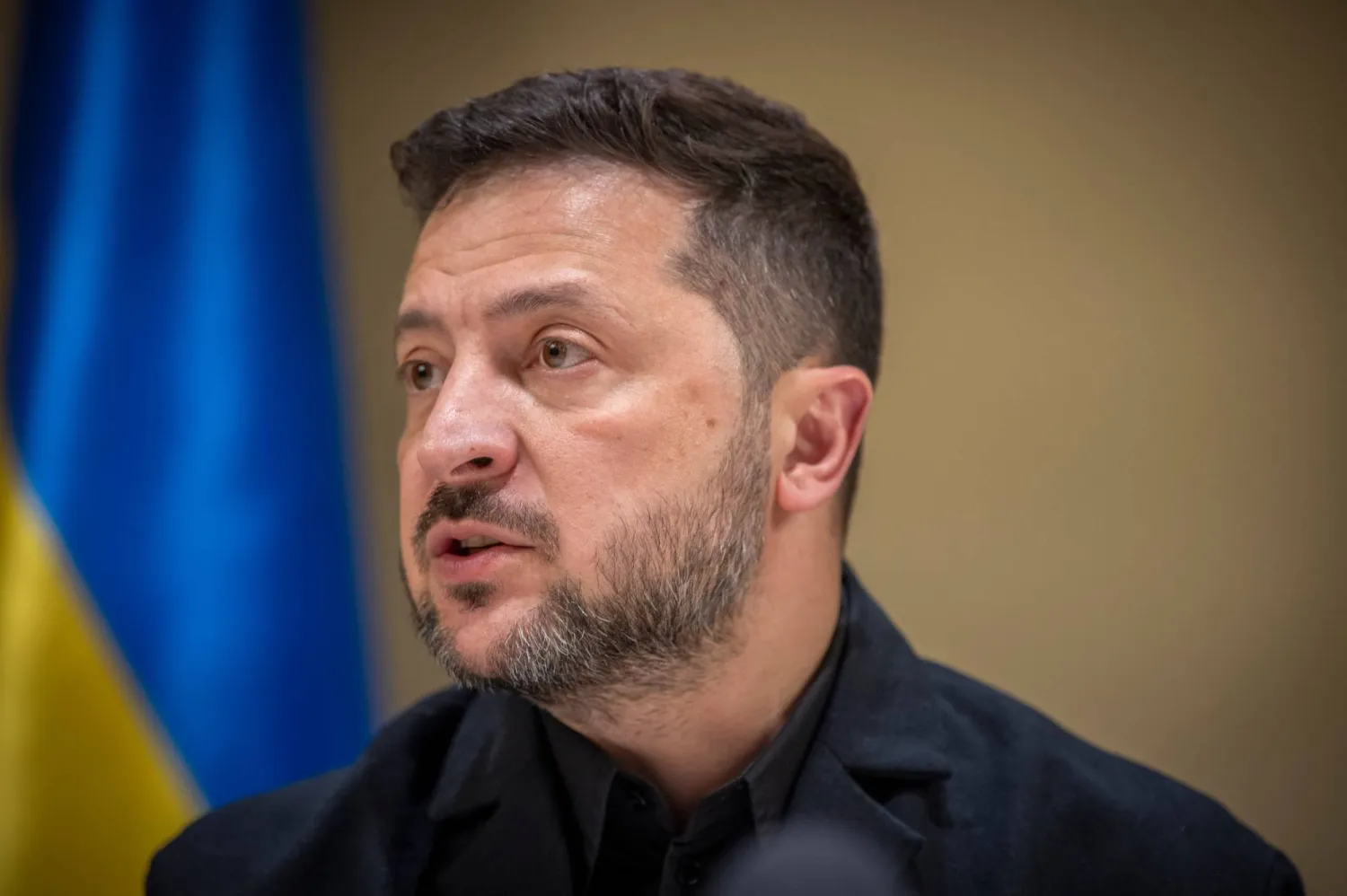
Ukraine's newly appointed Defense Minister Mykhailo Fedorov attends a parliamentary session in Kyiv, Ukraine, 14 January 2026. (EPA)
TT

Ukraine’s New Defense Minister Reveals Scale of Desertions as Millions Avoid the Draft

Ukraine's newly appointed Defense Minister Mykhailo Fedorov attends a parliamentary session in Kyiv, Ukraine, 14 January 2026. (EPA)

Wide-scale desertions and 2 million draft-dodgers are among a raft of challenges facing Ukraine's military as Russia presses on with its invasion of its neighbor after almost four years of fighting, the new defense minister said Wednesday.

Mykhailo Fedorov told Ukraine's parliament that other problems facing Ukraine’s armed forces include excessive bureaucracy, a Soviet-style approach to management, and disruptions in the supply of equipment to troops along the about 1,000-kilometer (600-mile) front line.

“We cannot fight a war with new technologies but an old organizational structure,” Fedorov said.

He said the military had faced some 200,000 troop desertions and draft-dodging by around 2 million people.

President Volodymyr Zelenskyy appointed 34-year-old Fedorov at the start of the year. The former head of Ukraine’s digital transformation policies is credited with spearheading the army's drone technology and introducing several successful e-government platforms.

His appointment was part of a broad government reshuffle that the Ukrainian leader said aimed to sharpen the focus on security, defense development and diplomacy amid a new US-led push to find a peace settlement.

Fedorov said the defense ministry is facing a shortfall of 300 billion hryvnia ($6.9 billion) in funding needs.

The European Union will dedicate most of a massive new loan program to help fund Ukraine’s military and economy over the next two years, European Commission President Ursula von der Leyen said Wednesday.

Fedorov said Ukraine’s defense sector has expanded significantly since Russia’s full-scale invasion in February 2022. At the start of the war, he said, the country had seven private drone companies and two firms developing electronic warfare systems. Today, he said, there are nearly 500 drone manufacturers and about 200 electronic warfare companies in Ukraine.

He added that some sectors have emerged from scratch, including private missile producers, which now number about 20, and more than 100 companies manufacturing ground-based robotic systems.


France Explores Sending Eutelsat Terminals to Iran Amid Internet Blackout

 Protesters hold up placards with pictures of victims as they demonstrate in support of anti-government protests in Iran, outside Downing Street, in London, Wednesday, Jan. 14, 2026. (AP)
Protesters hold up placards with pictures of victims as they demonstrate in support of anti-government protests in Iran, outside Downing Street, in London, Wednesday, Jan. 14, 2026. (AP)
TT

France Explores Sending Eutelsat Terminals to Iran Amid Internet Blackout

 Protesters hold up placards with pictures of victims as they demonstrate in support of anti-government protests in Iran, outside Downing Street, in London, Wednesday, Jan. 14, 2026. (AP)
Protesters hold up placards with pictures of victims as they demonstrate in support of anti-government protests in Iran, outside Downing Street, in London, Wednesday, Jan. 14, 2026. (AP)

France is looking into sending Eutelsat satellite terminals to Iran to help citizens after Iranian authorities imposed a blackout of internet services in a bid to quell the country's most violent domestic unrest in decades.

"We are exploring all options, and the one you have mentioned is among them," French Foreign Minister Jean-Noel Barrot said on Wednesday in ‌the lower house ‌after a lawmaker asked whether France ‌would ⁠send Eutelsat ‌gear to Iran.

Backed by the French and British governments, Eutelsat owns OneWeb, the only low Earth orbit constellation, or group of satellites, besides Elon Musk's Starlink.

The satellites are used to beam internet service from space, providing broadband connectivity to businesses, governments and consumers in underserved areas.

Iranian authorities in recent days have ⁠launched a deadly crackdown that has reportedly killed thousands during protests against clerical rule, ‌and imposed a near-complete shutdown of internet ‍service.

Still, some Iranians have ‍managed to connect to Starlink satellite internet service, three people ‍inside the country said.

Even Starlink service appears to be reduced, Alp Toker, founder of internet monitoring group NetBlocks said earlier this week.

Eutelsat declined to comment when asked by Reuters about Barrot's remarks and its activities in Iran.

Starlink’s more than 9,000 satellites allow higher speeds than Eutelsat's fleet of over 600, ⁠and its terminals connecting users to the network are cheaper and easier to install.

Eutelsat also provides internet access to Ukraine's military, which has relied on Starlink to maintain battlefield connectivity throughout the war with Russia.

Independent satellite communications adviser Carlos Placido said OneWeb terminals are bulkier than Starlink’s and easier to jam.

"The sheer scale of the Starlink constellation makes jamming more challenging, though certainly not impossible," Placido said. "With OneWeb it is much easier to predict which satellite will become online over a given ‌location at a given time."


China Says It Opposes Outside Interference in Iran’s Internal Affairs

Iranians walk next to a billboard reading "Iran is our Homeland" at Enqelab Square in Tehran, Iran, 13 January 2026. (EPA)
TT

China Says It Opposes Outside Interference in Iran’s Internal Affairs

Iranians walk next to a billboard reading "Iran is our Homeland" at Enqelab Square in Tehran, Iran, 13 January 2026. (EPA)

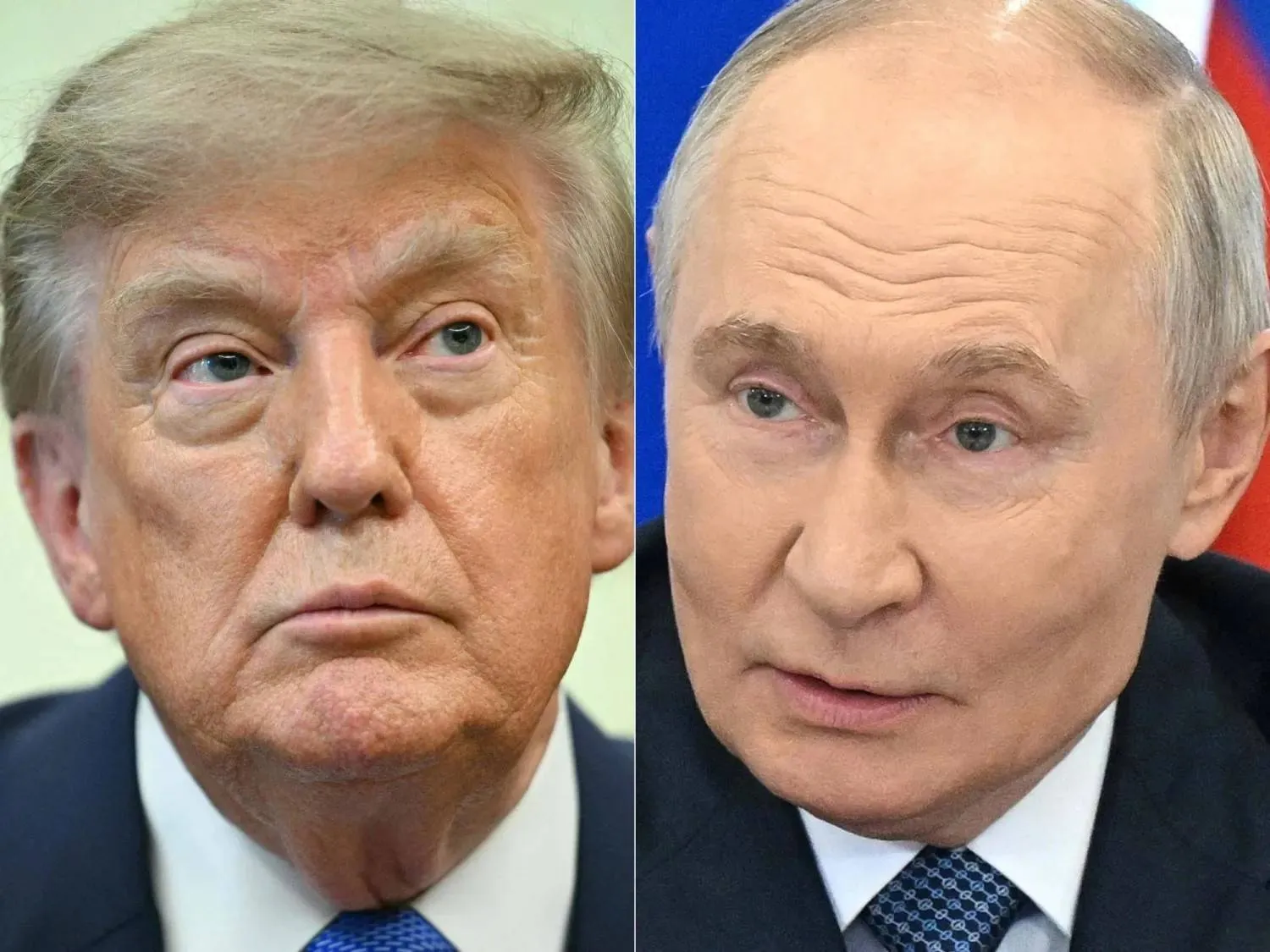
China opposes any outside interference in Iran's ​internal affairs, the Chinese foreign ministry said on Wednesday, after US President Donald Trump warned that Washington ‌would take "very ‌strong action" ‌against Tehran.

China ⁠does ​not ‌condone the use or the threat of force in international relations, Mao Ning, spokesperson at ⁠the Chinese foreign ministry, said ‌at a ‍regular ‍news conference when ‍asked about China's position following Trump's comments.

Trump told CBS News in ​an interview that the United States would take "very ⁠strong action" if Iran starts hanging protesters.

Trump also urged protesters to keep protesting and said that help was on the way.