


Lebanon’s Hariri Steps Away from Politics, Upending Election Landscape

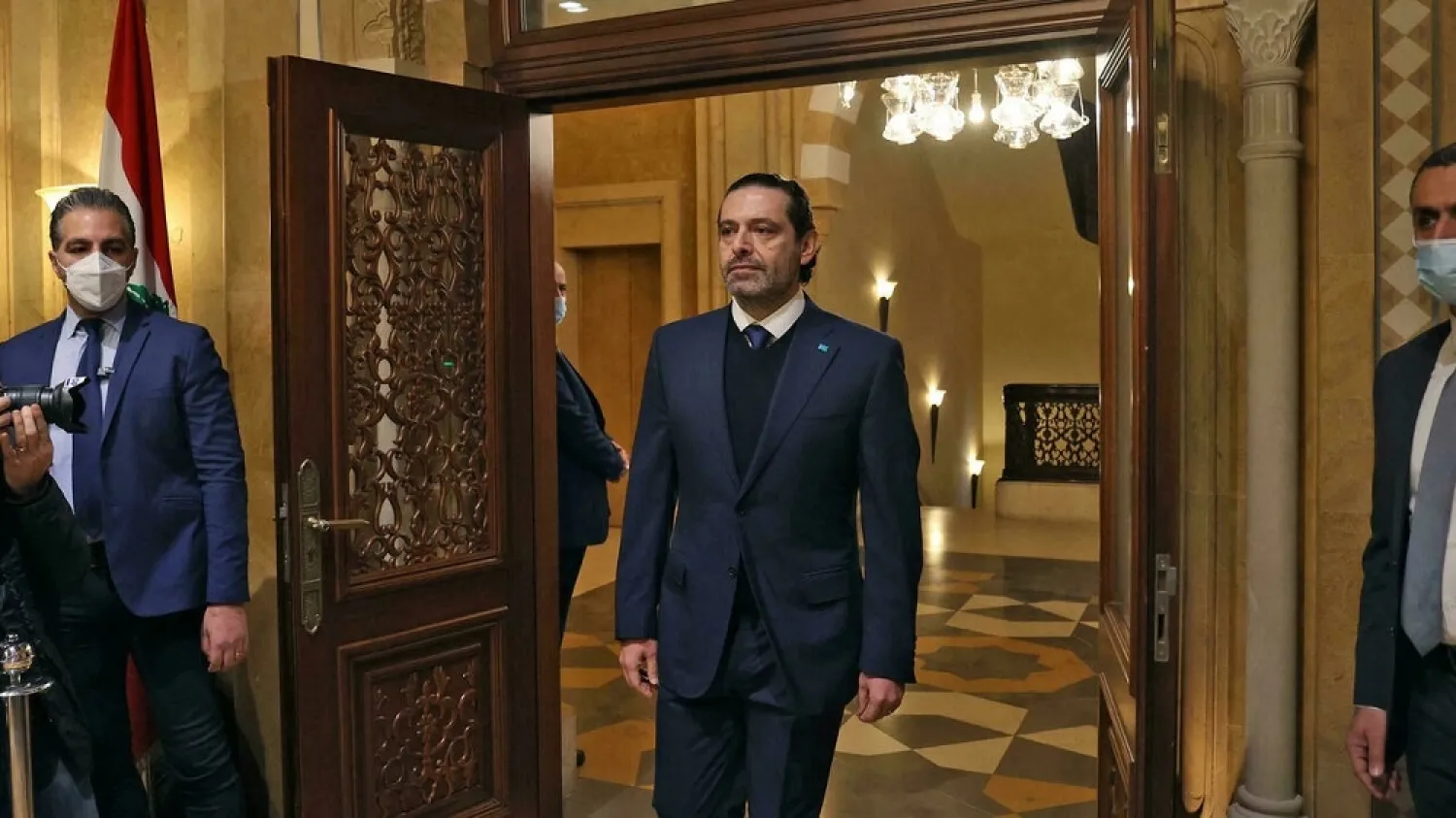
 Lebanon's former Prime Minister Saad Hariri arrives for a press conference in the capital Beirut on January 24, 2022. (AFP)
Lebanon's former Prime Minister Saad Hariri arrives for a press conference in the capital Beirut on January 24, 2022. (AFP)
TT

Lebanon’s Hariri Steps Away from Politics, Upending Election Landscape

 Lebanon's former Prime Minister Saad Hariri arrives for a press conference in the capital Beirut on January 24, 2022. (AFP)
Lebanon's former Prime Minister Saad Hariri arrives for a press conference in the capital Beirut on January 24, 2022. (AFP)

Lebanese Sunni leader Saad al-Hariri said on Monday he was stepping back from political life and would not run in the parliamentary election, turning Lebanon's sectarian politics on its head as the country grapples with a financial crisis.

Hariri, three times prime minister, also called on his party not to run any candidates in May's vote, indicating several factors were behind his decision, including Iranian influence -- a reference to the Hezbollah party.

Hariri's Mustaqbal Movement has long been the biggest representative of the Sunni community, controlling one of the largest blocs in parliament that also included members of other sects - seats which others can now win.

The move injects huge uncertainty into Lebanese politics just months ahead of the election, in which Hezbollah's adversaries had hoped to overturn a majority it won with its allies in 2018.

Some analysts have said a boycott by Lebanon's largest Sunni movement, which would leave the Sunni political scene in disarray, may lead to calls for a delay.

In a televised address, Hariri said he had decided to "suspend any role in power, politics and parliament", his voice breaking with emotion as he spoke in front of a portrait of his father, Rafik al-Hariri, who was assassinated in 2005.

"I am convinced that there is no room for any positive opportunity for Lebanon in light of Iranian influence, international disarray, national division, sectarianism, and the collapse of the state," he said.

While Hariri has remained Lebanon's leading Sunni since inheriting his father's political mantle, his political fortunes have waned in recent years. Mustaqbal lost a third of its seats in 2018.

Walid Jumblatt, Lebanon's leading Druze politician, told Reuters the announcement was "very sad because we are losing a major pillar of independence and of moderation".

"It means a free hand for Hezbollah and the Iranians," he added.

Hariri's announcement comes as Lebanon suffers an economic meltdown, which the World Bank has described as one of the sharpest ever globally. The sectarian elite has failed to take steps to address the crisis even as the bulk of the population has fallen into poverty.

The price of compromise

Mohanad Hage Ali, a fellow at the Carnegie Middle East Center, said a boycott by Hariri "pulls rug from under the whole process, and would increase speculation that (the election) might not happen".

Hariri's early years in politics were defined by confrontation with Lebanese allies of Syria and Iran, chief among them Hezbollah. He led a Western-backed alliance called "March 14".

Tensions spilled into a brief armed conflict in 2008, during which Hezbollah took over Beirut.

In his speech, Hariri said his goal of avoiding civil war in Lebanon had forced compromises on him, a reference to understandings with Hezbollah and a deal that made one of its allies, politician Michel Aoun, president in 2016.

Hariri became prime minister under that agreement for a second time.

Avoiding civil war "was the reason for every step I took, it was also the reason I lost my personal wealth, some of my foreign friendships, many of my national alliances, some comrades and even brothers", Hariri said, a reference to his brother Bahaa, a fierce critic of his policy towards Hezbollah.



EU Condemns Israel's West Bank Control Measures

The Israeli settlement of Har Homa, seen from the West Bank city of Bethlehem, Tuesday, Dec. 17, 2024. (AP)
TT

EU Condemns Israel's West Bank Control Measures

The Israeli settlement of Har Homa, seen from the West Bank city of Bethlehem, Tuesday, Dec. 17, 2024. (AP)

The European Union on Monday condemned new Israeli measures to tighten control of the West Bank and pave the way for more settlements in the occupied Palestinian territory, AFP reported.

"The European Union condemns recent decisions by Israel's security cabinet to expand Israeli control in the West Bank. This move is another step in the wrong direction," EU spokesman Anouar El Anouni told journalists.


Atrocities in Sudan's El-Fasher Were 'Preventable Human Rights Catastrophe'

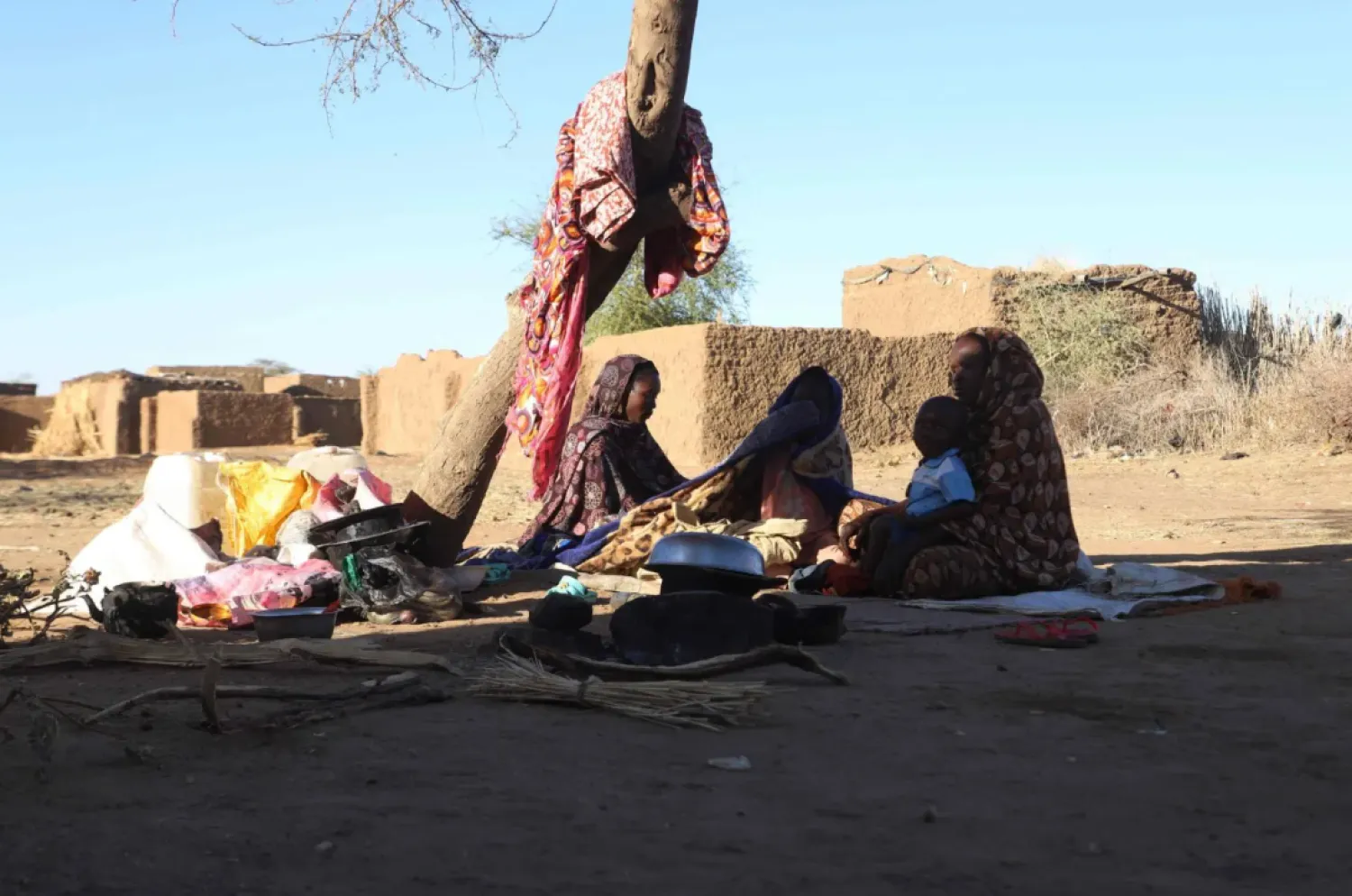
Sudanese displaced people who left El Fasher after its fall, sit in the shade in Tawila at the Rwanda camp reception point on December 17, 2025. (Photo by AFP)
TT

Atrocities in Sudan's El-Fasher Were 'Preventable Human Rights Catastrophe'

Sudanese displaced people who left El Fasher after its fall, sit in the shade in Tawila at the Rwanda camp reception point on December 17, 2025. (Photo by AFP)

The atrocities unleashed on El-Fasher in Sudan's Darfur region last October were a "preventable human rights catastrophe", the United Nations said Monday, warning they now risked being repeated in the neighbouring Kordofan region.


"My office sounded the alarm about the risk of mass atrocities in the besieged city of El-Fasher for more than a year ... but our warnings were ignored," UN rights chief Volker Turk told the Human Rights Council in Geneva.


He added that he was now "extremely concerned that these violations and abuses may be repeated in the Kordofan region".


Arab League Condemns Israel's Decisions to Alter Legal, Administrative Status of West Bank

A general view shows the opening session of the meeting of Arab foreign ministers at the Arab League Headquarters (Reuters)
TT

Arab League Condemns Israel's Decisions to Alter Legal, Administrative Status of West Bank

A general view shows the opening session of the meeting of Arab foreign ministers at the Arab League Headquarters (Reuters)

The General Secretariat of the Arab League strongly condemned decisions by Israeli occupation authorities to impose fundamental changes on the legal and administrative status of the occupied Palestinian territories, particularly in the West Bank, describing them as a dangerous escalation and a flagrant violation of international law, international legitimacy resolutions, and signed agreements, SPA reported.

In a statement, the Arab League said the measures include facilitating the confiscation of private Palestinian property and transferring planning and licensing authorities in the city of Hebron and the area surrounding the Ibrahimi Mosque to occupation authorities.

It warned of the serious repercussions of these actions on the rights of the Palestinian people and on Islamic and Christian holy sites.

The statement reaffirmed the Arab League’s firm support for the legitimate rights of the Palestinian people, foremost among them the establishment of their independent state on the June 4, 1967 borders, with East Jerusalem as its capital.