


Virus-ravaged Iran Finds Brief Respite with Mass Vaccination

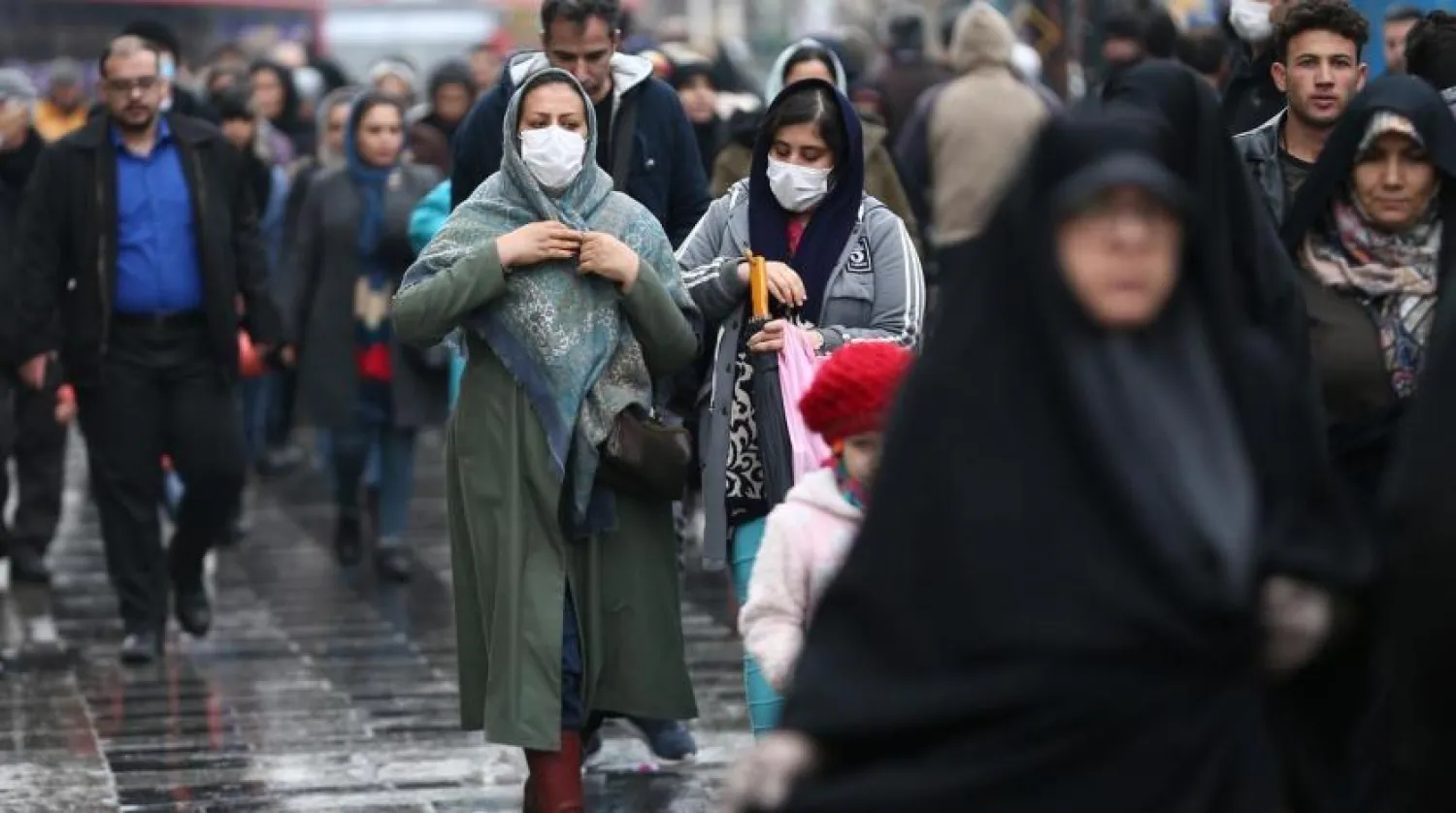
FILE PHOTO: Iranian women wear protective masks to prevent contracting a coronavirus, as they walk at Grand Bazaar in Tehran, Iran February 20, 2020. WANA (West Asia News Agency)/Nazanin Tabatabaee via REUTERS
TT

Virus-ravaged Iran Finds Brief Respite with Mass Vaccination

FILE PHOTO: Iranian women wear protective masks to prevent contracting a coronavirus, as they walk at Grand Bazaar in Tehran, Iran February 20, 2020. WANA (West Asia News Agency)/Nazanin Tabatabaee via REUTERS

As much of the world sees vaccination slowing and infections soaring with the spread of omicron, Iran has found a rare, if fleeting, respite from the anxiety and trauma of the pandemic.

After successive virus waves pummeled the country for nearly two years, belated mass vaccination under a new, hard-line president has, for a brief moment, left the stricken nation with a feeling of apparent safety.

Now, the specter of an omicron-fueled surge looms large. Hospitals are preparing for the worst as infections tick upward after a months-long lull. But so far, the variant has not battered the Iranian Republic as it has many Western countries where most adults got jabs a year ago, The Associated Press said.

Drastic infection surges among the inoculated from the United States to Russia have revealed the vaccine's declining defenses against infection even as its protection against hospitalization and death remains strong. Meanwhile, Iranians have received doses more recently and are feeling off the hook with their immunity still robust.

“A large number of people already have contracted the virus and huge vaccination has taken place in recent months,” health official Moayed Alavian said in an attempt to explain the sharp drop in infections easing the burden on Iran’s overwhelmed health system.

The virus has killed over 132,000 people by Iran’s official count — the highest national toll in the Middle East.

Iran’s recently elected president, conservative cleric Ebrahim Raisi, has made it a mission to expedite imports of foreign-made COVID-19 vaccines. With hard-liners in control of all branches of government, the new administration is fast fulfilling a task that had been vexed by power struggles during former President Hassan Rouhani’s term.

The contrast is not lost on ordinary Iranians.

“I do not know what happened,” said Reza Ghasemi, a Tehran taxi driver. “Suddenly vaccination happened in a widespread and quick way after Raisi came to office.”
“By the way,” he added, “I am thankful.”

But skeptics question the presidents' starkly different pandemic responses, criticizing the human cost of the country's factional rivalries.

“We delayed vaccination because of political issues,” reformist lawmaker Masoud Pezeshkian bluntly said last September.

Former President Donald Trump’s decision to withdraw America from Tehran’s landmark nuclear deal with world powers and pile on sanctions doomed the relatively moderate President Rouhani and his political camp.

Talks to revive the nuclear deal floundered over the past year, deepening mistrust of the West as hopes for quick sanctions relief faded.

With anti-American hostility simmering, Supreme Leader Ayatollah Ali Khamenei banned the import of Western shots a year ago. Hard-liners swept the parliament and railed against American-made vaccines even as virus deaths shattered records.

Scrambling to contain a vicious virus wave that inundated hospitals with intubated patients last summer, authorities urged Iranians to get one of the country’s five domestically produced shots instead of foreign alternatives.

Rouhani’s health officials struggled as information they provided was publicly contradicted, leading to conflicting messaging and leaving the vaccine program in shambles. Desperate Iranians flocked to neighboring Armenia for spare doses. In the end, Rouhani’s government distributed just 5 million shots.

Now under Raisi, Iran is riding high on its successes against COVID-19. Cases have fallen to about 7,000 a day from some 40,000 just months before. The death toll plummeted to 20 a day this month from peaks of over 700. His administration has provided 180 million vaccines since taking the reins in August.

More than 88% of all of those eligible for vaccines have been fully vaccinated. Iran has administered booster shoots to 20% of its population. Last week the government announced it would make vaccines available to children under 18.

Like many middle-income countries, Iran has relied on Sinopharm, the state-backed Chinese vaccine, but offers citizens a smorgasbord of other shots to choose from — Oxford-AstraZeneca, Russia’s Sputnik V, Indian firm Bharat’s Covaxin and its homegrown COVIran Barekat shot.

In a sign that resistance toward Western vaccines has softened, British-Swedish AstraZeneca makes up a substantial amount of Iran's inoculations. Although Moderna and Pfizer-BioNTech remain forbidden, some Iranians have described receiving the American-made shots through a booming black market.

While Raisi gets credit for a triumphant inoculation program, observers note that the campaign's foundations, including vaccine-sharing agreements and supply issues, were set under Rouhani.

“Under Raisi," Health Ministry spokesman Alireza Raisi said in September, “our past contracts have come into practice."

The groundwork for public acceptance was laid long before.

Iran's historically robust national vaccination program grew out of its battles against disease outbreaks from cholera to polio. In response to the El Tor strain of cholera that spawned a pandemic through the 1960s, Iran produced millions of vaccine doses, distributed American antibiotics to pilgrims and controlled the spread.

Coronavirus vaccination marks the nation’s first mass inoculation campaign outside of childhood illnesses since the 1979 Revolution that toppled the Western-backed shah.

Although the usual flood of misinformation about coronavirus shots fills Iranian social media, only a small percentage of Iran’s population has shunned the shot.

The climbing vaccination rate has fueled a sense among citizens that they have overcome the worst of the crisis. Virus restrictions — and public compliance with health measures — have notably relaxed. Tehran’s cafes, markets and metro stations are bustling with maskless patrons. Last week, Raisi increased spectator capacity at major sporting events and trade shows.

“I think the disease is over,” declared Masoud Navabi, a maskless 39-year-old delivery worker in downtown Tehran.

But authorities fear a nightmare wave of infection as omicron spreads. Iran recorded its first three deaths from the variant this month. The central city of Ardalan was classified on Wednesday as the country's first high-infection “red zone” because of the variant.

The country faces its sternest test in the next months as it marks the anniversary of its 1979 Revolution and Nowruz, the Persian New Year. The events typically involve massive street celebrations and gatherings.

The country's modest success against the virus has now given way to uncertainty, officials say. A recent uptick in cases reveals how fragile its gains against the virus can be.
“All (medical) centers should be on alert," Deputy Health Minister Saeed Karimi warned. “This is an alarm bell.”



Top Trump Iran Negotiator Says Visits US Aircraft Carrier in Middle East

US Special Envoy Steve Witkoff delivers a press conference upon the signing of the declaration on deploying post-ceasefire force in Ukraine, during the so-called "Coalition of the Willing" summit, at the Elysee Palace in Paris, France, January 6, 2026. (Reuters)
TT

Top Trump Iran Negotiator Says Visits US Aircraft Carrier in Middle East

US Special Envoy Steve Witkoff delivers a press conference upon the signing of the declaration on deploying post-ceasefire force in Ukraine, during the so-called "Coalition of the Willing" summit, at the Elysee Palace in Paris, France, January 6, 2026. (Reuters)

US President Donald Trump's lead Iran negotiator Steve Witkoff on Saturday said he visited the USS Abraham Lincoln aircraft carrier currently in the Arabian Sea, with Washington and Tehran due to hold further talks soon.

"Today, Adm. Brad Cooper, Commander of US Naval Forces Central Command, Jared Kushner, and I met with the brave sailors and Marines aboard the USS Abraham Lincoln, her strike group, and Carrier Air Wing 9 who are keeping us safe and upholding President Trump's message of peace through strength," said Witkoff in a social media post.

Iranian Foreign Minister Abbas Araghchi said on Saturday he hoped talks with the United States would resume soon, while reiterating Tehran's red lines and warning against any American attack.


Israel’s Netanyahu Expected to Meet Trump in US on Wednesday and Discuss Iran

Israeli Prime Minister Benjamin Netanyahu delivers a speech during a special session to mark the 77th anniversary of the Knesset's establishment and the 60th anniversary of the dedication of the current building at the Knesset, the Israeli parliament, in Jerusalem, 02 February 2026. (EPA)
TT

Israel’s Netanyahu Expected to Meet Trump in US on Wednesday and Discuss Iran

Israeli Prime Minister Benjamin Netanyahu delivers a speech during a special session to mark the 77th anniversary of the Knesset's establishment and the 60th anniversary of the dedication of the current building at the Knesset, the Israeli parliament, in Jerusalem, 02 February 2026. (EPA)

Israeli Prime Minister Benjamin Netanyahu is expected to meet US President Donald Trump on Wednesday in Washington, where they will discuss negotiations with Iran, Netanyahu's office said on Saturday.

Iranian and US officials held indirect nuclear ‌talks in the ‌Omani capital ‌Muscat ⁠on Friday. ‌Both sides said more talks were expected to be held again soon.

A regional diplomat briefed by Tehran on the talks told Reuters Iran insisted ⁠on its "right to enrich uranium" ‌during the negotiations with ‍the US, ‍and that Tehran's missile capabilities ‍were not raised in the discussions.

Iranian officials have ruled out putting Iran's missiles - one of the largest such arsenals in the region - up ⁠for discussion, and have said Tehran wants recognition of its right to enrich uranium.

"The Prime Minister believes that any negotiations must include limiting ballistic missiles and halting support for the Iranian axis," Netanyahu's office said in a ‌statement.


Italy FM Rules Out Joining Trump’s ‘Board of Peace’

Italy's Minister for Foreign Affairs Antonio Tajani speaks to the press during the EPP Leaders’ meeting, in Zagreb, Croatia, 30 January 2026. (EPA)
TT

Italy FM Rules Out Joining Trump’s ‘Board of Peace’

Italy's Minister for Foreign Affairs Antonio Tajani speaks to the press during the EPP Leaders’ meeting, in Zagreb, Croatia, 30 January 2026. (EPA)

Italy will not take part in US President Donald Trump's "Board of Peace", Italian Foreign Minister Antonio Tajani said Saturday, citing "insurmountable" constitutional issues.

Trump launched his "Board of Peace" at the World Economic Forum in Davos in January and some 19 countries have signed its founding charter.

But Italy's constitution bars the country from joining an organization led by a single foreign leader.

Prime Minister Giorgia Meloni, a Trump ally, last month noted "constitutional problems" with joining, but suggested Trump could perhaps reopen the framework "to meet the needs not only of Italy, but also of other European countries".

Tajani appeared Saturday to rule that out.

"We cannot participate in the Board of Peace because there is a constitutional limit," he told the ANSA news agency.

"This is insurmountable from a legal standpoint," he said, the day after meeting US Secretary of State Marco Rubio and US Vice President JD Vance at the Olympics in Milan.

Although originally meant to oversee Gaza's rebuilding, the board's charter does not limit its role to the Palestinian territory and appears to want to rival the United Nations.