


France's Macron Takes Own Path, Seeks Dialogue with Russia

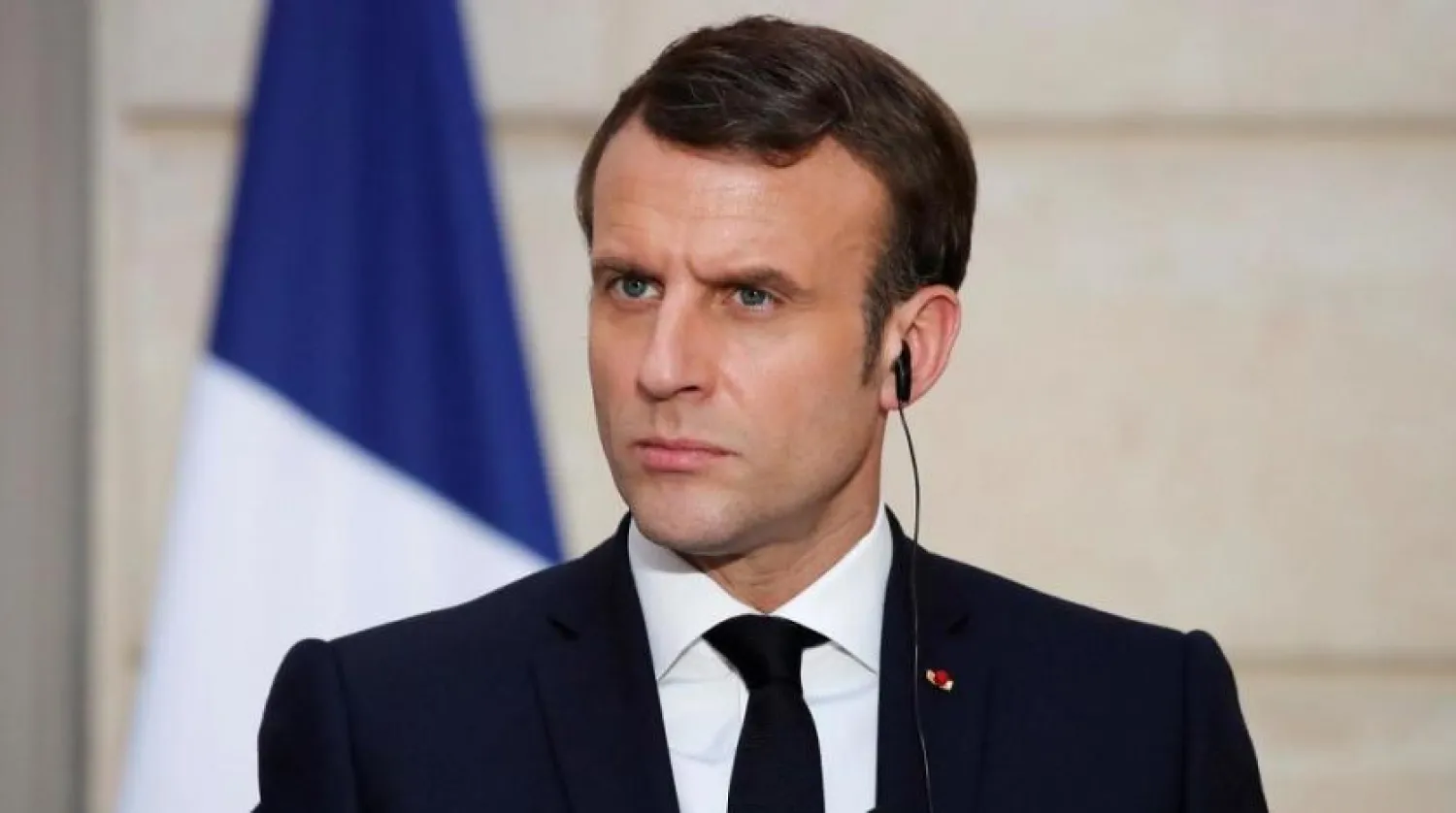
French President Emmanuel Macron. (Reuters file photo)
TT

France's Macron Takes Own Path, Seeks Dialogue with Russia

French President Emmanuel Macron. (Reuters file photo)

There’s still room for diplomacy in the Ukrainian crisis. At least that’s the conviction of French President Emmanuel Macron, who continues to push for dialogue with Russia despite signs pointing to a potential war.

His stance reflects France’s post-World War II tradition of carving its own geopolitical path, refusing to line up blindly behind the US. It’s also part of Macron’s domestic political strategy amid campaigning for April’s presidential election, where nationalists are setting the agenda and a war in Ukraine could prove an unwelcome distraction.

Macron is preparing to talk Friday with Vladimir Putin, and Macron’s presidential palace hosted marathon talks Wednesday between Russian and Ukrainian advisers, the first such face-to-face negotiations since Russia has massed troops near Ukraine in recent weeks, The Associated Press said.

Wednesday’s talks among Russian, Ukrainian, French and German advisers appeared to buy all sides more time, as they agreed to meet again in two weeks. But France’s diplomacy-focused strategy complicates efforts by the US and NATO to show a tough, united front against Russia. And experts question whether it will be enough to deter a Russian invasion of Ukraine.

Macron’s call with Putin on Friday morning has two goals, French government spokesman Gabriel Attal said: “to continue dialogue” and to “push Russia to clarify its position and the aim of (military) maneuvering.”

Moscow has denied it is planning an assault, but it has moved an estimated 100,000 troops near Ukraine in recent weeks and is holding military drills at multiple locations in Russia. That has led the United States and its NATO allies to prepare for the worst.

Macron “is at the heart of efforts towards de-escalation” and will also speak to Ukrainian President Volodymyr Zelenskyy in the coming days, Attal said.

French expert on geopolitics Dominique Moïsi told The Associated Press that Macron has tried since in power “to reset the relation between France and Russia, and to do it based on a mix of being open and being firm... This is very laudable, but did it work? Will it work this time? That’s the challenge.”

European diplomacy has helped cool tensions in the past. Wednesday’s talks took place in the so-called “Normandy format,” which helped to ease hostilities in 2015, a year after Putin ordered the annexation of Ukraine’s Crimean Peninsula and the Russia-backed insurgency began in eastern Ukraine.

Soon after his election in 2017, Macron invited Putin to a meeting in the sumptuous Palace of Versailles, letting him be “very impressed by the grandeur of France,” according to the Russian’s president’s own words.

Macron also invited Putin to his summer residence at the Fort de Bregancon, on the French Riviera, in a rare honor meant to give a boost to peace talks with Ukraine during summer 2019.

“Macron has shown extreme confidence in his ability to seduce, to charm world leaders and start with them a dialogue,” Moïsi said.

It hasn’t always worked. His unlikely bond with Donald Trump early in their presidencies quickly soured. And despite similar world views, relations between Macron and President Joe Biden were deeply damaged by a secret US-Australia-UK submarine deal last year that squeezed France out of the market and undermined the 250-year-old alliance between the US and France.

Macron said it was a “good thing” that the US and Russia have resumed talks in recent weeks, but noted he did not see any concrete results. “It’s because a discussion with Russia is always difficult,” he added, citing his own efforts to establish a personal relationship with Putin.

The French position has two question marks, Moïsi said: “Will Macron have such power of seduction toward Putin?” and “Can France rally support from a large number of European countries?”

Countries that used to be under Soviet influence are particularly worried about Russia’s intentions in Ukraine and want a tougher line.

Last June, Macron and former German Chancellor Angela Merkel tried to press EU leaders to hold a summit with Putin. The plan was rejected, notably by the Baltic countries and Poland, amid concerns about meeting with the Russian leader at a time when Europe’s relations with Moscow were so poor.

But Macron has made in recent days a fresh push for such a high-level meeting. He insisted that it wouldn’t disturb ongoing negotiation efforts from the US and NATO.
“Each of these channels must be exploited until the end to get Russia back into a process of de-escalation, to get guarantees, and allow us to build a new (European) security and stability order,” he said this week.

He also pressed last week for a new EU security plan to ease tensions with Russia. Some EU partners expressed concerns that this would make things even more complex, and undermine cooperation with the US.

The French presidency stressed that Paris is working in close coordination with Washington and EU partners to be ready for a joint response if there were to be a Russian offensive in Ukraine. In such a case, “there will be retaliation and the cost (for Russia) will be very high,” Macron reaffirmed this week.

France also expressed its willingness to station troops in Romania as part of a NATO force. France's defense minister is on a visit Thursday to Romania, which has a border with Ukraine, for talks on “deepening” defense ties, including in “armaments cooperation.”

“Nothing that concerns European security can be discussed or decided without the full involvement of Europeans,” French foreign minister Jean-Yves Le Drian told EU lawmakers this week. “We are at the table. We are not simply on the menu.”



Top Trump Iran Negotiator Says Visits US Aircraft Carrier in Middle East

US Special Envoy Steve Witkoff delivers a press conference upon the signing of the declaration on deploying post-ceasefire force in Ukraine, during the so-called "Coalition of the Willing" summit, at the Elysee Palace in Paris, France, January 6, 2026. (Reuters)
TT

Top Trump Iran Negotiator Says Visits US Aircraft Carrier in Middle East

US Special Envoy Steve Witkoff delivers a press conference upon the signing of the declaration on deploying post-ceasefire force in Ukraine, during the so-called "Coalition of the Willing" summit, at the Elysee Palace in Paris, France, January 6, 2026. (Reuters)

US President Donald Trump's lead Iran negotiator Steve Witkoff on Saturday said he visited the USS Abraham Lincoln aircraft carrier currently in the Arabian Sea, with Washington and Tehran due to hold further talks soon.

"Today, Adm. Brad Cooper, Commander of US Naval Forces Central Command, Jared Kushner, and I met with the brave sailors and Marines aboard the USS Abraham Lincoln, her strike group, and Carrier Air Wing 9 who are keeping us safe and upholding President Trump's message of peace through strength," said Witkoff in a social media post.

Iranian Foreign Minister Abbas Araghchi said on Saturday he hoped talks with the United States would resume soon, while reiterating Tehran's red lines and warning against any American attack.


Israel’s Netanyahu Expected to Meet Trump in US on Wednesday and Discuss Iran

Israeli Prime Minister Benjamin Netanyahu delivers a speech during a special session to mark the 77th anniversary of the Knesset's establishment and the 60th anniversary of the dedication of the current building at the Knesset, the Israeli parliament, in Jerusalem, 02 February 2026. (EPA)
TT

Israel’s Netanyahu Expected to Meet Trump in US on Wednesday and Discuss Iran

Israeli Prime Minister Benjamin Netanyahu delivers a speech during a special session to mark the 77th anniversary of the Knesset's establishment and the 60th anniversary of the dedication of the current building at the Knesset, the Israeli parliament, in Jerusalem, 02 February 2026. (EPA)

Israeli Prime Minister Benjamin Netanyahu is expected to meet US President Donald Trump on Wednesday in Washington, where they will discuss negotiations with Iran, Netanyahu's office said on Saturday.

Iranian and US officials held indirect nuclear ‌talks in the ‌Omani capital ‌Muscat ⁠on Friday. ‌Both sides said more talks were expected to be held again soon.

A regional diplomat briefed by Tehran on the talks told Reuters Iran insisted ⁠on its "right to enrich uranium" ‌during the negotiations with ‍the US, ‍and that Tehran's missile capabilities ‍were not raised in the discussions.

Iranian officials have ruled out putting Iran's missiles - one of the largest such arsenals in the region - up ⁠for discussion, and have said Tehran wants recognition of its right to enrich uranium.

"The Prime Minister believes that any negotiations must include limiting ballistic missiles and halting support for the Iranian axis," Netanyahu's office said in a ‌statement.


Italy FM Rules Out Joining Trump’s ‘Board of Peace’

Italy's Minister for Foreign Affairs Antonio Tajani speaks to the press during the EPP Leaders’ meeting, in Zagreb, Croatia, 30 January 2026. (EPA)
TT

Italy FM Rules Out Joining Trump’s ‘Board of Peace’

Italy's Minister for Foreign Affairs Antonio Tajani speaks to the press during the EPP Leaders’ meeting, in Zagreb, Croatia, 30 January 2026. (EPA)

Italy will not take part in US President Donald Trump's "Board of Peace", Italian Foreign Minister Antonio Tajani said Saturday, citing "insurmountable" constitutional issues.

Trump launched his "Board of Peace" at the World Economic Forum in Davos in January and some 19 countries have signed its founding charter.

But Italy's constitution bars the country from joining an organization led by a single foreign leader.

Prime Minister Giorgia Meloni, a Trump ally, last month noted "constitutional problems" with joining, but suggested Trump could perhaps reopen the framework "to meet the needs not only of Italy, but also of other European countries".

Tajani appeared Saturday to rule that out.

"We cannot participate in the Board of Peace because there is a constitutional limit," he told the ANSA news agency.

"This is insurmountable from a legal standpoint," he said, the day after meeting US Secretary of State Marco Rubio and US Vice President JD Vance at the Olympics in Milan.

Although originally meant to oversee Gaza's rebuilding, the board's charter does not limit its role to the Palestinian territory and appears to want to rival the United Nations.