


Arab Coalition Refutes Houthi Claims of Attack on Saada Prison with Facts, Detailed Information

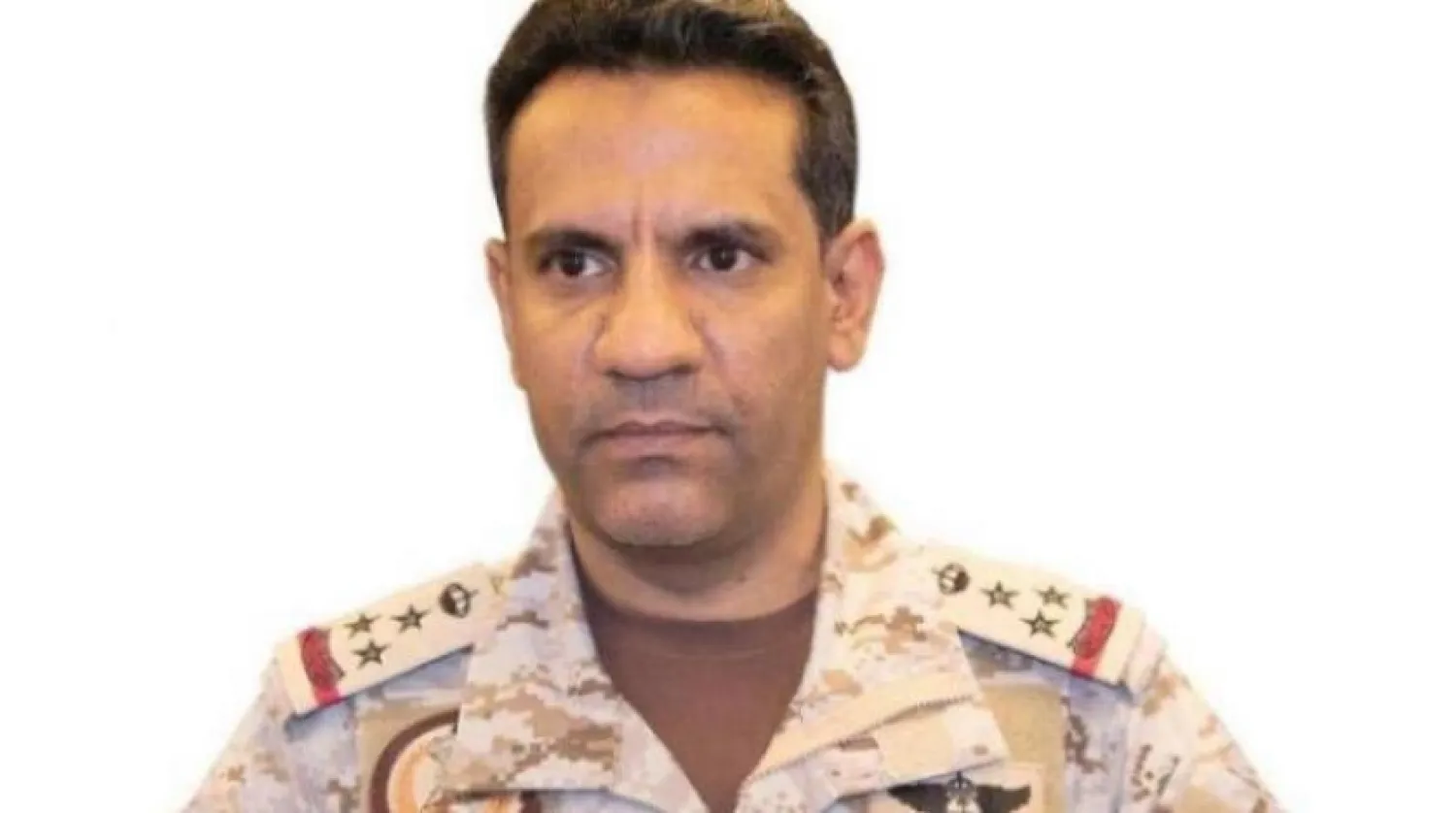
Coalition spokesman Brigadier General Turki Al-Malki. (Asharq Al-Awsat)
TT

Arab Coalition Refutes Houthi Claims of Attack on Saada Prison with Facts, Detailed Information

Coalition spokesman Brigadier General Turki Al-Malki. (Asharq Al-Awsat)

Saudi-led Arab coalition spokesman Brigadier General Turki Al-Malki stressed on Friday that the coalition did not target a prison in Yemen's Saada city earlier this month.

He accused the terrorist Iran-backed Houthi militias of spreading misleading information to the media in an attempt to manipulate the public and cover the real activity that was taking place at the facility in order to garner the sympathy of international agencies.

In a statement, he presented facts and detailed information collected by the Joint Forces Command of the Coalition regarding the Houthi claim. The information will be submitted to the Joint Incident Assessment Team (JIAT), Office for the Coordination of Humanitarian Affairs (OCHA) Yemen and International Committee of the Red Cross (ICRC).

There are four locations identified as prisons in the the Joint Forces Command’s No Strike List (NSL) in Saada city, which are being used by the terrorist Houthi militias, he continued. The closest prison is located 1.8 km away from the alleged location that was targeted.

The targeted location is a Special Security Camp in Saada, making it a legitimate military target. The Houthis have used it in their military activity and to launch cross-border attacks to target civilians and civilian objects, he stated.

"What was announced and disseminated by the terrorist Houthi militias in their media outlets is a blatant attempt to mislead the public opinion regarding the true nature of the location in an attempt to garner sympathy from UN organizations and INGOs," said Malki.

"Preparations are being made to invite OCHA Yemen and ICRC to visit the Joint Forces of the Coalition’s Headquarters to familiarize them with the true nature of the military location in question, discuss the misleading Houthi narrative," he added.

Both sides will "exchange the available information they posses regarding the statements by some organizations that they have visited the location of the claim."

The coalition, he said, has not received any requests from any UN organizations or INGOs to place the location of the claim on its No Strike List.

"The Joint Forces Command of the Coalition implements the highest targeting standards and highest international standards in its targeting mechanism and Rules of Engagement," stressed Malki.

"In case of any claims, the Joint Forces Command handles said claims with the highest consideration according to its internal mechanism and in a manner adhering to the International Humanitarian Law (IHL)," he continued.

"The terrorist Houthi militias bear the full responsibility in case they use civilians as human shields in their military locations or any case contrary to IHL rules concerning detention centers as stated in the Geneva Conventions."



OIC Condemns Israeli Decision to Ban 37 Aid Groups from Operating in Gaza

 The sun sets over a tent camp sheltering Palestinians displaced by the Israeli offensive, on New Year’ Eve in Khan Younis, southern Gaza Strip, December 31, 2025. (Reuters)
The sun sets over a tent camp sheltering Palestinians displaced by the Israeli offensive, on New Year’ Eve in Khan Younis, southern Gaza Strip, December 31, 2025. (Reuters)
TT

OIC Condemns Israeli Decision to Ban 37 Aid Groups from Operating in Gaza

 The sun sets over a tent camp sheltering Palestinians displaced by the Israeli offensive, on New Year’ Eve in Khan Younis, southern Gaza Strip, December 31, 2025. (Reuters)
The sun sets over a tent camp sheltering Palestinians displaced by the Israeli offensive, on New Year’ Eve in Khan Younis, southern Gaza Strip, December 31, 2025. (Reuters)

The General Secretariat of the Organization of Islamic Cooperation (OIC) strongly condemned on Wednesday Israel’s decision to prevent 37 international non-governmental organizations operating in the humanitarian and health sectors from carrying out their activities in Gaza.

The Secretariat stressed that these organizations “play an indispensable role in alleviating humanitarian suffering in Gaza.”

The OIC General Secretariat “warned of the grave consequences of this arbitrary measure, which is likely to dangerously exacerbate the catastrophic humanitarian situation in the Gaza Strip due to Israeli restrictions that hinder the entry of sufficient humanitarian and medical aid.”

It deemed the Israeli decision as “illegal and a “blatant violation of the principles of international humanitarian law and the advisory opinion of the International Court of Justice, which obliges the Israel to facilitate the work of international and humanitarian organizations and to allow the adequate and unhindered delivery of humanitarian assistance to the Gaza Strip.”

The OIC General Secretariat called on the international community “to take the necessary measures and exert effective pressure on Israeli authorities to reverse this decision, ensure the protection of humanitarian workers, and guarantee the freedom of humanitarian organizations to operate without restriction throughout the occupied Palestinian territory.”


Qatar, Kuwait Say Security of Saudi Arabia and GCC States Integral to Region

A general view of Kuwait City buildings, Kuwait, December 23, 2024. (Reuters)
TT

Qatar, Kuwait Say Security of Saudi Arabia and GCC States Integral to Region

A general view of Kuwait City buildings, Kuwait, December 23, 2024. (Reuters)

Qatar announced that it is following with great interest the ongoing developments and events in Yemen, reiterating its full support for the legitimate Yemeni government and the importance of preserving Yemen’s unity and territorial integrity, safeguarding the interests of the brotherly Yemeni people, and achieving their aspirations for security, stability, and development.

In a statement, the Qatari Ministry of Foreign Affairs stressed that the security of Saudi Arabia and the Gulf Cooperation Council states is integral to the security of Qatar, stemming from the deep-rooted brotherly ties and shared destiny that unite the GCC countries.

The ministry commended the statements issued by Saudi Arabia and the United Arab Emirates, noting that they reflect a commitment to prioritizing the region’s interests, boosting the principles of good neighborliness, and adhering to the foundations and principles enshrined in the Charter of the Gulf Cooperation Council.

Qatar will remain at the forefront of countries supporting efforts to promote dialogue and diplomacy as the optimal path to achieving prosperity, security, and stability for the region and its peoples, stressed the ministry.

Kuwait's foreign ministry issued a similar statement, saying the security of Saudi Arabia and GCC states is a fundamental pillar of Gulf collective security, rooted in the bonds of brotherhood and shared destiny among them.

It expressed continued support for regional and international efforts aimed at promoting dialogue and peace, emphasizing diplomacy as the most effective path to achieving security, stability, and lasting peace in the region.

Bahrain, chair of the current session of the GCC, praised the “pivotal role played by Saudi Arabia and the United Arab Emirates in supporting the security and stability of Yemen, stemming from their brotherly responsibilities and shared commitment to the security and stability of the Gulf region within the GCC framework.” 

The Bahraini Ministry of Foreign Affairs stressed its “confidence in the wisdom of the leaderships of Saudi Arabia and the UAE, and in their ability to contain any differences within the framework of the GCC, in line with the principles of the GCC based on solidarity, mutual understanding, and unity, serving the shared aspirations to instill security, stability, peace, and prosperity for the benefit of the region and its peoples.” 

The ministry reiterated Bahrain’s “firm and supportive stance toward all regional and international initiatives and efforts aimed at reaching a comprehensive and lasting political solution in Yemen, in accordance with the GCC initiative and its executive mechanism, the outcomes of the Comprehensive National Dialogue Conference, and relevant UN Security Council resolutions.” 

Jordan also praised Saudi Arabia and the UAE's roles in supporting Yemen.


Saudi Development Projects Fuel Growth in the Heart of Yemen

Saudi Arabia’s efforts through the SDRPY have emerged as a practical model for supporting Yemen’s path toward development and stability. (SPA)
TT

Saudi Development Projects Fuel Growth in the Heart of Yemen

Saudi Arabia’s efforts through the SDRPY have emerged as a practical model for supporting Yemen’s path toward development and stability. (SPA)

Saudi Arabia has provided Yemen with wide-ranging development and humanitarian support since the 1970s. The Kingdom has spared no effort to back Yemen's stability and prosperity, reflecting the fraternal ties, shared history, family bonds, and geographic proximity between the two neighbors, reported the Saudi Press Agency on Tuesday.

Building on that long-standing support, the Saudi Development and Reconstruction Program for Yemen (SDRPY) was established in mid-2018 by royal decree of Custodian of the Two Holy Mosques King Salman bin Abdulaziz Al Saud.

The SDRPY was launched with a strategic vision aimed at meeting Yemen’s development needs and aligning with the UN Sustainable Development Goals. The vision aims to apply global best practices in development and reconstruction to boost planning efficiency, improve implementation, and ensure sustainable impact.

The program’s development projects and initiatives complement Saudi Arabia's historical support for Yemen and follow a strategy focused on improving the efficiency and effectiveness of assistance through local, regional, and international partnerships.

These efforts are intended to support Yemen’s government and state institutions in achieving peace, stability, and reconstruction, improving living standards for the Yemeni people, and promoting sustainable development across the country.

The SDRPY incorporates sustainability principles into its development interventions, including building the capacity of Yemeni professionals across multiple sectors, deploying renewable energy technologies, and boosting effective community engagement to support stability and link development efforts with peacebuilding.

To date, the program has delivered 268 development projects and initiatives across eight key sectors: education, health, water, energy, transportation, agriculture and fisheries, government capacity-building, and development programs, covering 16 Yemeni governorates.

Health initiatives have boosted the sector’s capacities, benefiting around 4 million people, including the King Salman Medical and Educational City project in Al-Mahra. This project is among the largest efforts supporting Yemen’s health and education sectors, spanning one million square meters and including a fully integrated 110-bed hospital.

Another flagship project, Prince Mohammed bin Salman Hospital in the interim capital Aden, has a capacity of 270 beds and has delivered more than 3 million medical services since opening, in addition to specialized centers for cardiac care, dialysis, and maternal and child health.

In education, SDRPY has supported projects in 11 governorates, including Taiz, Aden, Socotra, Al-Mahra, Marib, Hadhramaut, Hajjah, Lahj, Abyan, Shabwah, and Al-Dhaleh.

Initiatives span general and higher education, as well as technical and vocational training. These include a development package for the University of Aden, the construction and equipping of medical, pharmacy, and nursing colleges at Taiz University, and the expansion of the University of Saba Region in Marib.

The SDRPY’s projects and initiatives have also strengthened water security and improved the efficiency of water distribution and management, with full coverage of water needs in Al-Ghaydah, 50% coverage in Socotra, and 10% coverage in Aden.

Transport-sector initiatives have benefited 14 million people. These include the rehabilitation of 150 kilometers of roads, such as the Al Abr Road, upgrades to border crossings including Al-Wadiah, rehabilitation of airports such as Aden International Airport and Al-Ghaydah International Airport, and expanded capacity at ports including Nashtoon and Socotra.

These projects have boosted connectivity, improved daily life, and supported commercial and economic activity by facilitating movement by land, sea, and air.

The SDRPY has also launched pioneering initiatives to support livelihoods, strengthen rural resilience, empower women and youth economically, revive and preserve heritage, restore historic buildings, build capacity in the cultural sector, and deliver targeted initiatives that further advance the development process.

Among these projects is the restoration of the historic Seiyun Palace to preserve it as a landmark and cultural center, while strengthening the capacity of Yemen’s government institutions as a key step toward enhancing stability and stimulating economic growth.

Overall, the SDRPY’s projects and initiatives are designed to meet citizens’ basic needs, support infrastructure across multiple sectors, and empower local communities, contributing to sustainable development and strengthening economic and social resilience across the governorates.

The program operates in coordination with the Yemeni government and local authorities, and in partnership with civil society organizations, international and UN agencies, the private sector, and local, regional, and international partners. It maintains five executive offices in Yemen to oversee project implementation on the ground.