


Amnesty Joins Rights Groups in Accusing Israel of Apartheid

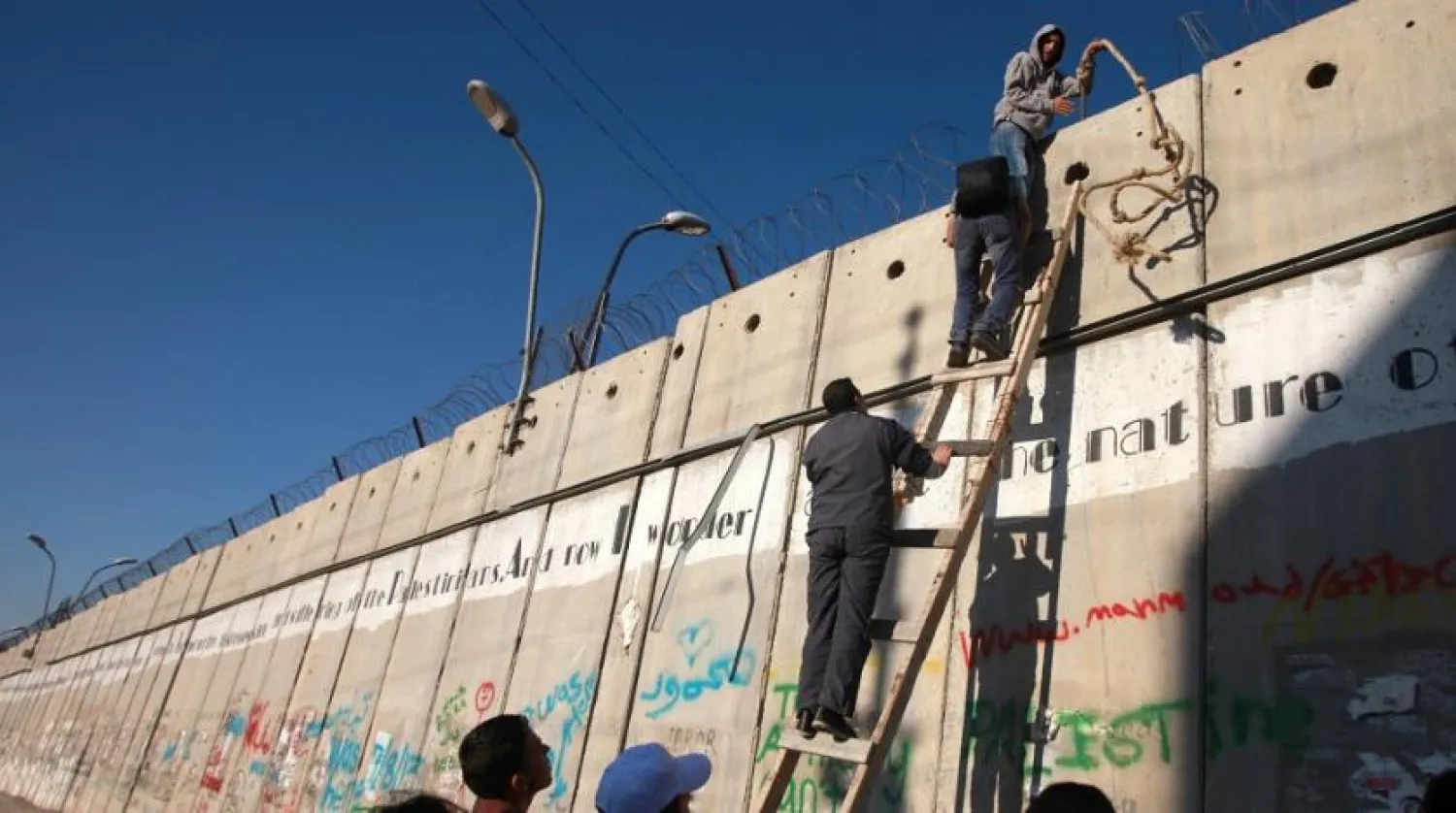
Palestinian men climb a section of Israel's separation barrier. (AFP file photo)
TT

Amnesty Joins Rights Groups in Accusing Israel of Apartheid

Palestinian men climb a section of Israel's separation barrier. (AFP file photo)

Amnesty International said Tuesday that Israel has maintained “a system of oppression and domination” over the Palestinians going all the way back to its establishment in 1948, one that meets the international definition of apartheid.

With the release of a 278-page report compiled over a period of four years, the London-based rights group joins Human Rights Watch and the Israeli rights group B'Tselem in accusing Israel of apartheid — both within its borders and in the occupied territories.

Their findings are part of a growing international movement to redefine the Israeli-Palestinian conflict as a struggle for equal rights rather than a territorial dispute. Those efforts have gained strength in the decade since the peace process ground to a halt, as Israel has consolidated its control over the occupied territories and soured on the idea of a Palestinian state.

Israel rejects any allegation of apartheid, saying its own Arab citizens enjoy equal rights. It granted limited autonomy to the Palestinian Authority at the height of the peace process in the 1990s and withdrew its soldiers and settlers from Gaza in 2005.

But Amnesty and the other groups say the very fragmentation of the territories in which Palestinians live is part of an overall regime of control designed to maintain Jewish hegemony from the Mediterranean Sea to the Jordan River.

They point to discriminatory policies within Israel and in annexed east Jerusalem, Israel's blockade of the Gaza Strip, which has been ruled by the Hamas militant group since 2007, and its de facto annexation of the West Bank, where it exerts overall control and is actively building and expanding Jewish settlements that most of the international community considers illegal.

Palestinians have accused Israel of apartheid for decades. The Palestinian Authority, which administers parts of the occupied West Bank and cooperates with Israel on security, welcomed the report.

Amnesty traces such policies back to the establishment of Israel in 1948. Around 700,000 Palestinians fled or were expelled during the Arab-Israeli war surrounding Israel's creation. They accounted for some 80% of the Palestinian population in what is now Israel. Israel barred the refugees from returning in order to maintain its Jewish majority.

The Palestinians remaining inside Israel lived under military rule until shortly before the 1967 Mideast war, when Israel captured east Jerusalem, the West Bank and Gaza, territories the Palestinians want for their future state.

Today, Palestinians inside Israel have citizenship, including the right to vote, and some have reached the upper echelons of business, law, medicine and entertainment. But overall, they face widespread discrimination in areas like the job and housing markets. Palestinians in the West Bank live under Israeli military rule, and those in Hamas-ruled Gaza also face a crippling Israeli and Egyptian blockade.

Palestinians make up about 20% of Israel’s 9.4 million population. But the Jewish and Arab populations are roughly equal when including the West Bank and Gaza.

"Since its establishment in 1948, Israel has pursued a policy of establishing and maintaining a Jewish demographic hegemony and maximizing its control over land to benefit Jewish Israelis while restricting the rights of Palestinians and preventing Palestinian refugees from returning to their homes," Amnesty said. “Israel extended this policy to the West Bank and Gaza Strip, which it has occupied ever since.”

Israel dismissed the previous reports as biased, but has adopted a far more adversarial stance toward Amnesty, accusing it of antisemitism and of delegitimizing Israel's very existence even before the report was published.

“Its extremist language and distortion of historical context were designed to demonize Israel and pour fuel onto the fire of antisemitism,” the Foreign Ministry said Monday.
Agnes Callamard, the secretary general of Amnesty, rejected those accusations as “baseless attacks” and “bare-faced lies.” She said Amnesty recognizes the state of Israel and denounces antisemitism, and that accusations to the contrary are “nothing more than a desperate attempt to evade scrutiny (and) divert attention from our findings.”

None of the reports compared Israel to apartheid South Africa, where a system based on white supremacy and racial segregation was in place from 1948 until 1994. Instead, they evaluated Israel’s policies based on international conventions like the Rome Statute of the International Criminal Court. It defines apartheid as “an institutionalized regime of systematic oppression and domination by one racial group over any other racial group.”

The ICC is already investigating potential war crimes committed by Israel and Palestinian militants in recent years. After last year’s Gaza war, the UN Human Rights Council set up a permanent commission of inquiry to investigate abuses against Palestinians in Israel, the West Bank and Gaza, including “systematic discrimination and repression based on national, ethnic, racial or religious identity.”

Such a commission is the most intrusive type of investigative body that the council can create, and for the first time, this one was given an “ongoing” or permanent mandate.

Israel has accused both the ICC and the UN rights body of being biased against it and of singling it out while other countries commit far worse violations.

Yuval Shany, a senior fellow at the Israel Democracy Institute and a member of the Hebrew University of Jerusalem Faculty of Law, said it's “highly unlikely” the ICC would pursue apartheid allegations given the complexities involved.

He said the apartheid claim is “extreme and quite unfounded” within Israel, despite there being discrimination. The situation in the territories “is much more complicated.”
“There you do have elements which could qualify as discrimination, segregation and oppression, given the length of the occupation,” he said. But "it is difficult to distinguish between questions that have to do with security policy, with competing national claims, and what is a racist agenda.”

Using the language of apartheid is "a bridge too far," he said.

Israeli Foreign Minister Yair Lapid told reporters last month that he expects intensified efforts this year to brand Israel as an apartheid state that could lead to it being banned from sporting or cultural events. He said that reviving a political process with the Palestinians would help to combat those efforts.

The peace process ground to a halt more than a decade ago, and Israel's current prime minister, Naftali Bennett, is opposed to Palestinian statehood. He heads an unwieldy coalition that includes more moderate members like Lapid and even a small Arab party.

In part because of its internal divisions, the government has ruled out any major initiatives to resolve the conflict. But several top officials, including Lapid and Defense Minister Benny Gantz, have met with Palestinian leaders with the aim of boosting the Palestinian economy and laying the groundwork for negotiations in the future.


First Execution to Be Livestreamed in the US: Nidal Hasan’s Journey from Psychiatric Clinic to Death Row

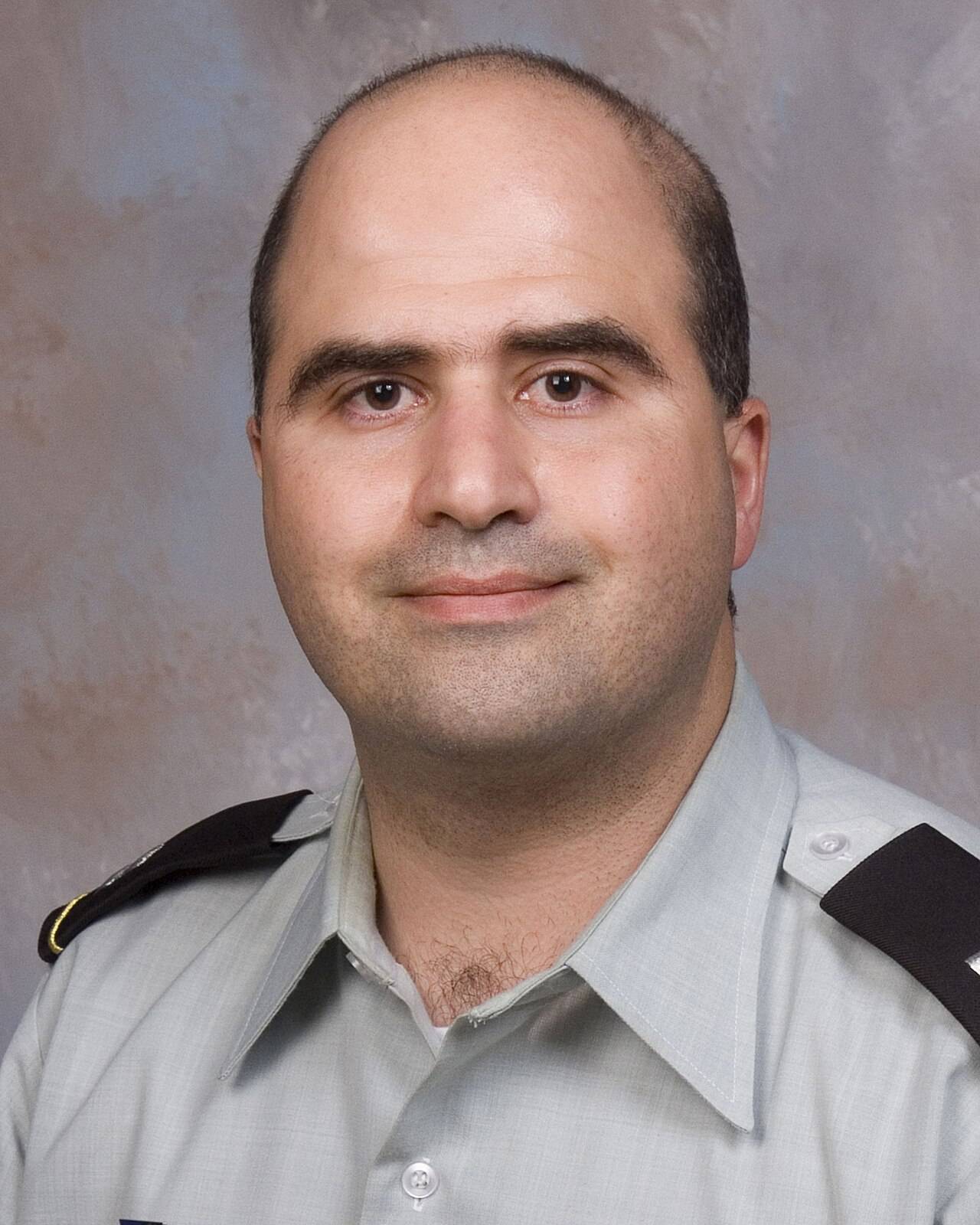
(FILES) This April 9, 2010 file photo released by the Bell County Sheriffs Department, shows US Major Nidal Hasan after being moved from Brooke Army Medical Center in San Antonio to Bell County Jail in Belton, Texas. . (Photo by Handout / BELL COUNTY SHERIFFS DEPARTMENT / AFP)
TT

First Execution to Be Livestreamed in the US: Nidal Hasan’s Journey from Psychiatric Clinic to Death Row

(FILES) This April 9, 2010 file photo released by the Bell County Sheriffs Department, shows US Major Nidal Hasan after being moved from Brooke Army Medical Center in San Antonio to Bell County Jail in Belton, Texas. . (Photo by Handout / BELL COUNTY SHERIFFS DEPARTMENT / AFP)

In an unprecedented move that has shaken Washington’s political and legal establishment, American society stands on the threshold of a deeply sensitive historical and moral turning point. The Pentagon is preparing to carry out what would be the first public execution broadcast live over the internet in modern US history, sentencing former Army Major and psychiatrist Nidal Malik Hasan to death on December 3.

The case is particularly significant because it would mark the first execution by firing squad under military law since 1945, the end of World War II. It would place a US Army major before the ultimate punishment, in a highly publicized execution watched by millions on their screens, after decades in which such military sentences had remained uncarried out.

Origins and Background: Between Achievement and Extremism

Nidal Malik Hasan was born in September 1970 in Arlington County, Virginia, to a family of Palestinian origin. He attended American schools before deciding to join the military in 1988, immediately after graduating from high school.

The US government fully funded his university education until he earned his medical degree in psychiatry. He steadily advanced through the military ranks, eventually becoming a major and Army psychiatrist, a position that placed him on a promising career path.

Behind this distinguished military career, however, a profound identity crisis and bitter ideological struggle were taking shape out of sight. Subsequent investigations revealed that Hasan had engaged in extensive ideological correspondence with extremist figures abroad, most notably Anwar al-Awlaki, a leader in Al-Qaeda, according to US media reports.

Hasan increasingly voiced strong opposition to US foreign policy, viewing the wars in Iraq and Afghanistan as direct attacks on his beliefs. The crisis reached its peak when he received official military orders assigning him to active duty in Afghanistan.

Fort Hood and the Mass Shooting

On November 5, 2009, just weeks before he was scheduled to deploy to Afghanistan, Major Nidal Hasan made the decision to completely repudiate his military oath and stormed the Soldier Readiness Processing Center at the well-known Fort Hood military base in Texas.

Hasan drew his firearm and opened fire indiscriminately and repeatedly on his fellow service members, who were unarmed and waiting to undergo medical examinations and routine vaccinations before deployment.

The surprise attack killed 13 people, including 12 military personnel and one civilian, and wounded another 32, with injuries of varying severity. It was described as the deadliest attack on a US military base in modern history.

The shooting ended when civilian security personnel at the base opened fire on Hasan, leaving him partially paralyzed and confined to a wheelchair from that day onward.

The Courtroom and the Shocking Admission

During his landmark military trial in 2013, Nidal Hasan stunned those present by refusing to use lawyers and choosing to represent himself before the military jury.

Hasan made no effort to defend himself or offer excuses. Instead, he openly accepted full responsibility for the incident before the court, stating that he had changed his allegiance and switched sides to protect those he believed were fighting against US forces.

The 13-member military panel convicted him on 45 counts, including premeditated murder and attempted premeditated murder. He was sentenced to death and subsequently transferred to the strict military confinement facilities at Fort Leavenworth, Kansas.

Hasan was not formally convicted of terrorism, as US military criminal law does not contain a separate offense bearing that designation. Instead, the case was prosecuted as a major mass-murder crime.

Nidal Hasan in a 2007 photograph at the Uniformed Services University of the Health Sciences. Hasan held the rank of captain in the US Army when the photograph was taken. (Wikipedia)

Trump’s Approval and the End of Six Decades

Under the strict and complex provisions of US military law, the death sentence of a serving military member cannot be carried out without formal approval and the final signature of the US president in his capacity as commander-in-chief of the armed forces.

After all available levels of appeal and legal challenges had been exhausted, and the Supreme Court had rejected his petitions, President Donald Trump signed the execution order following an explicit recommendation from his defense secretary, Pete Hegseth.

The presidential decision paves the way for the end of decades without military executions. The planned execution would be the first of its kind in the US military overall since 1961, when soldier John Bennett was hanged. Its particular historical significance lies in the fact that it would be the first military execution by firing squad since soldier Eddie Slovik was executed for desertion in 1945 during World War II.

Screens of Death and Divisions in the White House

The US Department of Defense sparked a major controversy when it announced that the execution by firing squad would be public and available to watch live on internet platforms. The Pentagon justified the unprecedented measure as an effort to establish a decisive deterrent and demonstrate the grave consequences of military betrayal.

Officials selected 1:30 p.m. as the execution time, precisely matching the time Hasan carried out his deadly attack at Fort Hood years earlier.

The announcement of the livestream triggered a storm of controversy and sharp divisions within American political circles. US Vice President JD Vance expressed serious reservations and deep skepticism about broadcasting the execution publicly, stating that he would not watch the spectacle under any circumstances.

Democrats strongly criticized the move, calling it a regressive act unbecoming of a country governed by institutions. Some prominent Republicans also expressed disgust at turning judicial justice into a media spectacle resembling practices associated with extremist totalitarian regimes.

Nidal Hasan in his 1986 high school yearbook. (Wikipedia)

The Legal Clash and the Constitutionality of a Public Broadcast

The decision to livestream the execution opens a dark and contentious legal and constitutional chapter in the American justice system. No official execution has been broadcast on public screens in the country’s modern history since the last authorized public execution took place in the 1930s.

This political ambition faces a complex legislative framework governing the public disclosure of executions, with substantial differences between state and federal law. In most US states, local laws prohibit filming and broadcasting executions, allowing only a limited number of witnesses and journalists to attend for transparency purposes.

Meanwhile, Federal Military Regulation 190-55 restricts attendance to a small group that includes victims’ relatives and accredited journalists, while imposing an absolute ban on anyone below the legal age.

Despite efforts by the defense to submit emergency petitions to civil courts seeking to halt the execution on the basis of these legal loopholes, the Pentagon appears determined to overcome the obstacles and proceed with both the execution and its broadcast on the scheduled date.


Russian Strikes kill 11, Including 3 Children

Local residents stand amid the rubble of a five-story residential building following a Russian attack that killed seven people, including three children, in Zaporizhzhia on October 10, 2026. (Photo by Daria Nazarova / AFP)
TT

Russian Strikes kill 11, Including 3 Children

Local residents stand amid the rubble of a five-story residential building following a Russian attack that killed seven people, including three children, in Zaporizhzhia on October 10, 2026. (Photo by Daria Nazarova / AFP)

Russian strikes on Ukraine's southeastern city of Zaporizhzhia on Saturday killed at least 11 people, including three children, according to regional authorities.

Ukrainian national police said Russia had targeted residential neighborhoods in the city with "five guided aerial bombs" early Saturday morning, hitting two residential buildings.

The strikes came a day after Ukrainian and European officials met in Miami in a renewed diplomatic push to end Russia's war in Ukraine.

"The toll from the air strikes on Zaporizhzhia continues to rise. At present, 11 civilians have been killed. Among them are three children," said Mykhailo Semikin, head of Zaporizhzhia Regional Military Administration.

He said rescuers were continuing their search for people under the rubble.

An AFP correspondent at the scene saw people being pulled from the rubble by Ukrainian emergency services.

"We saw people under the rubble -- a woman, her husband and a child," one volunteer rescuer, Daniil Pishkin, told AFP.

He added that he saw two people rescued from the wreckage but "unfortunately there was a little girl who died.”

A resident of one of the buildings that was hit, who identified herself as Iryna, 69, said she just had time to seek refuge in the toilets after receiving an air raid warning.

She said her two neighbors were killed.

"They were 75 years old. They were simply thrown out there, onto the street. They didn't make it to the hospital," she told AFP.

The Zaporizhzhia region, located just a few dozen kilometers from the front line, and its capital by the same name have been the target of frequent strikes.

Russia has intensified its strikes on Ukrainian territory in recent months, causing a growing number of civilian casualties.

Diplomatic efforts mediated by the United States to end the war more than four years since Russia's invasion of Ukraine have so far yielded no results.


OpenAI Disrupts 2 Influence Operations Linked to Russia and Iran

A keyboard is placed in front of a displayed OpenAI logo in this illustration taken February 21, 2023. REUTERS/Dado Ruvic/Illustration//File Photo
TT

OpenAI Disrupts 2 Influence Operations Linked to Russia and Iran

A keyboard is placed in front of a displayed OpenAI logo in this illustration taken February 21, 2023. REUTERS/Dado Ruvic/Illustration//File Photo

OpenAI on Thursday said it shut down two influence operations -- from Russia and Iran -- that used ChatGPT to push fake journalist personas and run a “think-tank” to covertly peddle anti-Ukraine propaganda.

The American AI giant said it banned a cluster of ChatGPT accounts that originated in Russia and Iran and were used to support “false front” entities for geopolitical and conflict-related messaging, according to AFP.

The Iranian operation involved seven “journalist” profiles, each purporting to be from Western countries including the United States, that were used to plant long-form articles in media outlets around the world.

“We identified almost 100 articles published or syndicated under the operation's bylines across roughly a dozen online outlets around the world,” OpenAI said.

“These were small to medium outlets, generally focused on international affairs, geopolitics, and events in the Middle East.”

The earliest article identified by OpenAI was published in July 2025, and the latest in October 2026, with the frequency of reports increasing after the US-Iran war broke out earlier this year.
The operation also generated social media comments on topics related to the US-Iran war, it added.

One of the personas named Ervin B Hoskins, whose bio claimed to be “an American freelance writer,” had social media accounts across tech platforms including Elon Musk's X and Meta-owned Instagram.

X's transparency information showed the account was connected via a “West Asia android app” and Instagram's transparency information showed the account was based in Iran, according to screenshots provided by OpenAI.

Both accounts appeared to be suspended.

The Russian operation co-opted “unwitting people” in Latin America to run a “think-tank” -- called the Social Research Center (SRC) -- used for covert activities aimed at undermining Ukraine's reputation in the region and to influence local politics, the company said.

“The available evidence indicates that the SRC's employees in Latin America were not aware that they were working for a Russian group,” OpenAI said.

The SRC appears to have produced a majority of original content via its co-opted staff. “This stands out as the most complex attempt to run a front identity that we've disrupted over the past two and a half years,” it added.
